




Test Drive -- International Lonestar: Style and Substance
A much-anticipated first drive of International's new LoneStar confirms it's more than just a pretty face
A much-anticipated first drive of International's new LoneStar confirms it's more than just a pretty face.
International's LoneStar is what car-guys call a white-space vehicle. That means it fits in to the marketplace where no other model currently resides. In this case, that means a grab-you-by-the-eyeballs retro appearance that promises the same kind of fuel economy as its best aero competitors.
It's a clever combination of the cab from the still-new ProStar and a long retro-look hood that harks back to D-model Internationals of the '50s. Under that hood, today you can get a Cummins ISX up to 600 horsepower (as in the unit tested here) or a Caterpillar C-15 up to 550 horsepower. Although it's still not officially announced, eventually post-2010 you'll still be able to get the C-15. But because Caterpillar is officially out of the truck engine business in North America as of 2010, that engine will wear International MaxxForce badges.
LoneStar has everything to complement such high-horsepower offerings, from a drive train to support up to 2,050 pounds-feet of torque through appearance options designed to shout out its significant presence. In fact, LoneStar will be fully supported in the dealerships with a host of optional appearance accessories, with more available by order from the factory. Among these are the industry's only uniquely forged aluminum wheels that are fully styled, beyond the unique handholds of competitive brands.
Inside it is very different, too, with a sleeper treatment styled to appeal to the trucker who's looking for something that not only looks different, but also truly is different, with a new approach to sitting and sleeping comfort.
If I sound enthusiastic, I am. It was a trial waiting for a new LoneStar to become available for some hands-on evaluation on the road. Fortunately, deliveries commenced late in 2008 and just before the New Year we got our chance to spend a day and a half with this gray-and-red beauty.
The plan was to run out of the engineering center in Ft. Wayne, Ind., heading south to the Kentucky border to find a few hills to stretch the Cummins 550 just a little. After an overnight, the truck had to be back for the International holiday shutdown, so I didn't get as many miles on the unit as I would have liked. (But heading south meant I did manage rather handily to miss the worst ice storm to hit northern Indiana in quite a long time.)
In all, we covered around 400 miles, not a heck of a lot, but better than a circuit of the showroom floor.
The Truck
The LoneStar features a unique frame. Compared to the ProStar's, it has an extra rib that stiffens the frame to prevent beaming under and ahead of the cab on the longer, 260-inch wheelbase. The drive axle suspension is the same as on the ProStar - a suspension that was subject to significant development for the launch of ProStar a few years ago. The air ride combines good, predictable handling with a very compliant ride, as we have noted with the ProStar drives we have enjoyed.
Drive axles on the test truck were Meritor RT40-145 tandem with a 52-inch spread, despite this truck being referred to as a "Canadian" spec. Up front was a Meritor axle again, this one the MFS-13-122A, a 13,200-pound axle on 14,000-pound parabolic taper leaf steel springs. This is the heaviest rated front end and likely the least limber. For top ride quality there is an in-house-developed air front suspension, engineered for long travel and with lots of anti-dive. We'll get to that in a future drive.
Brakes were pretty much what you'd expect: Meritor Q Plus with 15 x 4 in front, 16 ½ x 7 on the drives, all with dust shields. Meritor ABS was complemented by traction control and Wabco roll stability control.
The LoneStar cab is suspended on the frame with rear spring/damper units that are specially tuned, allowing for the different weight of the 73-inch medium-rise sleeper as on the test LoneStar. At the front, there's a different bulkhead/firewall for the cab as the hood closes to the frame on the long-nose truck. At the front of this stylish hood is a rather complex tilt hinge with a couple of air spring assisters. With these it is an easy task to flip the hood open using a handhold on either side of the hood ornament, standing on the ground and using only one hand.
The grille is, of course, huge, and should prove well able to accommodate the cooling that will be necessary for the next generation of EGR engines that Navistar will offer for 2010 emissions. The LoneStar has its own unique cooling package, with a radiator that is narrower than the ProStar's, but extends way down behind that big, stylish chrome bumper. It also leans back to accommodate the angled grille.
With the sleek ProStar cab sheet metal and this somewhat pointed nose, as well as the creative tank and side panel treatment, Navistar says the LoneStar is almost as good aerodynamically as its sister model. Claims and counter claims aside, the numbers I have seen from the Canadian wind-tunnel testing really do show the ProStar is exceptional, and the engineers say the LoneStar only gives away a little. External filters and B-Pillar mounted exhausts do bring their penalties, but the design of these is as clever as the tank trims and shrouds, so their effect is minimized while they bring a lot to the party in terms of appearance.
On the test unit we were running without any sort of cab-top fairing, which obviously will detract from the fuel mileage when hauling a van trailer. But with a tank or a tarped flatbed with side kit, it would be a sharp-looking combination, especially with the creative paint options that are being offered.
Only a few LoneStar trucks have been out in public, and I recall seeing only the 73-inch High Rise sleeper. Launch photos showed a full cab-top fairing available and there is also a Sky Rise sleeper on the ProStar, so other options will be coming down the pike for the flagship model that will offer even better fuel economy than the 6-plus mpg we experienced with this LoneStar.
In the Cab
Navistar's engineers did such a good job with the ProStar, there's little to find fault with in the LoneStar's cab. Indeed, there's a lot to like. Climbing aboard is easy, especially with an excellent grab handle that follows the profile of the driver's door storage bin for one hand, and the vertical grab at the B pillar. Steps are spaced evenly so even though the doors do not open especially wide, it's an easy, safe climb up.
Once aboard, a driver needs to take time to understand how to adjust the Isri seat. It has knobs, buttons and switches for every possible adjustment, and loads of seat travel so that I had to pull it up to get comfortable with the pedals. Then adjustment to the column put the excellent wheel just where I wanted it. And - unbelievable - not one of the gauges was obscured. It was all laid out there where everything could be seen at a quick glance, with white-on-black gauges that were easy to read.
In the steering wheel are controls for cruise and headlight interrupt under the left thumb. Marker interrupt, air horn, engine brake and radio controls are under the right thumb. Given the torque of the ISX (1,850 pounds-feet), this is a truck that can be driven just with the hands on the wheel and thumbs on the buttons.
The only mildly odd note is the sinuously curved gearshift lever - something we commented on when driving the ProStar a year or so ago. It's something you get used to, and it does make access back to the sleeper as good as it can be, but it looks a little odd and it's hard to look at it - or even put your hand on the shift knob - and know what gear you're in. At least, in the first 400 miles.
The look of the dashboard is great. It has that round-dial style of a "proper" truck, yet everything is where you expect it to be. Switches are rockers, heater controls are rotaries, the radio's down the
More Equipment
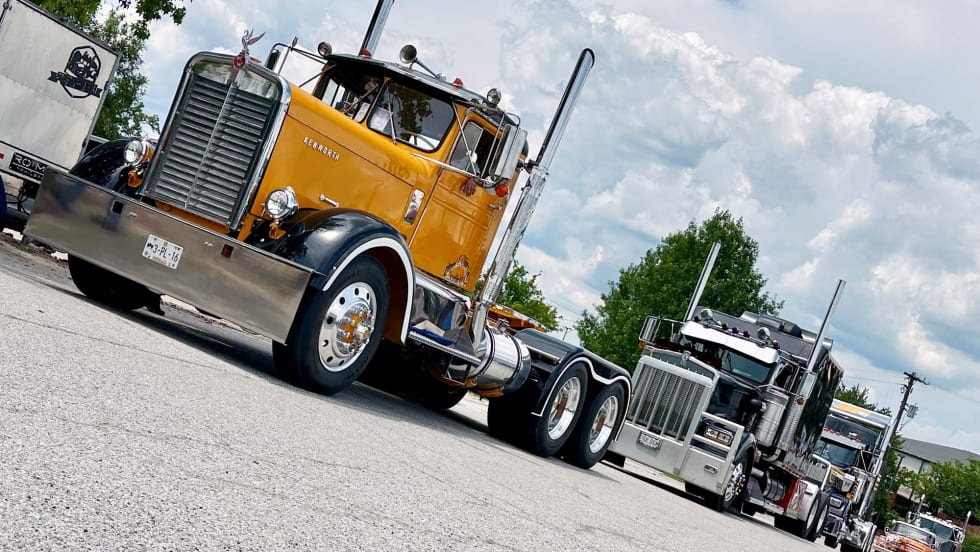
Historic, Vintage, and Antique Trucks at the 2026 ATHS Convention
More than 500 trucks were on display, indoors and out, at the 2026 American Historical Society annual convention in Springfield, Missouri.
Read More →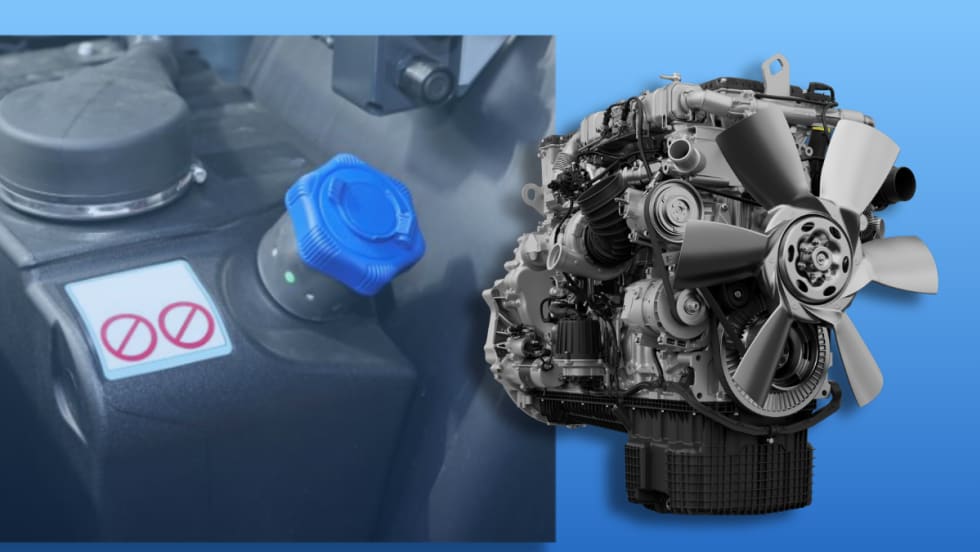
DTNA Software Update Gives Truckers More Time Before DEF Derates Take Effect
The changes reflect EPA guidance aimed at reducing downtime caused by emissions-system faults while maintaining compliance requirements.
Read More →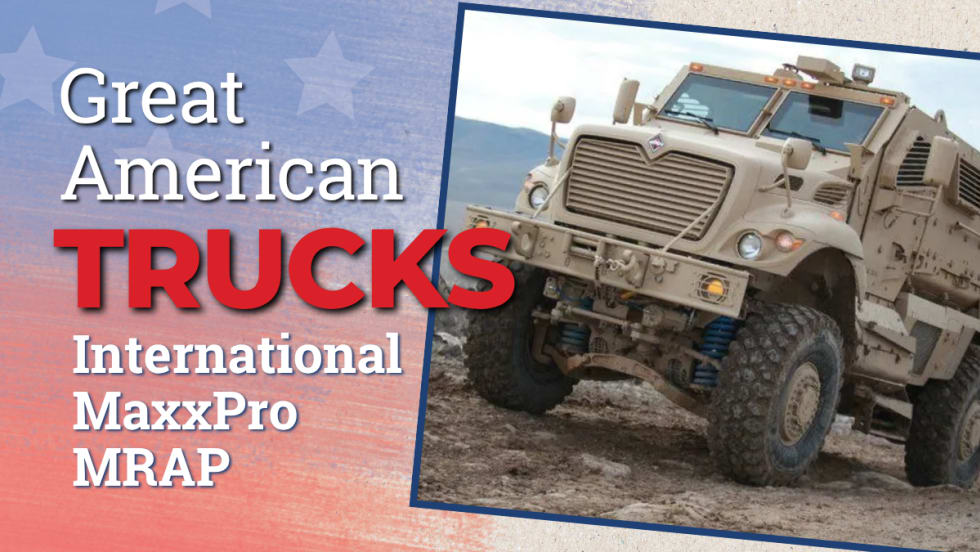
Great American Trucks: The International MaxxPro MRAP
Built from an International WorkStar chassis and powered by a MaxxForce diesel, the MaxxPro MRAP became one of the most important military trucks of the Iraq War era.
Read More →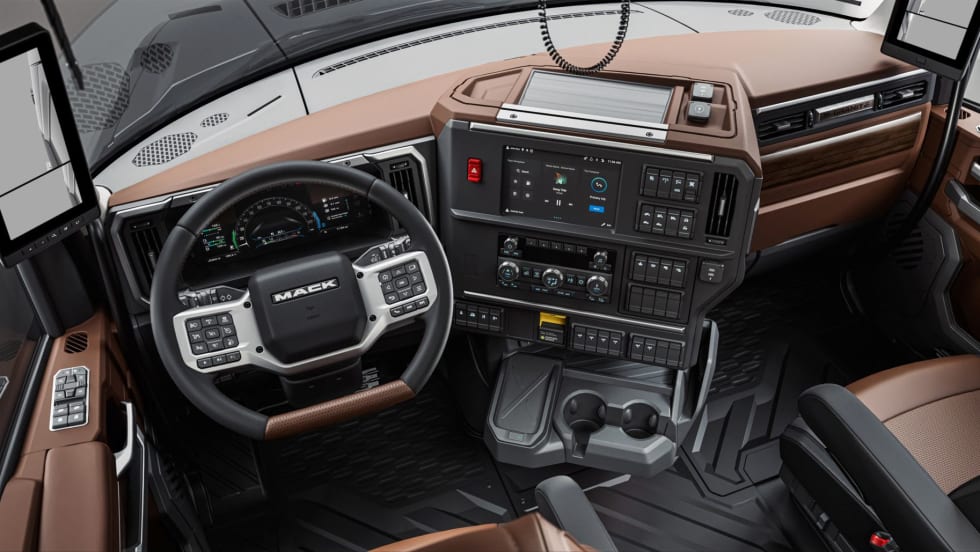
New Mack Granite Cab Puts Driver Comfort Front and Center
Mack’s next-generation vocational truck features a roomier cab, premium seating, advanced steering technology, and a driver-focused interior designed with direct input from professional operators.
Read More →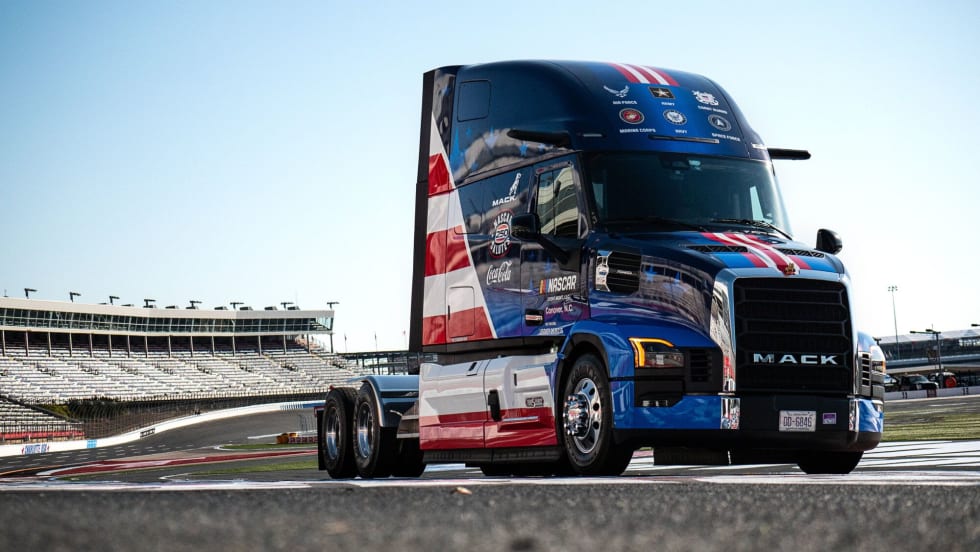
Mack Unveils Fan-Selected Patriotic NASCAR Pioneer Wraps
Racing fans picked the patriotic design now featured on three Mack Pioneer trucks hauling NASCAR equipment across the country during the 2026 season.
Read More →
Michelin Expands X Line Grip D Tire Line
Michelin is expanding its X Line Grip D drive tire lineup with a new pre-mold retread and additional sizes, building on what the company says is strong fleet adoption of the tire's traction, mileage, and fuel-efficiency benefits.
Read More →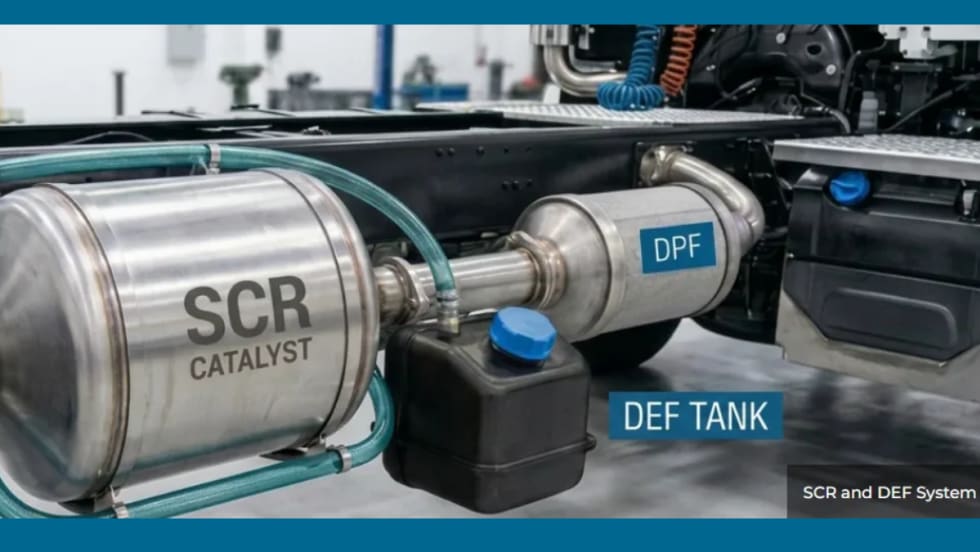
Engine Technology Forum Launches SCR, DEF Resource Center Amid Emissions Debate
The Engine Technology Forum’s new online hub aims to provide fleets, policymakers, and equipment owners with fact-based information about selective catalytic reduction technology, diesel exhaust fluid and emissions compliance.
Read More →
Prime Inc. to Open $7.9M Flagship Used-Truck Dealership
A new driver-focused facility to sell Prime Inc's used trucks and trailers will be the first purpose-built location in the company's history.
Read More →
Lessons Learned About Alternative Fuels: Start Small, Stay Flexible
Practical advice on adopting alternative fuels and ZEVs from HDT's 2026 Top Green Fleets, from renewable diesel and natural gas to electric trucks.
Read More →
Kenworth Names Peter Ahrens General Manager
Leadership changes at Kenworth take effect July 1 as the OEM promotes two longtime Paccar executives to key management roles.
Read More →