




TCA's Safety Professional of the Year Sets the Tone
When Don Lacy implemented weekly safety meetings as one of his first actions as director of safety at Prime Inc.
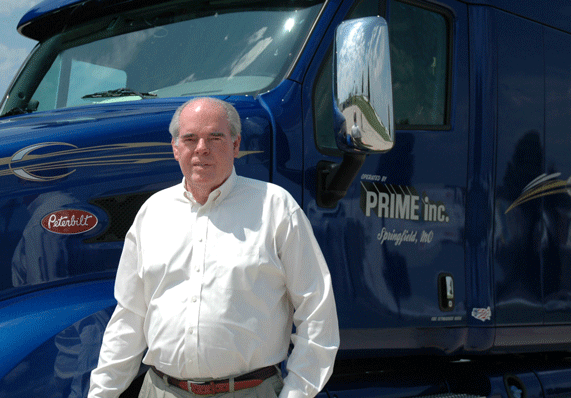
Don Lacy, TCA's 2011 Safety Professional of the Year
When Don Lacy implemented weekly safety meetings as one of his first actions as director of safety at Prime Inc.,
it was a "real slugfest," at first. Employees called each other out on their shortcomings, and drivers voiced complaints. But the entire staff, from CEO to driver, took the heat, and as evidenced in crash rates, it tempered them.
That was 15 years ago, and Lacy didn't stop there.
The Truckload Carriers Association's Safety & Security Division honored Lacy this year with its 2011 Safety Professional of the Year Award. The award recognized his outstanding contributions to trucking safety, including reducing Prime's DOT accident ratio from 0.80 in 1996, to just 0.57 in 2010 with his pioneering Prime University and the intelligent use of crash mitigation technologies.
"Training was a big issue [in 1996], especially with our owner-operators," Lacy says.
Among his most celebrated initiatives was "Prime University," an in-depth training course for drivers, which eventually became a full-blown training center. Prime ended up purchasing a small motel complex not far from its headquarters in Springfield, Mo. The facility, which Lacy describes as similar to a college campus, has six classrooms to teach courses on safety, along with business classes for owner-operators.
Today, the complex includes a driving simulator, akin to a flight simulator and nearly the cost of an actual truck, as well as a sleep lab to test for sleep apnea. All in all, the program requires a rigorous 50,000 training miles for new drivers.
In short, Lacy's safety programs really snowballed, and the results are, well, award-winning. But as much as simulators and classrooms have had an affect, it was really a company-wide attitude adjustment that allowed Lacy's programs to take root. Lacy, of course, led that adjustment.
"Everybody here has safety responsibility," he says. He believes the only way to successfully run a safety program is from the top down, and that's how he attacked his job of improving the Prime's record.
Those weekly safety meetings he implemented, which are ongoing, became so useful to Prime that Lacy decided to export them. Not long after their beginning, Lacy began recording and distributing the discussions on cassette tapes to other carriers, drivers, truckstops and the like. Today, 6,000 copies go out every week on CD.
"These were probably two of the biggest initiatives, putting the total safety culture in practice, " Lacy says, emphasizing the importance of having the CEO at the podium fielding questions and setting the tone. It filters down: Drivers listen, and more importantly, change.
Moreover, no issue is too small to bring up. Lacy makes sure of it as part of his philosophy of spreading out responsibility. A few years back, he began requiring that every single citation, no matter how small, issued to a company employee gets discussed. In this way, underlying causes get rooted out, which should be the ultimate goal of any safety program. And, of course, responsibility is assigned to managers and drivers alike - but rarely is someone fired, at least at first.
"We don't believe in firing people," Lacy says. "We believe in bringing them back here and torturing them to death with training."
He chuckles at himself, but also notes that under the new CSA enforcement regime, you can't fire mistakes. Points against a carrier stay there, even if the driver does not. Besides that, you've sunk a certain amount of cost into that driver, with recruiting, hiring, training and other expenses, that you shouldn't just throw away.
While training and safety culture are a huge part of what Lacy has done, the impact of technological development in truck safety cannot be ignored. Prime has adopted a battery of crash mitigation technologies as standard, including lane departure warnings, rollover stability control, forward-looking collision warning radar and speed limiters.
There is fairly convincing anecdotal evidence for the latter. Prime's power units used to be limited to 75 mph, but a few years ago they reduced it to 65 for owner-operators and 63 for company drivers. Following the change, Prime's crash rate dropped from 0.57 in 2008 to an all-time low of 0.52 in 2009.
In the big picture, however, training and technology should not be considered separately. Installing the systems and training the drivers are two sides of a handshake that make for a fully formed safety policy. That's not just management talking, either.
According to Lacy, drivers have reacted overwhelmingly positively to the adoption of crash mitigation systems. It makes them feel safer. Additionally, Lacy makes sure the entire truck is properly maintained and clean. He says it makes it a big difference to the driver.
"This is kind of a macho business," Lacy admits. "If a driver is in a truck that looks good, that runs good, and he has confidence in the maintenance department, he will drive better."
Under Lacy's careful leadership, Prime has stayed well ahead of the safety curve for a decade and a half. But it should be noted that the entire industry is moving in the same direction.
According to the Federal Motor Carrier Safety Administration, from 1998 to 2010, industry-wide DOT crash rates dropped from .857 to .689. Compare that to Prime's 1996-2010 drop of .80 to .57 - the curves track well with each other.
Lacy attributes this to a collective change in safety consciousness partly induced by DOT regulations, but made real by the sheer hardness of the bottom line. The fact is, being dangerous is expensive. Americans love to sue, and carriers that play dirty get taken to the proverbial cleaners. On top of that, if you're running a shoddy outfit, who will use your service?
"CEOs and truck company owners have come to the conclusion that safety is good business," says Lacy.
Lacy sees the industry getting progressively safer over time, even if that means that means some nitpicking. Prime has had several safety audits, and Lacy admits that some of the bad marks seemed a bit on the extreme side, at least for now. But that doesn't mean the problems weren't fixed.
"That's the whole deal," he says. "Would you be satisfied if your lights worked 97% of the time? Can you get too safe?" Lacy wonders.
"We're certainly not done," he answers himself.
From the September 2011 issue of HDT.
More Safety & Compliance
FMCSA: Stop Using These 15 Electronic Logging Devices
Fleets and drivers must replace the revoked ELDs with ones on the FMCSA's registered device list of electronic logging devices.
Read More →
How HDT’s 2026 Truck Fleet Innovators Are Rethinking Fleet Operations
Meet five trucking leaders who are challenging assumptions, solving operational problems, and putting innovative ideas to work.
Read More →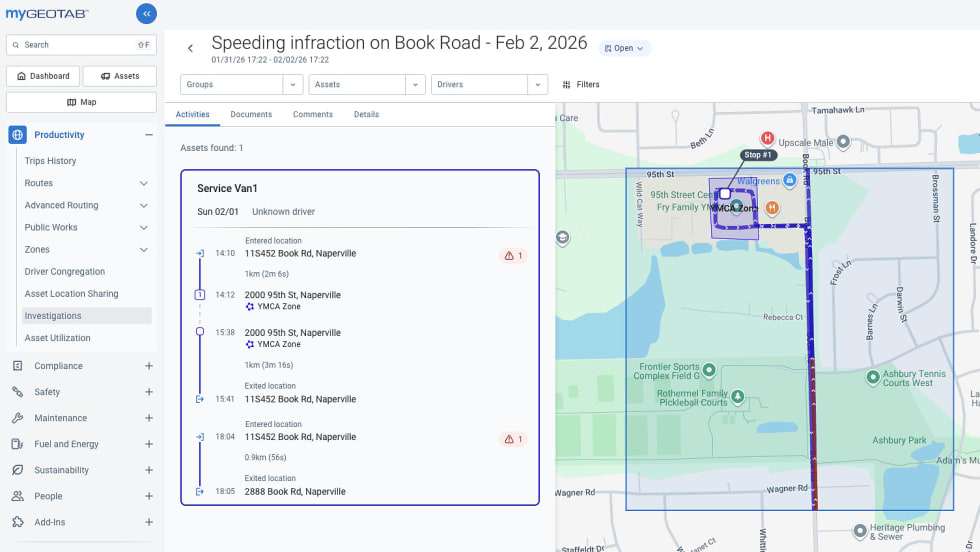
Geotab Launches Tool to Speed Fleet Incident Investigations
Geotab Investigations brings telematics data, video, photos, reports and other evidence into one case file to help fleets determine what happened and resolve incidents faster.
Read More →
FMCSA Moves to Codify English Language Requirements for Commercial Drivers
By changing regulations on English-language proficiency requirements for commercial drivers, rather than relying on a guidance memo, the FMCSA said future administrations won't be able to walk back the Trump administration's stricter enforcement with just a memo.
Read More →
Trump Administration Expands Homeland Security's Role in Trucking Enforcement
The administration's latest trucking crackdown goes beyond roadside inspections, expanding Homeland Security's role in commercial vehicle enforcement and investigations involving CDL training schools.
Read More →
Paccar Recalls 2027 Trucks Built This Summer for Possible Electrical Problem
The nearly 6,000 Kenworth and Peterbilt trucks in the recall could potentially lose engine power, among other things.
Read More →
Brake Safety Week to Focus on Drums and Rotors
Commercial vehicle inspectors will be focusing on brakes during CVSA's Brake Safety Week, August 23-29.
Read More →
Trump Administration Looks to Put More Veterans Behind the Wheel
The Freedom Haulers program pulls together existing and expanded programs at several federal agencies to recruit veterans to drive commercial heavy-duty trucks and cut the red tape for them to get a CDL, training, and employment.
Read More →
$604 Million Verdict Tests Broker Liability After Supreme Court Ruling
C.H. Robinson plans to appeal after a Texas jury found it bore the largest share of responsibility for a fatal 2021 crash, in a case that follows the Supreme Court's Montgomery decision allowing negligent hiring claims against freight brokers.
Read More →
How Fraley & Schilling Improved Logbook Compliance by Over 50%
Fraley & Schilling needed a way to close a compliance workflow gap in its ELD system without adding more work from driver training, reminders, and back-office follow-ups. It found the answer in a custom driver app.
Read More →