




Taking the Costs Out
Whether you operate one truck or 1,000, monitoring and managing costs is one of your most important tasks. Fleets have used technology to help them control costs for some time, but the latest third- or fourth-generation systems are capable of generating tremendous amounts of information fleets can put to use.

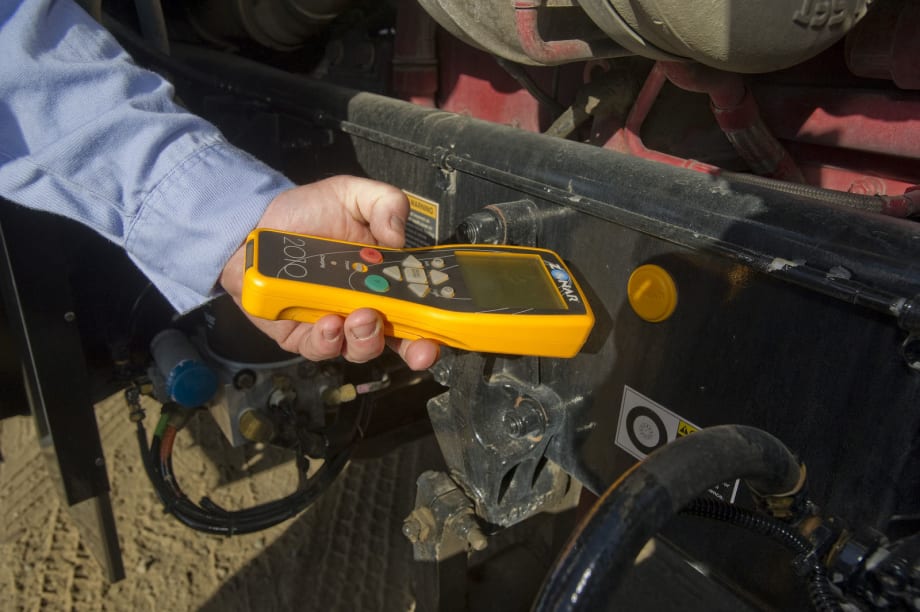
Electronic driver vehicle inspection tools such as Zonar’s EVIR help fleets control the maintenance part of its costs-per-mile.
Whether you operate one truck or 1,000, monitoring and managing costs is one of your most important tasks. Fleets have used technology to help them control costs for some time, but the latest third- or fourth-generation systems are capable of generating tremendous amounts of information fleets can put to use.
Electronic driver vehicle inspection tools such as Zonar’s EVIR help fleets control the maintenance part of its costs-per-mile.
“People in the industry realize that as much as the industry runs on diesel fuel, it really runs on information,” says Tom Flies, chief operating officer, Cadec.
For many trucking companies, cost per mile has long been the preferred metric for monitoring costs. Generally, this metric includes fuel, drivers and maintenance, as well as things such as vehicle/trailer depreciation, insurance, taxes, licenses and other operational costs.
Saving fuel
Clearly, the largest of these is fuel costs. Some of the earliest information technology adopted by fleets was designed to reduce fuel cost by allowing fleets to run more efficiently. It helped reduce non-revenue miles and increase revenue-generating miles for long-haul operations, and helped determine more productive routes in LTL or local delivery operations.
From the local delivery side, advanced routing technology “allows [fleet managers] to do things in the most cost-effective way,” says William Salter, president and CEO of Paragon Software Systems. “It helps reduce mileage, which cuts fuel costs and can also help reduce carbon emissions.”
Routing technology lets LTL carriers “smooth out routes,” explains Ken Weinberg, vice president and co-founder, Carrier Logistics Inc. He says if an LTL carrier can improve its route structure to save 5 miles per truck per day, with 50 trucks on the road, it can save 250 miles a day. “Over a year, then you are talking about real savings.”
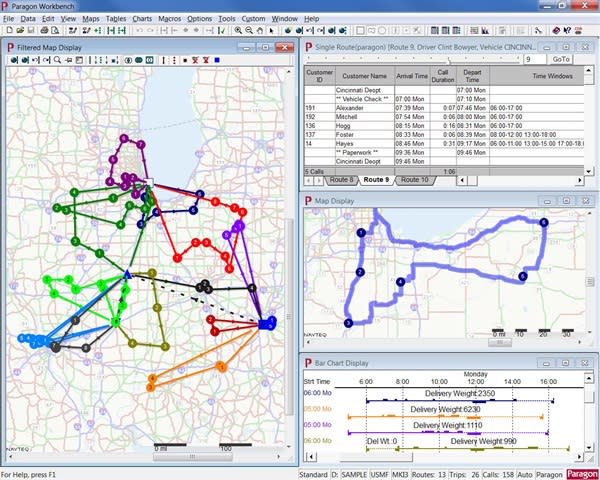
Efficient routing that reduces miles helps cut a fleet’s costs per mile.
Today’s technology also allows fleets to consider other factors that might affect a route, such as traffic or weather, and adjust routes on the fly, according to Daniel Valentine, product marketing manager at NexTraq. And they can monitor driver behavior that affects fuel mileage, such as hard braking, jack-rabbit starts and out-of-route miles.
Chris Otey, transportation manager at Goody Goody Liquors, says the routing system it recently deployed from Paragon “helped get our mileage down when we produce our routes every day.” The company has 27 retail liquor stores and six wholesale locations and runs a total of 35 trucks out of three warehouses. Those trucks deliver to some 600 restaurant/hotel customers in the Dallas/Ft. Worth area and are sent out twice each day. Goody Goody’s routing challenge is made more complex by state laws that prohibit transporting liquor across county lines.
The routing software has reduced the fleet’s mileage by about 100 mile a day. It also improved efficiency in the warehouse by producing load orders so trucks are loaded in the order of the stops on their routes. “Before they would have to zigzag across town,” he says.
Fleets save on fuel not only by cutting down on out-of-route miles and better routing, but also by making sure they are getting the best price possible and the best mpg.
You could break the fuel component down to purchasing optimization and consumption, says James Langley, vice president business analytics with TMW Systems.
Fleets can use fuel optimization technology to get the best network price for fuel over a route. They also use mobile communications and telematics to monitor and manage mpg, speed, idling and provide in-cab navigation and even real-time driver coaching.
John Erik Albrechtsen, manager of operations of Paul’s Hauling based out of Winnipeg, Manitoba, notes that the combination of mobile communications and navigation is critical to the fleet’s operations. The company uses ALK’s navigation and route planning systems.
“The navigation is important,” he says. “We can be sure where our trucks are going and we don’t want them in places they can’t operate.” If a truck goes off-route, that information is relayed via the mobile communications system to the planner. “So the planner can figure out ... was it an abnormality or is there something in the route that needs to be adjusted.”
More than fuel
Fuel isn’t the only area where technology can help reduce cost per mile, says Randy Seals, customer advocate at McLeod Software. Costs could be further reduced by using all the available data from a fleet’s management software and other systems that allow “the people behind the scenes to make better decisions,” in terms of which truck gets which load, driver hours of service, safety and maintenance.
Take maintenance costs, for example. Maintenance software that automates scheduling, parts ordering/inventory has been available for some time. Newer technologies integrate the shop more closely with other parts of the trucking operation, with telematics systems generating engine fault code alerts and engine performance data.
Automated driver vehicle inspection reports tools eliminate paper, ensure more timely service and catch problems in the yard rather than on the road. These technologies have made the vehicle more connected to the shop and fleet management functions. Mike McQuade, chief technology officer at Zonar Systems, says, “The concept of a connected vehicle is to collect the data, evaluate it in the cloud and give feedback in real-time. The magic happens with data that is real time.”
While automated systems keep track of scheduled maintenance and telematics systems can signal when problems are brewing on a truck, much of the time a truck spends out-of-service for maintenance or repair is not related to wrench-turning, according to Michael Riemer, vice president products and channel marketing at Decisiv. Service management software helps fleets manage the overhead that adds to service time by automating the paperwork and communication between the truck owner and service provider.
Safety and compliance
Safety is another area where technology can help cut cost per mile, according to Louis McAnally, vice president of operations for PeopleNet, although it’s not quite so easy to quantify.
Lawsuits, accidents, insurance premiums, and safety-related infractions can be huge cost drivers, particularly with fines and penalties imposed by the DOT’s Compliance, Safety, Accountability enforceent program.
“Start by electronically monitoring hours of service,” McAnally says. Electronic logs can cut down on time wasted in roadside inspections, improve CSA scores and more, he says. Trucks equipped with electronic logs are typically waved through roadside inspections, helping drivers maximize drive time and adhere to their delivery schedule.
“Installing electronic logs helped a Florida carrier bring driver out of service down from 90% to 35%, with incremental improvements along the way,” he says. “Without DOT scrutiny, driver productivity increased 30%. The improved safety track record reduced liability and physical damage insurance premiums by 20% after the first year and an additional 10% the following year.”
When e-logs are integrated with a transportation management system, dispatchers can make better decisions based on drivers’ available hours for optimal productivity along with compliance.
Another tool is sophisticated driver scorecards, which can improve safety, fuel mileage and other metrics – and also allow pay for performance, giving a pay boost to your best drivers without a costly across-the-board increase.
For long-haul trucking, it’s about targeting the variable costs you can get the most out of, says TMW’s Langley.
“To me it boils down to five key challenges,” he says. “Maximizing utilization, mitigating maintenance expenses, managing your driver constraints, managing your freight network and managing fuel costs.”
While there are other things involved in a fleet’s costs, these five things are the high-level “swag of what’s going on in the business,” he says. Focusing on driver wages, fuel and maintenance are the best places to start. “If you focus on those areas alone, you can find all kinds of opportunity.”
Other ways to measure costs
Cost per mile is used by trucking companies of all types to monitor and control various costs. But it’s not the only way fleets measure costs. Some look at cost per stop, cost per hour or other measuring sticks.
If miles are not the revenue generator, or even when they are, fleets want to get a more overall picture, according to Tom Flies, chief operating officer, Cadec.
“A trend with private fleets, and for-hire fleets are catching on, is looking at cost per hour to operate a truck,” he says. Cost per mile is still important, but these fleets want to optimize the fleet as a whole. “And optimizing time is really the name of the game.”
An increasing amount of fleet-generated data combined with analytical tools allows fleets to move beyond the cost per mile measure.
“Software allows a customer for the first time to determine what their revenue per hour, costs per hour and finally profit per hour,” says Randy Seals, customer advocate at McLeod Software. “By putting all that information together and analyzing it, we can find those.”
For LTL and delivery fleets, cost per stop is often the metric. Chris Otey, transportation manager at Goody Goody Liquors in the Dallas/Ft. Worth area, says that while vehicle mileage and fuel are considered in costs, they don’t do cost per mile, but rather cost per stop. “We figure how long it takes the driver to get to each stop and how long he should be there depending upon the delivery.” That allows them to get an idea of how much each stop should cost.
Carrier Logistics’ Weinberg notes that time per stop is also a valid metric. “Carriers want to get in and out as fast as possible. Technology such as geofencing can help by letting the customer know that your truck is close to their building and to make sure there is a loading dock available.”
More Fleet Management

Color Match Smarter: Tools That Restore & Perform
For fleet managers and collision repair professionals keeping heavy-duty trucks on the road, getting the color right the first time isn't just about appearance — it's about efficiency, turnaround time, and bottom-line results. Discover how today's digital color tools are transforming the repair process from guesswork to precision.
Read More →
FMCSA Pauses Biennial-Update Enforcement Amid Motus Transition
Carriers whose updates were due on or after June 1 have more time, while FMCSA works to stabilize its new registration system and warns of phishing sites impersonating its new carrier registration system, Motus.
Read More →
2026 Blueprint for Countering Smarter Supply Chain Theft
Cargo theft is no longer just the cost of doing business. It's a multi-billion-dollar criminal enterprise exploiting vulnerabilities across your fleet, drivers, and supply chain.
Read More →


How Telematics Improves Visibility, Control, and Performance in Refrigerated Fleets
Explore how telematics help refrigerated fleets improve visibility, uptime, efficiency, compliance, and cargo protection across connected cold chain operations.
Read More →
What the U.S.-Canada Trade War Means for Trucking
Escalating U.S.-Canada tariffs could disrupt cross-border freight, reduce truck volumes, raise costs, and create new uncertainty for carriers on both sides of the border.
Read More →
What Are Trucking’s Top Concerns for 2026?
The American Transportation Research Institute wants to know what's worrying trucking fleet managers, drivers, and other stakeholders in its annual Industry Issues survey.
Read More →
American Trucking Associations Looks for a New Leader
ATA President and CEO Chris Spear abruptly left his job at the association on August 21, at a pivotal time for the trucking industry.
Read More →
Public Wi-Fi Cybersecurity Risks: How Truck Drivers and Fleets Can Protect Their Data
Public Wi-Fi can expose truck drivers and fleets to credential theft, malware, and other cyber threats. Here’s how to reduce the risk on the road.
Read More →
For Nicky Cupp, Fleet Innovation Starts With Frustration
HDT Truck Fleet Innovator Nicky Cupp turns everyday pain points at Fraley & Schilling into opportunities for better technology and smarter processes.
Read More →
Adam Buttgenbach’s Approach to Electric Trucks: Start With Where They Fit
HDT Truck Fleet Innovator Adam Buttgenbach helped PepsiCo build one of North America’s largest EV fleets by focusing on where electric trucks make operational sense.
Read More →