




Study Sparks Industry Conversation on Fuel Economy
With the fluctuating cost of diesel and the multiple variables affecting fuel efficiency, even the most experienced fleets often are challenged with finding ways to keep improving fuel economy

With the fluctuating cost of diesel and the multiple variables affecting fuel efficiency, even the most experienced fleets often are challenged with finding ways to keep improving fuel economy.
That's why eight commercial fleets collaborated in the first broad-based, multi-party fuel efficiency study. Conducted by the North American Council for Freight Efficiency, the 2011 Fleet Fuel Efficiency Benchmark Study evaluated the adoption and performance of 60 fuel-saving technologies and practices across 75,000 tractors and 130,000 trailers.
Ryder was one of the participating fleets, along with C.R. England, Challenger Motor Freight, Con-way Truckload, Frito Lay, Gordon Trucking, Schneider and Werner. The companies came together to form a study team, and during a four-month period, visited each fleet to review data from 2003 to 2010. NACFE published the results of the study earlier this year, providing insight on the performance of the 60 fuel-saving technologies and identifying several best practices in fuel management.
The NACFE fuel study makes considerable progress in cutting through the noise to help fleets identify the fuel-saving technologies that can work for them. Other fleets now have this information available to learn from their findings and can consider implementing some of these technologies without having to validate or test the technology themselves. Manufacturers can also use the information to understand which of their technologies the market is responding to best.
Ryder's participation in the study yielded a number of key insights about fuel management tools and practices.
For example, one finding affected the engine parameters that are set for fuel economy. Of the two extremes in spec'ing vehicles - an extreme fuel economy spec on one hand and a performance spec (for maximum driveability) on the other - Ryder has generally opted for a balanced spec that can offer enough horsepower for the wide variety of customers we serve in our lease and rental fleet.
However, after participating in the NACFE study, we discovered that the extreme fuel economy spec can provide enough responsiveness from a horsepower/torque perspective while delivering greater fuel cost-savings. We are now moving toward adopting the fuel economy spec as our standard.
Ryder is also taking a closer look at progressive shifting, gear-down protection, and direct-drive transmissions, all of which were areas of focus during the study. Since the study, we have been working on matching the proper vehicle gearing to the newer, low-rpm engines introduced by most manufacturers as part of the EPA 2010 engine platforms. We have been collaborating with OEMs to optimize the fuel economy spec and engine/chassis operating parameters.
Another key finding involved the use of trailer skirts and low-rolling-resistance tires. Before the study, Ryder had shied away from using trailer skirts widely. Although there was some evidence for their fuel-saving potential, the breadth of our customer base and the variability of their vehicle applications had prevented Ryder from adopting trailer skirts as a standard part of our spec. Trailer skirts can yield a definite benefit to the operator if used correctly, but they can also become a cost source and a drag on fuel economy if the wrong type is used, if the trailer skirts become damaged, or if they are used in the wrong applications. Insights from the study, however, have pointed to specific scenarios where trailer skirts can be used to enhance fuel economy.
The NACFE fuel efficiency benchmark study has only just started the conversation on fuel economy. While great progress has been made, there is still much to be learned about the impact of individual technologies and how the investments in these technologies balance out versus cost-savings over time. In fact, NACFE wants to expand on the data and plans to continue adding fleets. Interested fleets can still join and benchmark their fuel practices against others.
The 2011 Fleet Fuel Efficiency Benchmark Study is just the beginning and has opened the door to continue exploring what has long been a pain point for many fleets. When so many fleets come together to share information, everyone comes away winning new information and fresh perspectives.
For more information, go to www.nacfe.org.
Scott Perry is vice president of supply management for Ryder's Fleet Management Solutions business segment and heads Ryder's alternative fuels program. He serves on the board of directors of NACFE.
More Fuel Smarts

FlowBelow Redesigns Trailer AeroSlider to Cut Fuel Use
The lighter trailer aerodynamic system installs in less than 45 minutes, according to the company, with potential payback in under a year depending on fuel prices and trailer mileage.
Read More →
Why Diesel Price Relief Efforts May Fall Short
Diesel prices have eased from September’s record high, but doubts about additional Russian supply and limits on dyed-diesel tax relief mean trucking fleets still face expensive fuel. And prices could go higher.
Read More →
Why Small Fuel Savings Matter in Trucking
Can better fuel economy help pay for driver raises? In this podcast, GP Transco explains how small efficiency gains create room to reinvest in its people.
Read More →
How GP Transco Cuts Trucking Fuel Costs, a Tenth of a Gallon at a Time
What’s another tenth of a mile per gallon worth? GP Transco shares how equipment upgrades and driver coaching turn small gains into meaningful fuel savings.
Read More →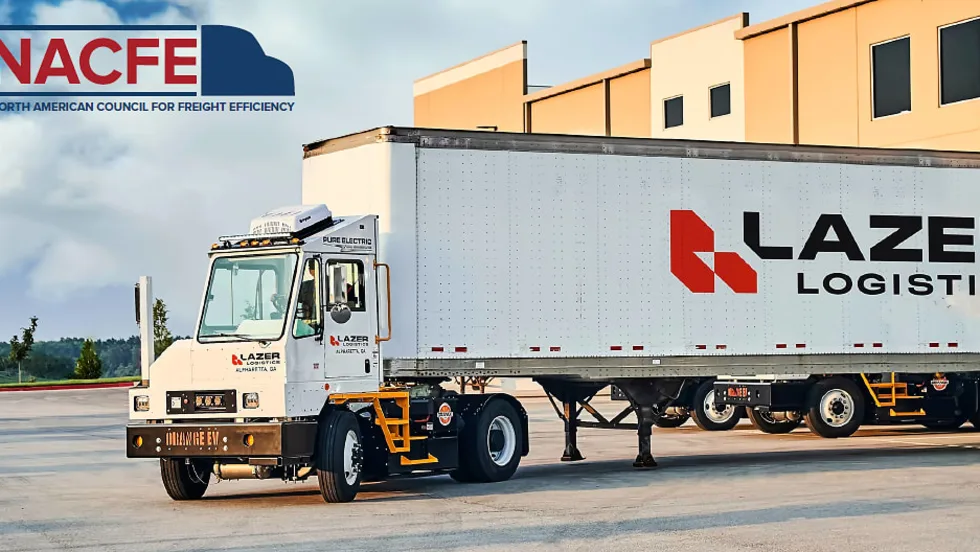
Electric Yard Tractors Move Beyond Pilots
Operating-cost savings have overtaken sustainability goals as the leading reason surveyed fleets are adopting battery-electric terminal tractors, according to new NACFE research.
Read More →
Geotab Links Fleet Card to Vehicle Data
The new card combines fuel discounts with telematics-based purchase controls. Geotab’s analysis also points to potential savings from choosing lower-priced fuel stops.
Read More →
Fleet Economics Shape Electric Truck Outlook
ACT Research expects costs, charging infrastructure, and technology improvements to drive zero-emission commercial vehicle adoption as federal regulations and incentives retreat.
Read More →
Wex Adds Cardless Fuel Payments for Over-the-Road Customers
A new fuel card feature for Wex customers offers convenience and security.
Read More →
New California Law Could Shed Light on Electric Truck Prices
Why do battery-electric Class 8 trucks remain so expensive? A California bill signed by Gov. Gavin Newsom would give fleets and state agencies more visibility into what manufacturers charge.
Read More →
How Volvo Updated Its D13 for EPA 2027 [Watch]
Volvo’s updated D13 promises lower emissions without sacrificing performance or fuel economy. Take a closer look at what changed inside the engine in this HDT Spotlight video.
Read More →