




Reap What You Pay
Driver compensation planning must go beyond a paycheck. It must involve benefits, bonuses – even non-monetary perks.
Driver pay has increased at a fairly steady pace since the mid-1990s, averaging about 3 percent a year, according to some estimates. But the numbers are all over the board, depending on the type of operation, experience, region of the country, how salary is calculated, and who you talk to. According to salary.com, the nationwide median base salary for a heavy-duty truck driver is $36,378, excluding bonuses and other extras. Drivers in the lowest 25 percent of the salary rage earn $32,159. Those in the highest 25 percent earn $41,990. Another online service for job seekers and employers puts the median salary at $45,000 for a tractor-trailer driver in Chicago, $40,000 in Dallas.
According to a survey done by the National Private Truck Council last year, starting pay for drivers in private fleets topped out at around $44,000. For experienced private fleet drivers the maximum was around $54,000. In recruiting ads, for-hire carriers routinely put "potential earnings" for experienced drivers in the $53,000 to $55,000 range. Some say their hardest-working veterans are tallying up $75,000 a year. Estimates for rookie over-the-road drivers range from the low $30,000s to the mid-$40,000s.
Many fleet executives say they have to go higher. "Right now we're in a time where the freight is lagging and unfortunately, we're not in a good bargaining position with our customers. Therefore we're not in a position to further our goal of increasing driver pay," says Dan England, chairman of C.R. England, which last year bumped its pay scale to a maximum 50 cents per mile (excluding the safety bonus) for solo company drivers in short-haul operations and $1.50 per mile for owner-operators. "When we are in a strong freight environment, we need to be real advocates on behalf of our drivers."
Certainly, the numbers have to be attractive, but experts say compensation planning must go beyond how much you pay. It must involve benefits, bonuses and even some non-monetary aspects of a compensation package. Following are some compensation-related issues fleets are currently trying to tackle.
GIVING THEM THE MILES
Since it was formed just two years ago, Con-way Truckload has grown from zero tractors to more than 300. It employs almost 500 drivers – mostly teams – plus about 50 owner-operators. The company's president, Clay Halla, has a long list of reasons for their success with driver recruiting and retention – not the least of which is a steady paycheck.
The carrier's primary mission is to provide expedited transcontinental linehaul service for its sister company, less-than-truckload carrier Con-way Freight, he explains. Because they have one customer with established terminals, they're able to set up traffic lanes that generate freight year-round, avoiding the seasonal cycles of many truckload operations.
"There are things we do within the network to keep drivers busy, but we're unique in the sense that we have freight availability year-round," he adds. Equally important, Con-way can offer steady work on routes that frequently get them home. "We want to make sure the freight lanes we offer drivers get them home as often as we possibly can," Halla notes.
Most truckload carriers don't have the luxury of established lanes, but some are trying to ease the strain on driver earnings caused by down cycles in freight demand. Schneider National, for instance, now has a program that guarantees a minimum level of pay month.
"We want to make sure drivers are getting enough miles and enough work. Occasionally you get that bad week," says Rob Reich, vice president of enterprise recruiting. Moreover, he admits, guaranteed pay motivates the company to make sure they're getting those miles for the drivers.
More commonly, fleets are changing the way mileage is calculated, switching from the old shortest route or "household goods" system to "practical mileage" systems. The difference in mileage can be anywhere from 4 percent to 9 percent, which not only puts more money in the driver's pocket, but appeases drivers who have long complained about short-route calculations. Most computer routing programs offer the choice, and shippers – nudged by tight trucking capacity – are reportedly accepting practical mileage in contract negotiations.
EXTRA PAY FOR EXTRA WORK
Stricter hours of service rules made it clear that drivers are working even when they're waiting. The new rules, plus the capacity squeeze, also helped convince shippers that driver time is valuable.
A study done several years ago for the Truckload Carriers Association, titled "Just in Time to Wait," found that the number of problem receivers is relatively small, yet the time and cost to deal with those receivers is relatively large. The conclusion: Trucking companies need to manage their customers more aggressively. One suggestion was to unbundle costs in order to expose problem areas. Another suggestion was to offer incentives and impose penalties to improve efficiency and reduce delays. Many carriers have done that and are making the penalties stick. Moreover, they're paying drivers for excessive wait times and extra services such as loading and unloading.
One important point: Fleet management experts say guidelines for non-driving pay should be clear and consistent. Drivers should understand what they'll be paid for, how much, and what paperwork or documentation is needed. They also stress that driver compensation, including detention or unloading pay, shouldn't be dependent on the carrier's ability to collect from the shipper. If it's promised, it should be paid.
Safety bonuses are common in trucking and generally recognized as a cost-effective way to reduce accidents and insurance claims. Recognition of a driver's good work can also affect retention.
"How to Implement Incentive Programs For Safety and Productivity," a guide produced by the Canada Safety Council, outlines two case studies to illustrate that point. In one case, an LTL carrier with 80 trucks saw driver turnover drop from 98 percent to 15-20 percent two years after initiating a safety bonus and driver recognition program. A truckload carrier with 350 power units saw a 40 percent improvement in driver retention three years into a comprehensive program that included safety bonuses and revised criteria for safety performance. The guide stresses that safety incentives, by themselves, won't reduce turnover – but they clearly help.
Some of the most effective incentive plans aren't just for drivers. Con-way Truckload has a program that rewards all employees for company performance. Financial goals are established at the beginning of the year and discussed with employees. Regular updates keep them informed of the company's progress. "It allows the driver to feel he's part of something bigger, that the decisions he makes have an impact on the overall success of the company," Halla notes. "If our company performs well, our drivers should benefit."
CUSTOMIZED BENEFITS
The health and welfare of the driver and his or her family are necessities of a competitive compensation package. Medical, dental and life insurance have become standard fare. So have vacation pay and retirement savings programs.
Companies are also starting to offer more optional benefits, such as additional life insurance or long-term care insurance through payroll deductions. The next logical step is cafeteria plans that give employees a choice of benefits that best suit their needs. For instance, a driver with a working spouse and young family might be interested in child care assistance or tuition savings. Another driver might be more concerned about long-term health care and retirement savings.
Cafeteria plans require good planning and administration, but if structured correctly, they offer tax savings for employers and employees. Moreover, a menu of benefits versus standard fare reinforces the feeling among workers that the company sees them as individuals and is trying to address their individual needs.
COMMUNICATING BENEFITS
On average, companies spend about 40 cents of every payroll dollar on employee benefits. The cost of medical insurance alone is estimated at $4,500-$8,500 annually for an individual and $12,000-$15,000 for a family. Yet research indicates that few employees appreciate or even realize the value of their benefits.
Employers are starting to share that information. The estimated cost of an employee's benefits might be included in employment offers or discussed at orientation. Some companies send annual "statements" to each employee detailing their benefits and the cost. Many are also committing resources to making sure employees understand insurance and other benefits and that they have someone to call with questions or problems.
Education and information regarding retirement savings programs seems to be particularly beneficial. Several studies indicate that employees who participate in company sponsored 401(k) or similar retirement savings programs are less likely to leave the company than those who don't participate.
Writing in "About Human Resources," consultant Susan Heathfield says studies also show that targeted communications about the 401(k) plan can be just as effective as higher employer contribution matches in getting employees involved.
"We're constantly tweaking what we offer our drivers based on what's going on in the economy, what's going on in the industry, and what's going on with the drivers themselves," says Halla. "We spend a lot of time making sure we have a good compensation package, but we also look at non-compensation benefits."
For instance, Con-way Truckload specifies equipment with comfort and convenience features such as front air-ride suspensions, electric landing gear, refrigerators and inverters. Their trucks are set up for satellite radio and there's no activation fee for drivers who sign up through Con-way. They also have a ride-along program for dogs and cats. "Pets are extremely important to our drivers," Halla explains.
Many "lifestyle benefits" for employees and their families require more creativity than cost. Group discounts are often available, even to small companies, on health club memberships, pet care insurance, tax preparation services, theme park tickets, dining – even auto maintenance.
Company picnics and similar events foster friendships among spouses and help make them feel that they're part of the organization. One human resource professional suggested activities for driver spouses such as bowling leagues, book clubs or regular seminars on general interest topics like budgeting and wellness.
HELP FOR OWNER-OPERATORS
Compensation for owner-operators is a little more restrictive because of the need to maintain the independent contractor relationship, but putting together an attractive "value-added" package is hardly impossible.
Greatwide Logistics Services has come up with a "Greatcare" package featuring a wide range of programs and services, such as national tire pricing, a discount fuel network, discounts on fuel, tires, parts, new vehicles, tax preparation services, legal services, even pet health insurance. "We're always looking for ways to make our independent contractors more successful by developing programs and services to help their bottom line," says Rob Newell, vice president of recruiting and retention.
Last fall they launched what Newell believes is the first-ever comprehensive group health care program for owner-operators. "The insurance industry has shied away from the independent contractor because of their lifestyle. They don't necessarily have the best food available to them on the road, so their health can be at risk," he notes. "I can put a group deal together for company drivers but it's risky to insure individual owner-operators."
The program essentially marries two insurance plans. One is an 80/20 Preferred Provider Organization (PPO) capped at $25,000, which keeps the premium low. The other is a catastrophic excess plan with a $1 million cap and a $25,000 deductible, again designed to keep premiums low. Newell says combining the two creates a comprehensive plan that costs $300-$400 a month for single drivers and $750 for families. There's also a third option with more limited coverage and even lower premiums for owner-operators willing to absorb a larger deductible.
"This isn't a half-hearted effort," Newell says. "We make sure it's a good product and we make it convenient."
BREAKING A FEW EGGS
When Dick Metzler teamed up with an ad agency to create some edgy recruiting advertising for Greatwide Logistics, he had to convince some people at the company that doing something different and a bit controversial would pay off. But it did – the award-winning 2006 "Choose Your Road" campaign not only won advertising awards, but also proved to be the company's most effective ad campaign to date, resulting in double-digit call volume increases and a corresponding rise in the number of owner-operators leasing on to the company.
Metzler, chief commercial officer for Greatwide, wanted to treat the Greatwide name as a brand, just like Coca-Cola or Nike, and create recruiting ads with the same kind of creativity and emotional appeal used for retail advertising.
"Our mandate to the agency (Levenson & Hill Advertising, Dallas) was to make our message jump off the page and burn it into the brain of our owner-operator audience in a way they will never, ever forget," Metzler says.
The "Choose Your Road" campaign was designed to illustrate the fact that Greatwide offers owner-operators a number of different options, such as long-haul or short-haul. It used emotion and humor to get the point across in print and radio advertising.
The most attention-getting ad in the campaign was the "Hot Wife" print ad, which suggested to drivers that if they have a hot wife, they might want to run short-haul – but they might like long-haul if they want to escape a nagging ex-wife.
The company did get some phone calls from truckers' wives and non-truckers who found the ad offensive. "We weren't afraid to take some chances on this," Metzler says. "As the old adage goes, if you're going to make an omelet, you've got to break some eggs. I told [the agency] that if we didn't offend anyone, we didn't stretch far enough."
Several radio spots also carried through the theme. In one, called "Missing the Daughter," a driver listens to a voice mail from his 16-year-old daughter, who's at the tattoo parlor. "Very important parts of the message kind of break up and he can't quite tell what she's describing," explains Richard Graves, creative director for the agency. "He's just all the more curious about what's happening to his daughter, and she's at the tattoo parlor when she calls, so he's really too late." The message, of course, is, wouldn't you like a driving job where you're home more?
In another spot, emphasizing the benefits of long-haul, a driver is talking to his wife on the phone and she's talking about an impending visit from his in-laws. "You hear the horn honk in the driveway, she's going through a litany of flaws and peccadilloes," Graves says. "He was starting to say he was going to spend more time at home, but when this happens, he says, 'No, I'm going to be on the road more.'"
The ads drove home Greatwide's message "in a way people could relate to and chuckle over," Graves says.
"It made the phone ring," Metzler says, "and we hired a lot more drivers than we would have otherwise."
More Fleet Management

New Independent Contractor Rule Gives Trucking More Clarity
The Labor Department is once again changing how it determines who's an independent contractor. This time, the rule includes specific examples addressing trucking safety requirements, CDLs, and lease-purchase agreements.
Read More →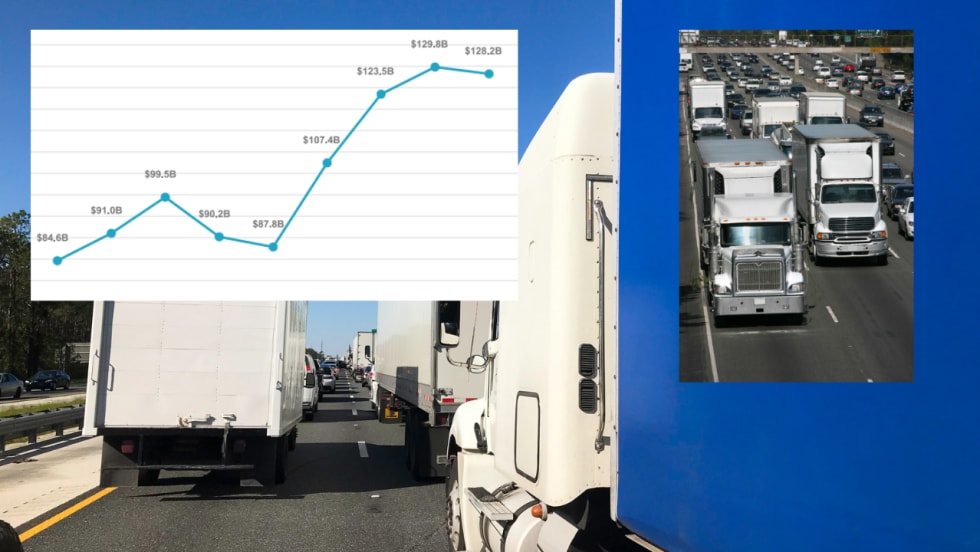
Trucking's Annual Congestion Costs Reach $128.2 Billion
That's the average cost, according to new ATRI research. And the wasted time and diesel are staggering.
Read More →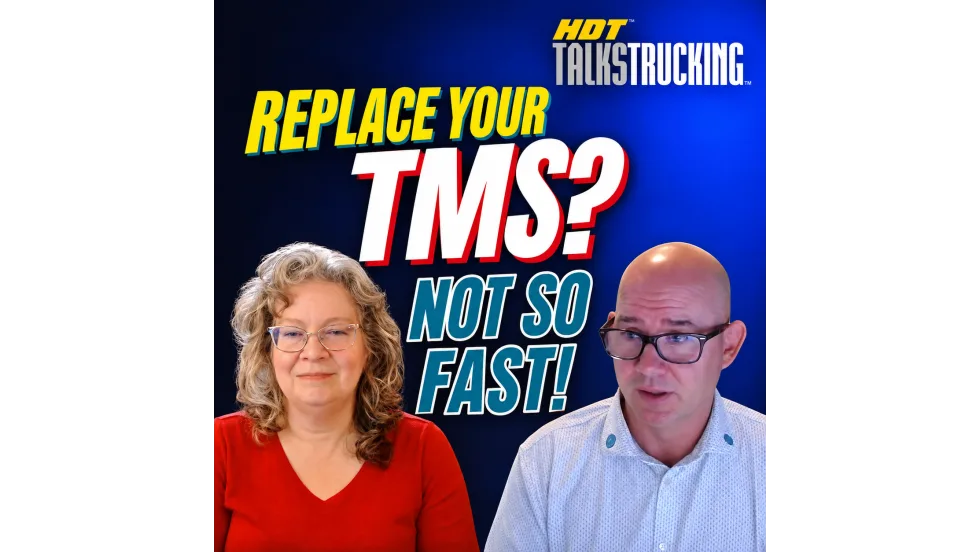
How to Modernize Your TMS Without Replacing It [Podcast]
Before investing in a new transportation management system, take a closer look at what you've already got. AI, cloud technology and better integrations may offer ways to improve your trucking operations without starting over.
Read More →
Could Your Truck's Connected Devices Be a Cybersecurity Risk?
ELDs, telematics systems and driver tablets help fleets operate more efficiently. But every connected device needs protection against cyberattacks.
Read More →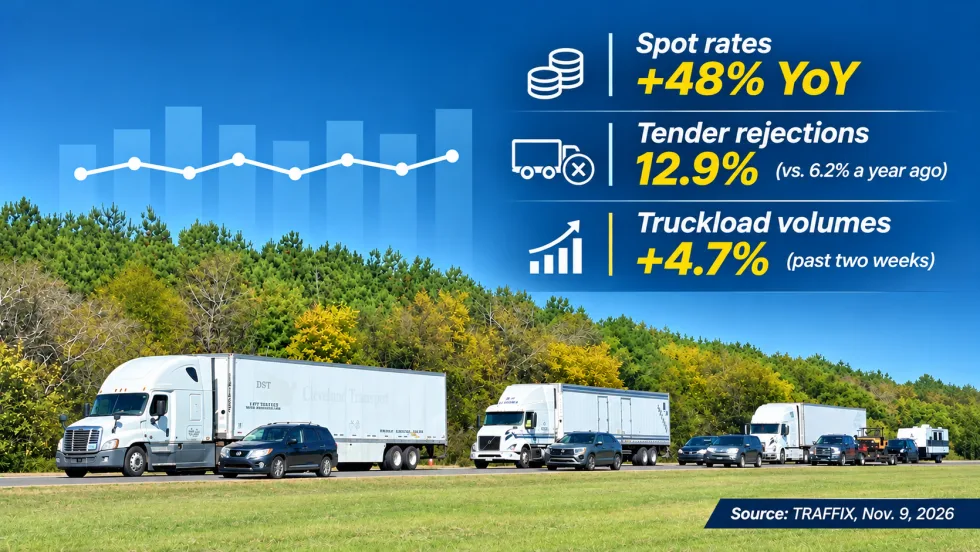
Holiday Freight Meets a Tight Trucking Market
There's no freight boom, but truckload carriers are finding themselves in a stronger position to negotiate rates. And holiday shipping demand could tighten the market further.
Read More →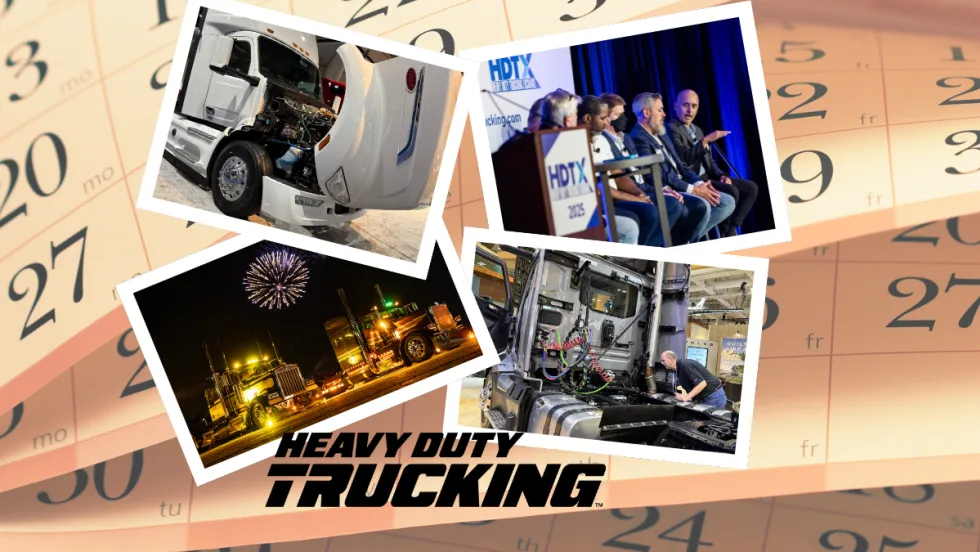
What Trucking Events are Happening in 2027?
Looking for trucking-related conventions, expos, and other events? Heavy Duty Trucking has developed this list of national and larger regional trucking shows and events.
Read More →
Does Your Trucking Fleet Need a New TMS?
Artificial intelligence and better integrations promise less busywork and more useful data. Can your TMS help your company solve problems? Do you need additional vendors or an upgrade? Or is it time to look for a new platform?
Read More →
Fleet Costs Shape ACT Expo 2027 Agenda
With diesel prices high and operating expenses under pressure, ACT Expo's 2027 agenda emphasizes fuel efficiency, AI, safety and the return on fleet technology investments.
Read More →
Does Your Trucking Fleet Need a New TMS? [Video]
Cloud technology, AI and new integrations are changing what transportation management systems can do. But does taking advantage of those advances mean replacing your existing TMS?
Read More →
Road Ready Becomes Saegic, Launches New Trailer Telematics Gateway
Clarience Technologies is rolling out new hardware and expanding its plans for connecting trailer telematics, maintenance data, and video.
Read More →