




Rails Back On The (PR) Attack
As Congress prepares to debate new transportation funding, ATA is back to seeking a higher weight limit on trucks. AAR is back to lobbying against it.


Back in mid-2003 two old archenemies - the American Trucking Associations and the Association of American Railroads - agreed to bury the hatchet and work toward common goals. Both signed the peace treaty as Congress got set to reauthorize the current transportation funding program.
It made sense. After all, the two industries are intermodal partners. Their history of bickering - largely over truck sizes and weights and whether rails deserved public money and more freight - only confused the issues for lawmakers.
Under the 2003 treaty, both parties effectively agreed to support keeping the rules at status quo.
Fast-forward to now. As Congress prepares to debate new transportation funding, ATA is back to seeking a higher weight limit on trucks. AAR is back to lobbying against it. AAR tempers its opposition by saying any weight limit increase should be accompanied by higher truck taxes. ATA indicates higher taxes might be acceptable in return for more productive trucks.
But wait. As these more conciliatory discussions go on, AAR has re-launched one of its oldest weapons: the public relations attack. On July 1, it issued a press release citing findings of the Congestion Relief Index, an annual study of traffic congestion in urban areas of the country. Its findings:
Freight trains are at least four times more fuel-efficient than trucks.
A train can move one ton of freight 436 miles on a gallon of fuel.
One intermodal train can take nearly 300 trucks off the highways.
The release says shifting 25 percent of freight from trucks to trains by the year 2026 would cut air pollution by more than 920,000 tons per year and save the average commuter 41 hours and 79 gallons of gasoline annually.
When you spoon-feed reporters stuff like this, it's a slam-dunk. Stories lauding rail efficiency, based on the AAR release, have popped up all over the country. One said the rails aim to show that "rail is to shipping what the Toyota Prius is to the morning commute."
Sen. Ted Carper (D-Del.) piled on with an op-ed piece for The Hill, a newspaper aimed at Congress. Headlined "Freight Rail Deserves More Federal Support," it made liberal use of the study's findings.
First off, the study and its conclusions are nothing new; it's been updated over the past seven years. The bottom line is that the railroads admittedly want public money (referred to in the study as "increased public-private partnerships, as well as tax incentives"). Impressing on lawmakers that trains are warm and fuzzy compared to trucks just creates confusion and takes time and energy to diffuse.
In fact, rails will never match the efficiency of trucks, particularly in urban operations, where virtually all the congestion is in the first place. Rails can't compete in areas other than long haul. And switching 25 percent of freight to rails? Not gonna happen.
Maybe ATA and AAR can work out a funding proposal to both their satisfaction. That would be nice, but only a start. Congress, particularly Rep. Jim Oberstar (D-Minn.) and Rep. Peter DeFazio (D-Ore.) must first be convinced that heavier trucks won't be a safety problem.
Oberstar chairs the House Transportation and Infrastructure Committee and DeFazio heads the Surface Transportation Subcommittee. Neither leans toward bigger and/or heavier rigs.
AAR's sniping at trucking is just one more hurdle to passing a decent funding program.
Oh, and have you seen CSX's snappy new slogan? "If it's going to be in your life, it'll probably be on our trains."
Somehow it doesn't have the same ring to it as "Good stuff. Trucks bring it."
E-mail Doug Condra at dcondra@truckinginfo.com, or write P.O. Box W, Newport Beach, CA 92658.
More Fleet Management
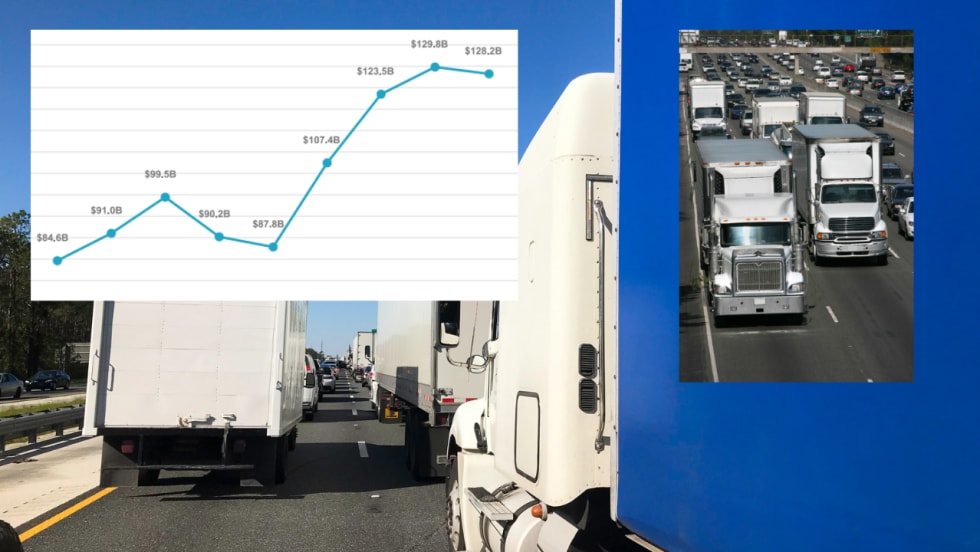
Trucking's Annual Congestion Costs Reach $128.2 Billion
That's the average cost, according to new ATRI research. And the wasted time and diesel are staggering.
Read More →
How to Modernize Your TMS Without Replacing It [Podcast]
Before investing in a new transportation management system, take a closer look at what you've already got. AI, cloud technology and better integrations may offer ways to improve your trucking operations without starting over.
Read More →
Could Your Truck's Connected Devices Be a Cybersecurity Risk?
ELDs, telematics systems and driver tablets help fleets operate more efficiently. But every connected device needs protection against cyberattacks.
Read More →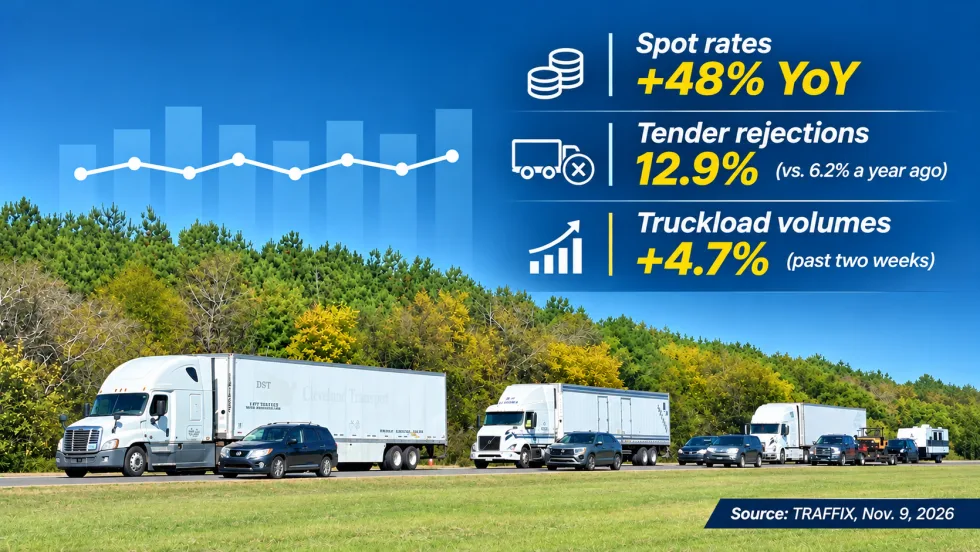
Holiday Freight Meets a Tight Trucking Market
There's no freight boom, but truckload carriers are finding themselves in a stronger position to negotiate rates. And holiday shipping demand could tighten the market further.
Read More →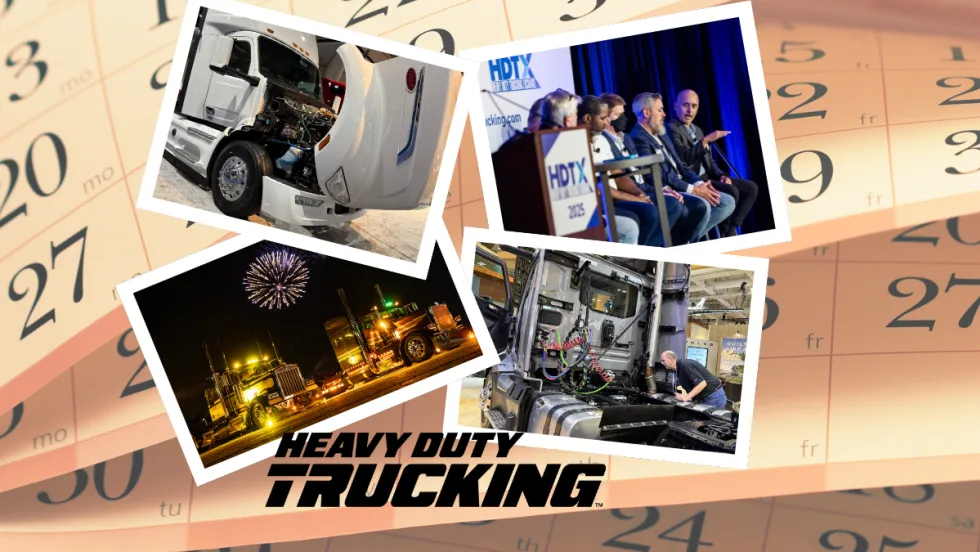
What Trucking Events are Happening in 2027?
Looking for trucking-related conventions, expos, and other events? Heavy Duty Trucking has developed this list of national and larger regional trucking shows and events.
Read More →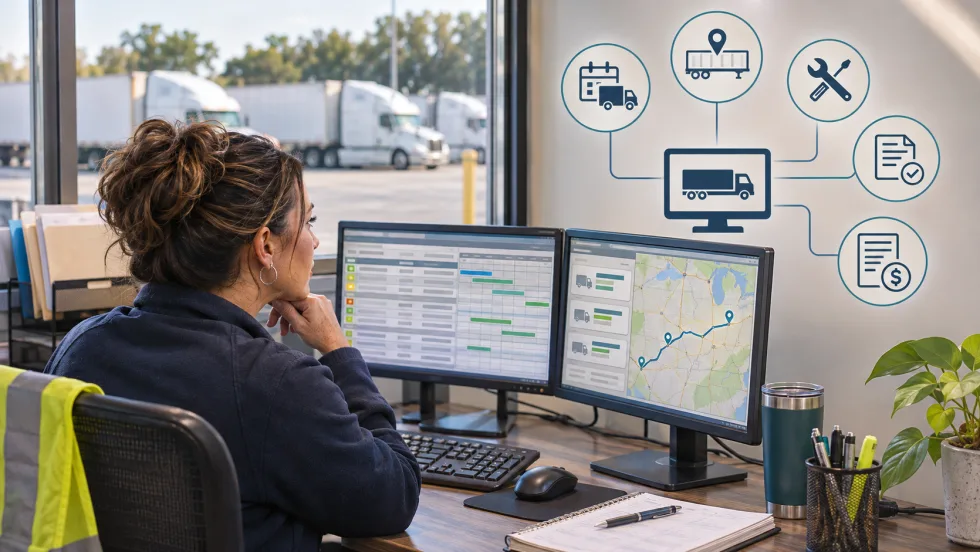
Does Your Trucking Fleet Need a New TMS?
Artificial intelligence and better integrations promise less busywork and more useful data. Can your TMS help your company solve problems? Do you need additional vendors or an upgrade? Or is it time to look for a new platform?
Read More →
Fleet Costs Shape ACT Expo 2027 Agenda
With diesel prices high and operating expenses under pressure, ACT Expo's 2027 agenda emphasizes fuel efficiency, AI, safety and the return on fleet technology investments.
Read More →
Does Your Trucking Fleet Need a New TMS? [Video]
Cloud technology, AI and new integrations are changing what transportation management systems can do. But does taking advantage of those advances mean replacing your existing TMS?
Read More →
Road Ready Becomes Saegic, Launches New Trailer Telematics Gateway
Clarience Technologies is rolling out new hardware and expanding its plans for connecting trailer telematics, maintenance data, and video.
Read More →
Give Your Trucking Fleet a Cybersecurity Walkaround
Your fleet's cybersecurity policies may look good on paper. These seven checks can help you find out whether they’re working.
Read More →