




Quick Spin: Peterbilt Model 579 UltraLoft Sleeper
Peterbilt pushes the long-haul space and luxury envelope with its latest Model 579 incarnation.

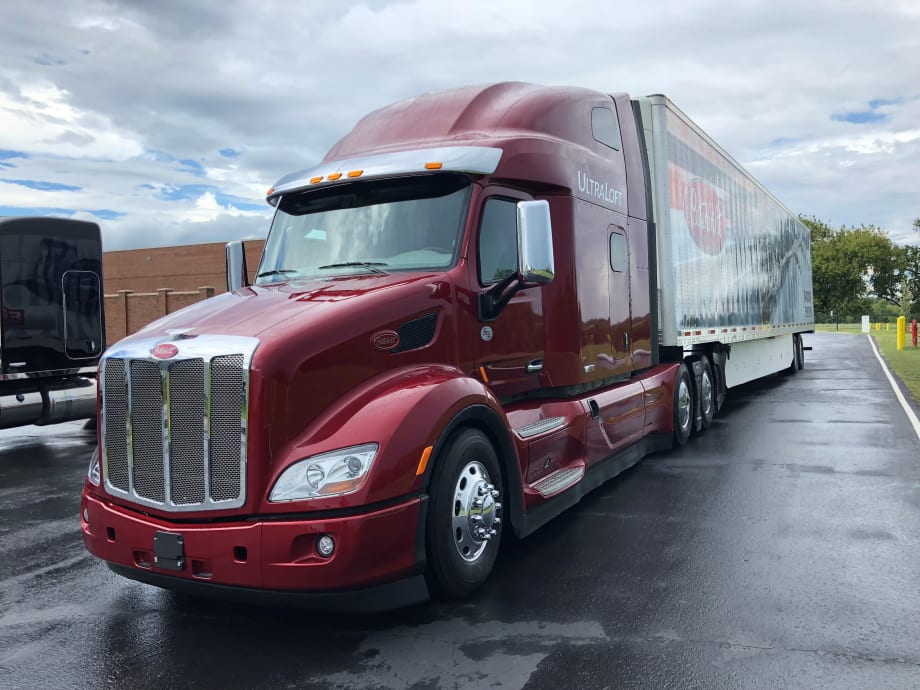
Peterbilt Model 579 UltraLoft demo truck waits outside the Paccar Engine Plant in Columbus, Miss., prior to a test drive on U.S. Highway 82.
Photo: Jack Roberts
Following a tour of Paccar’s highly modern diesel engine manufacturing plant outside of Columbus, Miss., I was given a chance to take the latest version of Peterbilt’s flagship highway hauler, the Model 579 UltraLoft, for a brief run east on U.S. Highway 82.
I actually learned to drive on this highway, heading to my grandmother’s house in Belzoni, Miss. But those early-‘80s road trips in my family’s much-despised Ford Granada were nothing compared to the level of luxury and comfort I found myself enjoying as I rolled down the four-lane past old cotton fields, ruined barns and rusting old trucks and tractors.
That’s because the Model 579 is about taking Peterbilt’s already well-earned reputation for luxury and literally super-sizing it, in the form of a stunning 80-inch, fully integrated sleeper, crammed full of nearly every creature comfort a space-conscious driver team or long-haul trucker can dream of.
Interestingly, from the exterior, there are very few visual clues to let an observer know the rig sports an ultra-high roof sleeper that is a full 12 inches taller than the older 72-inch Model 579 (which is still in production). That’s because Peterbilt engineers did an excellent job in keeping the overall cab design proportional in scale, crafting a truck that not only looks good moving down the highway, but cuts a sleek aerodynamic profile while doing so.
That impression changes dramatically when you climb up into the Model 579 UltraLoft. This truck is absolutely airy compared to most sleepers on the market today. The high-roof sleeper gives the entire cab a sense of space that is greatly enhanced by the skylight roof panels, which let in ample sunlight that further adds to the overall roomy feel.
Given this much room to work with, Peterbilt interior designers didn’t disappoint, either. A new HVAC system increases air flow to both upper and lower bunks. A fold-away ladder makes it easy to climb to the upper bunk, and there’s enough height between the upper and lower bunk that a driver can sit upright in the lower bunk without hitting his or her head. And those bunks are the largest available, according to Peterbilt. With the sleeper built on the wider 2.1-meter cab platform of the Model 579, the bunks are 85 inches long on the lower one and 82 on the upper, with the lower bunk 42 inches wide and the upper bunk 36 inches wide.
Single-bunk configurations provide 70 cubic feet of storage, with 64 in the double bunk. A split upper bunk design allows for another 14 cubic feet of storage; the forward portion flips up to create a secure, clean storage space for items when it’s not being used as a bed.
A large wardrobe offers 42 inch-long hanging space for long shirts and jackets. Large storage areas above the cabinets on both the driver and passenger side are large enough to store two CPAP machines for treating sleep apnea if needed, with the storage open to the rear so it’s easily accessed from the upper bunk.
And there are easily accessible power ports, with 12-volt, 110-volt and USB power ports located in the panel right behind the driver’s seat. When you have an upper bunk, it’s duplicated so that driver has the same power access without having to run extension cords and the like. There’s also a slide-out table on the driver’s side for working or eating.
Behind the wheel, the seating, instrumentation and gauges are familiar to any Model 579 aficionado, down to the infinitely adjustable steering column and Paccar air suspension seat, which make quickly getting situated and settled behind the wheel a snap.
With a turn of the ignition, the 455-hp Paccar MX-13 diesel instantly rumbled to life and quickly settled down to a softly muted burble. The truck wasn’t quite fully loaded, but there was enough payload in the 53-foot trailer to get a good sense of the Paccar MX-13 engine and the Paccar 12-speed Automated Transmission working together to get the rig up and moving. The transmission deftly handles the 1,650 lbs.-ft. of torque the engine churns out, skip-shifting as needed, to create a smooth, seamless acceleration curve that even the most seasoned gear-jammer would be hard-pressed to emulate.
Views over the sharply sloped hood and to the sides are exceptional – as are rearward views, thanks to the solidly mounted, panoramic mirrors mounted on the truck’s A pillars. The instrument panel is easy to see, thanks to crisp graphics and sharply contrasted backlighting. I’ve felt for some time that the Paccar Automated Transmissions stalk-mounted shifter is one of the best designs in North America today. It’s easy and intuitive to use, and the overall ergonomic feel of the driver’s station extends outward to the center-console controls as well. which are within easy reach and have a solid, tactile feel when being toggled.
Acceleration to highway speeds in the Model 579 UltraLoft is surprisingly quick, smooth, and quiet, bolstering Paccar’s argument that the MX-13 is more than sufficient for most long-haul applications, both in terms of low-end torque and reserve power at highway cruising speeds.
The truck is noticeably quiet too. In large part this is because of the attention Peterbilt engineers paid to sound dampening in the door seals and floor of the truck. But, it should be noted that my demonstrator vehicle was also equipped with Peterbilt’s top-shelf EPIQ aerodynamics package, which also drastically cuts down on exterior wind noise at highway speeds.
Taken as a whole, Peterbilt fans will find a lot to like in the Model 579 UltraLoft. It’s a truck that takes the best that the Model 579 already has to offer, and super-sizes it in a way that adds even more comfort and luxury with drivers always foremost in mind.
More Equipment
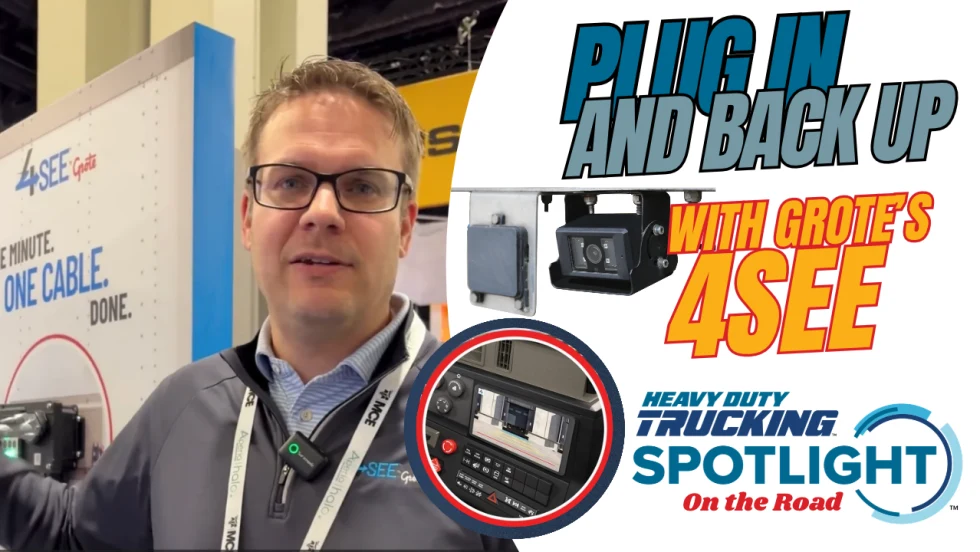
More Trailer Data Through the Same Seven-Way [Video]
Can trucking’s standard seven-way connector handle more cameras and trailer data? Grote’s Adam Slade shows HDT how the company is using new technology with its 4See trailer system, not only to add a new backup camera but also to expand other capabilities — without adding another connection.
Read More →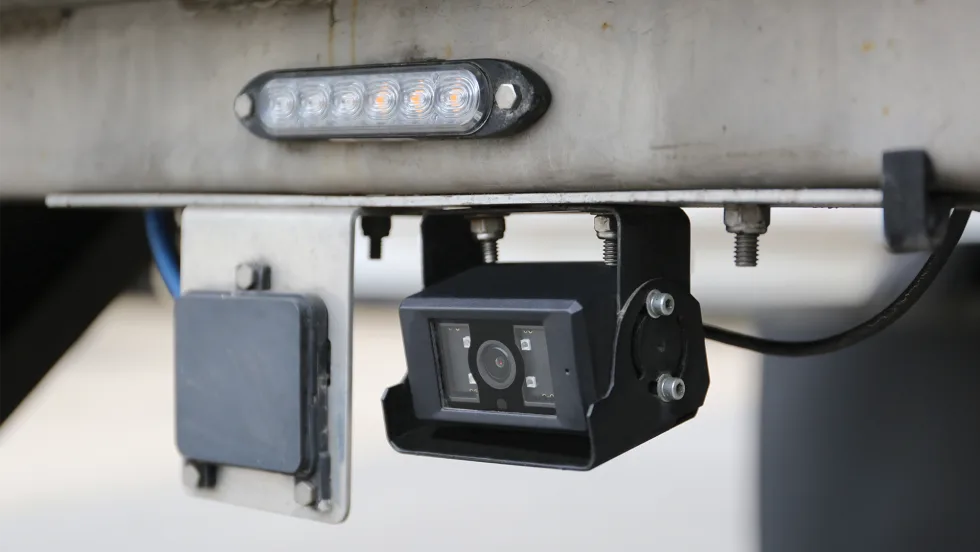
Grote: More Cameras, Same Seven-Way Connector
The next-generation 4See rear-view backup camera from Grote uses the standard seven-way connector and supports additional cameras and other trailer data.
Read More →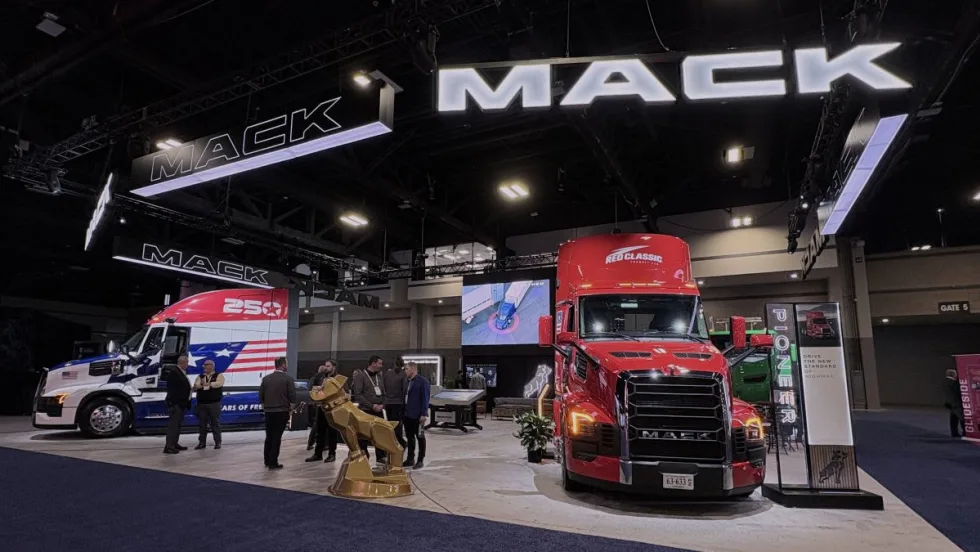
Trucks at ATA's 2026 MC&E in Charlotte, North Carolina [Photos]
From rigs decked out in patriotic America's 250 paint schemes to autonomous trucks and more, check out these photos from ATA's 2026 Management Conference & Exhibition.
Read More →
Help HDT Find Trucking’s Top Products
Have you come across a new product that could make a difference for trucking fleets? Nominate it for HDT’s 2027 Top 20 Products Awards by November 9.
Read More →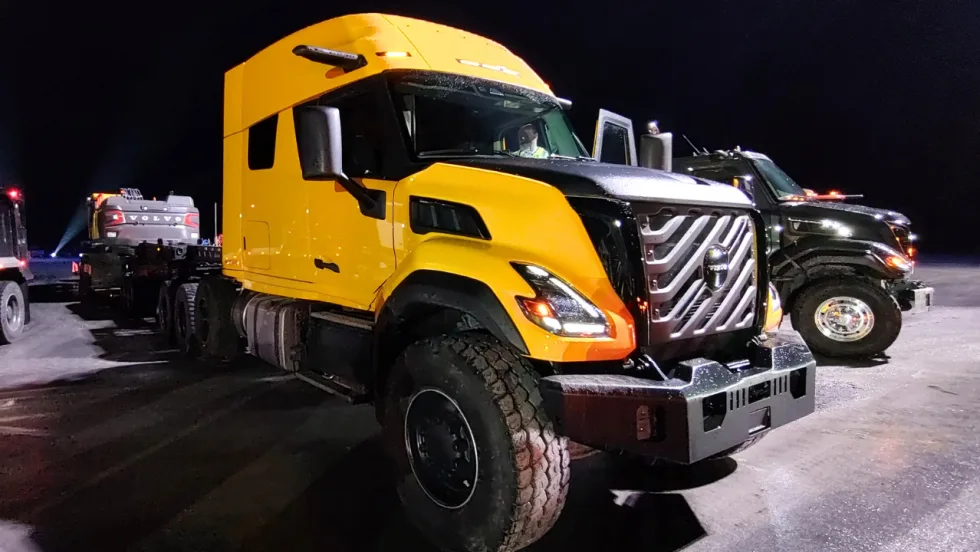
Volvo Unveils New VNX Heavy-Haul and Vocational Truck
Volvo Trucks has launched the VNX, a new vocational truck also available as a tractor in day cab and two sleeper configurations, with one heavy-haul model. The Volvo VNX is powered by Volvo's D13 platform, which delivers up to 540 horsepower and 1,950 pound-feet of torque and is EPA 2027-compliant.
Read More →
How GP Transco Cuts Trucking Fuel Costs, a Tenth of a Gallon at a Time
What’s another tenth of a mile per gallon worth? GP Transco shares how equipment upgrades and driver coaching turn small gains into meaningful fuel savings.
Read More →
Electric Yard Tractors Move Beyond Pilots
Operating-cost savings have overtaken sustainability goals as the leading reason surveyed fleets are adopting battery-electric terminal tractors, according to new NACFE research.
Read More →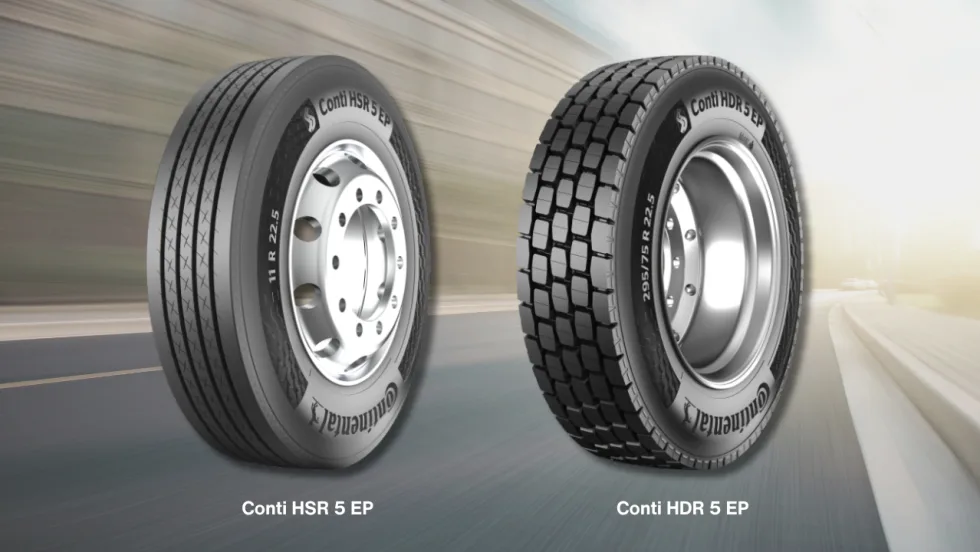
Continental Introduces New Regional Truck Tires
Continental says its new Generation 5 steer and drive tires for regional operations offer longer tread life, with estimated mileage gains of 22% and 19%, respectively.
Read More →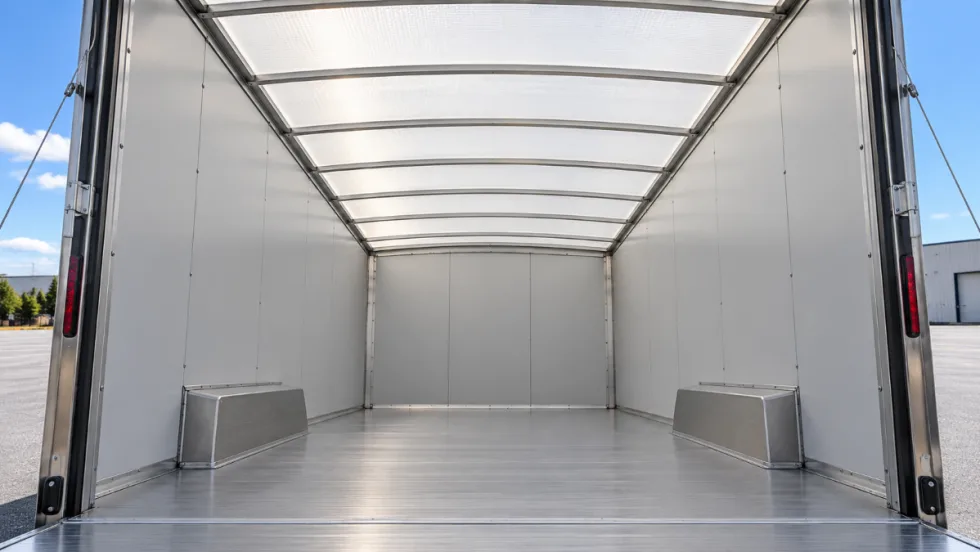
Tekmodo Introduces CargoBright Brand for Translucent Trailer Roofs
CargoBright is designed to diffuse daylight across the cargo area while performing as a working vehicle roof.
Read More →
Fleet Economics Shape Electric Truck Outlook
ACT Research expects costs, charging infrastructure, and technology improvements to drive zero-emission commercial vehicle adoption as federal regulations and incentives retreat.
Read More →