




Q&A With a Medium-Duty Giant: Rush Enterprises
Rush Enterprises is probably best known as North America's largest Peterbilt dealer. But realizing they could only go so far with their franchises from the Paccar manufacturer, leaders saw midrange trucks as a way to grow and to diversify in products and operations

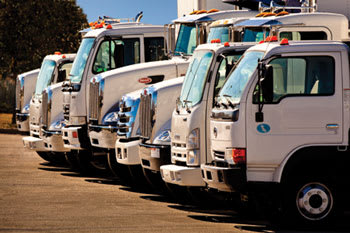
Rush Enterprises is probably best known as North America's largest Peterbilt dealer. But realizing they could only go so far with their franchises from the Paccar manufacturer, leaders saw midrange trucks as a way to grow and to diversify in products and operations.
Founded in Houston in 1965 by Marvin Rush and two partners (whom he later bought out), the company began as a single Peterbilt outlet. It grew by selling heavy trucks in southeast Texas. But Marvin Rush envisioned a multi-faceted firm with dealerships spread across the southern tier of states, as well as leasing, finance and insurance arms. Rush eventually became the largest truck dealer in the nation. In 1996 it was the first truck-dealer corporation to make an initial public offering of stock, which is now traded on Nasdaq under the symbol RUSH.
By 2003 it sold and serviced Peterbilt medium trucks and had a Hino franchise in San Diego. But executives knew growth with Peterbilt was limited. (They later formed a new organization to acquire International dealers, the first of which is in Salt Lake City). Executives developed a plan to greatly expand the medium-truck business by buying more franchises.
Today, in addition to Peterbilt mediums at 42 locations and Hino at 18, Rush sells and services International (12 locations), Isuzu (12), UD (seven), Fuso (three), Ford (three) and Workhorse (one). It also handles four bus makes at 53 locations. Truck makes are usually co-located with other brands so they complement rather than compete.
Rush was the largest General Motors midrange dealer until GM pulled the plug on its Class 4-7 business in summer of 2008, and recent addition of the Ford franchises is meant to compensate.
Overseeing the midrange network are Steve Taylor, vice president of medium-duty sales, and Whitt Michael, director of medium-duty operations. They deal with managers and sales people at the various locations, and with manufacturers' representatives. Both work out of Rush's corporate headquarters in New Braunfels, a suburb of San Antonio.
HDT: What were some of the thoughts behind the midrange expansion?
Steve Taylor: The idea of how we would grow the company was establishing more medium-duty operations and franchises, because the brick-and-mortar was already there within the Class 8 organization. So the process was to increase the efforts in Class 8 and look at expanding out. That all happened in the spring of 2003 and has evolved, and even to this day we keep looking at opportunities. Not all the stores have all those franchises.
What we try to do is find good products that would match the Peterbilt, which builds a great Class 7 conventional and has a great vocational tandem-axle product, with, like, Isuzu, which has a strong background in Class 3 and 4 cabovers. A lot of it depends on the market areas. Cabovers are very strong on the West Coast, in southern California and other metropolitan areas, so there we marry a cabover with a conventional product.
HDT: What's different about your operations?
Taylor: When we decided to do medium-duty, we wanted to have a separate, dedicated organization. We felt that trying to sell medium-duty with heavy is very difficult. So we totally separated medium-duty within our own organization, and put a way to measure and monitor our efforts by having a separate sales force at the locations. And when that started to grow, we saw that we needed a separate parts and service operational person who oversees that. And that's about when Whitt came aboard, in 2005, and really took over the back end, in parts and service for medium-duty.
HDT: How do customers for medium- and heavy duty trucks differ?
Taylor: A medium-duty customer goes out maybe 50 miles and then he comes home, every day and every night. An over-the-road customer might leave Long Beach and in five days he might be in Jacksonville, hitting all the markets. A Class 8 guy knows everything about his truck. A medium guy treats it like a necessary evil; it's a means to do his business.
HDT: Do you have separate service bays at the medium-duty locations?
Taylor: One of the things we do in L.A., Fontana, Denver, Dallas and Atlanta is operate separate medium-duty facilities. When we started in 2003 we didn't think that would ever happen, but those are such big markets for medium-duty. In Dallas, we have two separate medium-duty facilities in a town where we have three total facilities.
Whitt Michael: We asked ourselves how we could better serve the medium customer base in that they're more domiciled locally. We know the trucks are down usually at night, so we looked at expanding our evening hours, and at creating a mobile truck service. This is a mobile lube service for medium-duty. And we concentrated on focusing technicians on a specific product line. We got them trained up on those products instead of being experts across the board, where you see a Class 8 guy doing Cummins, Eaton, Allison, all the different manufacturers. [Instead we've] got a guy focusing on Isuzu, on Hino, and focusing on the medium-duty side.
And we took the concept of the quick-service bay from the heavy side to the medium side. Mechanics can focus on medium-duty only. This is something our customers really want, and something that we've really been addressing. And that includes a second shift. The trucks come in in the evening, and we realized that we need a second crew to concentrate on those trucks so they're ready the next morning so customers can go about their business. A customer in the furniture business has three trucks, and if he gets one truck down, that's a third of his fleet that's down. So we've got to get it back up running.
HDT: Do medium-duty customers care what brand of truck they buy?
Michael: Sure. The dealership is important to keeping his truck running. If his truck goes down quite a bit, he's out of business. It's a three-fold relationship: the dealer, the customer and the manufacturer. They want to become close to the dealer that they're working with. If the dealer has a strong service background, the ability to get on the vehicle - that means a lot, I think more so on the medium-duty than the Class 8 side. But because of the network we have, if a guy goes with his Hino from Dallas to Houston, in Houston we have the same kind of dealership. So the network gives us strong business opportunities.
HDT: Do you see any Buy American attitudes on the part of customers?
Taylor: Not today. I think you saw that 10 or 15 years ago, when I got into it. You don't see much of that today. The cabover business has the products being brought in [from Japan], and in some markets they've been very well accepted. California, Georgia, Texas, Florida - a lot of them are dominate cabover markets, because of the downtown areas, the ability to get around in congestion - maneuverability. Landscapers are one application; Isuzu has been strong in this, with a crewcab cabover - the ability to get in tight residential areas, and they're looking for a lighter weight truck.
HDT: Are there customers who prefer conventionals?
Taylor: Oh, yes. In some of your long box-type trucks, where a guy's going from Dallas to Houston, in more highway driving, you'll find people with a conventional product. Construction - a lot of your vocational stuff, municipal, is all conventional. That's where the Peterbilts and the Navistars really excel.
HDT: When Hino went to conventionals, did that change anything in the minds of your customers?
Taylor: Our Hino store in San Diego was cabover at first. When they went conventional it was a little bit different than what people were used to, but Hino did a very good job of building a good product, of marketing it, and of course assembling it in the States. From a Class 6 and 7 standpoint, they've done a very good job.
HDT: Did any Hino customers
More Equipment

ZF Expands Commercial Vehicle Push in North America
ZF is expanding its North American commercial-vehicle presence with new transmission applications, electrification, trailer technology and autonomous-driving systems.
Read More →
Tesla Wants a Self-Driving Semi. Are Cameras Enough?
Could Tesla’s camera-only autonomous driving technology work on an 80,000-pound Semi? In this commentary, HDT's Deborah Lockridge takes a look at Tesla, Cybercab, and how autonomous trucks see the road.
Read More →
Kodiak: Driverless Long-Haul Truck Launch on Track for 2026
Kodiak AI says its driverless long-haul safety case is 93% complete and it remains on track to begin commercial operations by year-end 2026.
Read More →
What DOT’s Automated Vehicle Strategy Means for Trucking
The U.S. Department of Transportation issued a new automated-vehicle strategy that outlines plans for driverless-truck regulations, cross-state freight corridors, and federal safety standards.
Read More →
East Coast Port Launches $45M Electric Truck Push
The Port Authority of New York and New Jersey announced millions in incentives for zero-emission drayage trucks, yard tractors, and new charging hubs near the port.
Read More →
PlusAI Going Public to Fund Autonomous Truck Launch
A SPAC deal could provide PlusAI with up to $300 million as it works toward a 2027 commercial launch of factory-built autonomous trucks.
Read More →
NHTSA Moves to Rewrite Truck Fuel-Economy Rules
The National Highway Traffic Safety Administration says it lacks authority to regulate medium- and heavy-duty truck engines separately from complete vehicles, but the existing standards have not yet been eliminated.
Read More →
Detroit Opens Orders for EPA 2027 Engines
Detroit isn’t starting from scratch to meet EPA 2027 diesel emissions standards. Its Gen 6 DD13 and DD15 engines keep much of today’s platform while updating the fuel and aftertreatment systems.
Read More →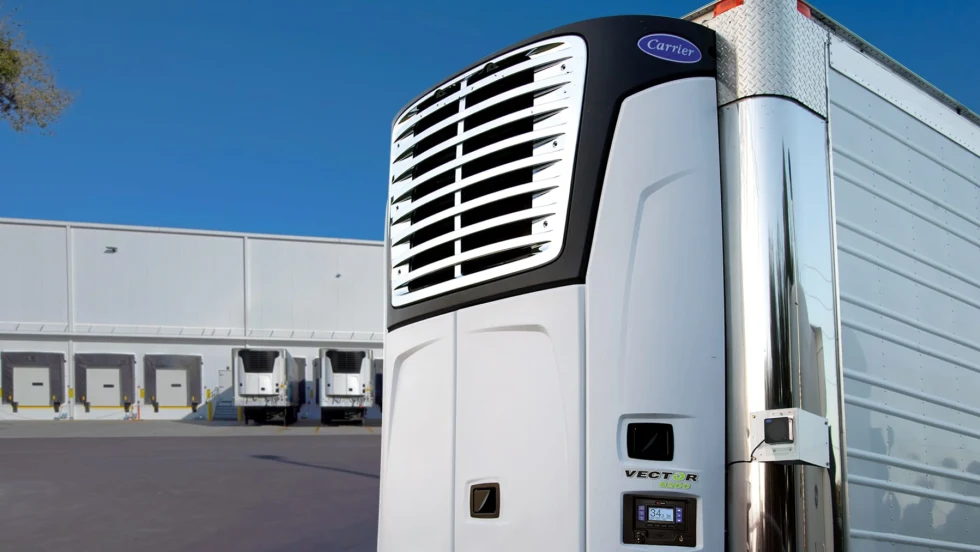
Carrier Transicold Adds All-Electric TRU for Stationary Cold Storage
Carrier Transicold’s new Vector 8200 all-electric transport refrigeration unit gives fleets a diesel-free option for temporary refrigerated and frozen trailer storage.
Read More →
A Closer Look at Kenworth’s Electric T880E Vocational Truck [Video]
Learn more about Kenworth's T880E battery-electric vocational truck at the Paccar Technical Center, including its range, applications, upfitting considerations, and PTO options, in this HDT Spotlight video.
Read More →