





Related: Q&A: Old Dominion Freight Line Exec on Scope, Scale, and Growth
Q&A: TransRisk's Craig Fuller on Creating a Trucking Futures Exchange
TransRisk founder and CEO Craig Fuller discusses the first regulated trucking futures exchange his startup is planning to launch.
July 26, 2017

Craig Fuller Photo: TransRisk
4 min to read

Craig FullerPhoto: TransRisk
Craig Fuller is the CEO and managing director of startup firm TransRisk. The Chattanooga-based tech firm aims to create the first regulated futures exchange based on trucking capacity. The startup venture was founded by Craig Fuller along with a group of transportation, financial technology, and trading exchange executives and it is backed by Hunt Technology Ventures LP.
Fuller is no stranger to trucking or entrepreneurialism. He previously launched two successful businesses that served long-haul operations. Xpress Direct, the surge capacity/on-demand provider of US Xpress, based pricing completely on a proprietary spot market business model. Transfund$/TransCard was a fleet card provider that offered fuel card payment services, combining GPS location and fraud analytics to prevent fuel-fraud; this business was sold to US Bank.
HDT: Can you tell us about the thinking behind setting up TransRisk to develop and launch a trucking futures exchange?
Fuller: Our idea is that a trucking-capacity futures exchange can address rate volatility, which is one of the most significant challenges in freight transportation today. Our exchange will list and trade contracts based on trucking linehaul rates. Shippers, carriers and brokers have no effective way to protect their market exposure on the volatility of spot market pricing. But by leveraging advanced technology to create an exchange to help mitigate the pricing risks, we’ll be able to enhance the way participants currently buy and sell trucking capacity.
HDT:Can you back up a bit and explain how a futures exchange, in general, operates?
Fuller: A futures exchange is a place to buy and sell contracts on some kind of commodity. What it amounts to is you are buying or selling a contract to take delivery of something in the future at a set price. The only difference [with TransRisk] is you do not take delivery of the product. You’re making a calculated guess on whether the [spot rate] price will go up or down. If the truck price goes down, you will lock in a hedge in case the price goes up. Or a shipper buying capacity would buy [capacity] contracts in specific lanes and lock in a future price. Freight futures have been traded in the maritime market and listed on exchanges around the world, such as London and Shanghai. Ours will be the first exchange in the world to focus on trucking freight. Hedgers could use the exchange to invest in capacity futures to avoid risk and protect against price shifts moving against them. And speculators could use it to accept risk and try to profit from price changes and create liquidity in the market.
HDT: Can you describe in more detail who might want to make use of a trucking futures exchange?
Fuller: Carriers, shippers, 3PLs and digitally enabled brokers all face the same challenge when it comes to volatile spot rates. They’re exposed to market conditions without viable hedging options to manage the price risk. Hedgers could use the exchange to invest in capacity futures to avoid risk and protect against price shifts moving against them. And speculators could use it to accept risk and try to profit from price changes and create liquidity in the market. It will provide a new way for participants to hedge their exposure on trucking rate volatility.
HDT: What impact is your exchange likely to have on the spot market?
Fuller: The spot market is a physical market. What we will be doing won’t change that. It will continue to operate as it always has— except that [once our exchange is in place] it will do so with a lot more transparency as to what is fair market pricing. You can maximize or minimize pricing based on date of delivery. So, there will be more structure and transparency to provide those in the market with a hedge. Technology enables people to obtain better information, including on pricing [in a market].
HDT: What data will drive the TransRisk exchange and when will you roll it out?
Our futures contracts will be settled using reference price data from DAT Solutions. We’ve formed a strategic alliance with DAT and the TransRisk exchange will list contracts that are financially settled using DAT’s data for major freight lanes in the U.S. We’ve been at this [developing the exchange] for over a year and we expect to have something in the market by August or September.
Topics:Fleet Management
Subscribe to Our Newsletter
More Fleet Management

Geotab Links Fleet Card to Vehicle Data
The new card combines fuel discounts with telematics-based purchase controls. Geotab’s analysis also points to potential savings from choosing lower-priced fuel stops.
Read More →
How MFA Helps Protect Trucking Fleets
Multi-factor authentication adds protection when passwords are stolen. Here’s how it works and where fleets should start.
Read More →
How Better Freight Data Helps Trucking Teams Get Ahead of Disruption
Trucking and logistics teams have plenty of data. The problem is getting the right information in front of the right people soon enough to act. Better-connected data can help teams spot trouble earlier and make smarter decisions before small problems become big ones.
Read More →

Trimble: Taking Artificial Intelligence in Trucking Beyond Faster Tasks
At Insight 2026, Trimble executives argued that fleets may need to redesign workflows to get more from AI as it introduced new products and enhancements. AI’s value will depend on how fleets combine automation with their people's knowledge.
Read More →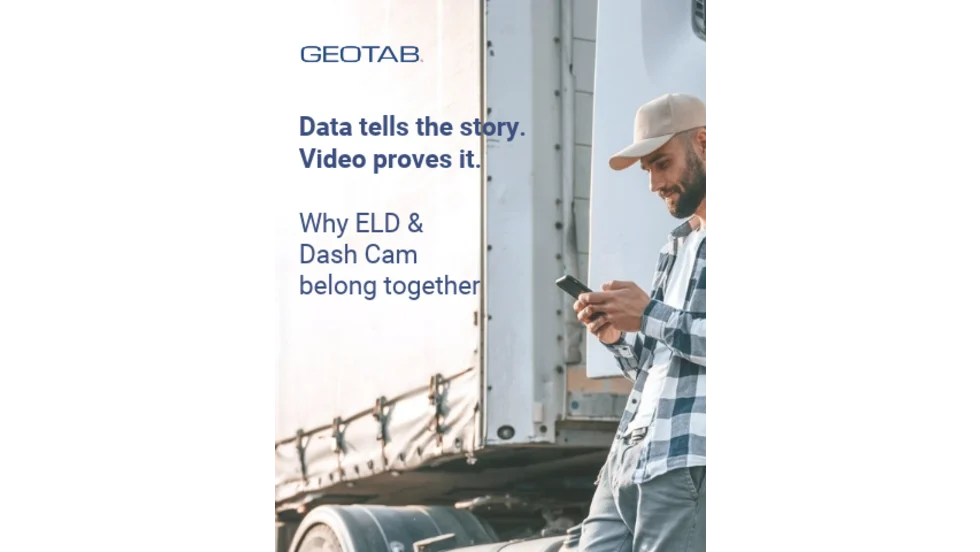
Sponsored•September 28, 2026
Build a bulletproof fleet: Uniting ELDs and dash cams for total compliance
An ELD can prove compliance, but it cannot always prove what happened on the road. Discover how uniting accurate ELD data with AI-powered dash cam video can help your fleet strengthen compliance, defend against liability, protect drivers and reduce operational costs.
Read More →
Nominations Open for HDT Emerging Leaders
Heavy Duty Trucking is looking for accomplished trucking fleet professionals under 40 who are making an impact and helping lead the industry forward.
Read More →
Why Private Fleets Are Taking More Freight
Private fleets are putting their own trucks on demanding customers and high-cost lanes as companies seek greater control over service, costs, and capacity.
Read More →
Sponsored•September 16, 2026
Color Match Smarter: Tools That Restore & Perform
For fleet managers and collision repair professionals keeping heavy-duty trucks on the road, getting the color right the first time isn't just about appearance — it's about efficiency, turnaround time, and bottom-line results. Discover how today's digital color tools are transforming the repair process from guesswork to precision.
Read More →
FMCSA Pauses Biennial-Update Enforcement Amid Motus Transition
Carriers whose updates were due on or after June 1 have more time, while FMCSA works to stabilize its new registration system and warns of phishing sites impersonating its new carrier registration system, Motus.
Read More →
Sponsored•September 14, 2026
2026 Blueprint for Countering Smarter Supply Chain Theft
Cargo theft is no longer just the cost of doing business. It's a multi-billion-dollar criminal enterprise exploiting vulnerabilities across your fleet, drivers, and supply chain.
Read More →