




Q&A: Scott Sutarik on Geotab and Telematics, Past and Future
Geotab recently surpassed 1 million subscribers. We spoke with Scott Sutarik, associate vice president, commercial vehicles, about the milestone, the history of Geotab, and how far telematics has come.

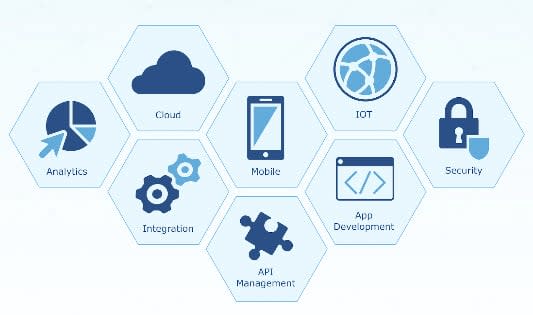
The Internet of Things, data security and data analytics will only get more important to the trucking industry as time goes on, Geotab believes.
Geotab recently surpassed 1 million subscribers. We spoke with Scott Sutarik, associate vice president, commercial vehicles, about the milestone, the history of Geotab, and how far telematics has come. (This interview has been lightly edited for length and clarity.)
HDT: Let’s start with what Geotab is and what it does.
Sutarik: We are a telematics company. We specialize in a variety of things, such as vehicle tracking, as well as pulling diagnostics data off the CANbus, accident reconstruction … One of the big things we talk about is our Geotab marketplace, our ecosystem where we have a variety of partners, such as TMS providers, cameras, tire pressure monitoring systems, temperature control monitoring for reefers, remote diagnostics – a whole host of different things. Data analytics is another piece, as well as data security – we spend a tremendous amount of time talking about security. And we’re an engineering company; we specialize in doing everything in house. We design and manufacture our own devices, our own software and APIs.
HDT: Tell us more about the Geotab marketplace.
Sutarik: Geotab has an open platform. All the data we pull from the device is exposed for the customer to pull as they see fit. A customer can consume the data in a variety of ways. The simplest way is to use Geotab’s MyGeotab software application. The customer can view their data and run reports. They also can bring the data in house and consume it in their back end architecture. And they can share that data with third parties to enrich the data and provide insight. There’s a host of different options in the marketplace. At the end of the day it’s about helping the customer expand the use of their data. If it’s being pushed into a maintenance system, maybe they can automatically create work orders in real time, or maybe it’s remote diagnostics, working with one of our OEM partners. They could integrate camera footage with the data Geotab provides. Geotab can’t be all things to all people, so we partner with the best providers.

Scott Sutarik, associate vice president, commercial vehicles for Geotab.
HDT: How is Geotab different from other telematics providers?
Sutarik: There’s a couple of things which we like to focus on. First and foremost is the open platform – the ability to pull the data and consume it in a variety of different ways is unique in the industry. It’s literally up to the customer to utilize that data in the way that makes the most sense for their fleet. You can use it in our software, or you can bring it into your back office or share with a third party.
The second is that our hardware is very simple. It’s a plug-and-play solution. Installation is 15-20 minutes max. Antennas are internally contained; there’s no need to slice into wires. The install is exceptionally easy. We also do all of our own design and manufacturing in house, so you’re getting something that’s controlled by Geotab from end to end, which allows for highest possible quality – and we do it at a very reasonable price point.
There’s a host of other things. The markeplace is by far one of the most expansive in the world for telematics providers. We also talk a lot about security. It’s not the most exciting, but Geotab is on the cutting edge of cybersecurity. We’re very entrained in the security community.
The other thing we like to spend a lot of time on is data analytics. Later this year you’re going to see some huge announcements with what we’re doing on data analytics. We currently have 15 people on the data analytics team, and later this year we’ll have north of 30.
We’re also a privately held company, where most of our competitors have been purchased recently or are up for sale.
HDT: Geotab recently surpassed 1 million subscribers. Tell us a bit about what that means.
Sutarik: From a Geotab standpoint, it’s a huge milestone. Only one other telematics provider I’m aware of that has over 1 million subscribers in the market.
HDT: Can you give us a feel for the types of fleet businesses using Geotab?
Sutarik: It really ranges from some of the largest companies in the world – our largest company over 80,000 units and our smallest is a one-person operation. [The product] scales very well and is very flexible. I have everything from Class 8 fleets to refuse fleets to concrete pumpers to automotive fleets. It really runs the gambit. We don’t have just one segment that we play in. We’re very broad when it comes to the applications and parts of the world we sell into.
HDT: We hear a lot about the Internet of Things. How does Geotab fit in?
From a Geotab standpoint, when we thing of the Internet of Things, we think about connecting the various parts of the truck or our partners to feed data back up to the cloud. It could be the engine, braking system, transmission, safety system, sensors, tire pressure monitoring. There’s all these types of applications out there that require all these various data points or sensors or integrations, and Geotab’s goal is to bring all that data together and push it up to the cloud and allow users to use that data. It’s all about connectivity to these various modules, something as small as a door open or as complicated as a man down feature in a remote workspace. It really depends on the application. It’s about integrating these various sensors, modules, truck bodies, and allowing that data to flow into the customer so they can improve their business.
HDT: Tell us about when Geotab launched – what did telematics mean then compared to now?
Sutarik: Geotab was found in 2000; in 2006 we came out with MyGeotab. Times have definitely changed. If you go back in time, back to the beginning, we had the Geotab checkmate, and everything was done at the end of the route. Essentially you had a way to offload the data through a device similar to a USB stick, that would get plugged into the terminal at the end of the day and wow, you had telematics. You fast forward, we added the Go5 device and the ability to do it wirelessly but still in the yard. I think in 2011 we added our first device that had a chipset for cellular connectivity, and that’s where things really started moving in a significant way from a telematics standpoint. We’ve really been growing at a significant clip in alrge part due to having that instant information that cellular connectivity allows. We’re on the Go8 already. Every couple of years we have a new product coming out. We standardize on a specific device, so we don’t have five or 10 devices. We have a standard device we utilize across all makes and models and all markets.
HDT: How has the electronic logging device mandate affected you?
Sutarik: 2017 was a record year, and that came from a variety of different parts of the business. Our Geotab Drive [ELD] business, we’re around 145,000 drivers today and that has obviously increased in many cases due to the mandate. We also have a lot of customers who were utilizing Geotab already but didn’t have ELDs, so they made the jump to the Geotab Drive platform.
HDT: How do you see that transition coming?
Sutarik: It’s definitely a journey, right? I always said this will have as significant an impact as deregulation did in the ‘80s. The way the driver interacts with the DOT and with their [carrier’s] back office, it’s changed so dramatically. We talk about wait times, detainment times, about loads that used to take three days but now it’s four, you talk about freight rates, driver retention, ability to recruit – all those things we’re seeing. I think after April 1 when actual enforcement starts going into effect, it’ll be very interesting to see where that goes.
HDT: What trends do you see affecting trucking and especially your part of the business over the next decade?
Sutarik: Two things. One is data analytics, being able to take the data and how do you leverage that to make your team more efficient in their decision-making. That’s going to be huge, machine learning, how do you apply that across your business. I think telematics has the ability to transform how customers look at their fleet in real time. And Geotab is investing heavily in data analytics.
The second one I believe strongly is going to be more and more important is the security aspect of it. Today it’s something that is talked about, but I think as we continue on over the next three to five years you’re going to see more and more news related to cyber security – what’s being done, what are best practices, who’s following them and who’s not – in short, how do I keep my data secure?
More Fleet Management

Color Match Smarter: Tools That Restore & Perform
For fleet managers and collision repair professionals keeping heavy-duty trucks on the road, getting the color right the first time isn't just about appearance — it's about efficiency, turnaround time, and bottom-line results. Discover how today's digital color tools are transforming the repair process from guesswork to precision.
Read More →
FMCSA Pauses Biennial-Update Enforcement Amid Motus Transition
Carriers whose updates were due on or after June 1 have more time, while FMCSA works to stabilize its new registration system and warns of phishing sites impersonating its new carrier registration system, Motus.
Read More →
2026 Blueprint for Countering Smarter Supply Chain Theft
Cargo theft is no longer just the cost of doing business. It's a multi-billion-dollar criminal enterprise exploiting vulnerabilities across your fleet, drivers, and supply chain.
Read More →


How Telematics Improves Visibility, Control, and Performance in Refrigerated Fleets
Explore how telematics help refrigerated fleets improve visibility, uptime, efficiency, compliance, and cargo protection across connected cold chain operations.
Read More →
What the U.S.-Canada Trade War Means for Trucking
Escalating U.S.-Canada tariffs could disrupt cross-border freight, reduce truck volumes, raise costs, and create new uncertainty for carriers on both sides of the border.
Read More →
What Are Trucking’s Top Concerns for 2026?
The American Transportation Research Institute wants to know what's worrying trucking fleet managers, drivers, and other stakeholders in its annual Industry Issues survey.
Read More →
American Trucking Associations Looks for a New Leader
ATA President and CEO Chris Spear abruptly left his job at the association on August 21, at a pivotal time for the trucking industry.
Read More →
Public Wi-Fi Cybersecurity Risks: How Truck Drivers and Fleets Can Protect Their Data
Public Wi-Fi can expose truck drivers and fleets to credential theft, malware, and other cyber threats. Here’s how to reduce the risk on the road.
Read More →
For Nicky Cupp, Fleet Innovation Starts With Frustration
HDT Truck Fleet Innovator Nicky Cupp turns everyday pain points at Fraley & Schilling into opportunities for better technology and smarter processes.
Read More →
Adam Buttgenbach’s Approach to Electric Trucks: Start With Where They Fit
HDT Truck Fleet Innovator Adam Buttgenbach helped PepsiCo build one of North America’s largest EV fleets by focusing on where electric trucks make operational sense.
Read More →