





"No one cares more about truck drivers getting home without incident than truck owners."
Q&A: ATA Chairman Pat Thomas on What's Ahead in Lobbying
Pat Thomas, senior vice president of State Government Affairs for UPS, and current chairman of the American Trucking Associations, speaks to HDT on the lobbying year ahead.
January 12, 2016
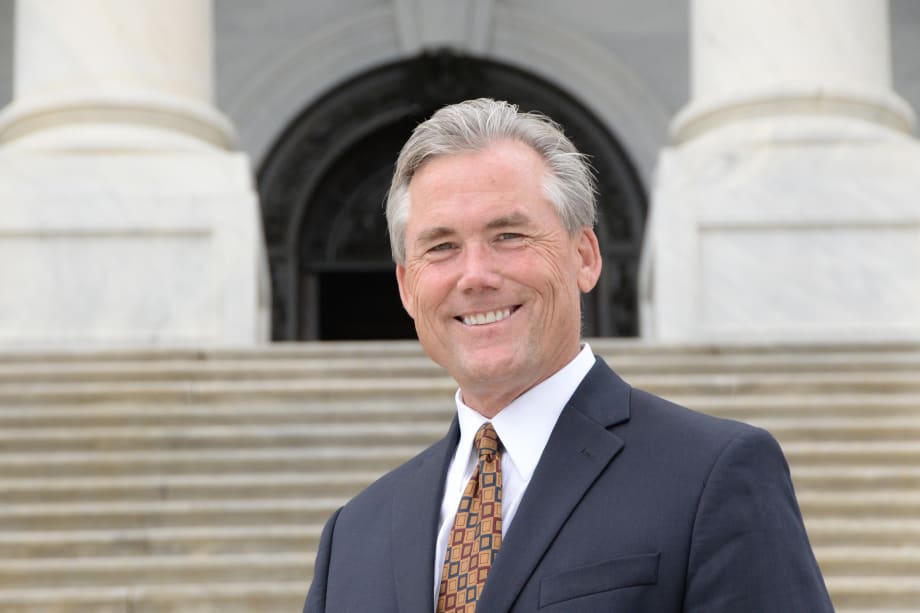
Photo: UPS
5 min to read
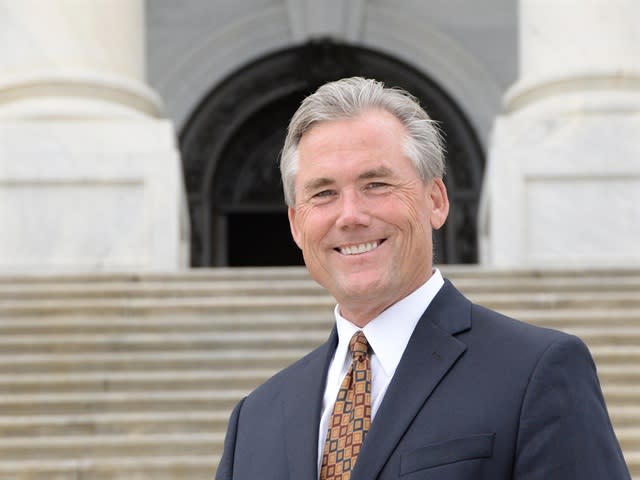
Photo: UPS
Pat Thomas, senior vice president of state government affairs for UPS, oversees all U.S. state legislative, regulatory and political activities for the package carrier. He directs a team of state and local public affairs managers across the country and is responsible for the UPS Congressional Awareness Program, a grassroots program that seeks to strengthen the company’s relationships with members of Congress in their home districts. Currently, Thomas also serves as chairman of the American Trucking Associations, the industry’s largest trade group.
Q: What’s your top priority as chairman of the American Trucking Associations in 2016?
A: I’m honored to be the first chairman from UPS and will work especially at spreading the word on what ATA and our industry does to keep improving safety, through equipment, training and technology. We want everyone to know that trucking spends $7 billion a year on safety. No one cares more about truck drivers getting home without incident than truck owners.
Q: What is business lobbying on the state level all about?
A: What happens in D.C. is important of course, but so is what goes on in the states. Our system of government encourages participation at every level. Fuel taxes, business taxes, etc. are also decided on by every state, so we need to participate [in lobbying] on a state-by-state basis.
Certainly, both in Washington and on the state level, trucking needs to secure additional funding for infrastructure. Our industry knows that will cost money. But we see the need — that spending is critical to the health of our economy. We now have a [long-term] highway bill, but most people agree that what we have in place for funding [roads] is not sustainable. The fuel tax is still viable. But the greatly improved fuel economy of cars has cut fuel use, so to keep getting the same amount of revenue from the tax, we have to raise it. That’s difficult to do politically in Washington. And that’s why we need to find the next system for highway funding — the one that will put us on a path to a sustainable future.
Q: What other policy areas will you be focusing on in 2016?
A: Although it should be an uneventful legislative year with the presidential election, we will continue to work on a number of items that need to be taken care of. We’re in the process of prioritizing those now. One will be to address the acceleration in regulatory activity, which we expect may continue as this [Obama] administration winds down. And we did not get all we wanted — no one ever does — in the highway bill, such as [nationwide operation of] twin 33 trailers. We will continue to support the increase in efficiency and productivity these would provide, without compromising safety.
Q: From your UPS vantage point, what drove the 2015 holiday shipping season?
A: What we’re seeing with holiday shipping is a compression in time. The shopping rush used to start in October. But now that window keeps tightening. As the year winds down, the volume starts climbing higher and faster. Online shopping is fueling this. It does create a challenge [for UPS] when shipments spike. But our people absorb it all.
Q: Drones seem to be landing everywhere. What’s the UPS take on the technology for package delivery?
A: It’s a fascinating concept and yes, UPS and folks like us, FedEx, etc., are taking a hard look at it. But there are still lots of practical hurdles, so don’t expect to get your Christmas presents delivered by drone next year. Then again, a lot of what we do today was not dreamed of 30 years ago. That’s what makes America great — people who think big. If drones do become a viable option, the front-runners in the industry will be flying them.
Q: I heard your career has afforded you both a bird’s eye and a ground level view of freight transportation. Can you relate how you got your start on the road to lobbying for UPS and the industry via ATA?
A: I’ve been around politics most of my life [His late father was Sen. Craig L. Thomas of Wyoming] and fairly early on became interested in transportation. I got my pilot’s license in high school. After college [a B.S. in Aviation Management from Southern Illinois University], I started doing corporate flying.
I found my way to UPS, more or less by fluke, in 1985. I started here like everyone else, in an entry-level position loading and delivery packages. We think that’s important because it provides the opportunity to learn the business form the ground up. Then employees can advance as they gain skills to reach their full potential. I spent my first 13 years on the operational side. It was sort of natural for me by 1998 to move into public and governmental affairs. For the last 13 years, I’ve been managing our government affairs activities on the state level.
Q: Was there any lesson from your early days at UPS that has stuck with you?
A: One of the things that struck me when I was driving a package car is how much UPS is relied on every day by small businesses. That’s really truly of the entire trucking industry— we’re the engine of the American economy. I’m still fascinated by the opportunities we create for customers through our efficiencies. As ATA’s chairman, I hope I can do all I can to help move the trucking industry forward.
Related: ATA Names UPS Exec its 71st Chairman
Subscribe to Our Newsletter
More Fleet Management

Why This Trucking Recovery Is Different
Freight demand remains sluggish, but rising costs and tougher enforcement have taken enough capacity out of the market to change the outlook for motor carriers.
Read More →
Platform Science Adds Dispatch and Safety Tools
Four additions to PS Fleet help fleets monitor loads, manage driver coaching, share truck locations and adjust video system settings.
Read More →
PrePass Intelligence Mines Fleet Bypass, Toll and Safety Data
PrePass Intelligence helps fleets measure bypass savings, flag potential toll overcharges, and spot suspicious transactions by combining data from separate systems.
Read More →
Motive Adds AI Agents for Fleet Operations
New tools automate follow-up on fleet data, from maintenance work orders to driver alerts, with two-way voice conversations planned for later this year.
Read More →
Can You Beat Our Trucking Trivia Challenge?
Test your truck knowledge with 19 trivia questions from Heavy Duty Trucking Exchange. Can you keep up with the fleet pros?
Read More →
BeyondTrucks Adds Rules Checks to Dispatch
New Compatibility Engine checks driver qualifications, equipment requirements and fleet policies before loads are dispatched.
Read More →
Diesel Prices Hijack Trucking’s Worry List
ATRI’s annual survey finds cautious optimism about freight, but diesel costs, litigation, and insurance continue to squeeze fleets. Drivers have different priorities on several issues.
Read More →
Nomination Deadline Extended for HDT Emerging Leaders
Just a few more days to nominate accomplished trucking fleet professionals under 40 who are making an impact and helping lead the industry forward for the HDT Emerging Leaders award. Deadline extended to October 20!
Read More →
What Will ATA’s New Leader Bring to Trucking's Table?
Incoming President and CEO Mark Colson’s record in Alabama offers clues about his priorities and approach following Chris Spear’s abrupt departure as the head of the American Trucking Associations.
Read More →
Volvo, Waabi Start Commercial Autonomous Operations in Texas
Volvo VNL Autonomous trucks, powered by the Waabi Driver, are hauling freight directly to third-party facilities for a customer in Texas.
Read More →