




Pickups Update: Sales Pick Up With Economic Recovery
The economy's coming back and so are sales of pickup trucks, as consumers, tradesmen and fleets resume ordering as their incomes and needs increase. Sales this spring are up sharply compared to last yea

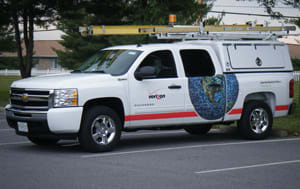
These hybrids are expected to get up to 21 mpg in the city.
The economy's coming back and so are sales of pickup trucks, as consumers, tradesmen and fleets resume ordering as their incomes and needs increase. Sales this spring are up sharply compared to last year
and seem to be climbing as the year progresses, along with the rest of the auto industry. Customers who need a vehicle with an open bed continue to buy them. But consumers have not forgotten the spike in fuel prices two years ago. Many of them realize they can't drive thirsty trucks simply because they want to, and have switched to more efficient automobiles for personal transportation.
With about 10 percent of the market, pickups remain the single biggest segment in the North American automotive business, manufacturers say. Pickups now constitute a 1-million-unit annual business, but that used to be 2 million a year. Even if sales don't return to that level, those sold will be more comfortable and capable than earlier models. Pickups are more car-like in their interior poshness and able to haul and tow more than ever. Even work trucks have more supportive seating and a nicer feel.
Recent styling is more aggressive and compelling, though black or gray plastic instead of chrome on base models loudly (if dully) proclaims the need for practicality rather than flashiness. However, trucks purchased for both work and personal use get higher trim levels, marketers explain, and company owners tend to treat themselves to fancy models.
In the Class 1 segment, fleets buy two-door regular-cab trucks with small V-6 and V-8 engines, mostly full-size trucks but also compacts. Tradesmen and consumers opt for extended- or crew-cab models with bigger power. Four-door crew cabs now grab half to two-thirds of sales, indicating that the majority of buyers want the greatest flexibility for professional or family hauling. Towing is important to many buyers, and advancements in electronic trailer-brake and anti-sway braking and dethrottling functions are now common.
Engine advances
Engines are stronger than ever, with big-displacement V-8s making close to 400 horsepower with torque to match. While hauling and towing capability are the most important considerations among buyers, fuel economy is now high on any desirability list. Manufacturers have improved engines with greater combustion efficiency by way of variable valve actuation and eight-to-four-to-eight-cylinder operation.
Better engines are paired with efficient new 5- and 6-speed automatic transmissions, and even 4-speed automatics work better than before. Manual transmissions have disappeared from most full-size pickups but are still offered on compacts. Such advances allow powertrains to achieve both higher performance and greater economy, and advertising touts both advantages.
Class 1 pickups get only gasoline engines, as diesels wait in the wings for greater prosperity and higher fuel prices that might make them more attractive. This reflects the fact that the majority of light trucks are bought by customers who don't run enough miles to make a diesel's higher upfront cost worthwhile. In heavier-duty pickups, however, up to 80 percent of sales include diesel engines.
Although ethanol has lost some of its sheen in the minds of consumers and politicians, it remains a viable alternative fuel. So manufacturers have given many gasoline engines and fuel systems Flex Fuel capability. Ethanol use is widespread in many parts of the country, with blends ranging from 5 or 10 to 85 percent (E85). Ethanol made from corn and other domestic crops displaces petroleum, especially that imported from the Mideast, and that makes America more self-sufficient and secure. However, many consumers grumble that fuel economy suffers because ethanol blends have less energy than straight gasoline.
Truck makers continue to emphasize large-displacement V-8s because consumers tell them they want performance. Indeed, few except the most frugal fleet buyers want anything but a V-8. So advances have been first applied to bigger engines and are only beginning to appear on smaller V-8s. Some explain that part of a small V-8's purpose is low price, and price-conscious customers won't pay for variable valve actuation and other complications. Still, manufacturers continue to study advanced small-displacement engines, preparing for the day when fuel prices spike again.
The pickup market
Chrysler, Ford and General Motors continue to offer the widest variety of pickup trucks, from compacts or mid-size to sub-medium-duty models with gasoline and, in "heavy-duty" models, diesel power. Nissan and Toyota still limit production to compacts and 1/2-ton full-size vehicles, while executives say they continue to study expansion to the 3/4-ton market. But they know the Big Three are solidly entrenched there and they'd face extreme competition.
Light-truck 1/2-ton products from all builders are carry-overs from 2009 and 2010 offerings, with minor changes to trim details and colors. That doesn't detract from their desirability and only indicates they are between product cycles that seem to be getting shorter. Manufacturers routinely introduce refinements and new platforms first on light trucks, then extend them to their heavier-duty pickups. So 3/4- and 1-ton trucks were more recently upgraded, and we'll cover them in a later issue.
Hybrids go to work
General Motors has gotten an order for 576 Two-Mode Hybrid pickups from Verizon, which will use them in urban areas to maintain its land-line communications network. The Chevrolet Silverado hybrids are expected to get up to 21 mpg in city running. They will replace full-size vans that now average 12 mpg, GM and Verizon officials say.
The pickups' beds will be fitted with lightweight fiberglass insert caps from Brand FX Body to house service equipment such as ladders, wiring, connectors and cable TV boxes. Like other GM hybrids, the units for Verizon are four-door crewcabs with 6-foot beds.
The two-mode system, developed with Chrysler and BMW, uses a sophisticated automatic transmission with two electric motors that generate electricity during braking and propel the truck during acceleration and cruising up to 30 mph. The system's Vortec 6-liter V-8 can operate in its more economical V-4 mode for extended periods. GM is now producing the system for use in full-size pickups.
Meanwhile, the U.S. Department of Energy has selected Chrysler for a grant of up to $48 million to build a total of 140 Ram Plug-in Hybrid Electric Vehicles for a three-year demonstration project. Private utility companies, government agencies and universities will test Ram PHEVs and provide data for advancement of electric-vehicle technology.
The Ram plug-in hybrid uses the 5.7-liter Hemi V-8 with the two-mode hybrid transmission and a 12-kilowatt-hour lithium-ion battery from Electrovaya Inc. The vehicle is capable of up to 20 miles of zero-emission, pure-electric range without the need for gasoline. An overall fuel economy improvement more than 65 percent is expected for average drive cycles.
The project is part of a $2.4 billion DOE Vehicle Electrification program funded through the American Recovery and Reinvestment Act promoted by the Obama Administration and passed by Congress last year. The goal is to power commercial vehicles with electricity generated with domestic fuels instead of imported petroleum.
Chrysler
Full-size pickups are now called Rams - a new brand from the New Chrysler - but still come from the Dodge Division and might be titled as Dodges (though that's not clear). Rams move into 2011 with the more aggressive styling and extensive improvements introduced in '09 for 1/2-ton 1500 models and 2010 for Heavy Duty versions. Ram 1500 continues with its unique coil-spring rear suspension, Ram Bed with in-wall storage compartments, and refined interiors for Regular, Quad and Crew Cabs. Engines still include the 4.7- and Hemi 5.7-l
More Equipment

How Volvo Updated Its D13 for EPA 2027 [Watch]
Volvo’s updated D13 promises lower emissions without sacrificing performance or fuel economy. Take a closer look at what changed inside the engine in this HDT Spotlight video.
Read More →
Michelin Tire Improves Efficiency and Durability for Regional Fleets
The Michelin X Multi Energy D2 is a regional haul drive tire engineered to help fleets improve fuel efficiency, durability and traction in demanding stop-and-go operations.
Read More →
ZF Expands Commercial Vehicle Push in North America
ZF is expanding its North American commercial-vehicle presence with new transmission applications, electrification, trailer technology and autonomous-driving systems.
Read More →
Tesla Wants a Self-Driving Semi. Are Cameras Enough?
Could Tesla’s camera-only autonomous driving technology work on an 80,000-pound Semi? In this commentary, HDT's Deborah Lockridge takes a look at Tesla, Cybercab, and how autonomous trucks see the road.
Read More →
Kodiak: Driverless Long-Haul Truck Launch on Track for 2026
Kodiak AI says its driverless long-haul safety case is 93% complete and it remains on track to begin commercial operations by year-end 2026.
Read More →
What DOT’s Automated Vehicle Strategy Means for Trucking
The U.S. Department of Transportation issued a new automated-vehicle strategy that outlines plans for driverless-truck regulations, cross-state freight corridors, and federal safety standards.
Read More →
East Coast Port Launches $45M Electric Truck Push
The Port Authority of New York and New Jersey announced millions in incentives for zero-emission drayage trucks, yard tractors, and new charging hubs near the port.
Read More →
PlusAI Going Public to Fund Autonomous Truck Launch
A SPAC deal could provide PlusAI with up to $300 million as it works toward a 2027 commercial launch of factory-built autonomous trucks.
Read More →
NHTSA Moves to Rewrite Truck Fuel-Economy Rules
The National Highway Traffic Safety Administration says it lacks authority to regulate medium- and heavy-duty truck engines separately from complete vehicles, but the existing standards have not yet been eliminated.
Read More →
Detroit Opens Orders for EPA 2027 Engines
Detroit isn’t starting from scratch to meet EPA 2027 diesel emissions standards. Its Gen 6 DD13 and DD15 engines keep much of today’s platform while updating the fuel and aftertreatment systems.
Read More →