




PG&E: Practicing What They Preach
Public utilities are in a precarious position. They must advise customers to be more prudent with their energy consumption; they also must set an example that their business operations are doing the same.
Public utilities are in a precarious position. They must advise customers to be more prudent with their energy consumption; they also must set an example that their business operations are doing the same.
In California, Pacific Gas and Electric knows this all too well. In order to expect their customers to engage in green practices, they must set an example where they do so in their own operations - and they're doing that in their fleet of commercial vehicles.
PG&E owns and operates some 918 natural gas vehicles, a tactic they started in the late 1980s. It also has 46 electric Chevy Volt electric vehicles on hand or on order, on top of another 561 other hybrid vehicles, and was one of the first to test diesel-electric hybrid utility service ("bucket") trucks. There are 1,547 biodiesel trucks and affiliated equipment, bringing PG&E's total green fleet assets to 3,072.
Fleet managers maintain the vehicles with "green" practices by keeping their service shops engaged in environmentally friendly practices and policies.
"Our internal fleet operation works diligently to ensure that we are as green as possible," says Dave Meisel, director for transportation and aviation services. "Conservation is the best term that I can think of. We do our best to minimize our facility footprint wherever possible, minimize chemicals that are harmful to the environment and utilize greener solutions whenever possible, utilize synthetic or recycled fluids in many applications, reduce waste streams, reduce energy consumption, and manage any air quality issues."
One of the ways it does that is with a retreading program. Until it started its tire program with Goodyear, the company never used a significant number of retreaded tires, a manufacturing process that saves about 15 gallons of oil as compared to a new tire.
"Our recap tire program is fairly simple," Meisel says. "We request that our field operation utilize recaps whenever possible and practical and that they order recaps as a first choice and new tires as a second. Savings is dependent upon the amount of tires purchased, and that can vary from year to year. But, we would expect that a fully utilized recap program will save PG&E $1 million to $2 million on an annual basis."
Buying Green Fleet Vehicles
Green vehicles must undergo a scrutiny of prudent purchasing practices before the buying decision is made, just like any vehicle in the fleet. "First and foremost, the vehicle must meet the needs of the operation," Meisel says. "If a vehicle, any vehicle, doesn't meet that hurdle, then we won't purchase it for our operating department.
"We look at the cost of the vehicle, not the price. Many times new technologies are more expensive on price alone, but in many cases they provide lower costs in other areas: operating costs, fuel costs, extended useful lives, and higher residual values that make them an attractive business decision."
To uncover those potential benefits, a number of people are involved in the discussions prior to buying any new technologies, he says.
"We engage our business finance team for long-term capital planning, our client organizations for operating input, and our regulatory team from a rate case perspective."
ROI and beyond
For PG&E, the shift to energy-efficient vehicles has afforded a definite return on their investment. "Each of the technologies that we have in place offer different benefits, opportunities and challenges," Meisel explains. To date, he says, the product that has offered the greatest ROI is the hybrid system from Eaton used on the bucket trucks.
"We expect this system to have a payback of less than four years from purely a financial viewpoint, but they also provide an series of additional benefits that are not calculated in the payback calculation, such as improved safety."
For instance, he explains, operators can now communicate at height in a normal voice without trying to communicate over the drone of the unit. There are improved emissions from being able to operate the aerial device in an "engine off" scenario. And the system offers extended workday capabilities for crews in noise-restricted areas."
PG&E's analysis of ROI begins early on in their decision-making process in making fleet purchases. But other factors are also considered, such as safety, emissions, and the ability to reduce operating costs in other parts of the company outside of the fleet organization.
"ROI is less of a factor if we are only purchasing a single test unit or a small group of demonstration units. We have statistics on each type of alternate fuel technology we buy."
Green Challenges
Building a green fleet has posed some challenges. "The greatest challenge is working with suppliers to develop and deploy a new technology," Meisel says. "Most of our suppliers are great to work with, but new technologies provide a lot of challenges for both sides of the equation. The suppliers generally have initial cost and durability challenges because the technology is new, and sales volumes and supply chain efficiencies have not had the opportunity to impact the overall unit costs at this stage of the process. Because they are new, each technology is an unproven commodity in an operational sense. At some point in the process, any new technology has to be placed into a work situation in the field, and this is where we see the greatest challenge."
Also to be considered is the company's ability to support the technology in its field operation. Can they support it with the internal fleet maintenance operation, or does it need to be supported by the manufacturer? If it does need to be supported by the manufacturer, does that manufacturer have the ability to service a company the size of PG&E?
"We don't generally have too many issues servicing and maintaining a green fleet," Meisel says. "We are primarily an internal fleet maintenance organization and we have some of the most talented technicians around. They love the new technology and love to learn how to work on it."
Moving forward
Meisel says there are some common misunderstandings about operating a green fleet in today's world.
"From my perspective, the greatest misunderstanding is the pace of change in the world of technology," Meisel says. "Many fleet managers are waiting for the pace to slow down so they can evaluate their options and try to build a solid, forward looking plan. But the pace isn't slowing down at all. It's accelerating. There are so many companies working on so many technologies right now, if a fleet manager waits for things to slow down before building their plan, he/she might have a long wait."
Meisel recommends fleet managers do their own research or talk to those who have already done the research and move forward. Each fleet is different to a certain extent and each solution needs to be tailored to each of those fleets.
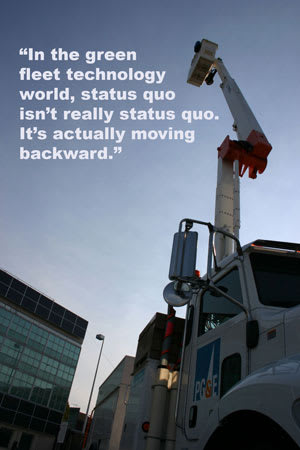
"But, all things considered, technology only moves in one direction ... away from us. The only way to catch up to the technology curve is to start moving towards it. In the green fleet technology world, status quo isn't really status quo. It's actually moving backward."
Technology that didn't make sense a few years ago might make sense now or in a few years from now, Meisel says. "Keep an open mind and continue to look at cost versus price. Some of the technology coming out has the ability to lower emissions and overall costs even though the initial price might be a bit higher. We have improved our overall cost structure and our internal levels of both client and employee satisfaction while drastically increasing the size of our green fleet. We are proof that it can be done."
From the March 2011 issue of Heavy Duty Trucking magazine. Jim Romeo is a freelance writer based in Chesapeake, Virginia. He focuses on business and technology topics.
More Fuel Smarts

Record Diesel Prices Squeeze Trucking Fleets
Average U.S. diesel prices have climbed to nearly $6 a gallon, surpassing the 2022 record as tight refinery capacity and Middle East disruptions keep fuel costs elevated.
Read More →
How Fuel Delivery Shapes Engine Performance
Fuel delivery depends on more than what happens at the injector. For fleet, maintenance and technical professionals, looking at the full path from pump to injector can provide useful context for understanding engine performance.
Read More →
East Coast Port Launches $45M Electric Truck Push
The Port Authority of New York and New Jersey announced millions in incentives for zero-emission drayage trucks, yard tractors, and new charging hubs near the port.
Read More →

California Bill Could Shed Light on Electric Truck Prices
Why do battery-electric Class 8 trucks remain so expensive? A California bill headed to Gov. Gavin Newsom would give fleets and state agencies more visibility into what manufacturers charge.
Read More →
Detroit Opens Orders for EPA 2027 Engines
Detroit isn’t starting from scratch to meet EPA 2027 diesel emissions standards. Its Gen 6 DD13 and DD15 engines keep much of today’s platform while updating the fuel and aftertreatment systems.
Read More →
Zero-Emission Truck Corridor Planned for West Coast
California, Oregon, Washington, British Columbia and Baja California are coordinating plans for truck charging and hydrogen fueling from Canada to Mexico.
Read More →
A Closer Look at Kenworth’s Electric T880E Vocational Truck [Video]
Learn more about Kenworth's T880E battery-electric vocational truck at the Paccar Technical Center, including its range, applications, upfitting considerations, and PTO options, in this HDT Spotlight video.
Read More →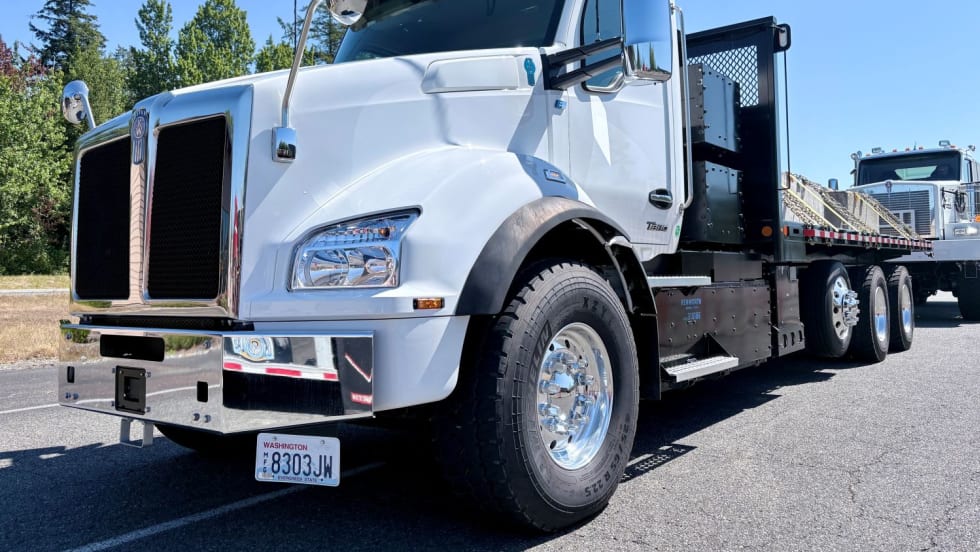
Kenworth T880E Brings EV Power to Vocational Trucks
A closer look at the Kenworth T880E’s range, charging, powertrain and upfit options — and where fleets are showing the most interest.
Read More →
Jennie Abarca Is Proving Electric Trucks Can Do the Job
HDT Truck Fleet Innovator Jennie Abarca is building confidence in fleet electrification one load at a time while openly sharing the challenges she encounters along the way as a small-fleet owner.
Read More →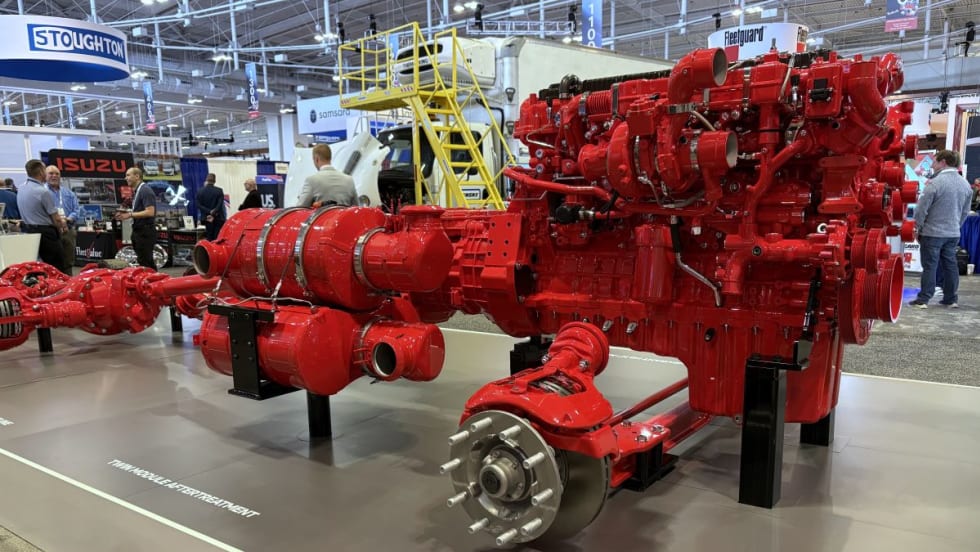
Cummins Adjusts 2027 Engine Rollout After EPA Proposal
The engine maker will gradually introduce its new Model Year 2027 diesel engines while continuing to offer current models during the transition, citing the EPA's proposed emissions rule changes.
Read More →