




Opportunities in Natural Gas
Is natural gas truly the fuel of the future, or is it just an overhyped niche? That's what many wondered in the wake of March's Mid-America Trucking Show, where it seemed nearly every press conference and OE booth had something to say about it.


Is natural gas truly the fuel of the future, or is it just an overhyped niche? That's what many wondered in the wake of March's Mid-America Trucking Show, where it seemed nearly every press conference and OE booth had something to say about it.
Navistar even had natural-gas-guru T. Boone Pickens himself on hand for a special event the night before the show opened.
Cummins announced it's developing a 15-liter heavy-duty, spark-ignited natural gas engine for on-highway applications, to be in limited production by 2014. The move builds on the recent decision to produce a factory-built, dedicated natural gas version of the 12-liter ISX engine, the ISX12, starting next year.
Volvo added a natural-gas fueled truck to its VNL lineup featuring the Cummins Westport ISX12 G, and Kenworth also is offering the engine, which can be spec'd to use compressed or liquefied natural gas.
Navistar's new LoadStar severe-service low-cab-forward will have a Cummins ISL-G natural gas engine as a power option. Chevron even introduced a premium oil for natural gas engines.
Some fleets are "true believers" when it comes to the promise of natural gas, both CNG and LNG. The latter is better suited to longer-haul operations, but fueling stations are more expensive.
Bill Malone, president of Enviro Express in Bridgeport, Conn., has 19 trucks powered by natural gas and plans to convert his entire 40-truck fleet. Not only is he buying natural-gas-powered trucks, but he's also opened the first LNG fueling facility east of the Mississippi River. Located near Interstate 95, it's open to other transportation customers and also sells CNG.
Swift Transportation has three different natural gas test projects under way, including the Cummins 8.9-liter, a Cummins 11.9-liter and a hybrid engine that mixes CNG and diesel.
"We really believe that natural gas is a thing of the future," Swift CEO Jerry Moyes recently said in an interview, pointing out that higher-powered engines are on the horizon. "We really think that this industry over the next five years could be close to 50% natural gas."
There's no denying the fueling infrastructure is expanding, and natural gas trucks are becoming more common, especially in applications such as utilities and refuse where trucks return to a central fueling facility each night. We're also seeing more interest from fleets operating regionally, especially for dedicated-fleet operations.
However, not everyone is as optimistic as Moyes. In an address to suppliers at the Mid-America Trucking Show, Dan Sobic,
Paccar executive vice president, said there are about 5,000 locations that serve diesel fuel in North America. There are only about 1,000 that offer CNG or LNG, with LNG being about 150 of that total.
"The market today, best estimate is 8,000 trucks," he said. "That is still a small piece. I think the infrastructure has to continue to be developed, and secondly, [we need to address] the upfront costs, whether it's through incentives or other means." Paccar brands Kenworth and Peterbilt both offer natural gas trucks, but Sobic believes, "diesel fuel will still power trucks because it is the most efficient way to move trucks around."
Nevertheless, in a Frost & Sullivan survey of fleet managers, 54% said they would consider compressed natural gas as an advanced powertrain technology. Only 30% said they would not consider it at all.
Like any other trucks, natural gas vehicles will need parts and service. There also are some retrofit opportunities, especially for dual-fuel systems. Even if natural gas is a niche, it's a growing one, and it's a niche aftermarket parts and service providers should investigate to see how it might benefit their businesses.
From the April/May 2012 issue of HDAJ
More Fuel Smarts

Record Diesel Prices Squeeze Trucking Fleets
Average U.S. diesel prices have climbed to nearly $6 a gallon, surpassing the 2022 record as tight refinery capacity and Middle East disruptions keep fuel costs elevated.
Read More →
How Fuel Delivery Shapes Engine Performance
Fuel delivery depends on more than what happens at the injector. For fleet, maintenance and technical professionals, looking at the full path from pump to injector can provide useful context for understanding engine performance.
Read More →
East Coast Port Launches $45M Electric Truck Push
The Port Authority of New York and New Jersey announced millions in incentives for zero-emission drayage trucks, yard tractors, and new charging hubs near the port.
Read More →

California Bill Could Shed Light on Electric Truck Prices
Why do battery-electric Class 8 trucks remain so expensive? A California bill headed to Gov. Gavin Newsom would give fleets and state agencies more visibility into what manufacturers charge.
Read More →
Detroit Opens Orders for EPA 2027 Engines
Detroit isn’t starting from scratch to meet EPA 2027 diesel emissions standards. Its Gen 6 DD13 and DD15 engines keep much of today’s platform while updating the fuel and aftertreatment systems.
Read More →
Zero-Emission Truck Corridor Planned for West Coast
California, Oregon, Washington, British Columbia and Baja California are coordinating plans for truck charging and hydrogen fueling from Canada to Mexico.
Read More →
A Closer Look at Kenworth’s Electric T880E Vocational Truck [Video]
Learn more about Kenworth's T880E battery-electric vocational truck at the Paccar Technical Center, including its range, applications, upfitting considerations, and PTO options, in this HDT Spotlight video.
Read More →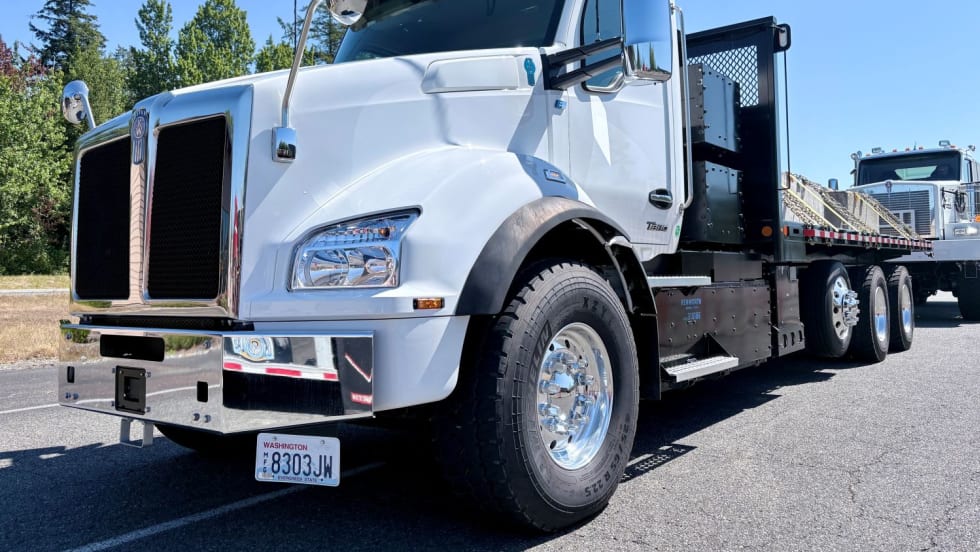
Kenworth T880E Brings EV Power to Vocational Trucks
A closer look at the Kenworth T880E’s range, charging, powertrain and upfit options — and where fleets are showing the most interest.
Read More →
Jennie Abarca Is Proving Electric Trucks Can Do the Job
HDT Truck Fleet Innovator Jennie Abarca is building confidence in fleet electrification one load at a time while openly sharing the challenges she encounters along the way as a small-fleet owner.
Read More →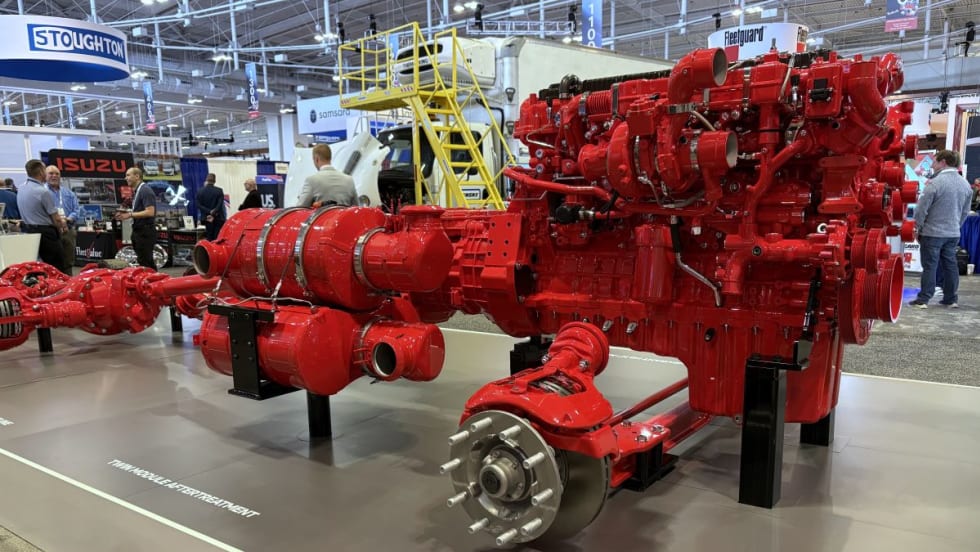
Cummins Adjusts 2027 Engine Rollout After EPA Proposal
The engine maker will gradually introduce its new Model Year 2027 diesel engines while continuing to offer current models during the transition, citing the EPA's proposed emissions rule changes.
Read More →