




One Fleet’s ‘Obsession’ With Driver Happiness
Trucking startup aifleet is taking a new, tech-centric approach to slashing dwell time, getting drivers home, and bringing in revenue.

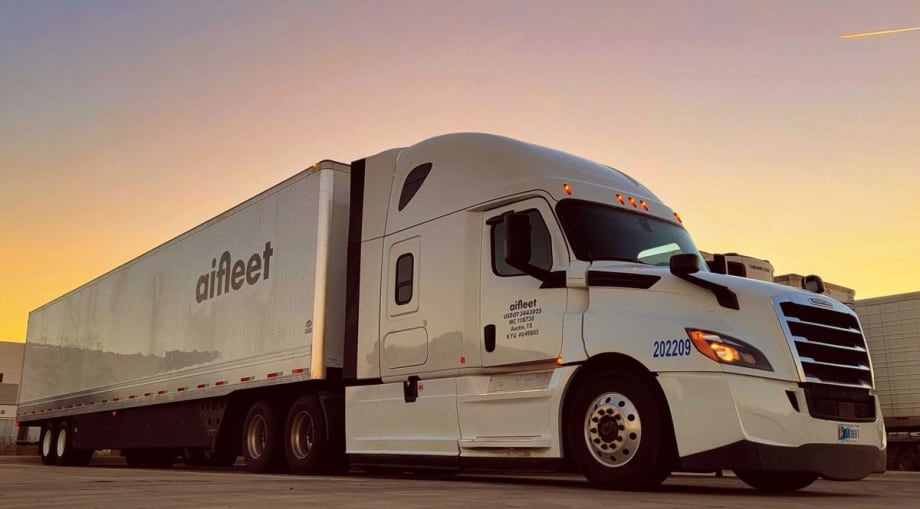
Drivers are at the center of how aifleet operates.
Photo: aifleet
Marc El Khoury contends that there’s not really a truck driver shortage. The problem, he says, is the traditional trucking model is terribly inefficient — but it doesn’t have to be.
Working in the trucking industry as a consultant, El Khoury grew convinced he could create a different kind of fleet model. He and programmer Mark Farkas, who had similar experiences in Europe, co-founded aifleet, which uses artificial intelligence technology to streamline operations and improve pain points for drivers.
“A lot of [fleets’] inability to grow was not really driven by the driver shortage — these companies are hiring literally thousands of drivers a year — it's the inability to retain drivers,” he explains. “We saw that driver utilization was 50% or below, meaning out of the 11 hours, they drove maybe five hours a day. And we tried to see, how can technology really help this problem?”
He and his co-founder, frustrated by an industry slow to adopt the kind of technology they envisioned, decided to create a trucking company from the ground up. Aifleet launched in late 2020, and a year later raised $21 million in funding.
Booking Loads Around the Driver
They designed a proprietary algorithm that looks at millions of available loads a day and books and prices loads based on what fits the drivers best and will maximize hours of service and utilization.
The system books more than a single load at a time, creating a route where a driver will be able to go from load to load with minimal downtime. (The human dispatch team reviews the assignments for final approval.)
“A driver should never have to call their dispatcher and say, ‘I’m waiting for my next load,’” El Khoury says. “That next load should always be assigned to the driver before they are fully empty.” That means less frustration for the driver, and more revenue for both the company and the driver’s paycheck.
“We basically book the route of the driver from the day they leave home on Monday through the day they’re back home on Friday night. We move heaven and earth to make sure the driver is at home every single week.”
This asset-optimization software generates significantly more revenue per truck, El Khoury says. This lets AI Fleet pay over-the-road truck drivers more than 50% above typical rates while guaranteeing them more home time.
Drivers are paid a minimum guaranteed salary every week. AI Fleet provides its drivers with free medical, dental, vision, short- and long-term disability, and life insurance benefits. It pays for parking when they’re on the road. On top of the salary, drivers get incentive pay every week that is based on the revenue the truck generates. “So it's a very different business model for company drivers.”
El Khoury points out that a major pain point for truckers is uncertainty about how much money they will make each week. Each Friday, drivers get a check for the minimum, and then on Monday they get their incentive pay.
Prospective drivers have been skeptical, thinking it’s too good to be true. But with some two-thirds of its hires being referrals, that’s becoming less of a problem.
AI Solutions in Trucking Sometimes Seem Counterintuitive
It’s not just drivers who have a hard time getting their arms around such as different approach to driver pay. El Khoury says the technology often provides solutions that seem counter-intuitive to longtime trucking veterans.
“When you utilize technology that has never existed in the industry, the results you’re going to get are not always going to be intuitive,” he explains. “It’s sometimes going to tell you to do things that you thought go against profitable trucking.”
For instance, the algorithm says it’s OK to deadhead more than 100 miles occasionally if it’s going to get the driver and truck out of a bad market and on to the next load, instead of “waiting for that one good load that you may or may not get.”
For aifleet, the metric that matters is revenue per week, not rate per mile — and high-tech algorithms or not, El Khoury believes that’s something all fleets should think about.
“There is really no one good load, there’s really no one bad load; there’s a good week and a bad week. And a good week usually has a few bad loads to get you to the overall profitable week. That is something that goes against what we all learn when we started into trucking and [are] obsessed with rate per mile for all loads, versus looking at it as, ‘What is the driver journey like?’”
In addition to better optimization, by focusing on drivers, paying them more and treating them like the valuable revenue-generators they are, the company saves money with its low driver turnover (about 11%).
“It’s very important to truly assess the ins and out of your driver turnover cost,” El Khoury says. “Because what you’ll find is, it is actually so high,” that if you divert some of the money you’re spending on recruiting into the pockets of the drivers themselves, they’re more likely to stay. Reduced turnover means less spending is needed on recruiting. “It becomes a win-win proposition.”
Spot vs. Contract Freight
AI Fleet’s algorithm primarily uses the spot market, which of course was on a tear for most of 2021. Now, however, it’s softening.
“So far, our technology continues showing that even with a continued softening, we’ll be able to continue generating the target revenue per truck per week,” he says. “Our technology is efficient enough that it’s able to keep finding the route that allows us to maximize our revenue and maximize our driver pay.”
However, he says, eventually there will be an effect on the revenue that is shared with drivers through their incentive pay, and that’s going to require some education.
“We started in a much lower rate environment, with a handful of drivers,” he says. “And even though they're still with us, many of the drivers who have joined us have joined us over the last year when the market has been relatively crazy high.”
While drivers’ incentive pay may drop with the spot market, El Khoury says the company is committed to never going below its guaranteed minimum salary. In fact, with high inflation, the company has been evaluating whether that minimum needs to be raised.
He’s hesitant to get into too much contract freight because it lessens the flexibility of the algorithm and doesn’t offer much ability to control dwell times.
“There's a lot that comes with contracts that we feel comes at a very substantial cost of revenue per truck per week,” he says. “You might win much more on the margin on the rate per mile itself. But you might lose in terms of the overall revenue per truck per week. And so that’s why right now, we're going to continue, at least for another year, focused almost entirely on the spot market.”
Aifleet's Growth Strategies
AI Fleet started officially as a motor carrier in November of 2020, and since then has grown to about 60 drivers. The company’s goal is to have more than 100 by the end of the year.
One of its biggest barriers to growth has been the same equipment issue facing the rest of the industry.
“Part of being obsessed with driver satisfaction means getting them not just any equipment, but good equipment that we can be proud of,” El Khoury says. “And today that flow of equipment is relatively slow.”
AIFleet is primarily leasing its trucks, but eventually hopes to buy. It demands relatively new, fuel-efficient, low-emissions equipment, with premium driver packages and auxiliary power units. Leasing has helped it conserve capital, he says, but buying would mean lower costs over the long term. The company may look at the acquisition of smaller fleets to help it meet its growth goals.
And aifleet is not resting on its laurels. There’s much more of fleet operations that can be improved through technology.
“We continue building unique technology to optimize the freight and automate the back office activities so that we can truly build a technology-enabled trucking company, so we’re still very early on in our journey.”
More Fleet Management

Color Match Smarter: Tools That Restore & Perform
For fleet managers and collision repair professionals keeping heavy-duty trucks on the road, getting the color right the first time isn't just about appearance — it's about efficiency, turnaround time, and bottom-line results. Discover how today's digital color tools are transforming the repair process from guesswork to precision.
Read More →
FMCSA Pauses Biennial-Update Enforcement Amid Motus Transition
Carriers whose updates were due on or after June 1 have more time, while FMCSA works to stabilize its new registration system and warns of phishing sites impersonating its new carrier registration system, Motus.
Read More →
2026 Blueprint for Countering Smarter Supply Chain Theft
Cargo theft is no longer just the cost of doing business. It's a multi-billion-dollar criminal enterprise exploiting vulnerabilities across your fleet, drivers, and supply chain.
Read More →


How Telematics Improves Visibility, Control, and Performance in Refrigerated Fleets
Explore how telematics help refrigerated fleets improve visibility, uptime, efficiency, compliance, and cargo protection across connected cold chain operations.
Read More →
What the U.S.-Canada Trade War Means for Trucking
Escalating U.S.-Canada tariffs could disrupt cross-border freight, reduce truck volumes, raise costs, and create new uncertainty for carriers on both sides of the border.
Read More →
What Are Trucking’s Top Concerns for 2026?
The American Transportation Research Institute wants to know what's worrying trucking fleet managers, drivers, and other stakeholders in its annual Industry Issues survey.
Read More →
American Trucking Associations Looks for a New Leader
ATA President and CEO Chris Spear abruptly left his job at the association on August 21, at a pivotal time for the trucking industry.
Read More →
Public Wi-Fi Cybersecurity Risks: How Truck Drivers and Fleets Can Protect Their Data
Public Wi-Fi can expose truck drivers and fleets to credential theft, malware, and other cyber threats. Here’s how to reduce the risk on the road.
Read More →
For Nicky Cupp, Fleet Innovation Starts With Frustration
HDT Truck Fleet Innovator Nicky Cupp turns everyday pain points at Fraley & Schilling into opportunities for better technology and smarter processes.
Read More →
Adam Buttgenbach’s Approach to Electric Trucks: Start With Where They Fit
HDT Truck Fleet Innovator Adam Buttgenbach helped PepsiCo build one of North America’s largest EV fleets by focusing on where electric trucks make operational sense.
Read More →