




On-And-Off Engine Patterns Can Be Hard on Oil
Fleets that do city deliveries are increasingly turning vehicles off during deliveries rather than letting them idle. While this saves fuel and cuts emissions, and in many cases conforms with local regulations, Chevron warns that it could be affecting your engine oil.


The engine off/engine on pattern of city deliveries can be hard on the oil. Photo: Deborah Lockridge

The engine off/engine on pattern of city deliveries can be hard on the oil.Photo: Deborah Lockridge
Fleets that do city deliveries are increasingly turning vehicles off during deliveries rather than letting them idle. While this saves fuel and cuts emissions, and in many cases conforms with local regulations, Chevron warns that it could be affecting your engine oil.
Chevron representatives say they have been seeing an increase in severe-duty operations due to these changing driving patterns, and they're not sure whether fleets and drivers are considering what this might mean to their maintenance practices.
"Customers say, 'I thought as long as I buy a premium oil I'll be in good shape,'" explains Jim Gambill, Delo brand manager. Of course, he says, Chevron agrees that buying a premium oil is an important step, "but we want to get a little more specific about those implications and what customers should look for."
So Chevron researched the issue, running an engine through stop-and-start cycles emulating this city delivery pattern at the independent Southwest Research Institute in San Antonio, Texas.
It found that there's a nearly 30% increase in engine temperature when you turn off the engine, then start it back up. "It doesn't last long, but it pops up and then drops. With that increase in temperature every time you turn the engine off and on, you can actually shorten your oil life by as much as 20%," Gambill says.
The rule of thumb is that each 10-degree increase in engine temperature can cut oil life in half.
That's because heat increases the rate of oxidation in the oil. When oil oxidizes, it forms acids. At one time, Gambill explains, those acids were all caused by the combustion process. But changes in engines and oil formulations mean that now as oil degrades, it forms acids. And you have to manage those. If you don't, taken to an extreme, those acids can cause corrosive wear in the engine.
In more practical terms, what it may mean is a change in oil drain intervals or oil formulation.
"We're seeing people are changing the way they use the truck but not changing things like the drain interval," Gambill says.
Oil analysis is important here, and Chevron recommends looking at TAN (total acid number) as well as the more traditional TBN (total base number.) TBN measures the ability of an oil to neutralize the acid, while TAN is the actual measure of that acid in the oil.
"Your TBN might be fine, but if you're building up acids, that's not a good thing," Gambill says.
So in addition to using a premium oil that's able to stand up to those acids, he says, you might have to reduce your drain intervals.
Gambill says to be aware the the OEM recommended oil drain intervals may not be right on target in this case.
"OEM recommendations often vary based on fuel usage," he says. "In severe duty, you have more fuel consumption than normal service. But in this case, you're turning the engine off and on to save fuel, you're cutting fuel consumption, but it's actually more severe. It's a little harder on your oil."
In addition, the timing on turning off the engine can make a difference because of something called heat soak. You need to idle down your turbocharger before shutting the engine town. Turbo bearings are by far the hottest in the engine, Gambill explains. So if you just turn the engine off immediately after stopping, and let the oil sit in these very hot bearings, you may "cook" the oil.
Most OEMs, he says, recommend one to three minutes of idling before shut-off. Most fleets have engines programmed to shut off after three to five minutes, but make sure drivers know about the need to idle down the turbocharger so they don't prematurely turn the switch.
So look at your specific situation, do oil analysis, and talk to the OEM and oil provider to see if you need to make any changes in your oil spec or your drain intervals.
More Maintenance
Oil Crisis Squeezes Trucking Lubricant Supplies
Fleets report higher lubricant costs as Middle East disruptions tighten supplies of ingredients used in synthetic engine oils and some driveline lubricants.
Read More →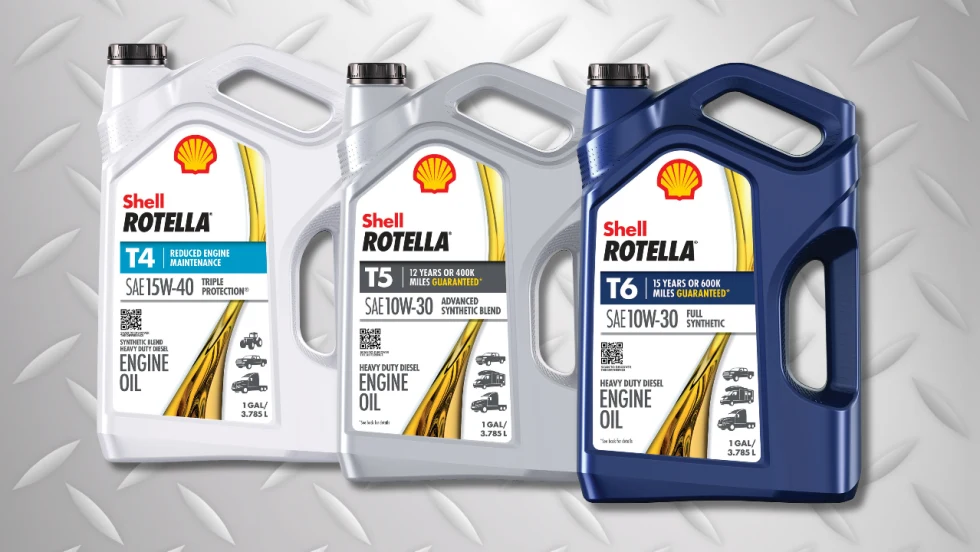
Shell Prepares Rotella Oils for 2027
New CL-4 and FB-4 formulations will begin arriving in early 2027, with improved protection against oil breakdown, wear and deposits, according to Shell.
Read More →
Mack Expands Extended Coverage With Four Chassis System Plans
Mack Trucks' new system-specific coverage options allow heavy-duty fleets to select protection for driveline, cab, HVAC, electronics, and advanced safety components.
Read More →
What an Out-of-Service Order Really Costs, and How to Plan for One
The repair invoice is the first number you see — and often one of the smallest. Here’s what else an out-of-service order can cost a fleet, and how planning can reduce the damage.
Read More →
International Launches Online Truck Parts Store
Fleetrite.com lets fleets and repair shops find OEM and all-makes parts, check prices and availability, and order without calling a parts counter.
Read More →
Continental Introduces New Regional Truck Tires
Continental says its new Generation 5 steer and drive tires for regional operations offer longer tread life, with estimated mileage gains of 22% and 19%, respectively.
Read More →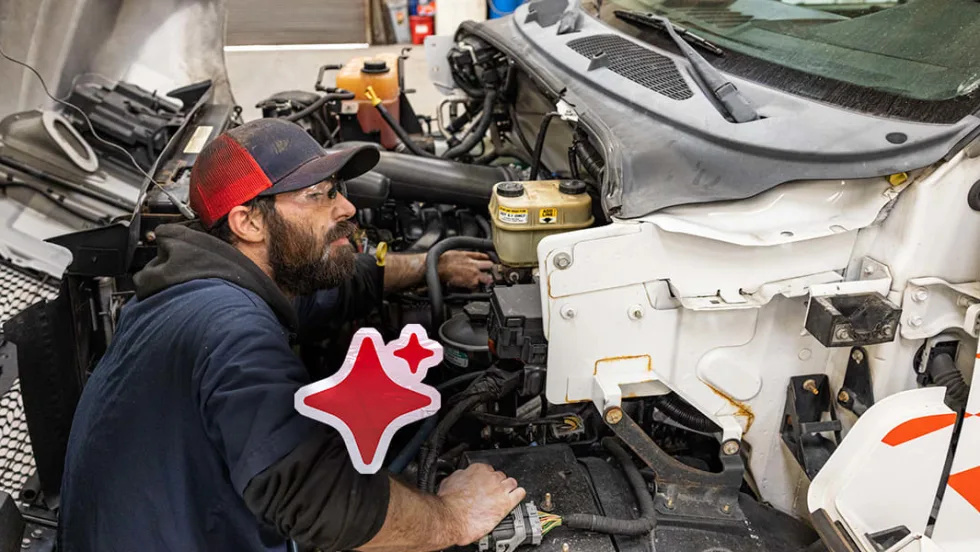
How AI Can Help Your Techs’ Efficiency
The technician shortage isn't going away, and no single fix can close the gap on its own. Trent Broberg makes the case that AI's real job in the shop is protecting the billable hours and job satisfaction of the techs you already have, not asking them to work faster.
Read More →
Color Match Smarter: Tools That Restore & Perform
For fleet managers and collision repair professionals keeping heavy-duty trucks on the road, getting the color right the first time isn't just about appearance — it's about efficiency, turnaround time, and bottom-line results. Discover how today's digital color tools are transforming the repair process from guesswork to precision.
Read More →
Wrong Repair Prompts Recall of Freightliner, Western Star 4x2 Trucks
DTNA is recalling more than 2,400 trucks that received an incompatible software fix instead of the hardware repair required to address brake valve corrosion.
Read More →
Truck Drivers Need More Than Another Alert
Fleets have more visibility into truck health, safety events, and driver activity than ever. The next challenge is turning all that information into useful guidance for the person who has to decide what to do next.
Read More →