




Old Trailers Sport Aerodynamic Look
Are truck and trailer aerodynamics new? Not exactly. Labatt's Streamliners like the one shown on the right were built in the 1930s and might be the most aerodynamic looking tractor-trailers ever produced.

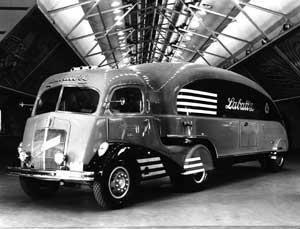
Labatt's Streamliners of the '30s and late '40s featured radically curved surfaces and Art Deco graphics, but they were built to promote beer sales, not to save fuel.
Are truck and trailer aerodynamics new? Not exactly. Labatt's Streamliners like the one shown on the right were built in the 1930s and might be the most aerodynamic looking tractor-trailers ever produced.
Looks can be deceiving. Image and promotion of beer sales, not fuel savings, were why they existed.
"I don't believe aerodynamics played a big role in the design of these trucks," says Bill Johnston, executive director of the American Truck Historical Society. "While they are very streamlined in appearance, given the engines of the day and speed limits in many areas of 45-50 mph, reduced drag wouldn't make much difference. These trucks were designed during the Art Deco period and were more of an advertisement than anything else."
They make a good story, though. Count Alexis de Sakhnoffsky, a French-Polish industrial designer, penned the images under commission from Labatt executives. White Motor Co. of Canada custom-built the tractors, and Smith Bros. Motor Body Works of Toronto crafted the bodies. Several series were built, and one won a design award at the 1939 World's Fair in New York.
The rounded noses on semitrailers of the 1930s and '40s might have had an aero advantage because a rounded surface moves through the air easier than a flat one, but that's not why they were built that way, Johnston says.
The reason was tight clearance between trailers and tractors, something required to meet strict length limits at the time. Close coupling reduced overall length, and a round nose allowed sharp turns without the trailer corners hitting the cab. Short overall length limits were set by states in the East and Midwest, and short, tightly coupled rigs were all fleets could run.
In the West, where highways weren't so crowded, limits were far longer. "Everybody liked the looks of California trucks," Johnston recalls. "They had a 70-foot overall limit and were stretched out. But there was a trailer limit of 45 feet. That's why there was so much space between tractor and trailer."
Eventually, various states increased their length limits enough to allow a little more gap between tractors and trailers. In the 1950s, longer trailers with flat noses began appearing. Shippers liked the extra volume possible in square-nose trailers, and tractors used diesels with more horsepower and torque than old gasoline engines, so they could pull the trailers against the air. Diesels also used less fuel - which was cheap, anyway. A common limit was 55 feet overall with 40-foot trailers, something that stayed in force in some states until federal pre-emption in 1982.
Much has changed since then. A couple of Arab oil embargos caused fuel shortages and drove up fuel prices in the 1970s, which got truckers thinking about saving fuel. They started with tractors, but makers of trailers and truck bodies began offering rounded corners on the vehicles' noses. A radius of 6 inches at the front corners and leading edge of the roof was shown to deliver some fuel savings at highway speeds without losing interior cube.
In the early to mid '80s, federal and state lawmakers further stretched length limits, to where 53-foot semitrailers are now ubiquitous, and the old cabovers were replaced by long conventional-cab tractors. Fuel became increasingly expensive, causing truck builders and operators to look more seriously at aerodynamics as one way to save money. Smoother, aero-style tractors evolved. However, only in recent years did trailers begin getting extensive aero treatments.
Fleet adoption of trailer aerodynamics has been slow. Many managers view side skirts and other equipment as things that add weight and cost and are subject to expensive damage.
What really pushed fleet people into it, suppliers say, were rules established a few years ago by California's Air Resources Board, which is determined to cut fuel use and reduce greenhouse gas emissions in the state. Long-haul fleets sending 53-foot trailers into California had to comply or face citations, so they began equipping them to meet minimum requirements. Usually this means a pair of side skirts and low-rolling-resistance tires that have been designated as such by the U.S. Department of Energy's SmartWay program.
The amount of fuel savings depends on individual operations, including how often trailers travel at speeds high enough for the devices to work. For some, the savings are negligible and the devices not worth their extra expense. For others, money savings were eye-opening, say suppliers of aero aids.
Side skirts have undergone a fast evolution, changing from more or less rigid panels to flexible pieces and mounts that bend when brushed or banged by obstacles, such as high rail crossings, then pop back into shape. Some operators look not only at performance but also styling, preferring to enhance their image by buying skirts with lines that complement those of the trailer.
Gap sealers could be considered a throwback to the close coupling of tractor-trailers in the old days of trucking. Sealers, whether vertical panels or bulbous appendages on the trailers' noses, keep air from intruding into the space where it's otherwise whipped into drag-inducing turbulence. Some products are rather new, but others have been on the market for years. Close coupling does some of what sealers do, if drivers are willing to keep sliding fifth wheels set forward.
Those who use the minimum amount of equipment on their trailers can save just a few percent in fuel. The most successful operations use multiple pieces, usually including side skirts, gap sealers, boat tails, wheel covers and wide-base single tires on lightweight wheels. Big-single tire-wheel combinations lower rolling resistance and save hundreds of pounds of tare weight, often enough to offset the aero devices' penalty in pounds. All these devices combine to save 10% or more at highway speeds, providing a reasonable and sometimes fast payback for the equipment investment.
More developments for trailers are on the way. The DOE is funding several Super Truck projects that aim to save even more fuel and reduce hydrocarbon emissions. Started several years ago, these projects are headed by truck manufacturers whose partners are makers of aero aids, tires and other equipment. Some involve trailer makers as full or partial partners.
Track testing of advanced equipment has shown drag reduction of up to 30%, and fleet road testing is seeking to find out if that converts to the expected 15% in fuel savings in real-world operations. Durability and repairability will be closely monitored in the fleet tests, participants say. Look for results to be published beginning late this year or into 2013, in time for truck and trailer builders to begin using them to meet upcoming fuel economy standards for heavy trucks.
Designers of aero improvers have thus far been dealing almost exclusively with long box-type trailers - vans and reefers. What about shorter vans and flatbeds, tankers and dumps? Less-than-truckload fleets that run short pup trailers have become interested in aerodynamic devices and are running some, says one supplier. Meanwhile, work is being done on other trailer types.
Drop decks on electronics vans are easier to work with than full-height vans. Results might be only a couple percentage points, but they need less material for the fairings so the ROI will end up about the same. The same goes for drop-de
More Equipment

Tesla Wants a Self-Driving Semi. Are Cameras Enough?
Could Tesla’s camera-only autonomous driving technology work on an 80,000-pound Semi? In this commentary, HDT's Deborah Lockridge takes a look at Tesla, Cybercab, and how autonomous trucks see the road.
Read More →
Kodiak: Driverless Long-Haul Truck Launch on Track for 2026
Kodiak AI says its driverless long-haul safety case is 93% complete and it remains on track to begin commercial operations by year-end 2026.
Read More →
What DOT’s Automated Vehicle Strategy Means for Trucking
The U.S. Department of Transportation issued a new automated-vehicle strategy that outlines plans for driverless-truck regulations, cross-state freight corridors, and federal safety standards.
Read More →
East Coast Port Launches $45M Electric Truck Push
The Port Authority of New York and New Jersey announced millions in incentives for zero-emission drayage trucks, yard tractors, and new charging hubs near the port.
Read More →
PlusAI Going Public to Fund Autonomous Truck Launch
A SPAC deal could provide PlusAI with up to $300 million as it works toward a 2027 commercial launch of factory-built autonomous trucks.
Read More →
NHTSA Moves to Rewrite Truck Fuel-Economy Rules
The National Highway Traffic Safety Administration says it lacks authority to regulate medium- and heavy-duty truck engines separately from complete vehicles, but the existing standards have not yet been eliminated.
Read More →
Detroit Opens Orders for EPA 2027 Engines
Detroit isn’t starting from scratch to meet EPA 2027 diesel emissions standards. Its Gen 6 DD13 and DD15 engines keep much of today’s platform while updating the fuel and aftertreatment systems.
Read More →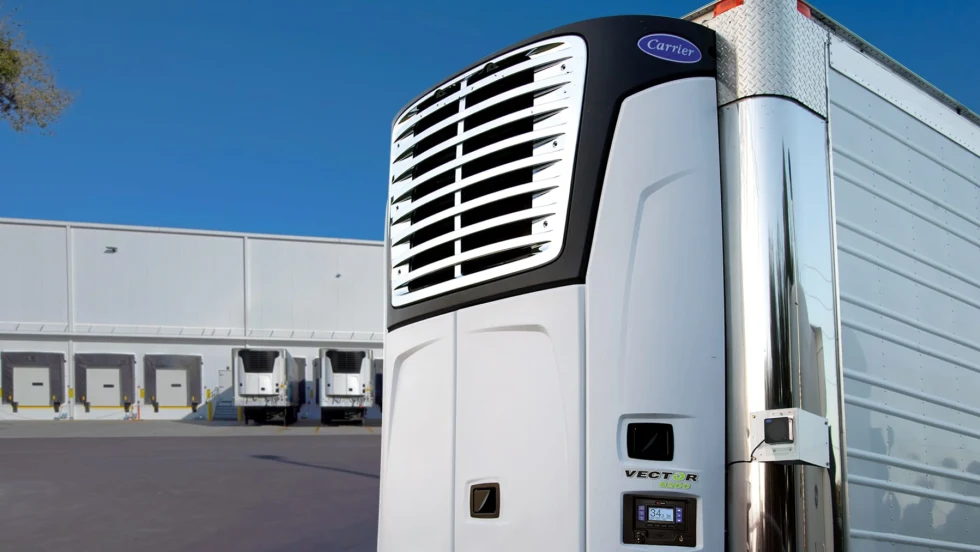
Carrier Transicold Adds All-Electric TRU for Stationary Cold Storage
Carrier Transicold’s new Vector 8200 all-electric transport refrigeration unit gives fleets a diesel-free option for temporary refrigerated and frozen trailer storage.
Read More →
A Closer Look at Kenworth’s Electric T880E Vocational Truck [Video]
Learn more about Kenworth's T880E battery-electric vocational truck at the Paccar Technical Center, including its range, applications, upfitting considerations, and PTO options, in this HDT Spotlight video.
Read More →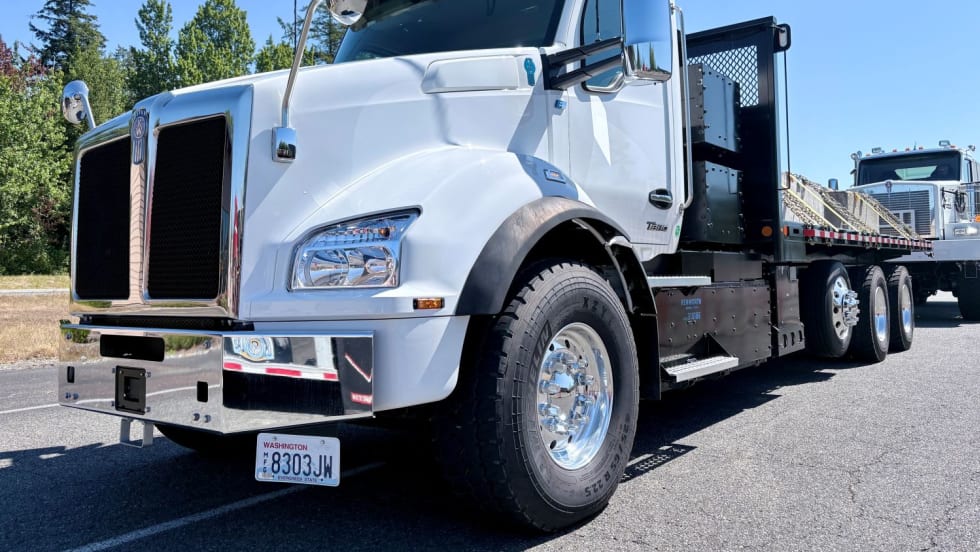
Kenworth T880E Brings EV Power to Vocational Trucks
A closer look at the Kenworth T880E’s range, charging, powertrain and upfit options — and where fleets are showing the most interest.
Read More →