




Oils For Natural Gas Engines
Recent announcements illustrate the growing interest in natural gas engines for medium- and heavy-duty commercial trucks

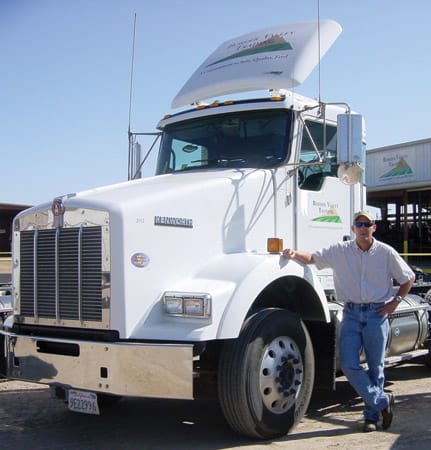
Border Valley Trading, a Brawley, Calif.-based alfalfa, sudan and klein grass hay producer and exporter, last year replaced its fleet of trucks with 15 liquefied natural gas-powered Kenworth T800s.
Recent announcements illustrate the growing interest in natural gas engines for medium- and heavy-duty commercial trucks.
In January, UPS announced it was buying 245 new compressed-natural-gas delivery trucks. Late last year, Kenworth announced it was expanding its natural gas offering to its T800 short hood and W900S models. At the Technology and Maintenance Council meeting in Tampa last month, Navistar and Clean Air Power announced a deal to develop Navistar's MaxxForce 13 big-bore engine as a dual-fuel version to run on natural gas and clean diesel, which will initially target the regional haul tractor market with a goal of achieving a 400-mile range. Also at TMC, Shell Lubricants introduced an engine oil for use in natural gas engines.
Although Shell had previously offered an oil for stationary/off-highway natural gas engines in the U.S., and had an oil for natural-gas engines in other parts of the world, up until now, they felt the demand wasn't there for a natural-gas oil in this country. Until now.
Many local fleets, municipalities and public transit companies are using natural gas-powered vehicles because of their lower emissions. In addition, a number of truck manufacturers are now making natural gas fueled engines a factory option.
"Natural gas engines have been run here in the U.S. for a long time, but it seems to be a fairly rapidly moving trend going towards natural gas vehicles, especially in specific areas like the ports on the West Coast," explains Dan Arcy, OEM technical manager for Shell Global Solutions. "Seeing those changes that were coming, it just seemed opportune for us to introduce our T3 product."
The new Shell Rotella T3 NG oil is a 15W-40 oil that uses a combination of high-performance additives to adapt and protect under the range of pressures and temperatures found in CNG/LNG fueled engines.
There is no API standard for natural gas engines, but there are a couple of key specifications set up by engine manufacturers, including the Cummins CES 20074 and the Detroit Diesel 93k216. You want to make sure the oil you're using meets the standards of the engine brand you're using. One of the key differences is that natural gas engines have a specific limit on phosphorus to protect the catalyst. Phosphorus is part of the anti-wear additive package in engine oils. Another difference is that oxidation is less of a concern than in diesels, while nitration is a greater concern, so oils for these engines will be formulated with some different types of additives to protect against nitration vs. oxidation.
Natural gas engines run hotter in the combustion process, explains Mark Betner, heavy-duty lubricant manager for Citgo Petroleum, "so they tend to have a different impact on the oil and the tendency for the additives to produce ash, much like wood in a fireplace will product ash. You want to design a natural gas formula so it doesn't produce as much ash."
Unlike diesel, natural gas does not produce soot when it burns, explains Reginald Dias, director of commercial products for ConocoPhillips Lubricants, which offers products under the 76 and Triton brands that are used by major municipalities with natural gas engines in their fleets. The same property that makes natural gas attractive as a less-polluting fuel also means the oil has to be formulated differently.
"Unlike a diesel engine, where there is soot buildup, which thickens the oil, in a natural gas engine there is no soot thickening," Dias says. "So the oil has to be properly formulated, because you cannot bank on the thickening effect to offset any shear loss." (Shear issues can lead to oil consumption.)
Don't be tempted to use an oil designed for an off-highway/stationary natural gas engine, Arcy says. They typically don't have enough anti-wear additives to protect the valvetrain area in on-highway engines, where the oil typically sees higher pressures than the stationary engines.
Right now, natural gas engines in heavy-duty vehicles are primarily most attractive in applications where vehicles get back to a central fueling location each day. But down the road, who knows? Texas billionaire T. Boone Pickens is preaching the gospel of clean-burning, domestically produced natural gas for heavy-duty trucks, and recently said he believes legislation to spur investment in natural gas vehicles over diesel, which doubles a 2005 tax incentive, has enough support in the House and Senate to pass by the end of May.
"I know four years ago when we were talking about diesel exhaust fluid, everyone was horrified by the thought, saying there's no infrastructure," observes Citgo's Mark Betner. "And here we are today, we fully know that there's a DEF infrastructure. So to sit here and say natural gas is not cost effective in Class 8 trucks, it would be stupid to say there can't be possibilities for natural gas being a fuel source" because of lack of infrastructure.
From the March 2010 issue of Heavy Duty Trucking.
More Fuel Smarts

Diesel Price Spike Shortens Payback for Natural Gas Trucks, Report Says
Energy Vision estimates fleets could recover the higher purchase price of an RNG-fueled Class 8 tractor in 1.3 to 2.8 years under current fuel-price scenarios.
Read More →
Calstart Becomes Catalyst Mobility, Reflecting Broader Focus
Calstart is now Catalyst Mobility, reflecting the nonprofit’s growing national role in clean transportation, including zero-emission trucks, infrastructure and incentive programs.
Read More →
Record Diesel Prices Squeeze Trucking Fleets
Average U.S. diesel prices have climbed to nearly $6 a gallon, surpassing the 2022 record as tight refinery capacity and Middle East disruptions keep fuel costs elevated.
Read More →

How Fuel Delivery Shapes Engine Performance
Fuel delivery depends on more than what happens at the injector. For fleet, maintenance and technical professionals, looking at the full path from pump to injector can provide useful context for understanding engine performance.
Read More →
East Coast Port Launches $45M Electric Truck Push
The Port Authority of New York and New Jersey announced millions in incentives for zero-emission drayage trucks, yard tractors, and new charging hubs near the port.
Read More →
California Bill Could Shed Light on Electric Truck Prices
Why do battery-electric Class 8 trucks remain so expensive? A California bill headed to Gov. Gavin Newsom would give fleets and state agencies more visibility into what manufacturers charge.
Read More →
Detroit Opens Orders for EPA 2027 Engines
Detroit isn’t starting from scratch to meet EPA 2027 diesel emissions standards. Its Gen 6 DD13 and DD15 engines keep much of today’s platform while updating the fuel and aftertreatment systems.
Read More →
Zero-Emission Truck Corridor Planned for West Coast
California, Oregon, Washington, British Columbia and Baja California are coordinating plans for truck charging and hydrogen fueling from Canada to Mexico.
Read More →
A Closer Look at Kenworth’s Electric T880E Vocational Truck [Video]
Learn more about Kenworth's T880E battery-electric vocational truck at the Paccar Technical Center, including its range, applications, upfitting considerations, and PTO options, in this HDT Spotlight video.
Read More →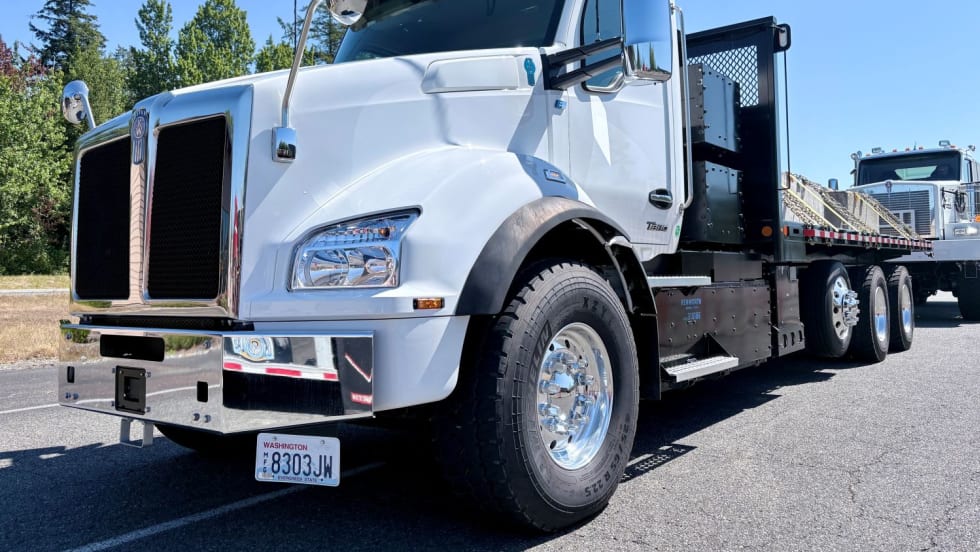
Kenworth T880E Brings EV Power to Vocational Trucks
A closer look at the Kenworth T880E’s range, charging, powertrain and upfit options — and where fleets are showing the most interest.
Read More →