




Not Using PSP Could Be 'Huge Mistake'
At a time when we're dealing with more acronyms than ever from the U.S. Department of Transportation - CSA 2010, HOS, EOBRs - there's one that may be getting overlooked: PSP, or pre-employment screening program

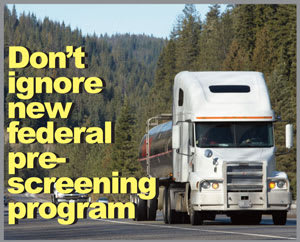
At a time when we're dealing with more acronyms than ever from the U.S. Department of Transportation - CSA 2010, HOS, EOBRs - there's one that may be getting overlooked: PSP, or pre-employment screening program.
The trucking industry lobbied for eight years to get the DOT to open its databases and let trucking companies take a peek at the roadside inspection histories of prospective drivers. But now that it's here, you'd better figure out the best way to make use of that data. Otherwise, a clever plaintiff's attorney could make a case that you should have been.
That was the message Sunday of Rob Moseley, a partner specializing in trucking with Smith Moore Leatherwood LLP, during an educational session at the American Trucking Associations' annual management conference in Phoenix.
"If you choose not to use the PSP, you're making a huge mistake," Moseley said. "Because the PSP is available to you, and everything that's available to you today will eventually be available to the lawyer who sues you."
Under the PSP, carriers can get a report on a prospective driver much like a motor vehicle report. Only instead of telling you how many speeding tickets and other moving violations the driver has had, it will tell you about roadside inspection data, such as hours of service violations, overweight violations, equipment violations.
DIGGING INTO THE DATA
One challenge with the data, however, is you can't look at the report and tell whether a violation is the driver's fault or whether it's his prior employer's fault. "Is the overweight ticket because the company gave him a load that was too heavy, or because the driver was too lazy to move the axle," Moseley asks. "Is the equipment violation because the company didn't maintain its equipment, or did the driver not tell the company he's been driving for six weeks with a light out?"
Another challenge is that your company must come up with new standards for hiring that take into account this data -- just like you might have a standard that you won't hire a driver who has more than X tickets in X years on his MVR.
"You're going to have the wrestle with the PSP and figure out what it means to your company," Moseley said. In fact, it's likely that access to the PSP will mean more work, not less, as you order more reports to try to uncover the truth behind the violations.
FAIR CREDIT REPORTING
Another PSP issue is that it is covered by the Fair Credit Reporting Act. Not only do you have to get consent on the front end from the potential employee to check their PSP (must as you do now for MVRs), but you also are required to take another step on the back end if your use of that data causes you to not hire the driver, or to hire him on some sort of provisional basis, require him to have remedial training, that kind of thing.
It's called an adverse determination notice, and it needs to tell the applicant about the adverse action, give him information about the PSP and how he can get that information and if he desires contest the data. Carriers already are supposed to be doing this for MVRs, Moseley said, but it's often overlooked. He believes with PSPs it could be more of a land mine.
"This could be a cottage industry for suing trucking companies for not complying with the Fair Credit Reporting Act."
THE BAD APPLES
Moseley believes the PSP will do even more to weed out the "bad apple" drivers in the industry than CSA 2010, the Federal Motor Carrier Safety Administration's new enforcement regime.
There also will be implications for a carrier's insurance policies, although not immediately. "Underwriters are not looking at PSP right now," he said. "They will, but underwriters are generally slow to pick up on what's happening in the current market. They're just now starting to understand SafeStat," the analysis system being replaced under the CSA 2010 initiative.
For more on the PSP, see "FMCSA Opens Pre-Employment Screening Program," 5/12/2010, or go to the FMCSA's PSP page at www.psp.fmcsa.dot.gov.
More Safety & Compliance

Driver Trust Can Make or Break the Success of Fleet Safety Technology
New Teletrac Navman research suggests that onboarding, transparency about driver data, and positive feedback can play a significant role in how commercial drivers respond to safety and coaching technology.
Read More →
FMCSA: Stop Using These 15 Electronic Logging Devices
Fleets and drivers must replace the revoked ELDs with ones on the FMCSA's registered device list of electronic logging devices.
Read More →
How HDT’s 2026 Truck Fleet Innovators Are Rethinking Fleet Operations
Meet five trucking leaders who are challenging assumptions, solving operational problems, and putting innovative ideas to work.
Read More →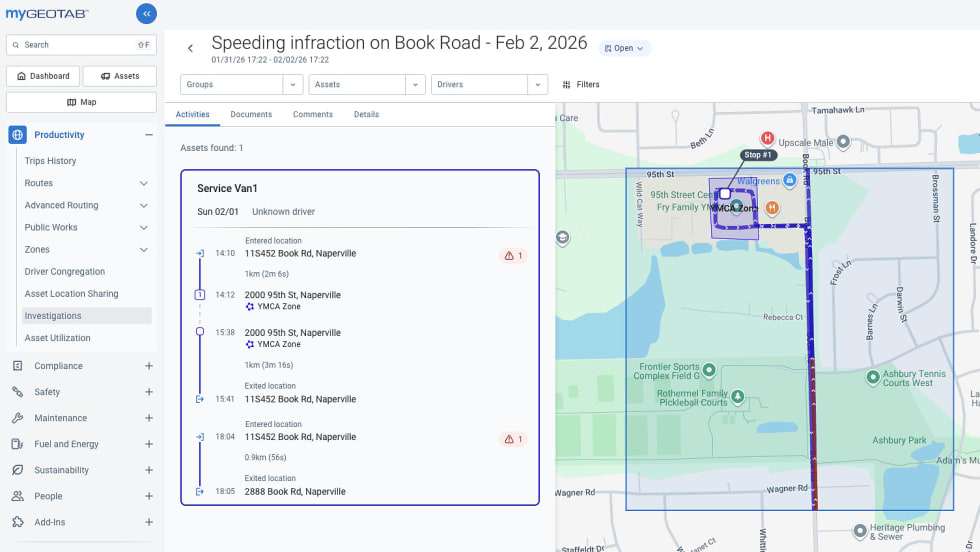
Geotab Launches Tool to Speed Fleet Incident Investigations
Geotab Investigations brings telematics data, video, photos, reports and other evidence into one case file to help fleets determine what happened and resolve incidents faster.
Read More →
FMCSA Moves to Codify English Language Requirements for Commercial Drivers
By changing regulations on English-language proficiency requirements for commercial drivers, rather than relying on a guidance memo, the FMCSA said future administrations won't be able to walk back the Trump administration's stricter enforcement with just a memo.
Read More →
Trump Administration Expands Homeland Security's Role in Trucking Enforcement
The administration's latest trucking crackdown goes beyond roadside inspections, expanding Homeland Security's role in commercial vehicle enforcement and investigations involving CDL training schools.
Read More →
Paccar Recalls 2027 Trucks Built This Summer for Possible Electrical Problem
The nearly 6,000 Kenworth and Peterbilt trucks in the recall could potentially lose engine power, among other things.
Read More →
Brake Safety Week to Focus on Drums and Rotors
Commercial vehicle inspectors will be focusing on brakes during CVSA's Brake Safety Week, August 23-29.
Read More →
Trump Administration Looks to Put More Veterans Behind the Wheel
The Freedom Haulers program pulls together existing and expanded programs at several federal agencies to recruit veterans to drive commercial heavy-duty trucks and cut the red tape for them to get a CDL, training, and employment.
Read More →
$604 Million Verdict Tests Broker Liability After Supreme Court Ruling
C.H. Robinson plans to appeal after a Texas jury found it bore the largest share of responsibility for a fatal 2021 crash, in a case that follows the Supreme Court's Montgomery decision allowing negligent hiring claims against freight brokers.
Read More →