




Next-Generation Leaders Run a Tight Ship
A panel of young truckload executives talked about making sure growth, technology, employees and customers are all contributing to a carrier's success during a panel discussion last week at the Truckload Carriers Association's annual conference

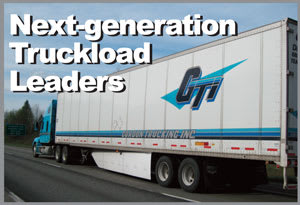
A panel of young truckload executives talked about making sure growth, technology, employees and customers are all contributing to a carrier's success during a panel discussion last week at the Truckload Carriers Association's annual conference.
James Hebe, senior vice president of North American sales operations for Navistar, moderated the panel discussion, well received by the crowd in the large ballroom at the Gaylord Palms in Kissimmee, Fla.
The panel featured Steve Gordon, COO of Gordon Trucking Inc.; Paul Will, vice chairman, president and COO of Celadon Trucking Services; Rob Penner, executive vice president and COO, Bison Transport; Aaron Tennant, president and CEO, Tennant Truck Lines; and Mike Gerdin, CEO and chairman of Heartland Express.
At Celadon, said Will, "We've done a lot to bring people in and analytically evaluate what the business is - not just to run miles to run miles, not running to a certain state because that's what you've always done. Make sure you're doing what's best for the bottom line."
For instance, he said, Celadon is looking into regional operations in the Southeast and the Northeast to complement its long haul. "Not to change what we're doing, but to add on to what we're doing."
At Heartland, which has been unusual in its continued adherence to the pure-truckload model, Gerdin said while the company has experienced success following the model his late father Russ established, "that doesn't mean that model's perfect. We're constantly working on our pricing, on our deadhead, how we're going to service our trucks and trailers better, how we're going to take care of our driver, how we're going to get them miles. It's constant, we're looking at every part of our business, every department we have." During the downturn, Gerdin said, the company tore a lot of departments apart and redesigned them from scratch.
While Heartland decided to add PeopleNet electronic logs, Gerdin said, it has not invested in trailer tracking. The company does a good job of keeping up with its trailers, he said, so the company didn't see a large return on investment there.
"We don't just do something because it's the new trend or everyone's doing it; you have to look at what it's going to do to help our company."
As Bison's Penner said, "It really comes down to, what are the big problems in your business, and will this [product] help?"
These young executives believe in using data to help them manage. For instance, when Mike Gerdin heads into the office after he's been out of town, the first things he's going to look at are numbers for load count, deadhead, and the loads in each lane, looking for flags for problems such as letting in a customer that maybe shouldn't be in the mix in this particular area.
Being disciplined in the freight you haul is vital, Gerdin and other panelists stressed. "I'm real particular about who's getting into our freight basket," he said. Some customers, he said, have a way of sneaking in where they don't belong.
Steve Gordon agreed that customers can be sneaky. "We track every commitment on every lane, and lo and behold, they don't always do what they say they're going to," he said. "If you don't manage your customers, they'll manage you." It's not unusual, he said, for a customer to promise, say, 20 loads a week in a particular lane but not follow through, and then want to know why the company's having problems giving them the service levels they want. "We check that two or three times a day," he said.
GTI tries to head off problems, as well, with a "robust filter" on the front end of the contract process.
Gerdin agreed: "It's your job to make sure your freight and your lanes are what you want to haul."
In order to get better rates, several panelists also noted, you have to offer something more in the way of service than the competition. This is especially vital for smaller carriers that can't compete on volume.
"If you're always chasing the easy stuff, you're easily replaceable," said Steve Gordon. "In that case, size doesn't necessarily matter, if you provide a valuable service better than anyone else.
Tennant, for instance, hauls machinery and is thus in a somewhat specialized business.
At Heartland, Gerdin said, "when we go to a customer, we ask for their toughest lanes, the ones they can't get covered, and give the best service on it. If you get a foot in with that customer, you can grow that customer, if you're taking care of stuff that really creates a problem for him each and every day."
Another key issue with customers going forward will be hours of service, panelists said.
"It's how many hours drivers can be behind the wheel now," said Celadon's Will. "You may look more at what you are going to be paid per hour the drivers are utilized, rather than old metrics like revenue per day."
Electronic logs, said Bison's Penner, allow fleets to see productivity in a totally different way. "We don't go to our shippers and say, 'Here's a 5% rate increase across the board,'" he explained. "We look at lanes, and talk to customers about where they're driving costs into the business, and give them a choice to take the extra cost out or pay us for it. I think it's the way the industry's going."
As Mike Gerdin said, "It's going to be more and more evident as we go forward: The ticking clock is the real issue."
A common theme was the importance of surrounding yourself with the right people - and that getting the right person may mean hiring someone without trucking experience or bringing someone in from outside the family.
At Gordon Trucking, explained Steve Gordon, "we had really great folks around the whole organization. But about 10 years ago, we found those folks had a lower 'ceiling' than what we needed to run the business." For instance, he said, just because someone was great in customer service didn't mean they would be a great customer service manager. So the company changed its hiring practice to focus on people coming out of college who had the attitudes and leadership abilities needed, then taught them the trucking business.
At Tennant Truck Lines, Aaron Tennant said, his family may know trucking, but that doesn't necessarily mean they had the skills to pull the analytics out of the company's data that it needs to control its business. "So we had to start hiring from outside the family," he said. "That was tough for a lot of family members. But I think once we made that switch and brought those talented people in from the outside, we've been able to explode with growth."
The right people includes drivers, as well. At Bison Transport, which has won the TCA annual safety award numerous times, Penner said, "We really are focused on surrounding our people with the right tools. Everyone in our business understands that if you're not out driving a truck, you're support staff for the drivers."
More Fleet Management

HDT Announces 2026 Truck Fleet Innovator Finalists
From AI and fleet electrification to safety, operations, and leadership, these HDT Truck Fleet Innovator finalists are changing how trucking gets done.
Read More →
Van Spot Rates Top Contract Rates for First Time Since 2022
There’s more good economic news for the North American trucking industry according to the latest Truckload Volume Index report from DAT.
Read More →
Carrier Transicold Extends Refrigerated Trailer Life
Fleet Refresh enables refrigerated fleets to replace aging transport refrigeration units instead of entire trailers, while adding Lynx Fleet telematics and BluEdge service coverage.
Read More →
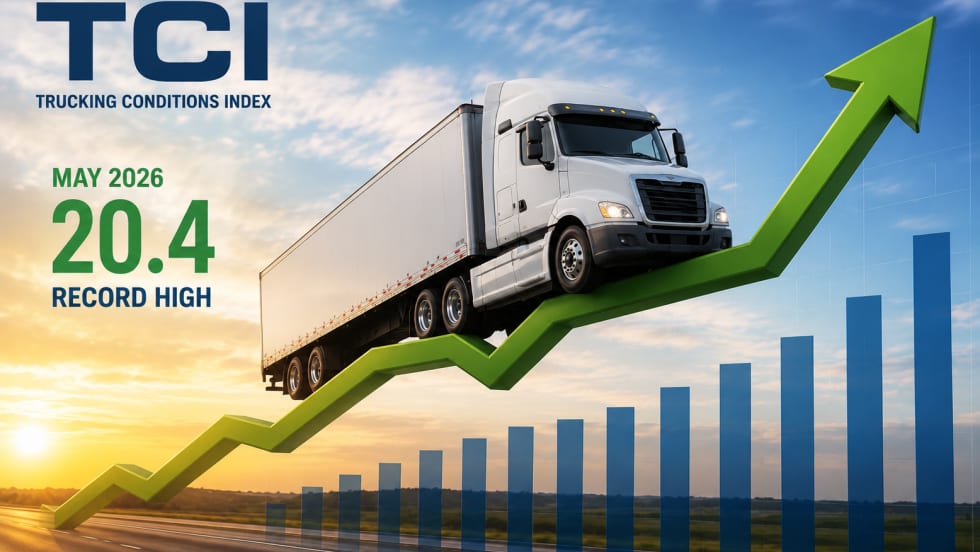
FTR Says Freight Rates Surged in May
FTR's Trucking Conditions Index surged to a record high in May, the analytics firm reports.
Read More →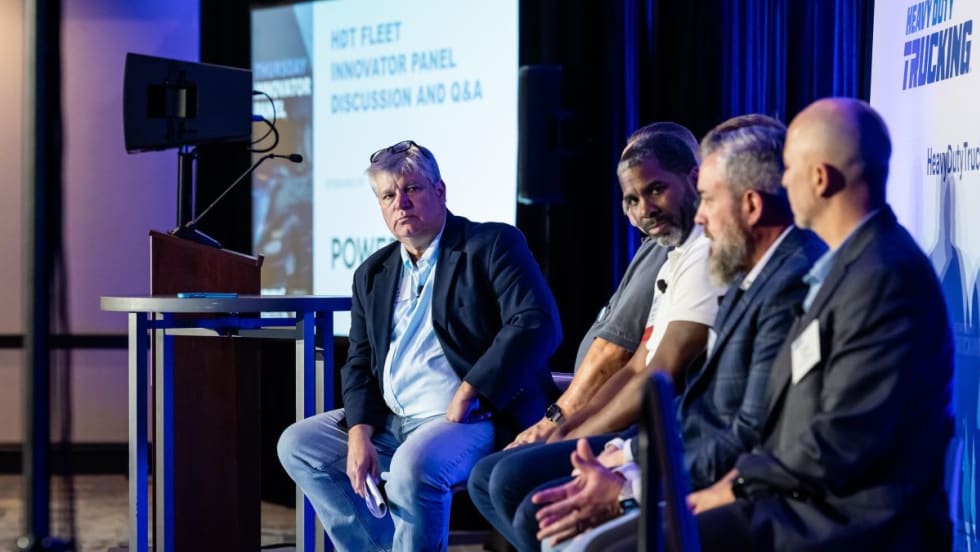
Meet HDT's Truck Fleet Innovators at Heavy Duty Trucking Exchange
Heavy Duty Trucking Exchange brings fleet managers and suppliers together for the deeper conversations that lead to ideas, partnerships, and solutions. Time is running out to apply for HDTX, September 23-25.
Read More →
Enhance Fleet Performance with High-Efficiency Auxiliary Power Units
Drive sustainable cost savings while increasing driver comfort during short- and long-haul logistics operations.
Read More →
Is Your Parts Procurement Process Reactive or Proactive?
Ready to revamp your parts procurement process? Learn how now with “Strategic Parts Purchasing: A Process Checklist”
Read More →
What Trucking Events are Happening in 2026?
Looking for trucking-related conventions, expos, and other events? Heavy Duty Trucking has developed this list of national and larger regional trucking shows and events.
Read More →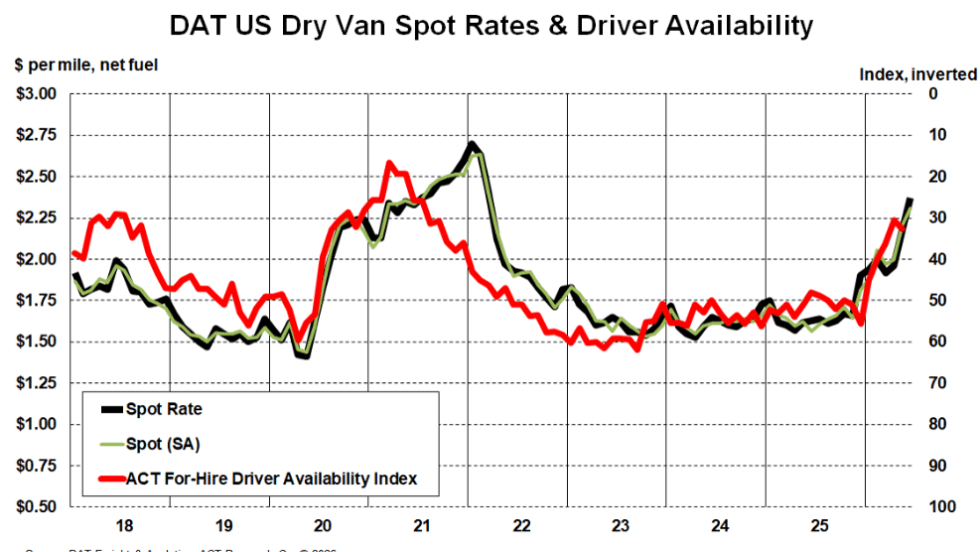
Truckload Rates Keep Rising as Tight Capacity Fuels Freight Market Recovery
Spot and contract rates continued climbing in May and June, not because freight demand is surging, but because fewer trucks and drivers are available.
Read More →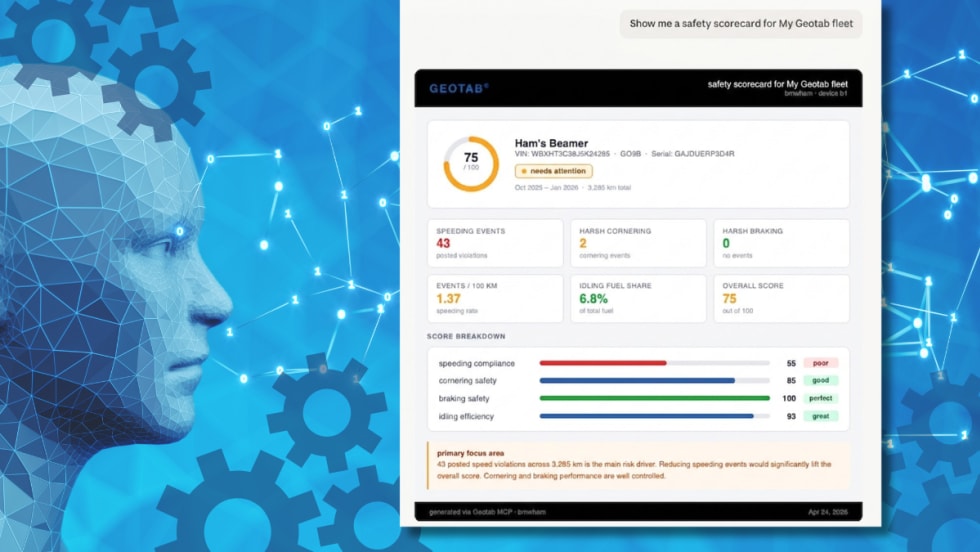
What Geotab's New AI Connector Means for Fleets
Fleets can now ask their usual AI assistants questions about maintenance, safety, fuel use, and vehicle performance, using their live Geotab data, and take action on the answers without leaving their preferred AI tool.
Read More →