




More Than Driving Skills
Knight Transport, a small Northwest trucking company, was in trouble. It had 24 trucks with 17 available, but only 14 drivers and a turnover rate of 75 percent a month. Owner Scotty White's truck fleet was lying largely dormant and he could not grow his company.
White sought help from Taylor Protocols, Tukwila, Wash., which profiles employees to identify top performers.
Beyond qualifications such as age, MVR and driving experience, there are many more intangible factors that determine whether someone is a good driver, and whether he or she is a good fit with the job and with your company. Taylor is one of a number of companies that offer ways to measure these factors.
Taylor uses what it calls the Core Value Index, which "characterizes and quantifies an individual's unchanging innate nature" to predict which candidates will be high performers. In truck driving, as with all jobs, the company explains, if a person's core values do not match what is needed to perform the tasks in that job at a high level, that person is likely to leave that job or perform very marginally at it and be frustrated.
The company profiles all of the current employees in a position and develops a "Top Performer Profile" for that position, a kind of fingerprint guide for identification of other top performers. Applicants take the CVI assessment, a 10-minute web-based process. If the "fingerprint" from the profile and the CVI test "match," the chances the manager is hiring a top performer are eight of 10.
At Knight Transport, these profiles allowed White to hire top performer drivers, as well as hiring top performers in other positions and doing an internal reorganization to put the right people in the right jobs. After two years, the company had grown its fleet to 35 trucks, with 34 on the road, and truck driver turnover was down to 25 percent per year.
Lower driver turnover also allowed the company to take more loads more consistently. That led to more dollar volume and higher income. Better driver dispatch caused drivers to capture more loads, creating more income for both drivers and the company. The increase in company income allowed White to increase employee benefits, which made the company an even better place to work, further lowering turnover.
Taylor Protocols is not the only company focusing on employee profiling to reduce turnover. Two others that have trucking clients are Scheig Associates and TamingTurnover.
"It is possible to have a tractor-trailer driver who is very good at backing into a dock, but their delivery is late, they don't effectively communicate with the dispatcher, they don't effectively represent the company and on and on and on. Are they a good overall driver? No," explains Kyle Scheig, director of marketing at Scheig Associates, Gig Harbor, Wash., which offers job-specific, behaviorally based pre-employment assessments.
"The issue is whether the applicant has the basic job behaviors it takes to do the job and do it well. Many people can be taught how to drive a truck, but it is very difficult to train for the other necessary behaviors."
Scheig does a job analysis of people identified as being superior performers in a particular job, derives the high-performing behaviors for the job and assembles it into an assessment. Scheig offers these assessments for a number of industries and positions, including long-haul truck driver, food service delivery driver, short-haul delivery driver and diesel technician. The company claims an 88 percent to 92 percent accuracy rate in identifying applicants who behaviorally are similar to high-performing workers in that job.
TamingTurnover, Alpharetta, Ga., focuses on over-the-road truck drivers and dispatchers as one of its three target markets, and the founders have a background in trucking. In addition to profiling applicants, TamingTurnover profiles drivers and dispatchers to help create a better fit between the two with what it calls a Turnover Audit.
"Because the quality of the relationship between a driver and his dispatcher is the No. 1 predictor of length of service, the more compatible we make our boards, the higher our driver retention will be," says Marc Bailey, TamingTurnover CEO.
The company has tools that measure people in 10 different areas: intelligence, work style, rules compliance, sensitivity, assertiveness, sociability, judgment, work motive, family need, and safety/risk.
As a case study, TamingTurnover cites the example of a Midwest trucking company that had 1,500 over-the-road drivers, more than 90 percent driver turnover and a nearly 200 percent annualized turnover rate during the first 60 days of employment.
TamingTurnover found that the company had four different profiles of drivers and three different profiles of dispatchers. They re-assigned 20 percent of the drivers to get a better fit with their dispatchers. In addition, six of the company's 40 dispatchers were identified as having profiles that were incompatible with 80 percent of successful OTR drivers. Those were replaced. The company saw an immediate reduction in driver turnover. In just eight months, the company was able to grow to 1,800 trucks, and its annualized driver turnover rate dropped from 92 percent to 70 percent.
"We replace unpredictable 'seat of the pants' recruiting and retention processes with structured, repeatable processes that yield consistent, predictable results," Bailey says. "Today it is possible to discover what a group of high-retention drivers have in common. It's also possible to discover what the 'quick quits' have in common. Combining these profiles with a thorough understanding of a carrier's own rules and procedures yields a detailed picture of the drivers and dispatchers a given carrier should focus recruiting on."
More Fleet Management

New Independent Contractor Rule Gives Trucking More Clarity
The Labor Department is once again changing how it determines who's an independent contractor. This time, the rule includes specific examples addressing trucking safety requirements, CDLs, and lease-purchase agreements.
Read More →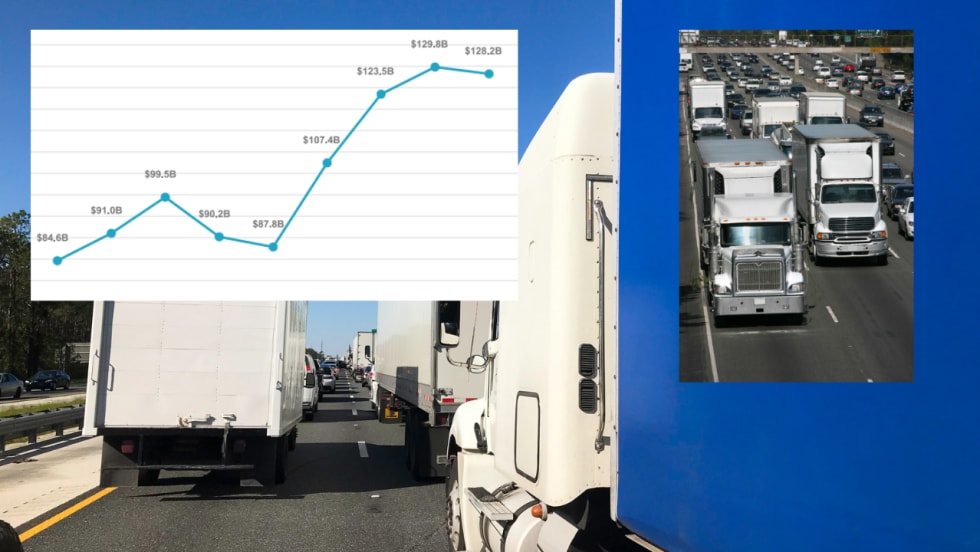
Trucking's Annual Congestion Costs Reach $128.2 Billion
That's the average cost, according to new ATRI research. And the wasted time and diesel are staggering.
Read More →
How to Modernize Your TMS Without Replacing It [Podcast]
Before investing in a new transportation management system, take a closer look at what you've already got. AI, cloud technology and better integrations may offer ways to improve your trucking operations without starting over.
Read More →
Could Your Truck's Connected Devices Be a Cybersecurity Risk?
ELDs, telematics systems and driver tablets help fleets operate more efficiently. But every connected device needs protection against cyberattacks.
Read More →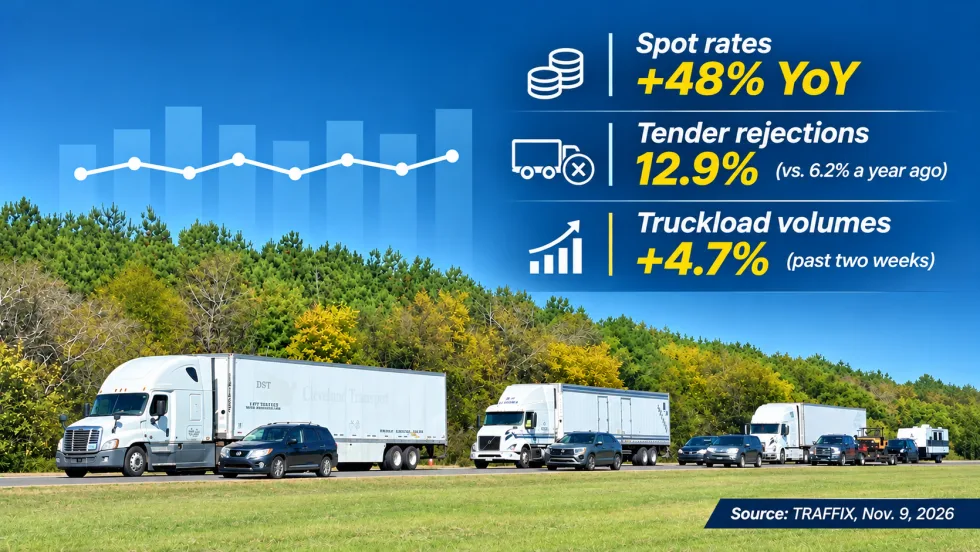
Holiday Freight Meets a Tight Trucking Market
There's no freight boom, but truckload carriers are finding themselves in a stronger position to negotiate rates. And holiday shipping demand could tighten the market further.
Read More →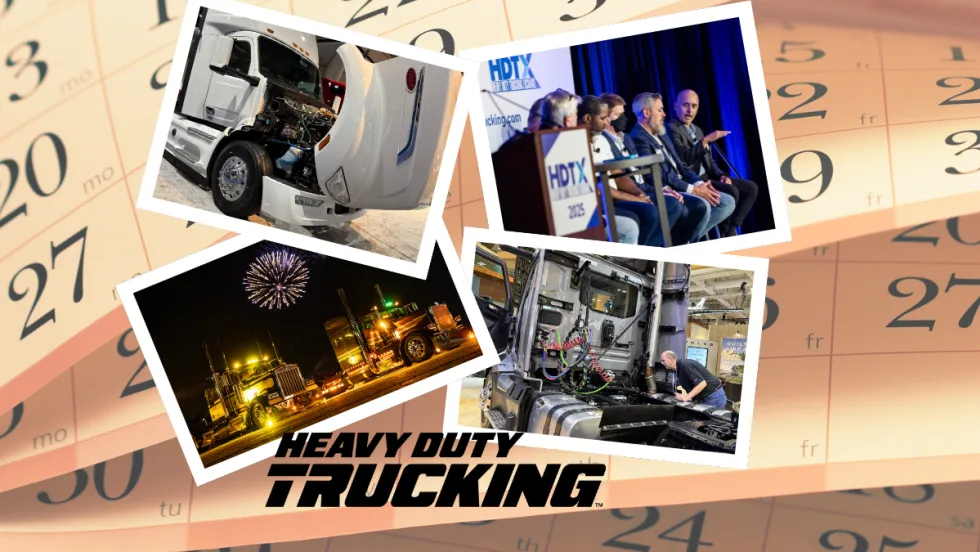
What Trucking Events are Happening in 2027?
Looking for trucking-related conventions, expos, and other events? Heavy Duty Trucking has developed this list of national and larger regional trucking shows and events.
Read More →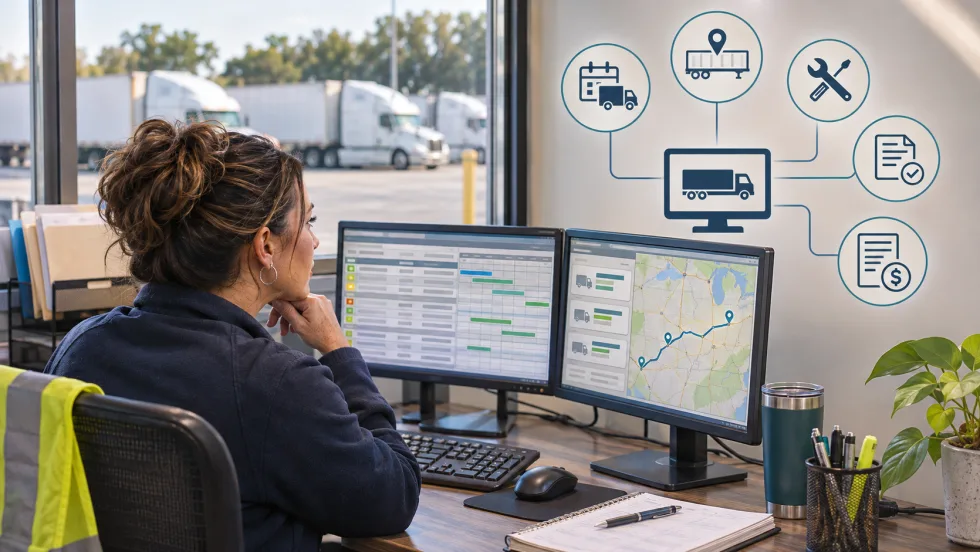
Does Your Trucking Fleet Need a New TMS?
Artificial intelligence and better integrations promise less busywork and more useful data. Can your TMS help your company solve problems? Do you need additional vendors or an upgrade? Or is it time to look for a new platform?
Read More →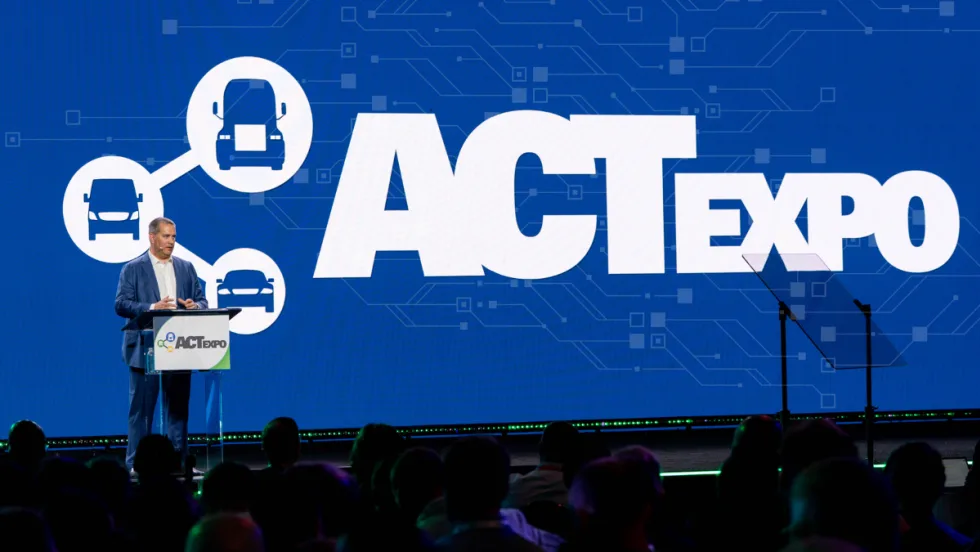
Fleet Costs Shape ACT Expo 2027 Agenda
With diesel prices high and operating expenses under pressure, ACT Expo's 2027 agenda emphasizes fuel efficiency, AI, safety and the return on fleet technology investments.
Read More →
Does Your Trucking Fleet Need a New TMS? [Video]
Cloud technology, AI and new integrations are changing what transportation management systems can do. But does taking advantage of those advances mean replacing your existing TMS?
Read More →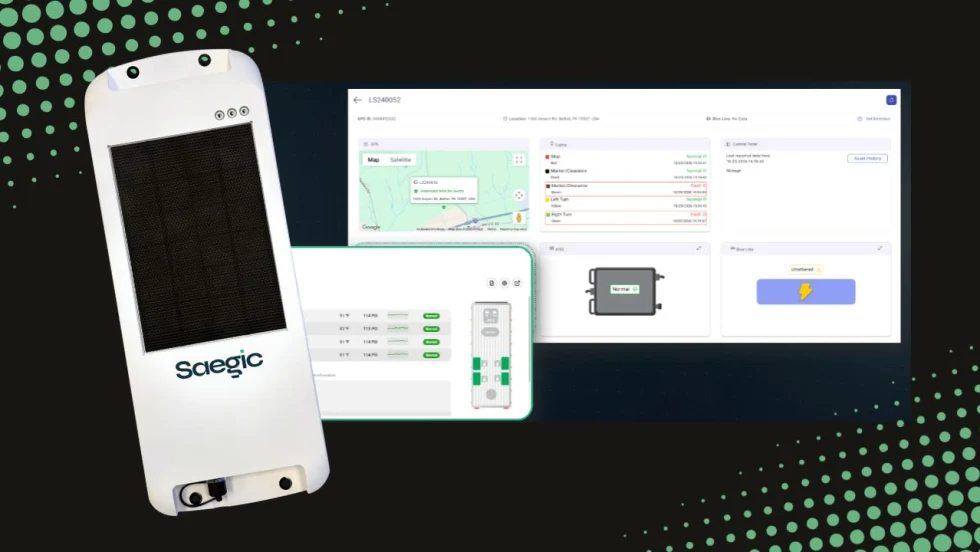
Road Ready Becomes Saegic, Launches New Trailer Telematics Gateway
Clarience Technologies is rolling out new hardware and expanding its plans for connecting trailer telematics, maintenance data, and video.
Read More →