





Related: How GHG Phase 2 Will Change the Way You Spec Trucks
Medium-Duty Truck Emissions in 2021 and Beyond
How will the second phase of the greenhouse gas rules affect medium-duty vehicles?
April 16, 2019
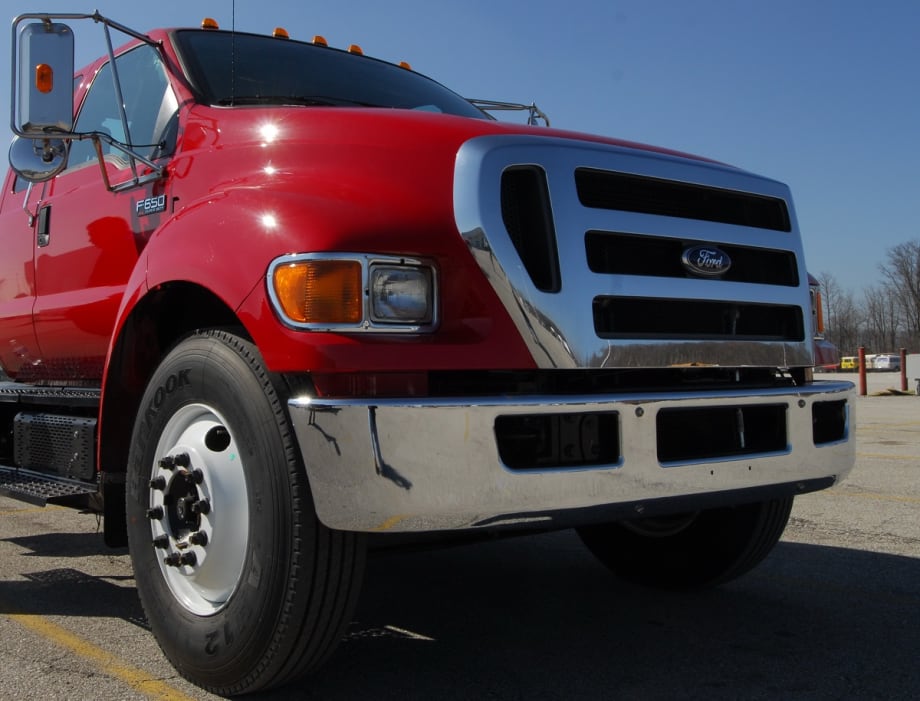
Medium-duty trucks are going to change in model-year 2021. GHG Phase 2 emissions rules will require better fuel economy and lower CO2 emissions.
Photos: Jim Park
5 min to read
Model-year 2021 vehicles will be affected by the next round of greenhouse gas emissions reduction regulations, and they affect medium-duty vehicles too, not just heavy-duty trucks.
“Back when the 2007 and 2010 soot and NOx emissions rules kicked in, we had to educate our customers on those changes, as dramatic as they were,” says Brian Tabel, executive director of marketing for Isuzu Commercial Truck of America. “Most of them didn’t know the change was in place, but they sure noticed the price jump between 2006 and 2010 MY trucks.”
Tabel and others in the medium-duty market are hoping there will be more awareness of the next round of changes. With them will come improved fuel efficiency, but also a much more complex vehicle, because getting those vehicles compliant with the new rules will be challenging.
The regulation, Phase 2 of the Heavy-Duty Greenhouse Gas and Fuel Efficiency Standards, is a comprehensive set of engine and vehicle standards jointly adopted by the Environmental Protection Agency and the National Highway Traffic Safety Administration to promote the use of technology to reduce GHG emissions and improve vehicle fuel efficiency. The rule set three stages for model-years 2021, 2024, and 2027. It builds on standards set in 2012 for MY 2014 and 2017 vehicles.
Medium-duty and GHG
The rules that apply to medium-duty trucks and heavy-duty pickup trucks and vans call for reductions in CO2 emissions and fuel consumption of about 16% beyond Phase 1 when fully phased in by 2027. The fully phased-in Phase 2 standards for medium-duty vocational vehicles (Class 4-6) call for reductions in CO2 emissions and fuel consumption of up to 24% relative to Phase 1.
Those are significant jumps for vehicles that won’t see the benefit of improved vehicle aerodynamics. In the on-highway sector, a high percentage of the overall reduction in tailpipe CO2 emissions will come from enhanced aerodynamics. In the medium-duty and vocational sectors, improvements will come from changes in engine and powertrain efficiency, lightweighting, low-rolling-resistance tires, and tire pressure management.
Darren Gosbee, Navistar’s vice president of engineering, says the improvement in medium-duty will come from the engine and the chassis separately — specifically, straight trucks and delivery vans in Class 3-6 territory.
“On the engine side, OEMs will be working to improve combustion efficiency as well as the gas exchange process — how efficiently you get the outside air into the combustion chamber and back out again — and to reduce parasitic or friction losses within the engine; oil and water pumps, engine gear train, piston rings, etc.,” he explains. “Mild hybridization is going to factor in the medium-duty environment. You’ll probably see engine stop/start technology coupled with energy recovery mechanisms such as regenerative braking and more efficient electric technology, depending on the class and duty-cycle of the vehicle.”
On the chassis side, the reductions in CO2 will come from weight reduction, reducing parasitic losses in the powertrain through more efficient axles, and with low-rolling-resistance tires and tire pressure management systems.
“Transmissions have a big role to play, too,” Gosbee says. “It comes down to the relative efficiencies of torque-convertor automatics versus dual-clutch automated transmission versus manual with direct gearing. Manual transmissions are the most efficient, technically speaking, but the least popular with medium-duty consumers.”
On the heavy-duty side, customers will have options to get the vehicle into compliance, and the OEMs will earn GHG credits based on how efficient the vehicle turns out. The OEs will be incentivizing certain technologies to increase uptake of those technologies. Because there are fewer options to tinker with in the medium-duty domain, OEs will be building trucks that help with their compliance pathway, with less input from the customer.
“In medium-duty the choices are more limited and the OE’s choices for controlling greenhouse gas take on a different form,” says Gosbee. “Technology may have to be forced onto a truck that customers may not necessarily want.”
Tabel says many of Isuzu’s traditional customer base many not be aware of the pending changes to their equipment and they probably won’t worry about it. Where it will matter is on the maintenance and operational side.
“Most of our customer base don’t know much about truck maintenance,” he says. “We went through all this with the 2007 and 2010 changes. When the check-engine-light came on they ignored it, and some face some pretty expensive repairs. We will be doing a whole new round of customer training and education when the 2021 trucks hit the street.”
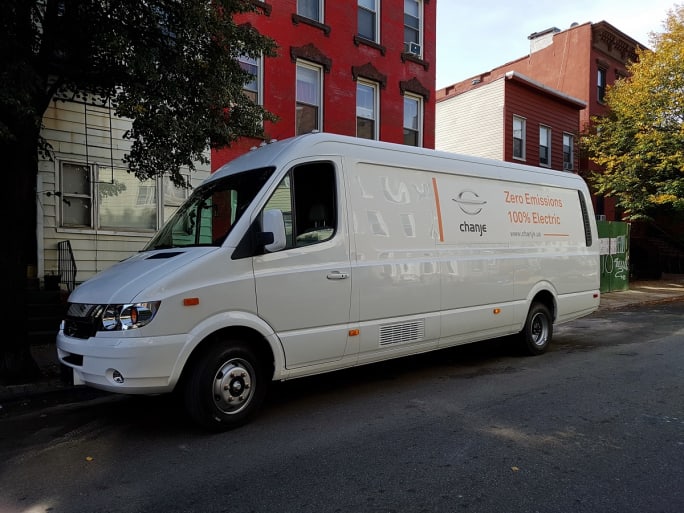
Battery-electric last-mile delivery vans (like this one from Chanje) could work quite well in many operational environments, but they won’t completely replace diesels anytime soon.
The case for electric
GHG Phase 2 for 2021 could be the rule that jump-starts the electric truck revolution. Through the magic of credits earned on more efficient vehicles, like battery electric vehicles (BEVs), manufacturers could afford to apply less drastic measures to their fleet of conventionally powered vehicles.
Hundreds of Class 4, 5 and 6 trucks and vans are already in revenue service in many parts of the U.S., with big carriers such as United Parcel Service, FedEx, and Frito Lay, and more manufacturers are introducing or testing such trucks all the time. Freightliner, for instance, is working with Penske Truck Leasing to field-test an electric version of the Freightliner M2 106 medium-duty truck in California. At the CES electronics show in January, Peterbilt launched the Model 220EV, a new medium-duty all-electric truck for the pick-up and delivery segment.
BEVs could be ideal candidates to replace conventionally powered light- and medium-duty trucks in segments where the technology suits the application. There’s a lot of talk about range anxiety, but a study by National Renewable Energy Laboratories of a delivery fleet in the Seattle area showed that matching the routes to the capability of the truck rather than forcing the electric truck to replicate diesel duty cycles was a better indicator of their potential to replace some diesel trucks.
In studying PepsiCo’s Frito-Lay North America diesel and electric vehicles, NREL found that average daily driving time for both electric and diesel units was just 1.5 hours, with most of the electric vehicles running less than 45 miles per day and consuming only 55 kWh of the battery’s 80 kWh capacity.
Tabel says Isuzu customers have traditionally bought one truck for all their routes. (Isuzu showed a battery-electric N-Series cabover at the Work Truck Show in Indianapolis last year, a research vehicle to allow the manufacturer to gauge interest from fleets who would use the truck for certain applications.)
“There’s room there to optimize the truck to the route; long routes for the diesels and shorter for gasoline or maybe electric trucks,” Tabel says. “When you look at the possible complexity of the 2021-and-beyond vehicle, battery-electric trucks could make a lot of sense for the consumer.”
Subscribe to Our Newsletter
More Equipment

How Volvo Updated Its D13 for EPA 2027 [Watch]
Volvo’s updated D13 promises lower emissions without sacrificing performance or fuel economy. Take a closer look at what changed inside the engine in this HDT Spotlight video.
Read More →
Michelin Tire Improves Efficiency and Durability for Regional Fleets
The Michelin X Multi Energy D2 is a regional haul drive tire engineered to help fleets improve fuel efficiency, durability and traction in demanding stop-and-go operations.
Read More →
ZF Expands Commercial Vehicle Push in North America
ZF is expanding its North American commercial-vehicle presence with new transmission applications, electrification, trailer technology and autonomous-driving systems.
Read More →
Tesla Wants a Self-Driving Semi. Are Cameras Enough?
Could Tesla’s camera-only autonomous driving technology work on an 80,000-pound Semi? In this commentary, HDT's Deborah Lockridge takes a look at Tesla, Cybercab, and how autonomous trucks see the road.
Read More →
Kodiak: Driverless Long-Haul Truck Launch on Track for 2026
Kodiak AI says its driverless long-haul safety case is 93% complete and it remains on track to begin commercial operations by year-end 2026.
Read More →
What DOT’s Automated Vehicle Strategy Means for Trucking
The U.S. Department of Transportation issued a new automated-vehicle strategy that outlines plans for driverless-truck regulations, cross-state freight corridors, and federal safety standards.
Read More →
East Coast Port Launches $45M Electric Truck Push
The Port Authority of New York and New Jersey announced millions in incentives for zero-emission drayage trucks, yard tractors, and new charging hubs near the port.
Read More →
PlusAI Going Public to Fund Autonomous Truck Launch
A SPAC deal could provide PlusAI with up to $300 million as it works toward a 2027 commercial launch of factory-built autonomous trucks.
Read More →
NHTSA Moves to Rewrite Truck Fuel-Economy Rules
The National Highway Traffic Safety Administration says it lacks authority to regulate medium- and heavy-duty truck engines separately from complete vehicles, but the existing standards have not yet been eliminated.
Read More →
Detroit Opens Orders for EPA 2027 Engines
Detroit isn’t starting from scratch to meet EPA 2027 diesel emissions standards. Its Gen 6 DD13 and DD15 engines keep much of today’s platform while updating the fuel and aftertreatment systems.
Read More →