




Medium-Duty Engine and Fuel Problems Decrease, Unscheduled Downtime Increases
As medium-duty truck engine technology advances, more complicated repairs lead to more unscheduled downtime, according to the J.D. Power and Associates 2012 U.S. Medium-Duty Truck Engine and Transmission Study
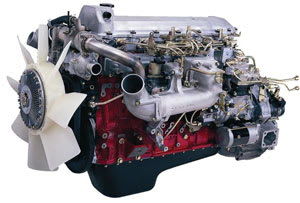
Hino engines rank highest in customer satisfaction for a fifth consecutive year.
As medium-duty truck engine technology advances, more complicated repairs lead to more unscheduled downtime, according to the J.D. Power and Associates 2012 U.S. Medium-Duty Truck Engine and Transmission Study.
The study, now in its fifth year, measures customer perceptions of 2011 model-year Class 5, 6 and 7 gasoline- and diesel-powered engines and provides manufacturers with a comprehensive and objective measure of customer satisfaction and product quality.
Eight attributes are measured to determine overall engine satisfaction: engine reliability and dependability; ease of access for service or maintenance; maintaining speeds on grades; acceleration when fully loaded; control module (ECM); vibration at idle; engine warranty; and average fuel economy.
Overall, the number of engine and fuel problems has decreased to 40 problems per 100 trucks (PP100), down by 11 PP100 from 2011. While the number of problems has decreased, the average length of unscheduled downtime due to these problems is 13.4 days, an increase of 2.7 days from 2011.
"As engine manufacturers continue to make advances in technology, there will likely be fewer problems," said Brent Gruber, director of the commercial vehicle practice at J.D. Power and Associates. "However, the trade-off is that when problems occur, they will likely be more complicated and require more downtime to fix."
The study finds that overall satisfaction with medium-duty truck engines is 760 (on a 1,000-point scale), and increases to 778 when selective catalytic reduction technologies are used to meet emission requirements.
Satisfaction varies among the different classes of trucks, with an 11-point gap in satisfaction between the highest- and lowest-scoring classes. The greatest difference among the three truck classes is the number of reported PP100, with considerably fewer engine problems reported for Class 5 trucks, compared with Class 6 and Class 7 trucks.
Customers' perceptions of their truck engine's performance are the most important factor of overall truck satisfaction. The 2012 study finds that owners who rate their overall engine satisfaction 9 or 10 on a 10-point scale, compared with those who rate their overall engine satisfaction 8 or lower, are more than twice as likely to say they "definitely will" specify the same engine brand again when they're in the market for a new truck (50% vs. 19%, respectively) and repurchase the same vehicle brand (50% vs. 21%, respectively).
"The level of satisfaction directly influences customers' future buying behaviors. By exceeding customers' expectations, engine manufacturers are generating customer loyalty for both the engine and truck brands," said Gruber.
Hino engines rank highest in customer satisfaction for a fifth consecutive year with a score of 801 and performs particularly well in control module; ease of access for service or maintenance; engine reliability and dependability; average fuel economy; and engine warranty. Cummins (793) and Paccar (789) follow Hino in the rankings.
The 2012 U.S. Medium-Duty Truck Engine and Transmission Study is based on responses from 1,272 primary maintainers of one-year-old conventional cab medium-duty trucks. The study was fielded between June and July 2012.
More Equipment

Tesla Wants a Self-Driving Semi. Are Cameras Enough?
Could Tesla’s camera-only autonomous driving technology work on an 80,000-pound Semi? In this commentary, HDT's Deborah Lockridge takes a look at Tesla, Cybercab, and how autonomous trucks see the road.
Read More →
Kodiak: Driverless Long-Haul Truck Launch on Track for 2026
Kodiak AI says its driverless long-haul safety case is 93% complete and it remains on track to begin commercial operations by year-end 2026.
Read More →
What DOT’s Automated Vehicle Strategy Means for Trucking
The U.S. Department of Transportation issued a new automated-vehicle strategy that outlines plans for driverless-truck regulations, cross-state freight corridors, and federal safety standards.
Read More →
East Coast Port Launches $45M Electric Truck Push
The Port Authority of New York and New Jersey announced millions in incentives for zero-emission drayage trucks, yard tractors, and new charging hubs near the port.
Read More →
PlusAI Going Public to Fund Autonomous Truck Launch
A SPAC deal could provide PlusAI with up to $300 million as it works toward a 2027 commercial launch of factory-built autonomous trucks.
Read More →
NHTSA Moves to Rewrite Truck Fuel-Economy Rules
The National Highway Traffic Safety Administration says it lacks authority to regulate medium- and heavy-duty truck engines separately from complete vehicles, but the existing standards have not yet been eliminated.
Read More →
Detroit Opens Orders for EPA 2027 Engines
Detroit isn’t starting from scratch to meet EPA 2027 diesel emissions standards. Its Gen 6 DD13 and DD15 engines keep much of today’s platform while updating the fuel and aftertreatment systems.
Read More →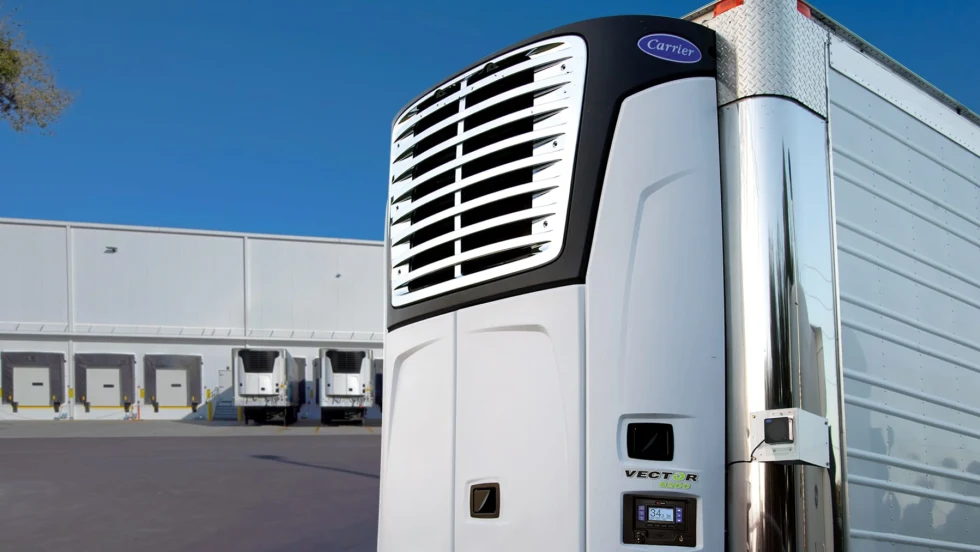
Carrier Transicold Adds All-Electric TRU for Stationary Cold Storage
Carrier Transicold’s new Vector 8200 all-electric transport refrigeration unit gives fleets a diesel-free option for temporary refrigerated and frozen trailer storage.
Read More →
A Closer Look at Kenworth’s Electric T880E Vocational Truck [Video]
Learn more about Kenworth's T880E battery-electric vocational truck at the Paccar Technical Center, including its range, applications, upfitting considerations, and PTO options, in this HDT Spotlight video.
Read More →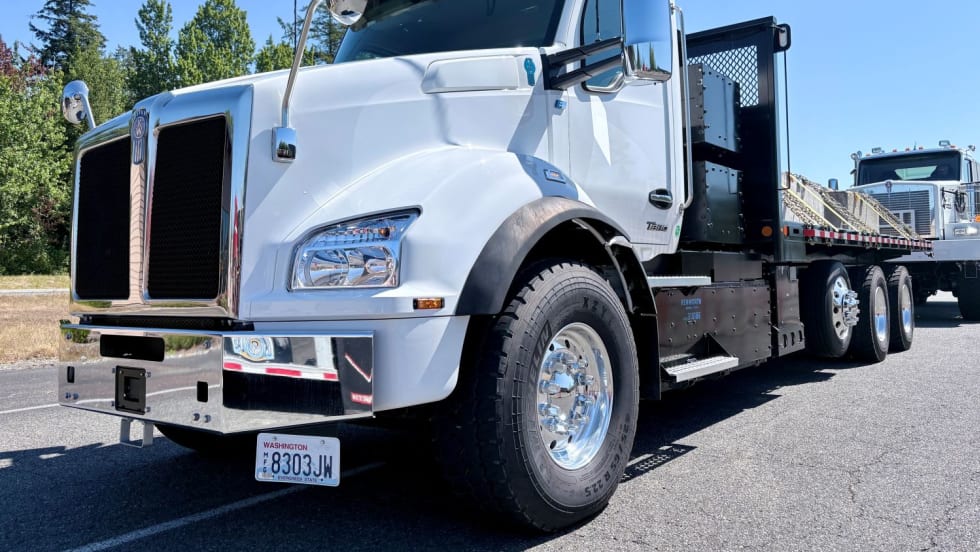
Kenworth T880E Brings EV Power to Vocational Trucks
A closer look at the Kenworth T880E’s range, charging, powertrain and upfit options — and where fleets are showing the most interest.
Read More →