




Lightweight Specs
Payload's important, but the longer an operator plans to keep his trucks, the more it will probably weigh.
Everybody wants payload, but not everyone is willing to pay for it – not in durability or longevity, anyway. Lightweight components leave room on the scale for more cargo, but some items wear out quicker than their heftier counterparts and probably aren't worth the extra expense they're likely to cause down the road.
Let's look at two examples: Freightliner Century Class S/T tractors operated by Schneider National Bulk Carriers, and a lightweight PayStar 5000i mixer built as a show truck by International Truck and Engine. Both are designed for low tare weight, but neither goes to extremes in specifications.
BULK HAULER
Schneider National has about 700 bulk tractors that pull tankers around the U.S., although operations are concentrated in Louisiana, New Jersey and Pennsylvania.
About 450 look like the one pictured in this article, bristling with aluminum parts, including tanks, boxes, hose racks and hubs. Drive axles are shod with single-wide tires on aluminum wheels. The single-wide tires alone save about 400 pounds over aluminum-wheel duals. The tractor certainly looks light, so one might guess its weight to be around 15,000 pounds.
It's actually about 17,000 pounds – or 18,500 with 200 gallons of fuel aboard, says Steve Duley, vice president, purchasing, for Schneider National Inc. in Green Bay, Wis. That might sound heavy, and in fact it's about 200 pounds more than a typical Schneider dry van tractor. But the bulk tractor is outfitted with 1,000 pounds of hydraulic and pneumatic pumping equipment needed to unload liquid and dry cargoes. And it has a roomy sleeper, which is important for over-the-road operations. Earlier sleepers are 58 inches long, but the latest ones are 70-inchers that can accommodate solo or team drivers to add versatility and keep good drivers.
The tractor is powered by a 12.7-liter Detroit Diesel Series 60 – not the lightest engine available, but it is the giant fleet's standard power. Standardization is useful for maintenance purposes. The engine is also robust.
Schneider has tried lighter-weight engines whose advertised weights are 400 to 500 pounds under the S60's, "but we still have very heavy [load] weights and we do try to keep them loaded both ways, and we try to keep the tractors 1 million miles before we dispose of them," Duley explains. "And we have found that the lighter-weight engines tend to need rebuilding before that."
Tank trailers have some aluminum in them, but mostly steel for durability, reliability and purchasing economy. They don't run as many miles as the tractors, so the extra cost of single-wide tires and aluminum wheels can't be justified. They run on duals with steel wheels. The tractors' big singles actually work well and suffer few flats, Duley says, partly because they have pumped-in sealant and also because they are checked every day by drivers.
The nature of the business is another factor in Schneider's spec'ing. Dedicated local fuel-hauling fleets that need every ounce of payload they can get can be much lighter, he notes, "but the way we sell our services, light weight is only important up to a point."
A shipment of product carried by a for-hire operation like Schneider National Bulk doesn't always push one of its rigs to a full 80,000 pounds. Although Schneider has been weight conscious regarding its van equipment for most of its history, even those rigs reach full gross only 15 percent to 20 percent of the time.
LIGHTWEIGHT MIXER
Payload is everything to ready mix operators, who often send out their trucks fully loaded with concrete that weighs about 4,000 pounds per cubic yard. So squeezing out tare weight was the point of the International PayStar mixer displayed at the World of Concrete show in Las Vegas earlier this year. As it sits, this truck tips the scales at 23,040 pounds, which is several thousand less than a typical 10-wheel rear-discharge mixer with a 10-yard drum, the company says.
Usually mixers use auxiliary lift axles to gain more payload, but of course state weight laws always determine how a truck is set up. This 10-wheeler could theoretically operate in many locales, say Bill Sixsmith and Frank Raney, severe-service product planners who had a big hand in the truck's creation. In practice, only a few jurisdictions allow a lot of concrete to be carried on three axles – New York City and the state of Texas come to mind – but we can still learn some lessons from it.
The specs list begins with International's PayStar 5600i chassis with a set-back steer axle, which laws in many eastern states favor (a 5500i has a set-forward axle). It has a lightweight aluminum cab, which saves several hundred pounds over the steel cab used on the 7000 series. This truck also has aluminum tanks, battery box and steps.
Its 10 wheels are all aluminum discs, which in the 22.5-inch size save about 330 pounds versus 10 steel wheels. As we've seen, single-wide tires on the drivers would've saved even more, but most operators prefer the peace of mind that duals offer (ready mix concrete is a highly perishable commodity, and you don't have long to change a tire before the stuff in the drum begins setting up).
The wheels are bolted to steel-and-iron Centrifuse brake drums, which slash nearly 400 pounds compared to iron-only drums, according to supplier figures.
Under the PayStar's big hood is a Cummins ISL, a heavy-duty in-line six-cylinder based on the midrange ISC. The 8.8-liter ISL weighs about 500 pounds less than a bigger-block ISM, yet is respectably strong: 345 horsepower at 1,600 rpm (330 at the 2,100-rpm redline) with peak torque of 1,150 pounds-feet at 1,300 rpm. Mixer trucks do not run high annual miles, so lighter-weight engines such as the ISL will last sufficiently long in years. (By the way, the current ISL and ISC are exempt from using cooled exhaust-gas recirculation, which other Cummins diesels have had since October 2002, but will get it come January 2007.)
Wait – why not use The quest for light weight notwithstanding, the mixer truck's front and rear axles are chosen primarily for strength. The International-branded steer axle's capacity is 22,000 pounds and the Meritor tandem's is 44,000 (though that's a little less than the usual 46,000-pound tandem often found on such a truck). The main frame's rails are 12 inches high, and an outside C-channel reinforcer adds even more beef. So no corners were cut here in the name of weight savings.
The biggest weight-saver of all, though, is the McNeilus Revolution body with its fiberglass drum, which saves 2,000 pounds compared to a steel drum, according to its maker. Almost any mixer could use that, and would gain a half-yard in capacity, McNeilus advertises. It says the Revolution, introduced several years ago in Las Vegas, is becoming popular, though many operators want to see how the fiberglass holds up in the long term.
And speaking of payload, International's PayStar name is back. It applies to the vocationally oriented severe-service 5000i series, and is part of a revival of "star"-suffixed names that will be applied to various products in coming months. Remember Loadstar, Cargostar and Transtar, which disappeared in the '80s? They may or may not reappear, but ProStar is the moniker for International's new highway tractor that's due out next January.
More Fleet Management

How Innovative Trucking Leaders Turn Change Into an Advantage
As the pace of change accelerates in trucking, the fleets that adapt best have more than the latest technology. They have cultures that embrace improvement.
Read More →
Freight Broker Bonds Just Got Harder to Get. Here's What That Means for Your Fleet.
When it gets harder for a freight broker to prove they are financially sound, the ones who cannot clear that bar get pushed out of the market. And those are exactly the brokers who used to leave motor carriers holding the bag.
Read More →
Long-Awaited Canadian Border Bridge to Open in Detroit
For trucking, the bridge opening should offer immediate improvements in efficiency and reliability, with new customs facilities, expanded inspection capacity, and direct freeway-to-freeway connections.
Read More →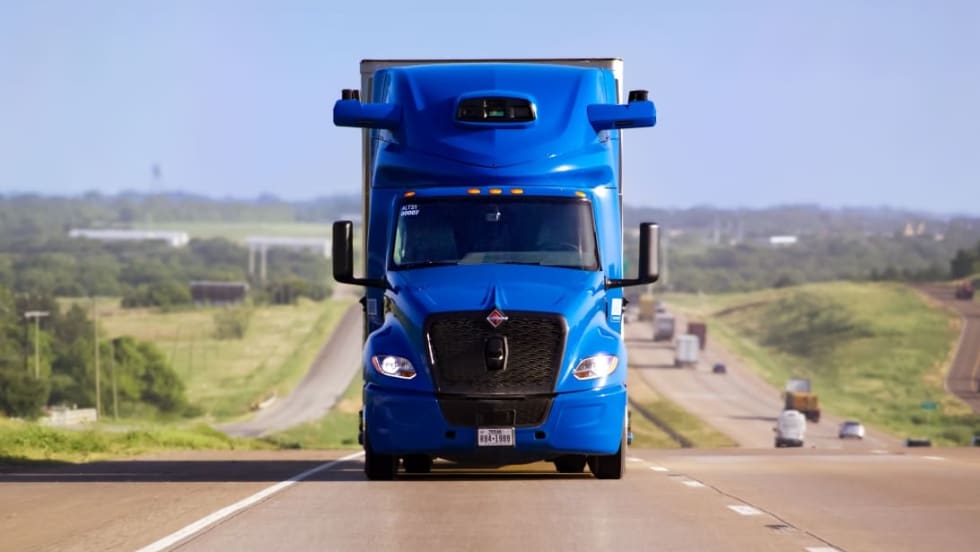
Aurora Rolls Out Next Generation of Driverless Trucks for Commercial Freight
Aurora's latest autonomous trucks it's rolling out with International feature lower-cost hardware designed for a million miles as the company expands commercial driverless freight operations across the U.S. Sun Belt.
Read More →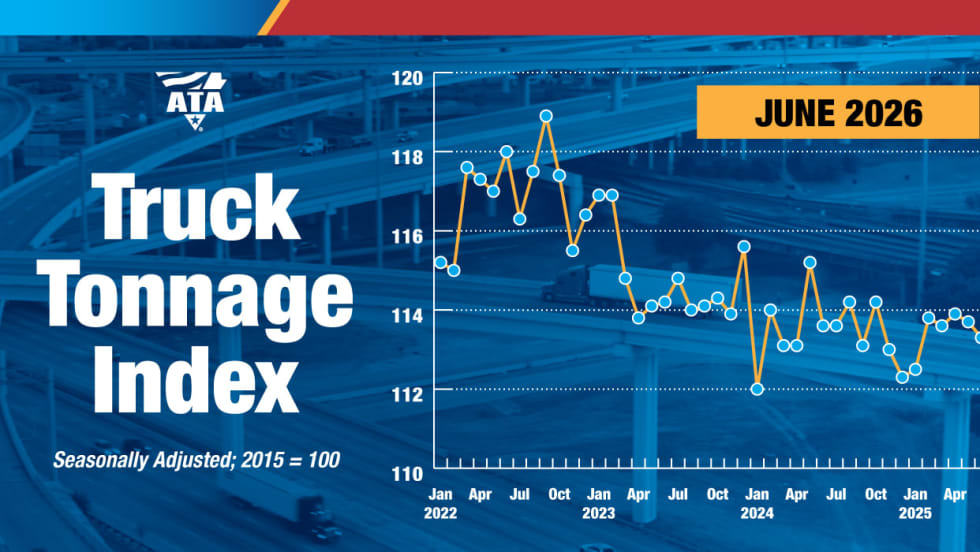
Freight Tonnage Down, Rates up, as Lower Capacity Powers Trucking Recovery
The recovery from the freight recession continues to be driven by reduction in capacity rather than by increased demand.
Read More →
Think Your Trucking Fleet Isn't Using Much AI? Think Again
Shadow AI — the use of unauthorized artificial intelligence tools at work — is becoming increasingly common, putting sensitive company data at risk. Learn how trucking fleets can protect sensitive data while embracing AI.
Read More →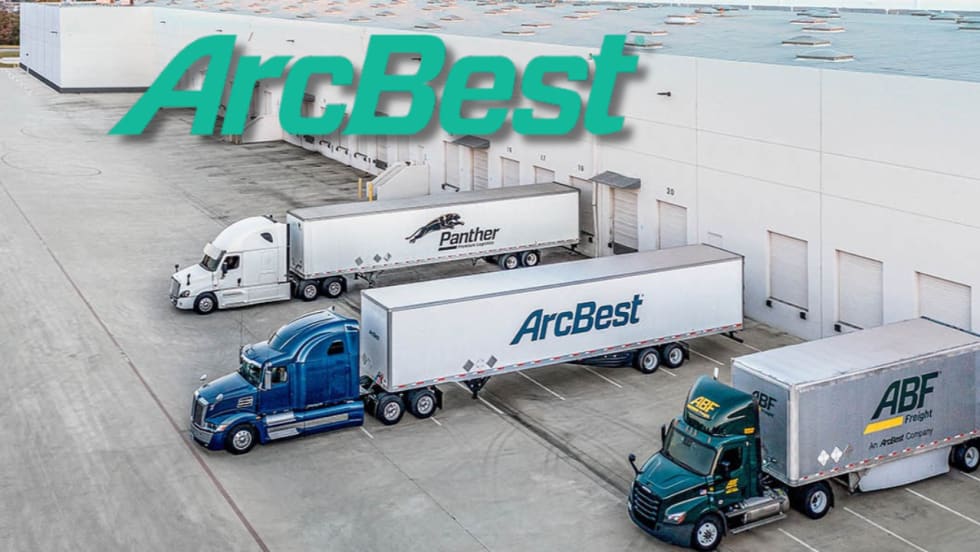
ArcBest Consolidates Brands, Cuts Workforce
The company will bring three business units under the ArcBest brand, eliminate about 2% of positions, and expects the changes to generate $40 million in annual savings.
Read More →
Trucking Fleets Faced Record Operating Costs During Third Year of Freight Recession
ATRI's annual operational cost report shows carriers trimmed fleets, delayed equipment purchases, and ran older trucks as expenses continued to outpace freight rates.
Read More →
Michelin Adds AI Assistant to MyConnectedFleet Platform
Michelin’s new generative AI tool delivers instant fleet insights, helping managers analyze fuel use, tire maintenance, vehicle status, and operational performance without manually creating reports.
Read More →
LytxOne Platform Now Features AI, Compliance, and Asset Tracking Tools
New enhancements add AI-powered insights, asset tracking, compliance automation, and configurable privacy controls to Lytx's all-in-one fleet management platform.
Read More →