




Is Hurricane Harvey the Lead-in to Something Significant in Trucking?
It’s apparent that people are working very hard in Houston, because the spot market trucking statistics are showing strong positive moves, in some cases to levels above pre-storm benchmarks.
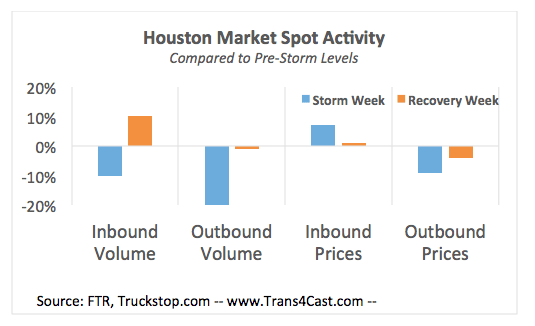
How have the after-effects of Hurricane Harvey affected trucking? FTR has quantified the numbers, gauging the impact on the overall trucking market and the Texas and Houston markets in particular.
During the first week, almost 10% of all U.S. trucking was affected in some manner. That number jumps to near 100% for the Gulf Coast region west of the Mississippi. After a month, the numbers will ease but still remain significant. The largest effects were regionalized, but transportation managers across the entire U.S. were scrambling.
As we moved into the second week of the Hurricane Harvey drama, we saw three things happening, all reflecting supply chains and trucking operations thrown out of normal routines by this long and powerful storm.
Volumes fell more in the seven days after the end of the storm than at the height of the storm.
Inbound rates were up, as truckers were reluctant to go into this risky environment, even though there were more outbound spot loads than inbound.
The Truckstop.com Market Demand Index (MDI) jumped 10% and prices jumped 3%. This is just what one would expect when a storm takes 5-10% of trucks out of normal patterns.
Looking to Recovery
It’s apparent that people are working very hard in Houston, because the spot market trucking statistics are showing strong positive moves, in some cases to levels above pre-storm benchmarks.
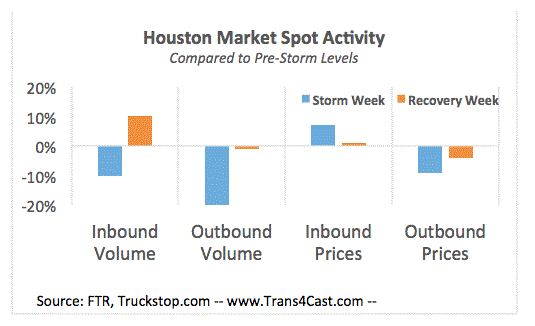
Beginning with day 13 (Tuesday, Sept. 5), the recovery clearly had started. Outbound volumes in Houston were up for the week and would have been back at pre-storm levels if not for Labor Day. Outbound prices still lagged pre-storm levels. The outbound volume situation was very good news, because it implies that the Houston manufacturing sector, so important for U.S. fuel and chemical supplies, had begun to roar back to life.
On the inbound side we saw clear evidence of the beginning of the rebuild efforts. Volumes during Labor Day week were up 10% over pre-storm levels. Prices had stabilized as well, almost exactly at pre-storm levels.
As to differences by trailer type, the inbound reefer sector was the early recovery winner, as retailers were busy restocking shelves. Flatbeds were weakest – apparently, construction is still depressed. It is the hardest to restart, given the need to acquire capital, secure permits and draw up plans.
Potential to Shift the Market
We stand at a moment where the freight economy is looking relatively strong. We’ve already weathered two large-scale disruptive events (Harvey and Irma), the full effects of which have only begun to be felt, and another is on the doorstep with the electronic logging device mandate.
Market watchers have been wondering when trucking contract rates would begin following spot rates up. The combination of regional and fuel effects from Harvey/Irma, coupled with the ELD mandate in December, could be the catalyst to a pricing spiral.
The potential clearly exists for a capacity shortfall as bad or worse than that seen in 2014. It’s by no means a certainty, but if it were me I sure would be laying out contingency plans.
More Fleet Management

What the U.S.-Canada Trade War Means for Trucking
Escalating U.S.-Canada tariffs could disrupt cross-border freight, reduce truck volumes, raise costs, and create new uncertainty for carriers on both sides of the border.
Read More →
What Are Trucking’s Top Concerns for 2026?
The American Transportation Research Institute wants to know what's worrying trucking fleet managers, drivers, and other stakeholders in its annual Industry Issues survey.
Read More →
American Trucking Associations Looks for a New Leader
ATA President and CEO Chris Spear abruptly left his job at the association on August 21, at a pivotal time for the trucking industry.
Read More →
Public Wi-Fi Cybersecurity Risks: How Truck Drivers and Fleets Can Protect Their Data
Public Wi-Fi can expose truck drivers and fleets to credential theft, malware, and other cyber threats. Here’s how to reduce the risk on the road.
Read More →
For Nicky Cupp, Fleet Innovation Starts With Frustration
HDT Truck Fleet Innovator Nicky Cupp turns everyday pain points at Fraley & Schilling into opportunities for better technology and smarter processes.
Read More →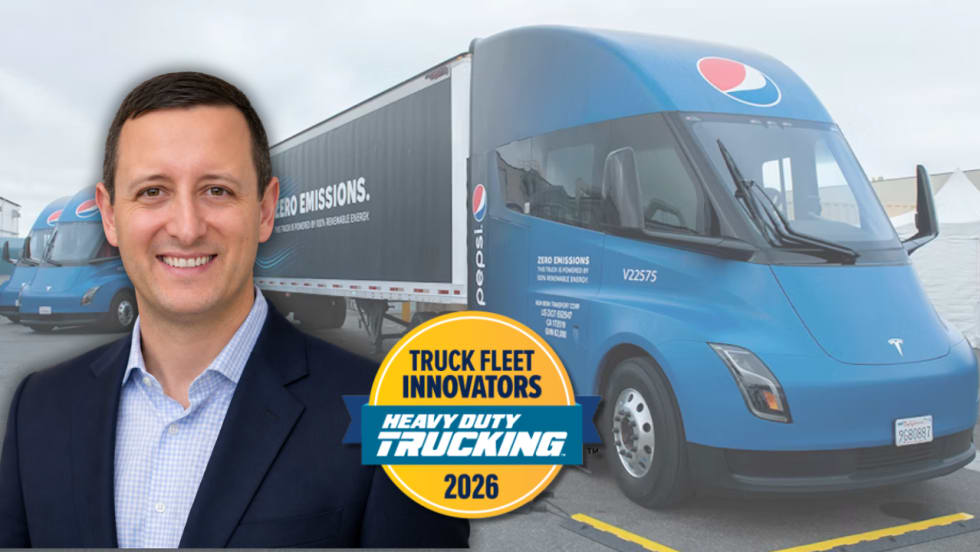
Adam Buttgenbach’s Approach to Electric Trucks: Start With Where They Fit
HDT Truck Fleet Innovator Adam Buttgenbach helped PepsiCo build one of North America’s largest EV fleets by focusing on where electric trucks make operational sense.
Read More →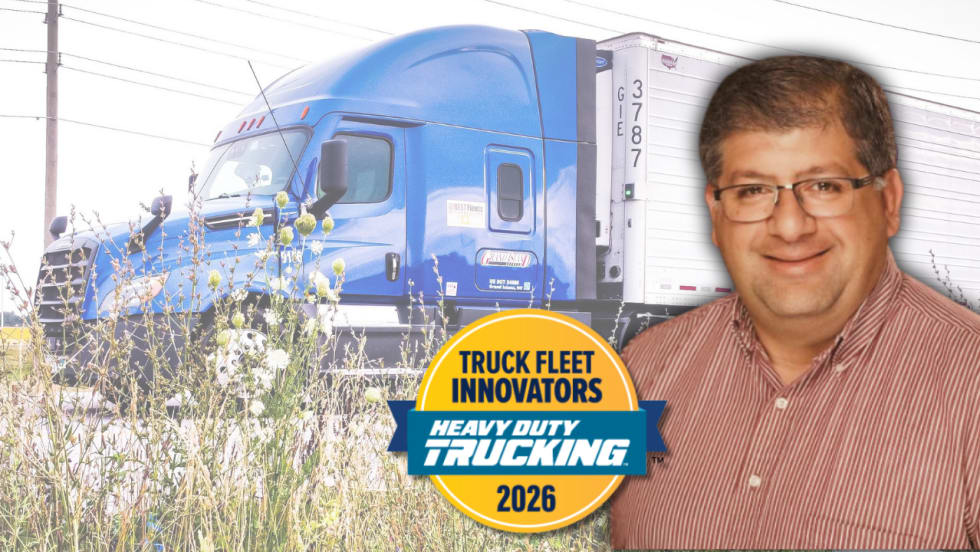
Deen Albert: Let Automation Do the Math, People Make the Decisions
HDT Truck Fleet Innovator Deen Albert makes sure people are still at the heart of operations at Grand Island Express, even while adopting artificial intelligence tools. AI-assisted dispatch helped boost revenue 25% with the same number of trucks.
Read More →
Trimble’s New AI Agent Takes Aim at Fleet Back-Office Busywork
Arc Agent works across Trimble TMS products to automate repetitive tasks such as freight orders, maintenance, invoices, fuel costs and more.
Read More →
How HDT’s 2026 Truck Fleet Innovators Are Rethinking Fleet Operations
Meet five trucking leaders who are challenging assumptions, solving operational problems, and putting innovative ideas to work.
Read More →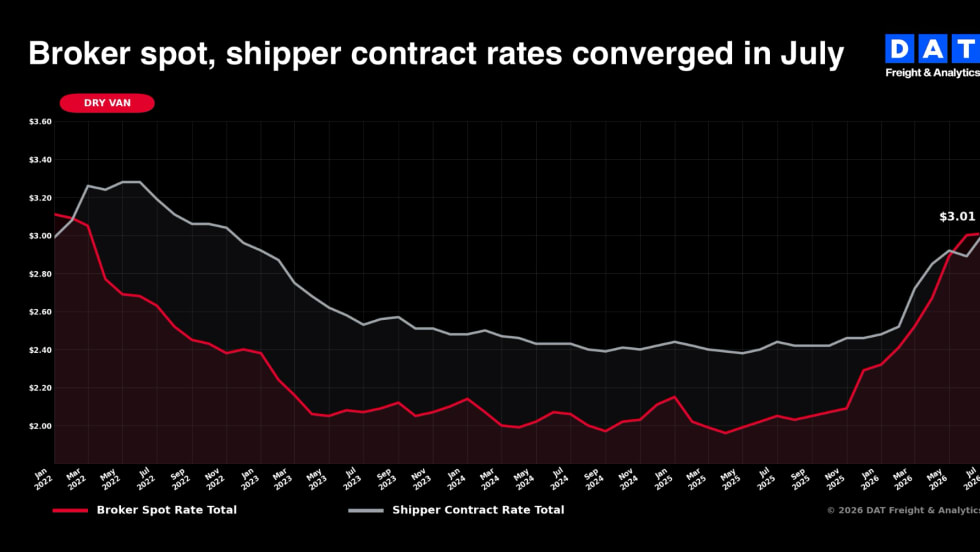
Tight Trucking Capacity Pushes Rates Higher Even as Freight Volumes Fall
“Spot rates moving ahead of contract rates have historically signaled a tightening market, but we haven’t seen a capacity-driven market quite like this one,” said DAT's Dean Croke.
Read More →