



How Can Trucking Fleets Keep the Best Drivers?
Why Do Truck Drivers Leave — Really?
Invest in Truck Drivers’ Lives to Improve Retention
 MENU
MENU SEARCH
Making drivers feel connected and part the social fabric of your heavy-duty trucking business is a great way to boost retention.

Building and fostering a sense of community helps driver fight off feelings of isolation and feel more engaged with a company.
Photo: Prime
“Work-life balance” can mean different things to different trucking companies and different drivers. However, social activities for drivers, charitable giving or involvement, and other opportunities for drivers to get involved are important, says Mark Murrell, co-founder and president of CarriersEdge, which administrates the Best Fleets to Drive For program.
“Those are the things that build the relationships that help people stick around," he says. "They feel like they're part of something.”
Other factors come into play, such as:
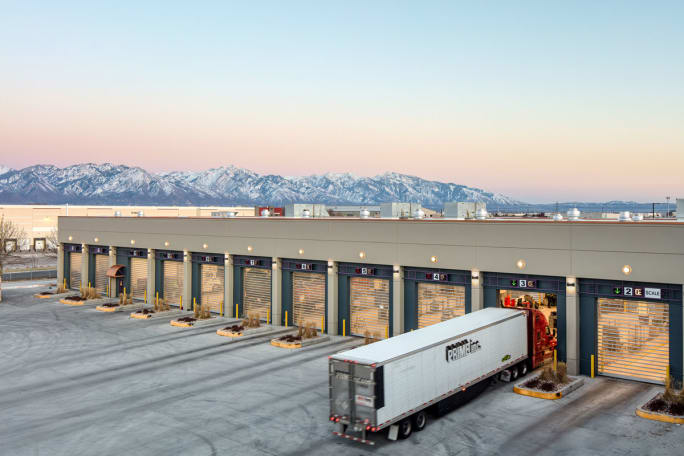
Prime places an emphasis on having top-notch facilities with plenty of amenities to help tired drivers relax.
Photo: Prime
For Prime Inc., which has about 10,000 associates, that means terminal facilities that include doctor's offices, spas and salons, fitness centers, workout facilities, personal trainers, driver health and wellness consultants, and nutrition and physical fitness counselors for drivers.
Prime’s three main terminals — Pittston, Pennsylvania, Springfield, Missouri, and Salt Lake City, Utah — have most of the amenities and programs mentioned above. Springfield and Salt Lake City have them all.
“A lot of people say, ‘We appreciate our drivers,’ and a lot of people probably say that and do that. But do they show it with the investment and resources for those drivers?” says Jim Guthrie, director of operations for Prime.
“We’ve seen some really nice facilities out there, but I don't think anybody goes to the extent that we do, that I'm aware of.”
Events for drivers go a long way in helping build a culture that helps drive retention, according to Guthrie, such as:
“Those are events that are really designed to help bring drivers into the culture and ingratiate them into the culture, Guthrie adds.
At Prime, there is also a focus on supporting drivers both at home and on the road through programs like its Highway Diamonds program for women drivers, or through participation in Good Dads, a program that is not specific just to Prime but focuses on keeping the relationship at home strong.
American Central Transport, a medium-sized carrier with 280 drivers and a regular among the Best Fleets to Drive For, provides a wide range of services and programs to help support drivers. That includes Rocky, the ACT chaplain who offers spiritual support and strikes up friendships with the drivers.
“It can be hard, and hard things can happen on the road,” explains Phil Wilt, ACT president and CEO. “You can have a family member diagnosed with cancer, or someone you know. We’ve had a lot of deaths, where someone’s family member dies and they’re distraught and they’re two states or three states away from their home. And so often Rocky will jump in and talk to them, listen to them, pray with them, if they want that.”
The company also provides a life coach and offers things such as financial well-being classes on Zoom. There are mental health resources as well, including a mental wellness coach.
“He's a coach, not a counselor,” Wilt says. “What we try to do is listen, and then if folks need additional services, or need additional help, then we get them tied into our insurance carrier, to our EAP [employee assistance program], or a counselor.
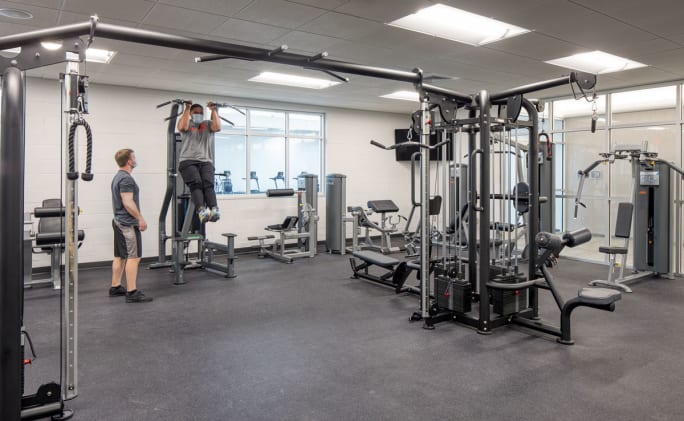
Giving drivers a safe, clean place to workout and shower are great ways to let them feel valued and improve their quality of life.
Photo: Prime
“It can be anything, really, based on having a conversation. Sometimes people just need to talk, and someone needs to listen.”
In the works at ACT is a focus on helping drivers be healthy and more physically fit. There will be activities such as weight loss challenges and tips for staying healthy on the road.
ACT has a chronic condition management program through its insurance broker. In this program, a health nurse works with any ACT associates who have been identified as having chronic conditions such as high blood pressure or diabetes.
For example, when working with drivers who have diabetes, she will help them think about menus, diets, and how to pack a cooler with healthy items when they are on the road.
She also checks to make sure drivers and other associates are taking their medicines, following up with a doctor, and in general staying on track with what they need to be doing. Working with the nurse also opens up the opportunity for a driver to get a discount on his or her health plan.

Fleets have more visibility into truck health, safety events, and driver activity than ever. The next challenge is turning all that information into useful guidance for the person who has to decide what to do next.
Read More →
Federal regulators also are targeting more than 160 additional training providers and launching a nationwide audit of third-party CDL skills testers as part of a broader crackdown on trucking fraud.
Read More →
Two pilot programs could eventually reshape hours-of-service rules, giving truck drivers options to pause their 14-hour clock or use longer split sleeper rest periods.
Read More →
Medical-card violations jumped to the top of the driver out-of-service list during CVSA’s 2026 International Roadcheck, while English-language proficiency violations appeared among the leading violations for the first time.
Read More →
New Teletrac Navman research suggests that onboarding, transparency about driver data, and positive feedback can play a significant role in how commercial drivers respond to safety and coaching technology.
Read More →
KLLM is facing a federal sex-discrimination lawsuit over policies the EEOC alleges put female truck driver trainees at a disadvantage.
Read More →
By changing regulations on English-language proficiency requirements for commercial drivers, rather than relying on a guidance memo, the FMCSA said future administrations won't be able to walk back the Trump administration's stricter enforcement with just a memo.
Read More →
Watch to get an inside look at the Western Star trucks, technology, and community behind the Star Nation Experience 2026!
Read More →
The Freedom Haulers program pulls together existing and expanded programs at several federal agencies to recruit veterans to drive commercial heavy-duty trucks and cut the red tape for them to get a CDL, training, and employment.
Read More →
A test drive of Mack’s Command Steer active steering system evaluates how it can make truck driving easier and less tiring.
Read More →