How Tucker Freight Lines Modernized Its TMS and Integrated Its Fleet Systems
A digital overhaul helped Tucker Freight Lines connect its TMS, maintenance, and other software systems, transforming manual processes into a data-driven advantage for a growing fleet.
Tucker Freight Lines needed a better TMS and software tech stack solution for its fast-growing heavy duty trucking fleet.
Photo: Tucker Freight Lines
5 min to read
Tucker Freight Lines' Results at a Glance:
Eliminated more than 20 hours of manual maintenance tracking per week
Centralized data for profitability and lane analysis
Improved data accuracy across departments
Going to the cloud enabled more integration and reduced local cybersecurity burden
After AJ and Sauny Tucker acquired the small Iowa-based fleet Art Pape Transfer in 2018 and rebranded it as Tucker Freight Lines, the company tripled in size. But its technology wasn’t keeping up.
Ad Loading...
Systems didn’t talk to each other, staff relied on Excel and order scrolls for data, and reports didn’t match across departments.
Chief Information Officer Charles Martin joined the company nearly four years ago and set out to replace manual work with integrated, cloud-based systems and a single point of data entry.
Ad Loading...
Tucker already was a Trimble customer. But the transportation management system and other software the company was using needed to be revamped for what Martin calls “a full process improvement.”
“The system just wasn't working,” Martin explains, especially the lack of connection between the different software and departments. There was missing functionality and Martin admits that the system probably wasn’t being used to its full potential.
“We worked to improve the functions of the TMS to help our business grow.”
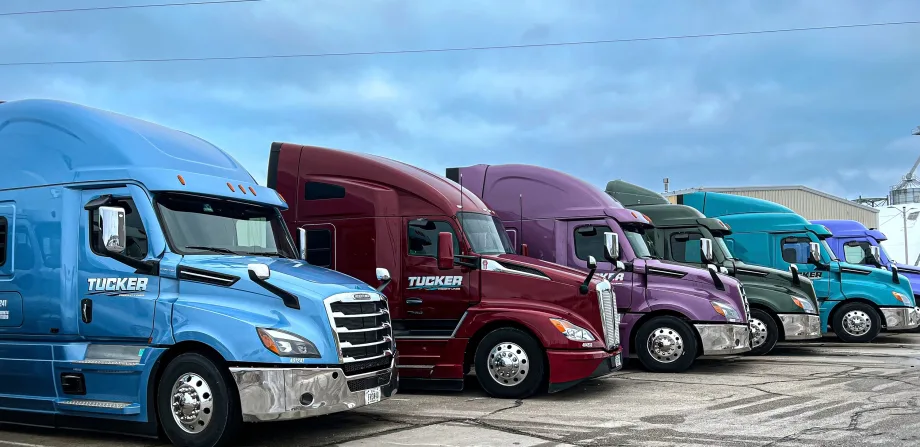
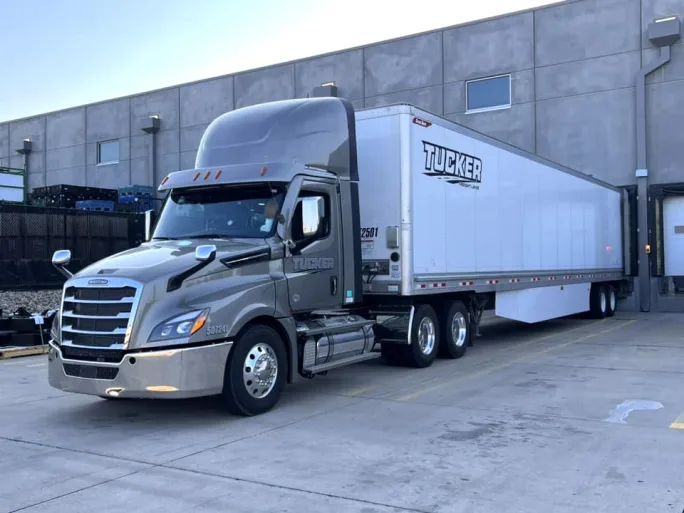
Tucker has more than 300 day cab and sleeper power units providing open deck, dry van, and dedicated services.
Photo: Tucker Freight Lines
Modernizing a Growing Fleet’s TMS
The Tucker team, already a Trimble customer, reached out for help in implementing Trimble’s TMT Fleet Maintenance and integrating it with the TMW.Suite TMS to create a single data entry point.
FLEET SNAPSHOT
Who: Tucker Freight Lines
Where: Dubuque, Iowa
Fleet: More than 300 day cab and sleeper power units providing open deck, dry van, and dedicated service
Fun Fact: Tucker’s trucks are a rainbow of colors, “like a bag of Skittles.” It’s appealing to truck drivers and helps when they sell or trade the trucks.
Challenge: Modernizing their TMS and other software to improve efficiency and data analytics.
That was a priority goal for Martin.
Ad Loading...
“When we enter a truck, when we enter an employee, when we enter a trailer or something in the system, I want one single point of entry, and I want it to touch every other system that's needed,” he says.
One of the first changes was transitioning to a cloud-based platform, also known as software-as-a-service (SaaS).
“The benefits were pretty immediate,” Martin says. It provided more of what he was looking for, a single point of entry. It also made integration easier and boosted cybersecurity.
“If you ask what keeps me awake at night, it is the one person that's going to get through our security,” Martin says.
Not having the burden of cybersecurity “allows us as a trucking company to focus on what we need to do, which is move freight,” he says.
Ad Loading...
Integrating TMS and Maintenance Systems
The biggest success, Martin says, was getting the different software programs to talk to each other.
“When I got here, our maintenance software did not talk to our TMS software,” he explains. “We had a TMS, we had a maintenance program, we had all of these other things that were in their own separate silos.”
The company relied heavily on manual processes to track vehicle maintenance and inventory. This led to inaccurate data and inefficient workflows, including untracked or improperly closed work orders.
“We've been able to take our systems and make them integrated and work very tightly. so that we eliminate those silos of separate reporting,” Martin says.
The benefits? Time saved from duplicating efforts and being able to more efficiently schedule truck maintenance and repair. The company completely replaced manual spreadsheets for tracking maintenance, saving over 20 hours of manual work each week.
Ad Loading...
“We found that we are able to be more efficient with our preventative maintenance, with planning, with purchase planning for our shop.”
And it wasn’t just integrating the maintenance and the TMS software. Other integrations include everything from recruiting software to CRM (customer relationship management) software.
Before Tucker Freight Lines' TMS revamp, people from different parts of the company couldn't even get the data to agree because everything was in separate silos.
“We’ve realized where our costs are missing,” Martin says. “We immediately found where the weaknesses are. We found inventory discrepancies that we wouldn't have known.”
As part of the project, he says, the team ensured that the TMS had the proper labels and accounts built to accurately measure profitability.
Ad Loading...
“We've centralized our reporting so that when we come to meetings, we're all reading out of the same playbook,” Martin says.
Being able to consolidate all of Tucker’s data reporting allowed company managers to determine real costs, real expenses, and what profits actually are, including by lane.
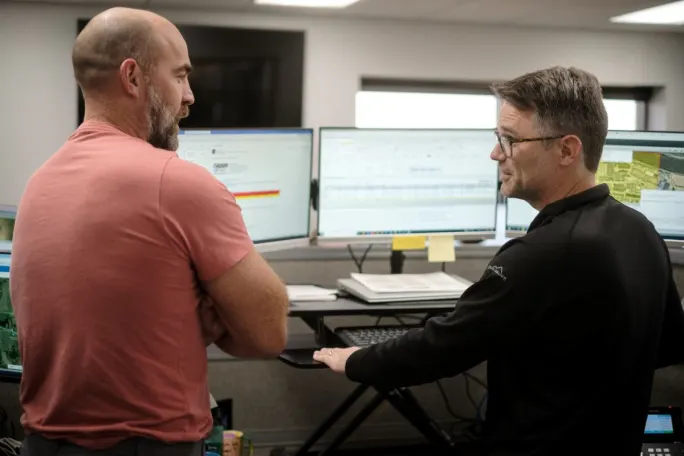
Looking ahead, Charles Martin is looking to integrate routing solutions that go beyond how a truck gets from point A to point B.
Photo: Tucker Freight Lines
Building a Culture of Integration and Efficiency
Implementing all this wasn’t easy.
Tucker and Trimble worked together to create a project plan. It included step-by-step milestones to address pain points such as data accuracy, system configuration, and training.
Then they manually verified and updated data for over 1,500 pieces of equipment and corrected meter readings on more than 300 power units. They identified gaps, streamlined processes, and implemented a full integration with existing systems.
Ad Loading...
An important part of the implementation was creating standard operating procedures, Martin says.
“We have to have things documented on how we’re doing this, so that A is doing it the same as B and C. Or even better yet that we only have A doing it because we've got a single point of entry. We had a lot of duplication before.”
The collaborative effort earned Tucker the 2024 Trimble Ovation award for collaboration.
Watch the full HDT Talks Trucking interview with Charles Martin and Trimble's Adam Adlerman
Preparing for the Next Stage of Digital Transformation
Tucker Freight Lines has seen some impressive results, but Martin has plans for more.
Ad Loading...
“There's just a host of things that right now just don't seem to run seamlessly.”
For instance, he wants routing solutions that go beyond how a truck gets from point A to point B, including all the fuel stops in between, taking into account hours of service, etc.
The bidding process is another area ripe for a technology update.
“A lot of it’s still done in Excel spreadsheets, unfortunately.”
The work isn’t finished. Martin is eyeing future advances in routing and bidding that could make the company’s systems even more seamless. But the hardest part — breaking down data silos and building a unified tech foundation — is already done.
Ad Loading...
Many fleets face the same problem Tucker Freight Lines once did: systems that just don’t talk to each other. By tackling those silos head-on and investing in integration and process discipline, Tucker turned hours of manual work into actionable insight.
AI That Supplements Rather than Replaces
Part of Tucker Freight Lines’ reinvented tech stack uses artificial intelligence, but Martin emphasizes that the company is not looking at it as a way to reduce headcount.
“We're looking at it to supplement the processes, to help us,” he says.
For instance, the company is accepting load tenders via AI and using voice text to improve efficiency.
When that frees up people’s time, he says, the company can reallocate resources to make it more efficient in other areas.
For fleet managers and collision repair professionals keeping heavy-duty trucks on the road, getting the color right the first time isn't just about appearance — it's about efficiency, turnaround time, and bottom-line results. Discover how today's digital color tools are transforming the repair process from guesswork to precision.
Carriers whose updates were due on or after June 1 have more time, while FMCSA works to stabilize its new registration system and warns of phishing sites impersonating its new carrier registration system, Motus.
Cargo theft is no longer just the cost of doing business. It's a multi-billion-dollar criminal enterprise exploiting vulnerabilities across your fleet, drivers, and supply chain.
Explore how telematics help refrigerated fleets improve visibility, uptime, efficiency, compliance, and cargo protection across connected cold chain operations.
Escalating U.S.-Canada tariffs could disrupt cross-border freight, reduce truck volumes, raise costs, and create new uncertainty for carriers on both sides of the border.
The American Transportation Research Institute wants to know what's worrying trucking fleet managers, drivers, and other stakeholders in its annual Industry Issues survey.
HDT Truck Fleet Innovator Adam Buttgenbach helped PepsiCo build one of North America’s largest EV fleets by focusing on where electric trucks make operational sense.