




4 Ways Intelligent Mapping Does More Than Get Trucks to Their Destinations
If your trucking fleet is using traditional manual route planning processes or letting drivers rely on generic mapping systems, you're risking delays, damage, and missed opportunities.
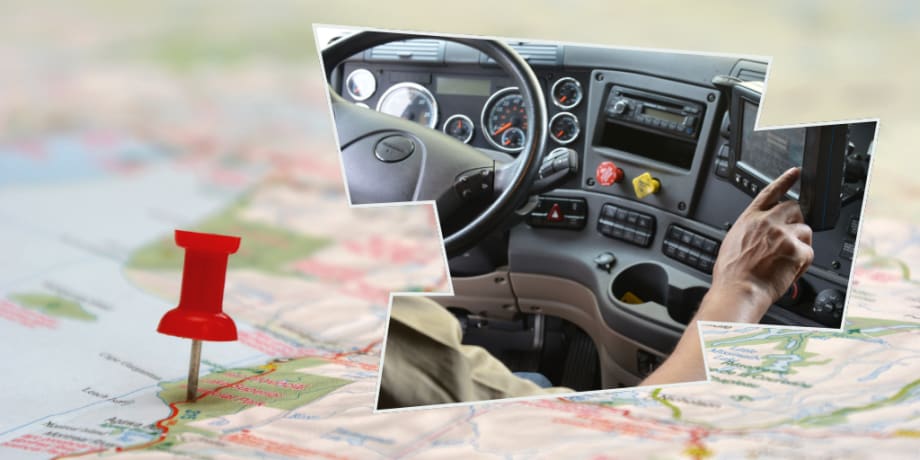
You might be surprised by the many things intelligent mapping and routing can do for your trucking fleet.
Image: HDT Graphic/Canva/Trimble
Route optimization has become ever more important in recent years. The rise in e-commerce has created new routing pressures, especially in the last mile. At the same time, rising fuel costs, the push towards net zero, and load theft have placed the spotlight on using preferred refueling locations and the need for safe, comfortable truck parking – especially overnight.
Layering these demands over the traditional goals of controlling costs and meeting tight deadlines has highlighted the limitations of generic mapping and routing solutions.
From large trucks stuck in construction zone traffic, to the damage – and cost – incurred when a truck hits a low bridge or takes a hazardous load through a tunnel without permission, many transportation companies have learned the painful lesson of relying on a phone’s GPS.
Consumer mapping technologies may be ubiquitous, but they lack the depth of insight required to manage the complexity associated with the commercial movement of goods.
Dedicated commercial route mapping technology has been developed to address the very specific demands of transportation fleets – from height and weight restrictions and hazardous materials transport designations to improving driver well-being and safety.
1. Help Fleets Meet Operational Goals
Reliance on online maps has become standard for most drivers, but effective commercial route optimization requires far more depth and breadth of insight than the basic, ubiquitous directions that cannot differentiate between a driver in a freight vehicle or a sports car.
Commercial mapping intelligence has evolved beyond simple visualization on a map to offer a wide range of insights on business and driver behavior that can significantly enhance fleet management.
Complex routing algorithms are used to determine the most efficient routes for delivery or service vehicles by considering factors such as traffic patterns, road permissions, congestion, low bridges, narrow lanes and fuel consumption.
Data surrounding new infrastructure construction and changes in existing restrictions is continually updated to give transportation companies confidence in the safety and legality of the designated route.
2. Make Transportation Sustainable Using Smart Routing
Transportation companies can leverage this depth of information to plan based on different priorities, comparing routes based on sustainability, cost, and time objectives.
For example, the ability to offer customers different routing models provides a competitive advantage by enabling transportation companies to support a client’s sustainability reputation.
It also assists fleets in future-proofing their operations so they can better serve and meet sustainability goals such as adhering to environmental rules and guidelines, a better understanding of vehicle carbon footprint, and a reduction in operating costs thanks to EV efficiency for long-term, sustainable cost reduction.
3. Boost Fleet Efficiency With Complex Routing Algorithms
Complex algorithms are used to determine the most efficient routes for delivery or service vehicles by considering factors such as traffic patterns, road permissions, congestion, and low bridges.
Route intelligence software can also track dwell time, a perennial problem for all transportation companies. By using precise polygonal geofencing to improve the accuracy of arrival and departure notifications, the overall journey time – including both travel and stop time – is more precise.
It also enables companies to better understand the efficiency and performance of the fleet – information that can help to reduce empty miles, cut costs, and reduce emissions while adding revenue.
4. Keep Drivers Safe With Truck-Specific Mapping Technology
By investing in smart mapping technology, elements such as planning processes will automatically consider drivers’ hours of service (HOS) and include specific locations for resting and parking to avoid the risk of unsafe roadside parking.
Even more, intelligent route mapping allows transportation companies to optimize loyalty programs and discounts around specific brands of fuel to optimize routes, understand freight spend, and plan routes more efficiently.
The routes can be designed around the use of rest stops preferred by drivers wherever possible to ensure they have access to good quality food and showers.
Driver safety throughout the journey — especially during the last mile — can be further enhanced with vehicle-specific information.
Commercial mapping intelligence solutions pinpoint the actual final location, such as the delivery entrance to the shopping center (not the consumer entrance suggested by generic mapping solutions).
In addition, transportation companies can customize mapping, overlaying a preferred approach path for specific locations to ensure every driver has the optimal, safe route to each location – whether it’s a store, warehouse, or distribution center.
The Risks of Manual Routing and Generic Routing Apps
For transportation companies wrestling with the daily need to mitigate disruption, reduce costs, and meet escalating customer demands, intelligent route mapping and routing is becoming a strategic imperative.
Companies can no longer afford to rely on traditional manual route planning processes or let drivers rely on their own generic mapping systems. The risks of delays, damage, and missed opportunities are simply too high.
Intelligent route mapping provides businesses with a chance to improve day-to-day planning and ensure routes are optimized for each vehicle, taking into account weight, size, and hazardous materials.
It gives the chance to focus on both driver performance and well-being, enabling companies to prioritize access to safe overnight parking and rest stops.
Finally, it also delivers vital insight into the intricate interplay of suppliers, processes, and partners that allows transportation companies to optimize operations, intelligently consider innovations such as EVs, and confidently navigate today's complex marketplace.
About the author: Kate Legnola is the senior product manager for Trimble MAPS, where she has worked since 2019. Prior to that she was with ALK Technologies for over 11 years. This contributed guest article was authored and edited according to Heavy Duty Trucking’s editorial standards and style to provide useful information to our readers. Opinions expressed may not reflect those of HDT.
More Fleet Management

How Telematics Improves Visibility, Control, and Performance in Refrigerated Fleets
Explore how telematics help refrigerated fleets improve visibility, uptime, efficiency, compliance, and cargo protection across connected cold chain operations.
Read More →
What the U.S.-Canada Trade War Means for Trucking
Escalating U.S.-Canada tariffs could disrupt cross-border freight, reduce truck volumes, raise costs, and create new uncertainty for carriers on both sides of the border.
Read More →
What Are Trucking’s Top Concerns for 2026?
The American Transportation Research Institute wants to know what's worrying trucking fleet managers, drivers, and other stakeholders in its annual Industry Issues survey.
Read More →

American Trucking Associations Looks for a New Leader
ATA President and CEO Chris Spear abruptly left his job at the association on August 21, at a pivotal time for the trucking industry.
Read More →
Public Wi-Fi Cybersecurity Risks: How Truck Drivers and Fleets Can Protect Their Data
Public Wi-Fi can expose truck drivers and fleets to credential theft, malware, and other cyber threats. Here’s how to reduce the risk on the road.
Read More →
For Nicky Cupp, Fleet Innovation Starts With Frustration
HDT Truck Fleet Innovator Nicky Cupp turns everyday pain points at Fraley & Schilling into opportunities for better technology and smarter processes.
Read More →
Adam Buttgenbach’s Approach to Electric Trucks: Start With Where They Fit
HDT Truck Fleet Innovator Adam Buttgenbach helped PepsiCo build one of North America’s largest EV fleets by focusing on where electric trucks make operational sense.
Read More →
Deen Albert: Let Automation Do the Math, People Make the Decisions
HDT Truck Fleet Innovator Deen Albert makes sure people are still at the heart of operations at Grand Island Express, even while adopting artificial intelligence tools. AI-assisted dispatch helped boost revenue 25% with the same number of trucks.
Read More →
Trimble’s New AI Agent Takes Aim at Fleet Back-Office Busywork
Arc Agent works across Trimble TMS products to automate repetitive tasks such as freight orders, maintenance, invoices, fuel costs and more.
Read More →
How HDT’s 2026 Truck Fleet Innovators Are Rethinking Fleet Operations
Meet five trucking leaders who are challenging assumptions, solving operational problems, and putting innovative ideas to work.
Read More →