




About the Author: Jill Schultz is senior transportation safety editor at J.J. Keller & Associates. She specializes in the Federal Motor Carrier Safety Regulations and state intrastate safety regulations, which include driver qualification, hours of service, and alcohol and controlled substance regulations. She also specializes in driver training issues, including entry-level driver training.
How to Prepare for the New Entry-Level Driver Training Rule
New entry-level driver training requirements go into effect on Feb. 7, 2022. Motor carriers that provide CDL training need to prepare now.
by Jill Schultz, Contributor
September 30, 2021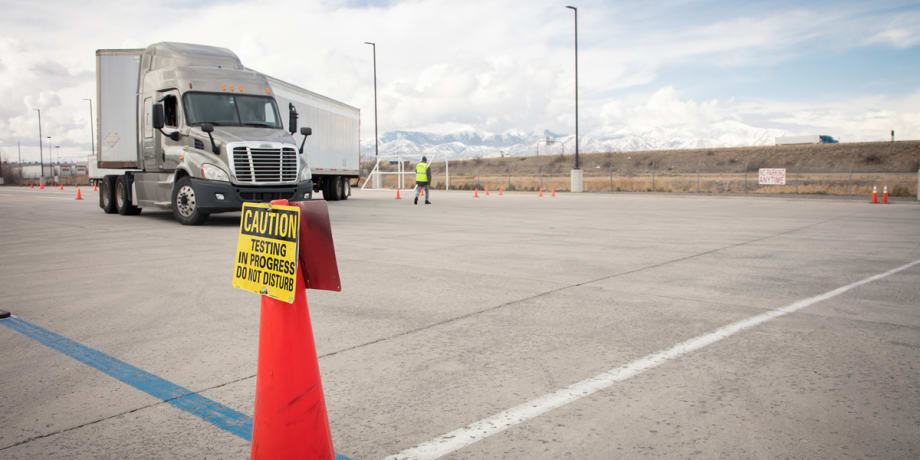
New entry-level driver training requirements call for range instruction to cover seven topics, including backing and parking, among others.
Photo: Prime Inc.
4 min to read
New entry-level driver training requirements go into effect on Feb. 7, 2022, for new drivers seeking a commercial driver’s license. When they do, gone are the days of a driver-trainee obtaining a learner’s permit, driving with a CDL holder for as little as a few days, and then taking the CDL skills test. Under the new ELDT requirements, driver-trainees will be subject to a specific curriculum presented by an entity listed on the Federal Motor Carrier Safety Administration’s Training Provider Registry.
While the deadline may still be months away, motor carriers that provide CDL training need to prepare now.
The ELDT Basics
The entry-level driver training rule establishes minimum training standards for drivers who are:
applying for their initial Class A or Class B CDL
upgrading their current CDL
obtaining a hazardous materials endorsement for the first time.
An individual must complete a prescribed program of theory and behind-the-wheel instruction provided by a school or other entity listed on the TPR prior to taking a skills test for a Class A CDL or Class B CDL.
A prescribed program of theory instruction provided by a school or other entity listed on the TPR must be completed prior to an individual taking a hazardous materials endorsement knowledge test.
Theory Curriculum
For Class A and B CDLs, the rule prescribes instruction in five major areas, encompassing 30 specific theory topics for a Class A CDL and 29 specific theory topics for a Class B CDL:
basic operation (vehicle inspections, basic control, backing/docking)
safe operating practices (speed and space management, night driving, extreme driving conditions)
advanced operating practices (hazard perception, skid control and recovery)
vehicle systems (roadside inspections, identification and diagnosis of malfunctions)
non-driving activities (hours of service, trip planning, medical requirements).
Drivers seeking a hazardous materials endorsement for the first time must also complete a specific curriculum that includes theory instruction on 13 topics.
The rule does not, however, include a minimum number of hours that driver-trainees must spend on theory instruction.
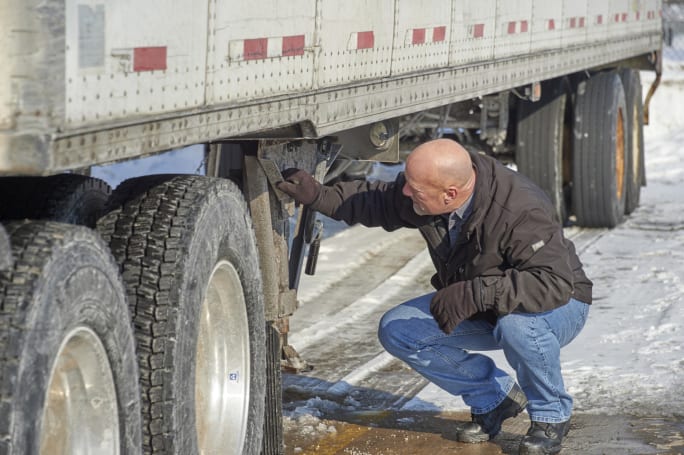
Vehicle inspections are one of the topics required during range instruction in the new ELDT rules.
Photo: J.J. Keller
An assessment must be used to determine the driver-trainee’s proficiency for each unit of instruction. Driver trainees must demonstrate their understanding of the material by achieving an overall minimum score of 80% on the theory assessment.
Behind-the-Wheel Curriculum
Range and public road instruction are included in the behind-the wheel curriculum for Class A and Class B CDL drivers.
Range instruction covers seven topics, including vehicle inspections, backing, and parking. Public road instruction covers 12 topics, including vehicle controls, hazard perception, and visual search.
Again, the rule does not require a minimum number of behind-the-wheel instruction hours. The driver-trainee is expected to be able to successfully repeat each required maneuver several times. The determination of proficiency is based on the instructor’s professional judgment.
Training Provider Registry
All entry-level driver training instruction must be provided by a school or entity listed on the Training Provider Registry. To be eligible for listing on the TPR, specific criteria addressing curriculum, instructors, facilities, vehicles, equipment, and recordkeeping must be met. Training providers will need to complete an online application that includes:
provider name, facility name, and contact information
whether driver enrollment is open to the public or by private enrollment
type of training provided, average training hours, and average training cost
third-party affiliations, certifications, or accreditations.
A training provider will also need to supply information about each of its instructors on the TPR application. Instructors will not need to apply separately.
Theory and behind-the-wheel instructors must hold an appropriate class of CDL (including appropriate endorsement(s)) and have either:
a minimum of two years of experience driving a commercial motor vehicle requiring the CDL (including appropriate endorsement(s)); or
a minimum of two years of experience as a behind-the-wheel commercial motor vehicle instructor.
These individuals must also meet all applicable state qualification requirements for commercial motor vehicle instructors.
ELDT Recordkeeping
After an individual completes training administered by a provider listed on the registry, that provider must, by midnight of the second business day after the driver-trainee completes the training, electronically transmit training certification information through the TPR website.
This transmission of data is necessary, as it provides proof to the applicable state driver licensing agency that an individual has successfully completed ELDT and is eligible for CDL or endorsement testing.
Training providers are also required to maintain training-related documentation for at least three years from the date each required record is generated or received. This documentation includes:
driver-trainee documentation, including self-certifications of compliance and a copy of the commercial learner’s permit
instructor qualification documentation, including a copy of the CDL
a copy of the registration submitted to the TPR
the lesson plans for theory and behind-the-wheel (range and public road) training curricula, as applicable; and
records of individual entry-level driver training assessments.
Note that if local, state, or federal requirements prescribe longer retention periods for any category of records described, the records should be kept under those guidelines.
The Bottom Line
As of Feb. 7, 2022, obtaining a Class A or Class B CDL, as well as a hazardous materials endorsement, will become more detailed and will take more time. Carriers need to work on a game plan now to minimize delays in the process.
For more information, including the TPR provider application, visit FMCA's website.
This article first appeared in the September 2021 issue of Heavy Duty Trucking.
Subscribe to Our Newsletter
More Safety & Compliance

FMCSA Pauses Biennial-Update Enforcement Amid Motus Transition
Carriers whose updates were due on or after June 1 have more time, while FMCSA works to stabilize its new registration system and warns of phishing sites impersonating its new carrier registration system, Motus.
Read More →
ZF Expands Commercial Vehicle Push in North America
ZF is expanding its North American commercial-vehicle presence with new transmission applications, electrification, trailer technology and autonomous-driving systems.
Read More →
Truck Drivers Need More Than Another Alert
Fleets have more visibility into truck health, safety events, and driver activity than ever. The next challenge is turning all that information into useful guidance for the person who has to decide what to do next.
Read More →
Tesla Wants a Self-Driving Semi. Are Cameras Enough?
Could Tesla’s camera-only autonomous driving technology work on an 80,000-pound Semi? In this commentary, HDT's Deborah Lockridge takes a look at Tesla, Cybercab, and how autonomous trucks see the road.
Read More →
What DOT’s Automated Vehicle Strategy Means for Trucking
The U.S. Department of Transportation issued a new automated-vehicle strategy that outlines plans for driverless-truck regulations, cross-state freight corridors, and federal safety standards.
Read More →
NYC Expands Speed, Pedestrian Safety Tech Across Fleet
New York City is expanding intelligent speed assistance and pedestrian-alert systems across its municipal fleet, moving the technologies from pilot programs into vehicle procurement and retrofit requirements.
Read More →
FMCSA Removes 110 Truck Driver Training Schools from Certified ELDT List
Federal regulators also are targeting more than 160 additional training providers and launching a nationwide audit of third-party CDL skills testers as part of a broader crackdown on trucking fraud.
Read More →
Beyond DOT Compliance: What Makes a Trucking Fleet Truly Safe?
A trucking fleet can follow every rule and still make unsafe decisions. The real test comes when safety conflicts with freight, productivity, or cost.
Read More →
Hours of Service Pilot Programs: FMCSA Readies for 2027 Rollout
Two pilot programs could eventually reshape hours-of-service rules, giving truck drivers options to pause their 14-hour clock or use longer split sleeper rest periods.
Read More →
New Guide Offers Pet Safety Tips for Truck Drivers
Hundreds of thousands of pets travel in truck cabs. A new safety guide from Volvo Trucks and the Center for Pet Safety offers practical advice for truck drivers who bring dogs and cats along for the ride.
Read More →