




How Automated Pre-Tripping of Trailers Could Help Fleets with CSA
There always have been a lot of reasons for drivers to do effective pre- and post-trip inspections on trailers and power units. Starting in 2010, we've had another: Compliance, Safety, Accountability better known as CSA

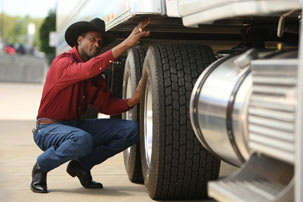
Instead of a traditional look-and-touch routine, a driver’s pre-trip inspection would be faster and better if key components had sensors wired to transponders that would broadcast their status.
There always have been a lot of reasons for drivers to do effective pre- and post-trip inspections on trailers and power units. Starting in 2010, we've had another: Compliance, Safety, Accountability better known as CSA.
The Federal Motor Carrier Safety Administration's new way of evaluating carrier safety raised the stakes for finding and repairing equipment faults before the vehicle gets on the road, where a roadside inspector may find them and ding the fleet and driver both.
Trailers have gradually become more complex as electronic systems such as roll stability control, anti-lock braking systems and tire inflation devices join traditional wiring and lights, air plumbing and foundation brakes, coupling hardware, wheels and axle-end components. Yet drivers still use their eyes and hands to inspect everything, and record what they see (honestly or not) on old-style pre-printed forms.
Isn't it time to modernize the process?
That's what members of the Future Trailer Task Force of ATA's Technology & Maintenance Council think. They met during TMC's annual meeting in Tampa to discuss a white paper that would describe automating the pre-trip inspection with sensors and alarms. This, leaders said, would accomplish the inspection more quickly and with greater accuracy than the current manual method. Such automation would also help with maintenance on trailers, because the shop would know what's wrong with a trailer almost as soon as the driver does.
Task Force members have written a draft paper, "Increasing the Efficiency of Pre- and Post-Trip Inspections," which they discussed with interested members.
There seemed to be considerable interest, drawing about 75 people - a large number for a Task Force session - and many made comments and suggestions.
The draft paper emphasizes that "existing technologies" could facilitate a quick scanning by the driver, who would use a handheld "wand" or similar handheld device.
"Typically these systems utilize the trailer ABS system to power and/or communicate with sensors on the various components being monitored," the draft says. "The data may then be analyzed, stored for later retrieval or communicated to the tractor or other entities such as a gate reader, a telematics transponder or some other type of 'reader.'"
The paper explained that these "onboard" monitoring systems offer sensors for tire pressure, brake friction material wear, proper tractor/trailer coupling, trailer door opening/closing and trailer reefer unit operation. The monitored functions are sensed and available (as appropriate) while the vehicle is stationary or in motion and could potentially be used as a part of a pre- or post-trip inspection.
Some of current products are proprietary, but most use industry-standard communication protocols to some extent, the paper notes. Such systems might be expanded to accommodate additional sensors and satellite systems as they become available.
"The ideal system would allow a walk-around review and recording of various parameters to amend or enhance visual inspection," the paper says. A handheld "wand" would allow the person inspecting to "zero in" on and interrogate various systems or components and measure, qualify and record vital information.
The wand would be capable of discriminating between components, for example, tires in a set in terms of pressures, while the inspector checked the tire visually for damage. Pressure could be displayed on the wand or a go/no-go indication could be given. The wand would record and save information for later download and could sent reports by wired or wireless means.
"The wand should communicate with other devices (transducers, other recording or reporting devices, etc.) through standardized communications protocols," the draft says. "These protocols would allow it to read transducers from different vendors and of different styles."
Going back to the tire pressure example, the wand should read tires with embedded chips, valve stems with sensory capability or sensors mounted on the wheel inside the tire regardless of brand.
Of course the wand would be rugged and waterproof (or highly water resistant), capable of operating for a long period of time without changing batteries or recharging, and it would have a logic screen visible in full sunlight. The unit would self-test and be field software-upgradable.
"Sensors would be available from a variety of components or systems as needed, be rugged and weatherproof, resistant to road chemicals, inexpensive and capable of functioning for the life of the vehicle," the paper says. "In the event of sensor failure or damage, the sensor would be easily replaceable, widely available and of course compatible with all standardized wands on the market."
Wait! One of the biggest complaints about power units involves defective sensors and connectors. Won't these also be a problem if installed on a trailer? "This is a white paper - the ivory tower," quipped the discussion leader. "Sensors will be perfect here."
Past TMC white papers have been wish lists from fleet managers. One called for the million-mile tractor with million-mile engines, transmissions and axles. It was followed by relentless pressure on suppliers, and they answered by gradually increasing component life until the long-lasting tractor arrived in the 1990s. If a similar campaign were done on rigging trailers with sensors and broadcast devices, who knows, it might happen.
From the April 2012 issue of HDT.
More Maintenance

Truck Drivers Need More Than Another Alert
Fleets have more visibility into truck health, safety events, and driver activity than ever. The next challenge is turning all that information into useful guidance for the person who has to decide what to do next.
Read More →
The Maintenance Checks Trucking Fleets Should Prioritize Before Fall Freight Picks Up
Making it through August isn’t the same as being ready for the next several months of operation. Find out what systems may have suffered from summer heat and need to be checked out before fall.
Read More →
What Three Fleets Are Doing Differently When Buying Truck Parts in 2026
With freight improving but costs still climbing, fleet maintenance executives explain how they're balancing price, quality, and supplier relationships.
Read More →
Paccar Recalls 2027 Trucks Built This Summer for Possible Electrical Problem
The nearly 6,000 Kenworth and Peterbilt trucks in the recall could potentially lose engine power, among other things.
Read More →
Will API PC-12 Oil Change Trucking Fleet Maintenance?
The new API PC-12 heavy-duty engine oil category reflects the changing demands of modern diesel engines. But fleets like Foodliner are looking to getting their own data before making decisions on adopting the new oils and questions such as extending oil drain intervals.
Read More →
Brake Safety Week to Focus on Drums and Rotors
Commercial vehicle inspectors are focusing on truck brakes during CVSA's Brake Safety Week, August 23-29.
Read More →
Possible Battery-Cable Fires Prompt Recall of 15,000+ International MV and HV Trucks
On the recalled vehicles, manufacturing variations can cause the battery interconnect cable to contact the auxiliary stud and hold down the bracket.
Read More →
Rush, MCT Team Up to Grow Refrigeration Service Network
The joint venture will operate MCT's network of Carrier Transicold dealerships and mobile service locations, with the companies promising greater service capacity and uptime for refrigerated fleets.
Read More →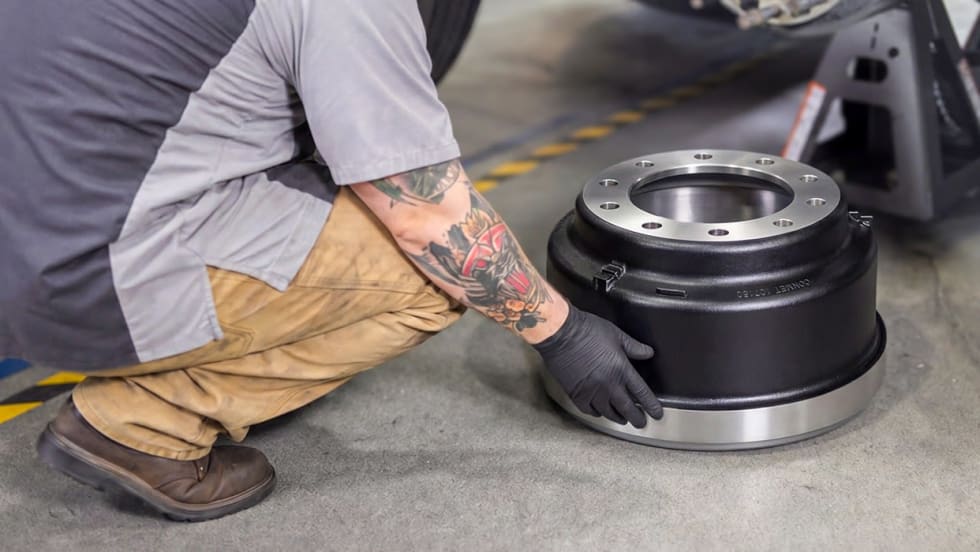
ConMet Expands Aftermarket Brake Drum Lineup With TruCast
A new heavy-duty truck brake drum option in the aftermarket gives customers more flexibility within the ConMet product family.
Read More →
Mack Expands Premium Service Contract Coverage to Medium-Duty MD
With a service contract, inspections, preventive maintenance and repairs can be handled in a single visit instead of multiple ones.
Read More →