




Hiring Veterans
“Veterans make excellent employees,” says Boyd Stephenson, who heads the American Trucking Associations’ driver licensing efforts. “They’re conscientious, they’re focused, they’re responsible; they’re everything you could want in an employee.”

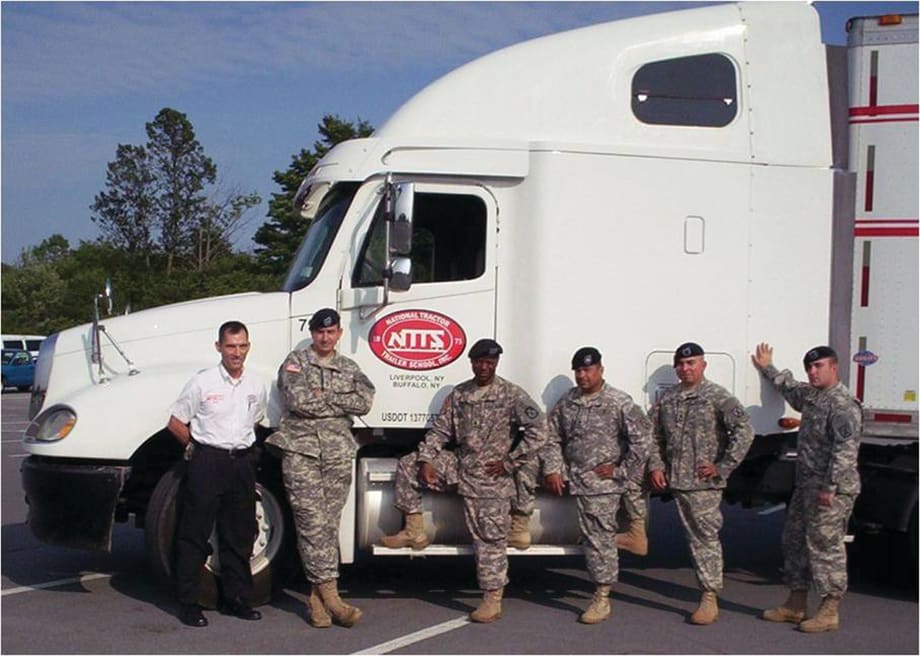
Soldiers from the Army’s Fort Drum, N.Y., as well as Guard and Reserve troops, learn how to operate manual transmissions and other skills specific to civilian truck driving at the National Tractor Trailer School. Rick Catlin (in the white shirt) is a master instructor at the school.
Think of all the attributes any qualified job applicant should have – good work ethic, team-oriented, self-starter, respect for authority, years of experience – and they come standard with a military veteran.
Soldiers from the Army’s Fort Drum, N.Y., as well as Guard and Reserve troops, learn how to operate manual transmissions and other skills specific to civilian truck driving at the National Tractor Trailer School. Rick Catlin (in the white shirt) is a master instructor at the school.
Anyone who’s served with the U.S. Army, Navy, Marine Corps, Air Force and Coast Guard needs those traits to successfully complete a term of service, and is likely to fit in well with any trucking company seeking to fill its ranks of drivers, mechanics and supervisors, according to people in the industry.
“Veterans make excellent employees,” says Boyd Stephenson, who heads the American Trucking Associations’ driver licensing efforts. “They’re conscientious, they’re focused, they’re responsible; they’re everything you could want in an employee.”
Veterans have learned to accept discipline and to follow and give orders under conditions that most civilians never face or could ever imagine. So, barring debilitating physical wounds and mental scars that affect some, vets are ready to go to work.
“Mission oriented” is one way Ed Tobon, director of recruiting at Ryder System, describes veterans who’ve been trained to get a job done no matter what. A former Navy aircraft pilot, he heads the company’s efforts to seek and hire military members.
“They have worked in a team environment, and a lot of them have had leadership roles, so they can be good as the lead in warehousing teams” and other roles. They have the potential to be better employees than someone off the street, and with training and guidance they usually are.
“We find that there is a certain amount of maturity that comes with their military experience,” says Rob Reich, vice president of maintenance operations and driver recruiting at Schneider National. “They’ve worked away from home and were in situations where they made decisions on their own. So they’re able to make decisions out there,” such as in dealing with customers and other people they contact while on the road.
Training veterans
Last year Schneider celebrated the 20th anniversary of its formal military recruiting program. Many of the company’s driver-trainers came from the military, and 22% of the approximately 1,000 drivers now in its apprenticeship program are veterans. Like apprenticeships at other trucking firms and schools, Schneider’s leans on GI Bill benefits, through which a vet can get up to $1,200 a month for living expenses and tuition.
Some vets with military driving experience go directly to work at trucking firms, while others first go to specialized schools. One is the National Tractor Trailer School in Liverpool and Buffalo, N.Y., which has been training military veterans for 40 years, says Harry Kowalchyk, its president and co-founder.
“Under the old GI Bill we trained Vietnam and Gulf veterans, and now it’s Iraq and Afghanistan veterans,” he says. “All trucking companies put ads in the paper and they have to be competitive, so they have similar benefits, pay, working conditions and so on. But they don’t get many qualified applicants.”
They do with military veterans.
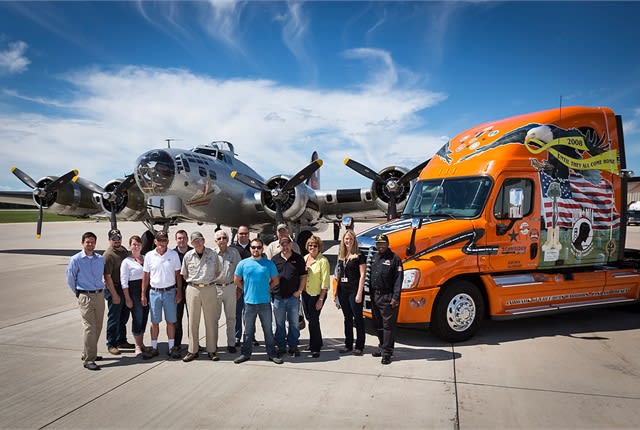
Schneider National recently sponsored a stop in Green Bay, Wis., for the
Experimental Aircraft Association’s World War II-era B-17 “Aluminum Overcast.” A few Schneider employee-vets and their spouses rode over the area in the bomber, then posed with it and one of the carrier’s specially decorated Ride of Pride tractors at the airport.
“Pretty much all trucking schools are active in training veterans,” says John Diab, vice chairman at Smith & Soloman Truck Driving School, Bordentown, N.J. “Through veterans programs, the veterans come to us and sign up. We can pretty much assure veterans that we can get them a job. It becomes easier to get veterans a job because they’re a more stable person and can take direction. Problems they have are funding-related, and we do everything we can to assist them in getting it. They’re easily employable.”
Ryder has long sought to hire veterans, but its process has become more formal since it began taking part in a U.S. Chamber of Commerce program called Hire Our Heroes, Ed Tobon says.
“They come into our normal applicant tracking system, but in 2011 we pledged that we were going to hire 1,000 vets by the end of 2013, over two years. We met the 1,000 goal in February, and are now at 1,495 as of end of September, so we are happy to have exceeded that number.”
The jobs at Ryder are for drivers, mechanics, warehouse workers, and management in fleet operations and the supply chain. Some jobs require a four-year degree, which officers usually have, and enlisted people with degrees are also considered for supervisory roles. Ryder sent recruiters to 50 Chamber of Commerce-sponsored job fairs for service members and vets in 2012, and to 35 so far this year. There are also fairs by organizations like Recruit Military, the Veterans Administration and state agencies.
One challenge is that vets fill their resumes with military jargon that’s almost a foreign language to civilians, and that they list team accomplishments instead of personal achievements. Teamwork is valuable, but civilian recruiters need to know what the vet can do individually. Through the Chamber program, Ryder and other companies help vets “civilianize” their resumes.
In particular, Ryder wants to know about individual “soft skills” that vets have picked up in the military – “collateral duties” such as writing reports, personnel evaluations, and leadership and management development, he says. Often these are not in a resume, so have to be brought out in the interview. The company’s hiring managers have guidelines on how to talk with veterans to get that information.
Many military veterans worked as truck drivers, some of them in tractor-trailers. Some states have formal policies that waive the driving portion of the commercial driver’s license test for vets who have such experience verified by former commanders. ATA pushed for this, says Stephenson. But he and others noted that most military trucks and tractors have automatic transmissions, which, while gaining in popularity among trucking companies, are still rather rare in heavy trucks. And military hauling doesn’t often involve backing of semitrailers.
“What we’ve found is that it’s not the waiver that’s really going to be helpful, because he’s not been involved in driving vehicles with air brakes and manual transmissions,” he says. “So it’s about expedited training in what they need to know.” Driving schools and some trucking companies provide just that sort of training, as well as more extensive training for veterans whose duties did not involve truck driving.
Stephenson points out that many military duties – from driving and repair work to the handling of ammunition, explosives and motor fuels – can equate to experience. “A lot of carriers won’t hire drivers until they have a certain number of years of experience,” he says, “but a lot will credit a driver for time in the military doing the exact same thing.”
Mission: Hire veterans
Military services are working with industry organizations and companies to place former service people into specialized training and jobs. A few of the many formal programs set up to accomplish this include:
• U.S. Chamber of Commerce wants companies to hire 500,000 military veterans and spouses by the end of 2014: www.uschamber.com/hiringourheroes.
• Military.com has a site in conjunction with Schneider National, a “military friendly” company that has been recruiting veterans for more than 20 years: www.military.com/jobs-in/employer/schneider/.
• Ryder System is actively recruiting veterans as drivers, mechanics, warehouse workers and for other jobs: www.ryder.com/career/military-recruiting.aspx.
• USA Truck, whose logo is the insignia carried by American military aircraft, seeks veterans on its special website: www.hiringmilitarydrivers.com.
• Con-way Truckload has an agreement with the U.S. Army Recruiting Command, called Partnership for Youth Success, to attract young people into that branch where they get specific training, then can return to civilian life and a job with the company. It’s described at www.con-way.com/en/careers/driver-careers/truckload-driver/veterans.
More Fleet Management
Why This Trucking Recovery Is Different
Freight demand remains sluggish, but rising costs and tougher enforcement have taken enough capacity out of the market to change the outlook for motor carriers.
Read More →
Platform Science Adds Dispatch and Safety Tools
Four additions to PS Fleet help fleets monitor loads, manage driver coaching, share truck locations and adjust video system settings.
Read More →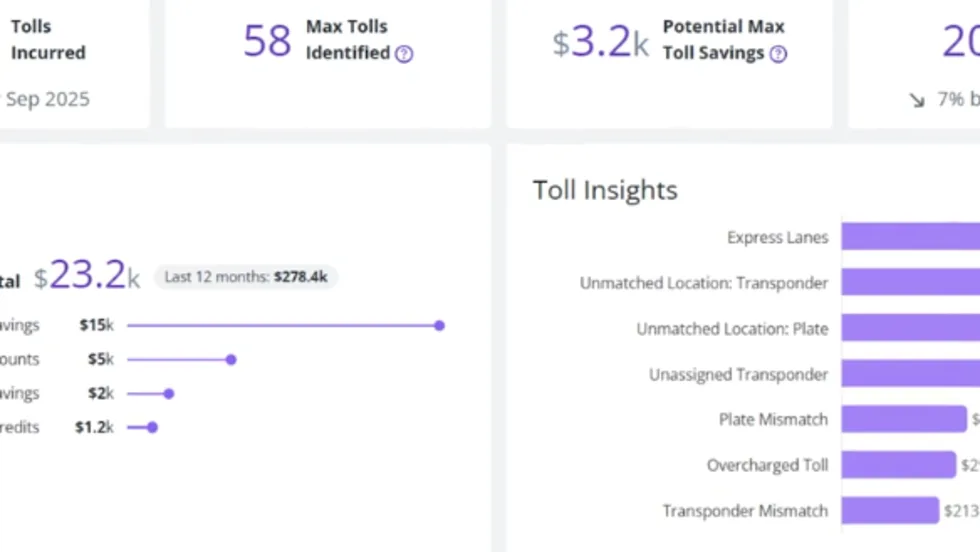
PrePass Intelligence Mines Fleet Bypass, Toll and Safety Data
PrePass Intelligence helps fleets measure bypass savings, flag potential toll overcharges, and spot suspicious transactions by combining data from separate systems.
Read More →
Motive Adds AI Agents for Fleet Operations
New tools automate follow-up on fleet data, from maintenance work orders to driver alerts, with two-way voice conversations planned for later this year.
Read More →
Can You Beat Our Trucking Trivia Challenge?
Test your truck knowledge with 19 trivia questions from Heavy Duty Trucking Exchange. Can you keep up with the fleet pros?
Read More →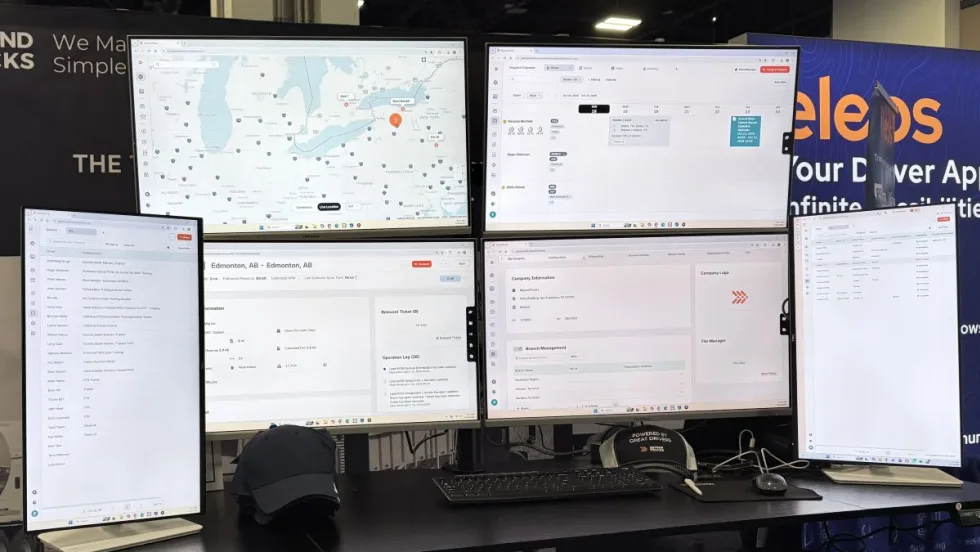
BeyondTrucks Adds Rules Checks to Dispatch
New Compatibility Engine checks driver qualifications, equipment requirements and fleet policies before loads are dispatched.
Read More →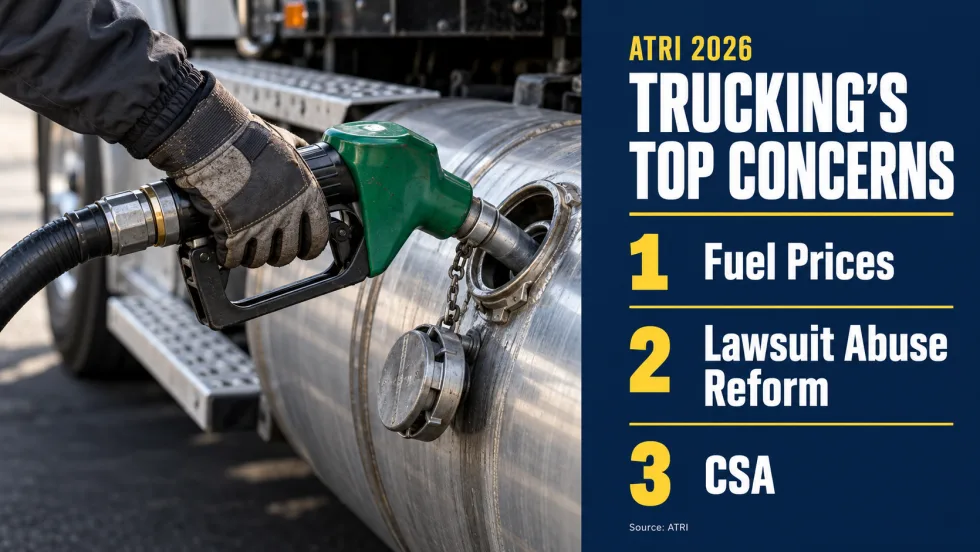
Diesel Prices Hijack Trucking’s Worry List
ATRI’s annual survey finds cautious optimism about freight, but diesel costs, litigation, and insurance continue to squeeze fleets. Drivers have different priorities on several issues.
Read More →
Nomination Deadline Extended for HDT Emerging Leaders
Just a few more days to nominate accomplished trucking fleet professionals under 40 who are making an impact and helping lead the industry forward for the HDT Emerging Leaders award. Deadline extended to October 20!
Read More →
What Will ATA’s New Leader Bring to Trucking's Table?
Incoming President and CEO Mark Colson’s record in Alabama offers clues about his priorities and approach following Chris Spear’s abrupt departure as the head of the American Trucking Associations.
Read More →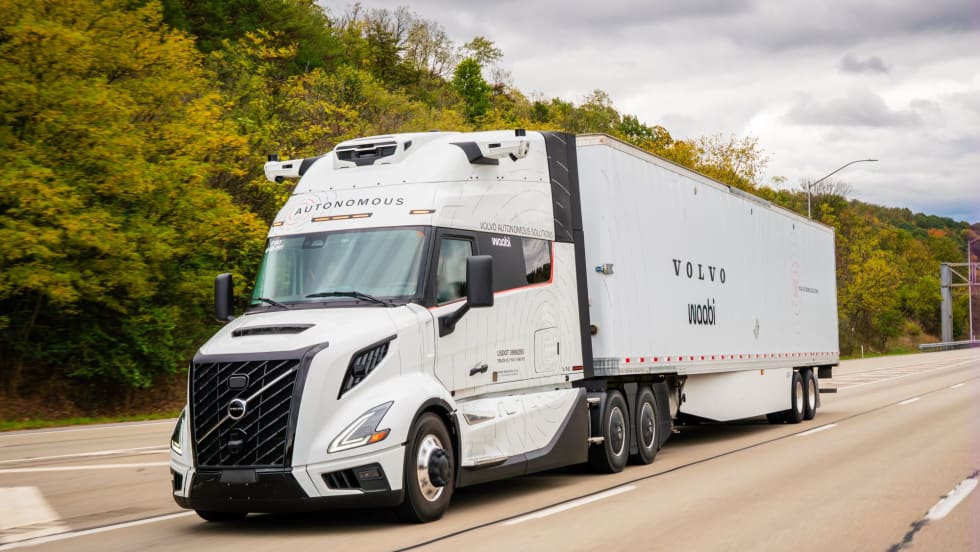
Volvo, Waabi Start Commercial Autonomous Operations in Texas
Volvo VNL Autonomous trucks, powered by the Waabi Driver, are hauling freight directly to third-party facilities for a customer in Texas.
Read More →