




‘Hard Market’ for Insurance Leads to Search for Creative Solutions
These are hard times. To be precise, it’s a “hard market” when it comes to sourcing insurance coverage in the trucking industry.
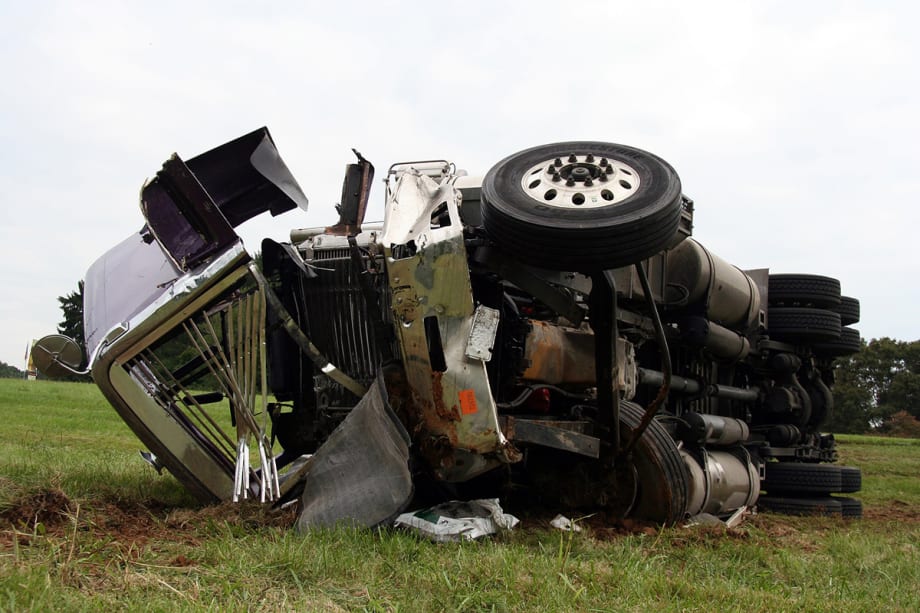
Photo: Denise McQuillen via Pixabay
These are hard times. To be precise, it’s a “hard market” when it comes to sourcing insurance coverage in the trucking industry.
Insurance premiums have been soaring, largely because the insurers themselves have been bleeding profits.
The commercial transportation market sector has performed worse than the broader property and casualty insurance market for eight years, said McGriff Executive Vice President Ryan Erickson, during a presentation for the American Trucking Associations annual management conference.
Last year, the U.S. commercial transportation market found itself underwriting $4 billion in losses, the worst performance on record. Losses have even outpaced double-digit increases in premiums, he said.
“We are in very challenged times with respect to transportation.”
For insurers, it’s becoming harder to attract the capital needed to underwrite the business. That’s led to substantial increases for higher levels of insurance. For the first $25 million, the premiums are up 15-50% depending on the fleet’s experience. Beyond that, rates have increased 100-300%, Erickson said.
“Some experienced it last year. Some are experiencing it this year,” he said.
The losses themselves are being driving higher by factors ranging from distracted driving to lower hiring standards because of the truck driver shortage, as well as dreaded nuclear verdicts, he added.
Facing the ‘Reptile’ Lawyers
Jeff Toole, a partner with Scopelitis, Garvin, Light, Hanson and Feary, points to “reptile theory” as a key factor behind the multi-million jury awards known as nuclear verdicts.
The approach sees lawyers making broad generalizations about a carrier or even the entire trucking industry, to make the jury believe the broader community is threatened, he explained.
It’s also requiring fleets to consider additional coverage.
Broker liability insurance, while uncommon five to 10 years ago, can now be needed to protect those who broker freight to a third party, Toole said, noting that traditional liability coverage won’t extend to claims relating to that work.
While the motor carrier liability focuses on issues around the ownership, maintenance, and use of a truck — such as speeding — the broker liability coverage looks at the decisions that led to brokering a load. Brokers arguably face a higher standard of care, he added.
Meanwhile, the broader cost increases are leading fleets to explore more options such as risk retention groups — an insurance company established under the Liability Risk Retention Act, covering third-party liability but not physical damage and property.
“It can result in reduced premiums and savings assuming a good safety program is implemented,” Toole said.
Another option is a Risk Purchasing Group, which purchases liability insurance on a group basis for members, leading to potential premium savings where they’re available.
‘A Lot of Options’
“There are a lot of options out there,” said Jim Millar, vice president of transportation insurance at Cottingham Butler.
But the risks and rewards vary, depending on factors from budget certainty, to loss sensitivity, flexibility, tax considerations, safety incentives, control over claims, security, required analytics, customized coverage, and administrative burdens, he said.
Among the options available:
The guaranteed cost option – While the premiums don’t fluctuate, they’ll likely be too expensive for many trucking operations. “There’s also a lack of incentive to reduce losses,” Millar said.
Small-deductible programs – This coverage can require collateral to cover estimated losses up to the cost of the deductible itself.
Large-deductible programs – In some options, deductibles could range from $100,000 to $5 million depending on the size of the carrier. “Your collateral is going to be a lot more because you’re assuming more risk,” Millar said. It’s a strategy that will require layers of different coverage to address losses.
Captive insurance plans – “I’m sure that captives are getting popular again these days,” Millar said. These traditionally insure a parent company or affiliates. But a “rent-a-captive” hybrid model insures risk without investing capital for an ownership share.
Single-parent captives – For larger companies, this option can create an insurance company to protect the owner or affiliated companies.
Transportation group captives – This model offers several benefits, including the return of underwriting profits and investment income, access to the reinsurance market on a group basis, and more stability. But it’s important to explore the group’s track record and risk because the risk is shared among members, he said. “Do you know them, and do you feel comfortable sharing risk with them?”
Ultimately, deciding on the best option is a matter of balance.
“The more risk you take, the less premium you should pay,” Millar said.
Factors to consider might be based on a rate per 100 miles or a percentage of revenue, or maybe the payment plan and claims service. Decisions might reflect claims funds, collateral, loss control, risk management, information systems, the payout schedules for claims, how capital might be put to other use, and more.
There’s one other factor to consider, Millar added.
“What does your gut tell you?”
John G. Smith is the editorial director of Today's Trucking, where this article originally appeared. This content was used with permission from Newcom Media as part of a cooperative editorial agreement.
More Safety & Compliance

FMCSA Pauses Biennial-Update Enforcement Amid Motus Transition
Carriers whose updates were due on or after June 1 have more time, while FMCSA works to stabilize its new registration system and warns of phishing sites impersonating its new carrier registration system, Motus.
Read More →
ZF Expands Commercial Vehicle Push in North America
ZF is expanding its North American commercial-vehicle presence with new transmission applications, electrification, trailer technology and autonomous-driving systems.
Read More →
Truck Drivers Need More Than Another Alert
Fleets have more visibility into truck health, safety events, and driver activity than ever. The next challenge is turning all that information into useful guidance for the person who has to decide what to do next.
Read More →
Tesla Wants a Self-Driving Semi. Are Cameras Enough?
Could Tesla’s camera-only autonomous driving technology work on an 80,000-pound Semi? In this commentary, HDT's Deborah Lockridge takes a look at Tesla, Cybercab, and how autonomous trucks see the road.
Read More →
What DOT’s Automated Vehicle Strategy Means for Trucking
The U.S. Department of Transportation issued a new automated-vehicle strategy that outlines plans for driverless-truck regulations, cross-state freight corridors, and federal safety standards.
Read More →
NYC Expands Speed, Pedestrian Safety Tech Across Fleet
New York City is expanding intelligent speed assistance and pedestrian-alert systems across its municipal fleet, moving the technologies from pilot programs into vehicle procurement and retrofit requirements.
Read More →
FMCSA Removes 110 Truck Driver Training Schools from Certified ELDT List
Federal regulators also are targeting more than 160 additional training providers and launching a nationwide audit of third-party CDL skills testers as part of a broader crackdown on trucking fraud.
Read More →
Beyond DOT Compliance: What Makes a Trucking Fleet Truly Safe?
A trucking fleet can follow every rule and still make unsafe decisions. The real test comes when safety conflicts with freight, productivity, or cost.
Read More →
Hours of Service Pilot Programs: FMCSA Readies for 2027 Rollout
Two pilot programs could eventually reshape hours-of-service rules, giving truck drivers options to pause their 14-hour clock or use longer split sleeper rest periods.
Read More →
New Guide Offers Pet Safety Tips for Truck Drivers
Hundreds of thousands of pets travel in truck cabs. A new safety guide from Volvo Trucks and the Center for Pet Safety offers practical advice for truck drivers who bring dogs and cats along for the ride.
Read More →