





Photo Gallery: Classic Peterbilts Turn Heads at the Texas Motor Speedway
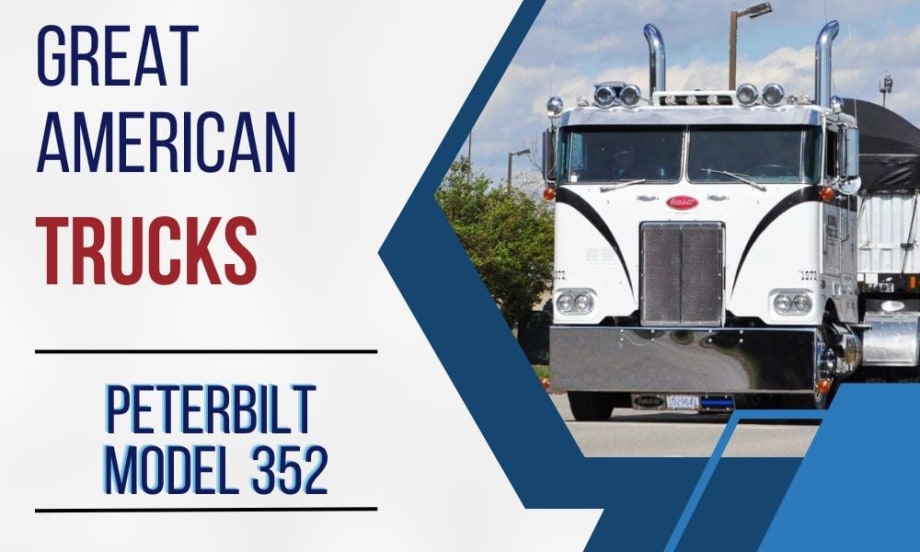
Great American Trucks: Peterbilt Model 352 Cabover
The Peterbilt Model 352 cabover tractor was such an iconic design that in an unusual departure from its numeric-based identification system, the company actually gave it a name. It remains Peterbilt’s longest-produced truck to this day.
January 3, 2024
Bob Petite's 1972 Peterbilt Model 352
Photo: Bob Petite
5 min to read
Two major transportation events took place in 1956 that would affect the U.S. trucking industry for decades to come. That year, Congress, at the urging of President Dwight Eisenhower, passed the Interstate Highway Act, which created the modern highway system. And Congress passed a law limiting the maximum length of a Class 8 tractor-trailer to 65 feet.
This latter law prompted North American OEMs to focus on the design and production of cabover highway tractors. And these tall, boxy, rigs would come to define an era many regard as trucking’s golden age.
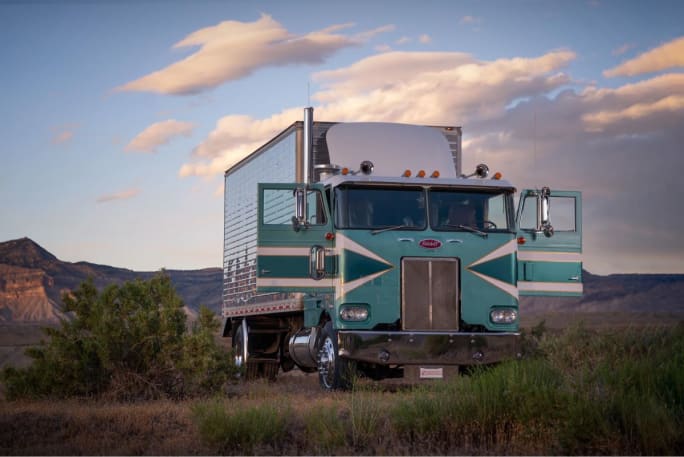
Social media influencer Flatbed Red's 1980 Model 352 came out of North Carolina and has been transformed into a stunning show truck.
Photo: Miss Flatbed Red
If you were going to pick one truck that embodies Class 8, long-haul cabover tractors, the Peterbilt Model 352 would certainly be in contention for the top slot.
For many trucking enthusiasts, Its iconic looks and towering stance came to define the pinnacle of American cabover design. Indeed, the Model 352 enjoys a devoted fan base, with a passionate group of collectors and restorers keeping many vintage models on the road today.
A Timeless Design in the Peterbilt Cabover Truck
Peterbilt found itself at a crossroads as the 1950s dawned. The OEM had made a reputation for building tough, reliable trucks to order. Demand for Peterbilts had grown to the point that in 1949, the company began mass-producing a truck for the first time – the Model 334 conventional tractor.
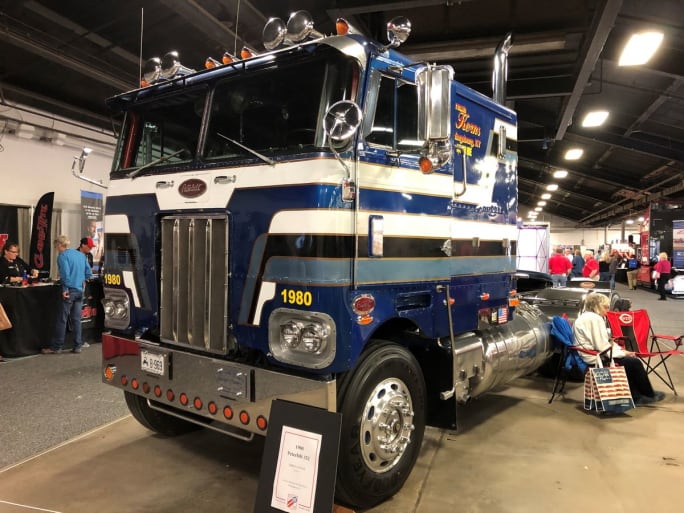
The Peterbilt Model 352 featured an ultra-light design thanks to its innovative aluminum cab.
Photo: Jim Park
But with the need for a tough, comfortable and reliable cabover, Peterbilt engineers began work on what would become one of the OEM’s most legendary trucks.
Peterbilt built its first-ever cabover in 1941 – a mere two years after the company’s founding. These early Peterbilt cabovers featured a “bubble nose” front end – a bulge outward from the cab to house the engine.
Subsequent designs, most notably the Model 351, flattened out the truck’s front end in favor of a taller and wider cab, which the Peterbilt marketing department promptly dubbed the “Panoramic Safe T Cab.”
With this design, the basic configuration of Peterbilt cabover design for the next three decades was essentially set.
But the Model 352, introduced in 1959, took things to a whole new level. Peterbilt called its new truck a “uni-light” design, thanks to an aluminum cab that kept weight to a minimum and proved to be remarkably resistant to corrosion. Even more revolutionary was the truck’s 90-degree tilt cab, which gave technicians (or “mechanics” as they were known at the time) full access to the engine bay.
The Cummins NHC-250 diesel was the standard engine offering, although three other Cummins engines were available as well. You could also spec powerplants from Caterpillar, and Detroit Diesel. Over time, these offerings grew, as did displacement, horsepower, torque, exhaust and transmission offerings. Eventually, the Model 352 would earn a reputation as one of the most versatile trucks on the market in its time.
The Rise of the Pacemaker
Inside, the Model 352 had cramped dimensions that seem staggeringly tight when compared to today’s spacious cabs and sleepers. But Peterbilt designers made the most of that limited space. Over time, Model 352s were upgraded with more and more comfort features that were considered downright luxurious at the time.
Indeed, by its 10th anniversary in 1969, the Model 352 was so popular that Peterbilt decided the truck was worthy of its own name, as opposed to the OEM’s traditional numeric model number naming system. An internal competition was held, which led to the introduction the 1969 Peterbilt Pacemaker tractor. Among the many upgrades offered, the Pacemaker featured a wider cab. This led to a focus on providing more interior comforts, including ergonomic seats and more internal space.
Bob Petite is an owner-operator and chrome shop owner based in Hartselle, Alabama. He runs old cabovers daily pulling flatbeds. For several years, a 1972 Model 352 was his primary truck.
“My dad bought one new in 1973,” Petite recalls. “And I wanted one since they day he brought it home.”
Petite’s Model 352, which he sold a few years ago in order to buy a 1979 Freightliner FLT cabover, was a “true” West Coast truck, with Cummins Big Cam power putting out 400 horsepower.
“It handles great on the road,” Petite says. “But keep in mind that none of them had power steering. Some of them had air- or hydraulically assisted steering, but nothing like what we know as power steering today. So, it took a few extra minutes when I was backing it up. But I didn’t mind the exercise.”
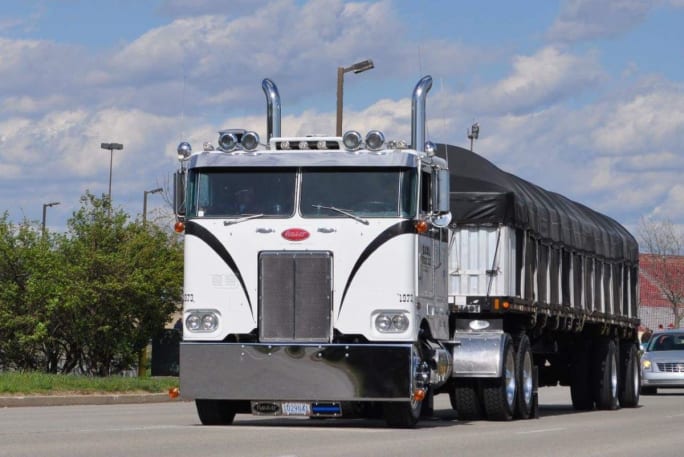
Bob Petite says his Model 352 is a somewhat basic design for the time -- but praises its durability and smooth ride.
Photo: Bob Petite
Interestingly, given Peterbilt’s long-standing reputation for luxury, Petite says he feels the Model 352 was “somewhat primitive” for its time — especially compared to the 1979 Freightliner he drives now.
“I feel like the Model 352 was a ‘bare bones’ truck from Peterbilt,” he says. “Which is not to say it was a cheap truck. Momma says they paid $35,000 for the ’73 model Dad bought in Birmingham [Alabama]. She always joked that they lived in a $6,000 house while Dad drove a $35,000 truck.”
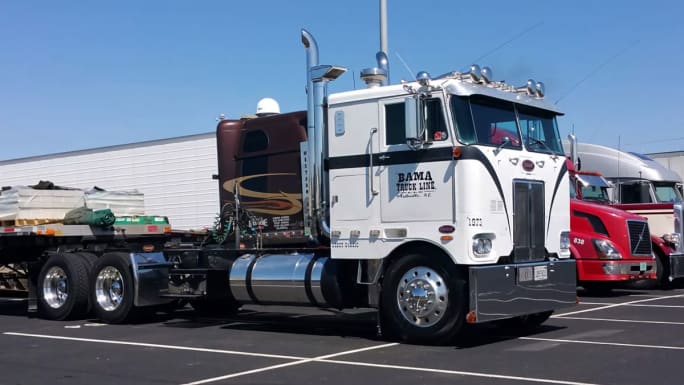
Bob Petite does more than just restore old trucks. His 1972 Model 352 routinely worked pulling flabeds until he sold it in order to purchase a 1979 Freightliner FLT cabover.
Photo: Bob Petite
Still, Petite says, despite its shortcomings, he’s not surprised the Model 352 stayed in Peterbilt’s lineup for as long as it did.
“It was a basic truck,” he says. “But it really rode better than the Freightliners did at the time. And the durability on it is excellent. They were very tough trucks, and that made them perfect for life on the road in those days.”
In 1975, Peterbilt introduced the penultimate version of the truck with the Model 352H Pacemaker. H Models featured a taller cab, which rode a full 4 inches higher than on previous Model 352s. This was to accommodate increasingly larger, more powerful diesel engines. A larger radiator with a wider and taller front grille also defined the look of the new truck.
In 1981, Peterbilt retired the Model 352. The truck was replaced by the Model 362 cabover – an iconic truck in its own right. It would be the last of the great Peterbilt cabovers.
To this day, the Model 352 remains the longest-running production of any Peterbilt truck – a testament to its cutting-edge design, striking looks, and commitment to durability and reliability.
Subscribe to Our Newsletter
More Equipment

How Volvo Updated Its D13 for EPA 2027 [Watch]
Volvo’s updated D13 promises lower emissions without sacrificing performance or fuel economy. Take a closer look at what changed inside the engine in this HDT Spotlight video.
Read More →
Michelin Tire Improves Efficiency and Durability for Regional Fleets
The Michelin X Multi Energy D2 is a regional haul drive tire engineered to help fleets improve fuel efficiency, durability and traction in demanding stop-and-go operations.
Read More →
ZF Expands Commercial Vehicle Push in North America
ZF is expanding its North American commercial-vehicle presence with new transmission applications, electrification, trailer technology and autonomous-driving systems.
Read More →
Tesla Wants a Self-Driving Semi. Are Cameras Enough?
Could Tesla’s camera-only autonomous driving technology work on an 80,000-pound Semi? In this commentary, HDT's Deborah Lockridge takes a look at Tesla, Cybercab, and how autonomous trucks see the road.
Read More →
Kodiak: Driverless Long-Haul Truck Launch on Track for 2026
Kodiak AI says its driverless long-haul safety case is 93% complete and it remains on track to begin commercial operations by year-end 2026.
Read More →
What DOT’s Automated Vehicle Strategy Means for Trucking
The U.S. Department of Transportation issued a new automated-vehicle strategy that outlines plans for driverless-truck regulations, cross-state freight corridors, and federal safety standards.
Read More →
East Coast Port Launches $45M Electric Truck Push
The Port Authority of New York and New Jersey announced millions in incentives for zero-emission drayage trucks, yard tractors, and new charging hubs near the port.
Read More →
PlusAI Going Public to Fund Autonomous Truck Launch
A SPAC deal could provide PlusAI with up to $300 million as it works toward a 2027 commercial launch of factory-built autonomous trucks.
Read More →
NHTSA Moves to Rewrite Truck Fuel-Economy Rules
The National Highway Traffic Safety Administration says it lacks authority to regulate medium- and heavy-duty truck engines separately from complete vehicles, but the existing standards have not yet been eliminated.
Read More →
Detroit Opens Orders for EPA 2027 Engines
Detroit isn’t starting from scratch to meet EPA 2027 diesel emissions standards. Its Gen 6 DD13 and DD15 engines keep much of today’s platform while updating the fuel and aftertreatment systems.
Read More →