




Great American Trucks: Marmon
In a time when driver comfort and ergonomics were virtually nonexistent, one OEM set out to hand-build premium highway cruisers exactly the way their owners wanted them.

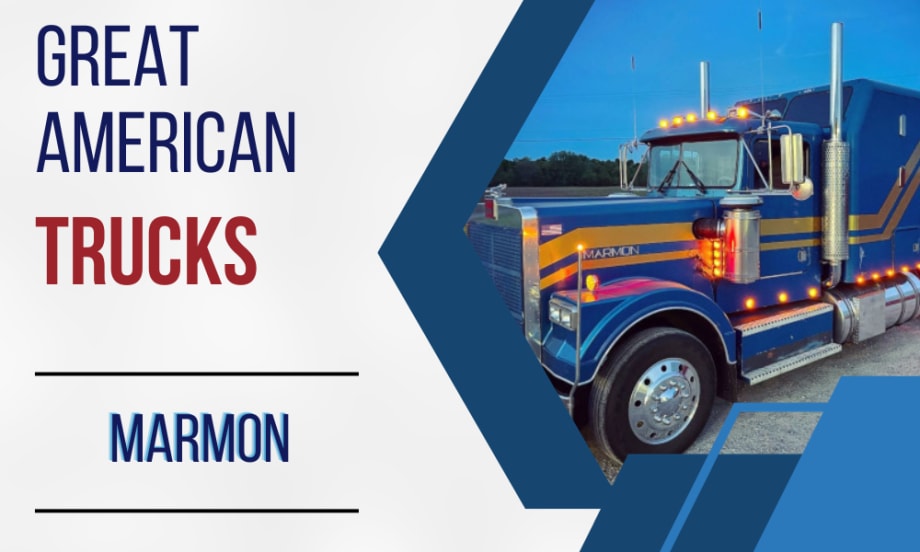
The Marmon Motor Company set a new standard for luxury in the 1960s and became known as the "Rolls-Royce" of American trucking.
Photo: Chris Budke
Beginning in the early 1960s, an old-but-new truck marque appeared on North American highways. Marmon Trucks were a new take on long-haul trucking. They were low-production trucks that were virtually hand-made. Moreover, they were designed with the driver first and foremost in mind.
Indeed, luxury and comfort were so integral to the Marmon design and image, they were billed as the “Rolls-Royce of trucks.”
You’d need a flowchart to fully trace the history of Marmon Trucks. The company’s roots went all the way back to 1865, when a newly minted college graduate named Daniel Marmon became an equal partner in Nordyke Marmon and Co., a firm that manufactured milling equipment in Richmond, Indiana. An orphan, Marmon had worked for the company’s founder, Ellis Nordyke, since he was a small child.
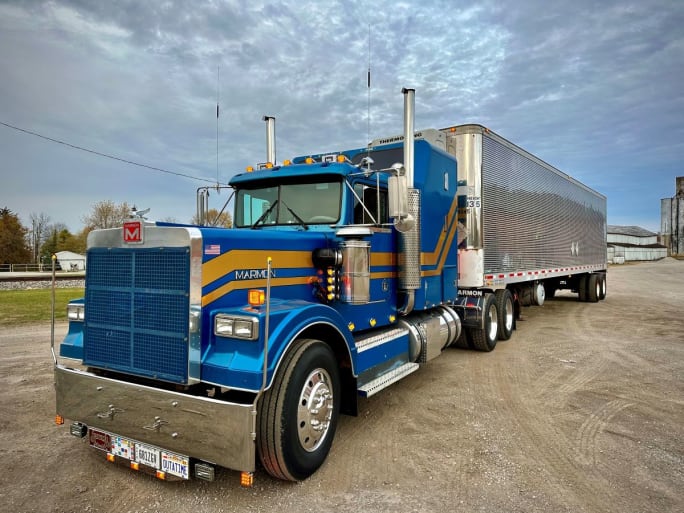
After years of searching, truck collector Chris Budke purchased this pristine 1987 Marmon 57P in 2019.
Photo:Chris Budke
Over time, Nordyke Marmon became one of the leading manufacturers of milling equipment. And in time, Marmon’s two sons, Walter and Howard, joined their father’s company.
Like many young Americans at the dawn of the 20th century, the Marmon brothers were fascinated by new automobiles just starting to appear around the country. After several disappointing purchases with early, primitive, motorcars, the brothers decided they could build a better automobile and set about building their own models.
From the Indy 500 to Trucking
The first Marmon automobiles appeared in 1902. And in a precursor to the trucks that would one day bear the family name, Marmon automobiles appealed to wealthy customers who placed an emphasis on quality and dependability.
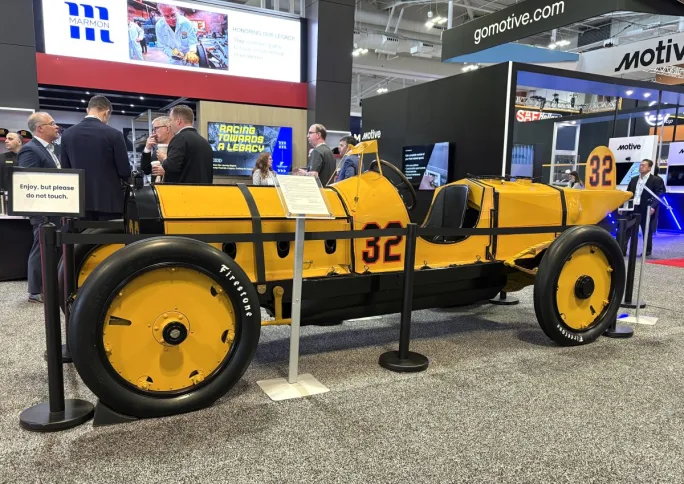
Marmon Highway Technologies in 2025 displayed the Marmon Wasp at its booth at TMC.
Photo: Deborah Lockridge
The Marmon Brothers had some serious gravitas backing up their claims of quality. In 1911, the company entered its Wasp race car – a four-cylinder-powered Marmon 32 model – in the Indianapolis 500. The Wasp started 28th in the field and went on to win the race, taking the checkered flag in six hours, 42 minutes at an average speed of 74 mph.
To this day, no other car has won the race after starting so far back in the pack.
With that racing victory bolstering its reputation, Marmon became known as one of the premier, high-end, automobile manufacturers of the early 20th century. Its future looked bright until disaster struck.
The Great Depression, which began with the Stock Market Crash of 1929, dealt Marmon a blow from which it never fully recovered. Overnight, the market for expensive luxury cars vanished. The company found itself scrambling to survive.
Auto Company Finds Opportunity in Trucks
Salvation arrived in the form of Col. Arthur Herrington.
Herrington was a retired U.S. Army officer and engineer who specialized in designing all-wheel-drive trucks for military applications. With this talented designer on board, Marmon, now the Marmon-Herrington Company, began building trucks for the U.S. Military. Eventually, their tough and dependable trucks would serve all over the globe during World War II.
Marmon Herrington lasted until 1963, when it was sold to new owners who were interested in building high-end Class 8 trucks for the North American owner-operator market.
Now dubbed the Marmon Motor Company, Marmon set up shop in Denton, Texas, and began building one-off trucks made to exacting customer specifications. (Manufacturing later moved to Garland, Texas.)
There was no assembly line. No unordered trucks were produced. Each truck was essentially hand-built from the ground up – although there was a trim level tier of sorts that allowed buyers to select increasingly more opulent rigs.
Cabovers still ruled the road in the early 1960s – and would for more than a decade to come. So early Marmon builds focused on cabover tractors with a wide array of sleeper options.
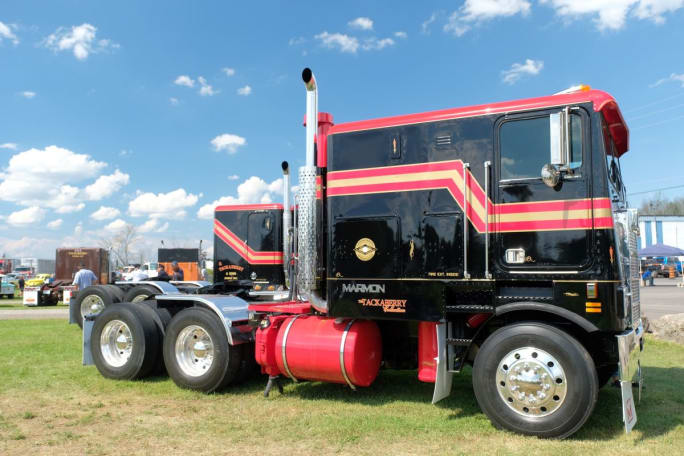
Early Marmon production featured a large percentage of cabover tractors. Eventually, long-nose conventional models become more popular.
Photo: Jim Park
There were approximately 24 base models to choose from. These included both cabovers and conventional tractors (which became much more popular in the 1980s when federal laws restricting tractor-trailer lengths were eased.)
Options included lightweight and setback axle configurations. There were also high- and low-roof versions, day cabs and short hood models. You could even spec an old school “butterfly” hood option – a retro offering before “retro” was a thing.
Models with an “F” designation were optimized for fleets (and some fleets did purchase Marmons). “P” models were premium rigs aimed squarely at the booming and somewhat glamorous owner-operator market of the day.
Engine and transmission offerings were standard for the time. A majority of the trucks left the plant with Caterpillar, Cummins or Detroit Diesel power and manual transmissions. All models featured a bright red Marmon M prominently displayed on the front of the truck.
The Most Truck for the Money
Marmons were fairly popular with a small group or drivers who praised their craftsmanship, attention to detail and comfort – from ride quality to cab and sleeper amenities. They stood out as luxurious vehicles in a time when most truck designs gave only passing attention to things like ergonomics and driver comfort.
Chris Budke is a former trucker and fleet manager out of Findlay, Ohio. Today, he’s in the truck parts business. But, more importantly, he’s an antique truck collector and the proud owner of a 1987 Marmon 57P. He says the quality of the truck is still impressive today.
“It’s the ultimate customer’s truck,” Budke says. “Each one was built exactly the way the customer wanted it spec’d. You don’t get that anymore. Now you pretty much have to take whatever they give you.”
Budke has researched Marmon’s history, and he says there's just not a lot of information out there. As best as he can tell, the OEM only built around 250 to 350 trucks a year – which really underscores how rare they are today.
“They’re so well built it’s amazing,” he adds. “Back then, buying a truck like this was a huge investment. And the people that were putting that money out wanted the most bang for the buck they could get. Marmon gave them a truck that was put together well and would last forever. This truck still rides better and is quieter inside the cab than most brand-new trucks today.”
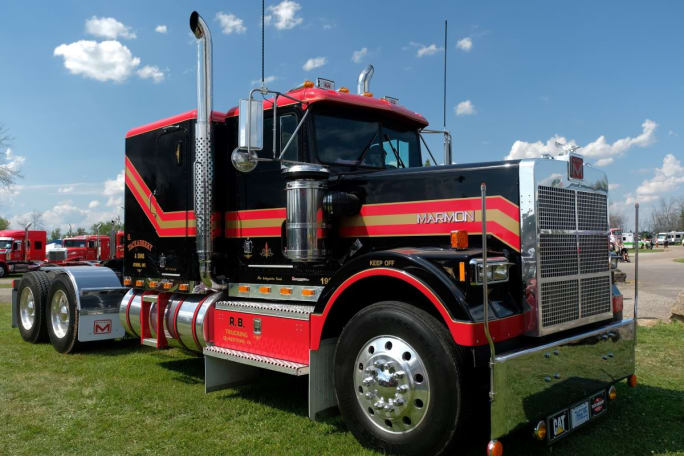
Each Marmon was hand-built to exacting customer specifications. Estimates vary -- but production was limited to around 300 trucks a year.
Photo: Jim Park
But over time, larger, better-funded OEMs began to see the value in offering safer, quieter, more comfortable trucks to customers — and fleets began to see the value in putting drivers in those trucks. Over time, the “luxury gap” that had originally differentiated Marmon Trucks began to close. The company found itself competing with high-volume truck builders that could offer better and better trucks at much more competitive prices. Marmon’s low-volume, hand-built business model was doomed.
Marmon limped along until 1997, when its last truck was produced. The company sold its production facilities to Navistar’s Paystar vocational truck division.
Given its low production numbers over the company’s life, Marmon Trucks are extremely rare today. A few working models are still out on the road. Which means your best chance to see one today is at a historic truck show.

Eventually time caught up with Marmon as larger, higher-volume OEMs began to produce more affordable trucks with comparable levels of quality and driver amenities. The company ceased producing trucks in 1997.
Photo: Chris Budke
But the Marmon name is still esteemed by many old truckers, who still remember the “Rolls-Royce” of trucking as a stand-alone in a time when style, comfort and quality were not priorities in commercial vehicle design.
Marmon was a marque that really captured the swagger, lifestyle and mystique of owner-operators and life on the road.
Editor's Note: Updated January 5, 2026, to clarify where Marmon trucks were built.
More Equipment

How Volvo Updated Its D13 for EPA 2027 [Watch]
Volvo’s updated D13 promises lower emissions without sacrificing performance or fuel economy. Take a closer look at what changed inside the engine in this HDT Spotlight video.
Read More →
Michelin Tire Improves Efficiency and Durability for Regional Fleets
The Michelin X Multi Energy D2 is a regional haul drive tire engineered to help fleets improve fuel efficiency, durability and traction in demanding stop-and-go operations.
Read More →
ZF Expands Commercial Vehicle Push in North America
ZF is expanding its North American commercial-vehicle presence with new transmission applications, electrification, trailer technology and autonomous-driving systems.
Read More →
Tesla Wants a Self-Driving Semi. Are Cameras Enough?
Could Tesla’s camera-only autonomous driving technology work on an 80,000-pound Semi? In this commentary, HDT's Deborah Lockridge takes a look at Tesla, Cybercab, and how autonomous trucks see the road.
Read More →
Kodiak: Driverless Long-Haul Truck Launch on Track for 2026
Kodiak AI says its driverless long-haul safety case is 93% complete and it remains on track to begin commercial operations by year-end 2026.
Read More →
What DOT’s Automated Vehicle Strategy Means for Trucking
The U.S. Department of Transportation issued a new automated-vehicle strategy that outlines plans for driverless-truck regulations, cross-state freight corridors, and federal safety standards.
Read More →
East Coast Port Launches $45M Electric Truck Push
The Port Authority of New York and New Jersey announced millions in incentives for zero-emission drayage trucks, yard tractors, and new charging hubs near the port.
Read More →
PlusAI Going Public to Fund Autonomous Truck Launch
A SPAC deal could provide PlusAI with up to $300 million as it works toward a 2027 commercial launch of factory-built autonomous trucks.
Read More →
NHTSA Moves to Rewrite Truck Fuel-Economy Rules
The National Highway Traffic Safety Administration says it lacks authority to regulate medium- and heavy-duty truck engines separately from complete vehicles, but the existing standards have not yet been eliminated.
Read More →
Detroit Opens Orders for EPA 2027 Engines
Detroit isn’t starting from scratch to meet EPA 2027 diesel emissions standards. Its Gen 6 DD13 and DD15 engines keep much of today’s platform while updating the fuel and aftertreatment systems.
Read More →