




Going Green: Crescent Crown Tests Hybrids, Other Sustainable Technologies
Crescent Crown Distributing is one of the five largest beer distributors in the country, delivering more than 26 million cases a year in Arizona and Louisiana. As a leader in the industry, company officials believe it's their job to take the lead in sustainability initiatives as well

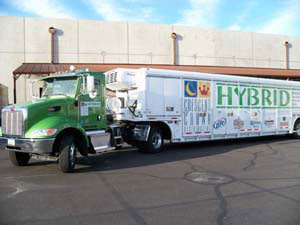
Crescent Crown's fuel savings with diesel-electric hybrids are even better than projected, once they got them broken in, on the right routes and got drivers trained
Crescent Crown Distributing is one of the five largest beer distributors in the country, delivering more than 26 million cases a year in Arizona and Louisiana. As a leader in the industry, company officials believe it's their job to take the lead in sustainability initiatives as well.
That's why they've been trying out three hybrids in their fleet and last year opened a new environmentally friendly distribution center in Surprise, Ariz.
"It's important for the leaders to take the initiative to test these new technologies," says Rich Marchant, vice president of operations. "A lot of people are hesitant to do it because of the cost and the uncertainty behind it. It's incumbent upon us to take on those type of challenges, because we have the scale to do so." Crescent Crown operates slightly more than 200 medium-duty and heavy-duty trucks between its two locations.
That's not to say that green initiatives don't have to have a return on investment. But Crescent Crown officials are willing to take a longer-term view on how soon they have to pay off.
In 2008, Crescent Crown signed up with PacLease to lease three Peterbilt Model 335 diesel-electric hybrid Class 7 tractors. Delivered early in 2009, these vehicles can help fleets reduce their carbon footprint, reducing tailpipe emissions of hydrocarbon by as much as 60 percent, carbon monoxide by about 50 percent, and nitrogen oxide by more than 40 percent. And, of course, they use less fuel.
"As a company we're committed to environmental issues and thought we'd be a great test for those vehicles, because we have a lot of in-town, urban routes" that offer the kind of stop-and-start operations a hybrid needs to run efficiently, Marchant explains.
Saving Fuel With Hybrids
They were expecting to save up to 35 percent on their fuel bill with the hybrids. It's taken a little while to get the engines broken in (they only run about 15,000 miles a year), make sure drivers understand how to drive them, and discover the most effective routes for them. Now that they've gone through that initial phase, Crescent Crown is discovering their fuel savings are even better than expected: 33 to 38 percent over a conventional medium-duty tractor.
The cost of fuel has dropped since the initial decision was made to lease the hybrids, which has lengthened the estimated return on investment from about seven years to more like eight. Crescent Crown typically keeps a truck for eight to nine years. "Eventually fuel prices will go upward again and these things will be more realistic," Marchant says. "Certainly when the rest of our fleet comes ready for repurchase, we're definitely looking at the hybrid technology. The prices will never get low enough to make it a bad investment."
Crescent Crown leased the hybrids instead of buying them outright because they weren't sure what the maintenance would be like. "But they've had very low maintenance and we haven't had any problems whatsoever. In fact we've had less problems than with other medium-size vehicles," Marchant says.
The company also has been moving to the new Ford Transit Connects for their merchandising vehicles, which go out and make small deliveries and set up merchandising displays. The Transit Connects get very good fuel mileage for the size of the vehicle. A new hybrid and a full-electric version have also caught Marchant's interest.
"We're also keeping a close watch on what's going on with LPG and CNG," Marchant says. "Right now it's just the availability (of the fuel) in our area that's keeping us from doing that. I think [natural gas] has one of the best potentials to keep fuel prices low in this country, but we've got to get the infrastructure in place."
Crescent Crown has also taken steps to get the most fuel mileage out of its conventionally fueled vehicles. All vehicles have a 5-minute idle shutdown control, as well as speed limiters. Route optimization is another big factor in fuel savings, with GPS tracking to ensure drivers are sticking to the prescribed routes.
Green Facilities
Last year the company opened a new 280,000-square-foot distribution center in Surprise, Ariz., which "represents a significant investment in our company's continuing commitment to reduce our carbon footprint," says James "Bubba" Moffett, president of Crescent Crown. Some of the "green" features include a motion-activated, energy-efficient fluorescent lighting system, an energy-efficient computer-controlled air conditioning system that can be adjusted remotely via the Internet, and an irrigation system that uses reclaimed water. The building is heavily insulated, with R30 walls, for more efficient energy use for air conditioning. When outside air temperatures permit, the air conditioning system brings in outside air instead of running the compressor.
Because Crescent Crown plans to occupy the building for a number of years, they were able to to think longer-term when it came to ROI, Marchant says. "Utility costs, unlike fuel, don't go up and down - they always go up." So most strategies that would help save on utilities would pay off eventually.
While being a committed corporate citizen is a major reason behind these initiatives, Marchant says, at the same time, "everything flows to the bottom line. And when you're talking about some of these, you're looking past the usual five- to six-year return."
Not everything is a good fit. For instance, they looked closely at using solar power for the new distribution center. "Even with the incentives that were out there and the cost of electricity, the return on investment was beyond 14 years," he says.
One challenge with evaluating sustainable technologies, Marchant says, is that uncertainty about the future makes determining ROI difficult. "You have to kind of take out your crystal ball and look at energy prices into the future, and even bigger than that, at the regulatory environment. What type of savings will there by, and what type of regulatory impact will come that will cause those technologies to be more cost-effective?"
From the October 2010 issue of Heavy Duty Trucking magazine.
More Fuel Smarts

Record Diesel Prices Squeeze Trucking Fleets
Average U.S. diesel prices have climbed to nearly $6 a gallon, surpassing the 2022 record as tight refinery capacity and Middle East disruptions keep fuel costs elevated.
Read More →
How Fuel Delivery Shapes Engine Performance
Fuel delivery depends on more than what happens at the injector. For fleet, maintenance and technical professionals, looking at the full path from pump to injector can provide useful context for understanding engine performance.
Read More →
East Coast Port Launches $45M Electric Truck Push
The Port Authority of New York and New Jersey announced millions in incentives for zero-emission drayage trucks, yard tractors, and new charging hubs near the port.
Read More →

California Bill Could Shed Light on Electric Truck Prices
Why do battery-electric Class 8 trucks remain so expensive? A California bill headed to Gov. Gavin Newsom would give fleets and state agencies more visibility into what manufacturers charge.
Read More →
Detroit Opens Orders for EPA 2027 Engines
Detroit isn’t starting from scratch to meet EPA 2027 diesel emissions standards. Its Gen 6 DD13 and DD15 engines keep much of today’s platform while updating the fuel and aftertreatment systems.
Read More →
Zero-Emission Truck Corridor Planned for West Coast
California, Oregon, Washington, British Columbia and Baja California are coordinating plans for truck charging and hydrogen fueling from Canada to Mexico.
Read More →
A Closer Look at Kenworth’s Electric T880E Vocational Truck [Video]
Learn more about Kenworth's T880E battery-electric vocational truck at the Paccar Technical Center, including its range, applications, upfitting considerations, and PTO options, in this HDT Spotlight video.
Read More →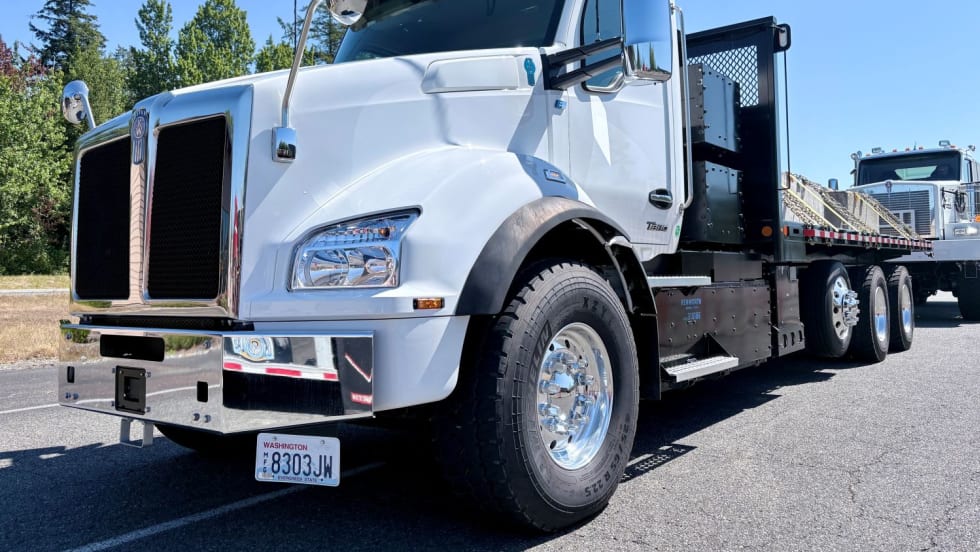
Kenworth T880E Brings EV Power to Vocational Trucks
A closer look at the Kenworth T880E’s range, charging, powertrain and upfit options — and where fleets are showing the most interest.
Read More →
Jennie Abarca Is Proving Electric Trucks Can Do the Job
HDT Truck Fleet Innovator Jennie Abarca is building confidence in fleet electrification one load at a time while openly sharing the challenges she encounters along the way as a small-fleet owner.
Read More →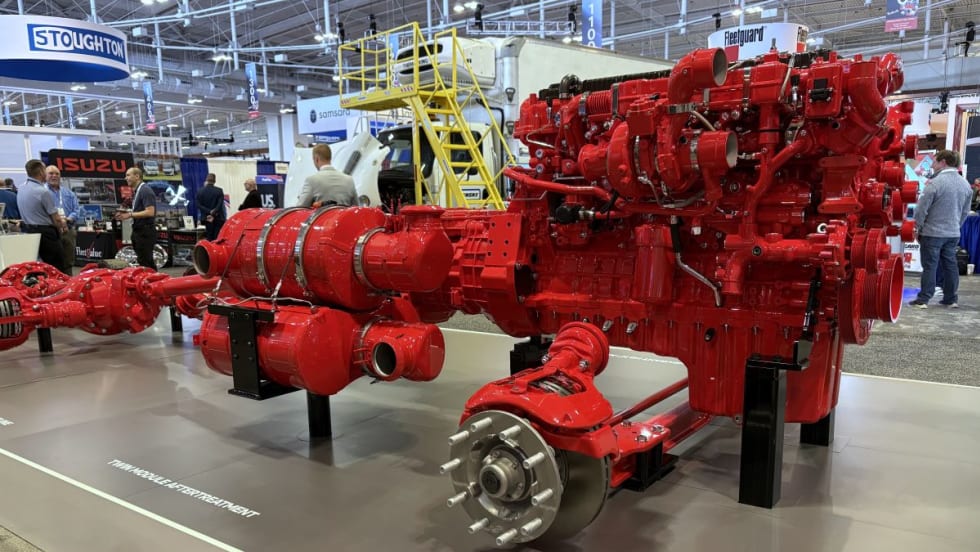
Cummins Adjusts 2027 Engine Rollout After EPA Proposal
The engine maker will gradually introduce its new Model Year 2027 diesel engines while continuing to offer current models during the transition, citing the EPA's proposed emissions rule changes.
Read More →