





Related: Kinedyne Designates May as Cargo Securement Awareness Month
Getting Ready for This Year's Roadcheck
Cargo securement is a special focus of this year’s 72-hour inspection blitz. Do your drivers know how to avoid citations — and keep the cargo where it belongs?
May 22, 2017
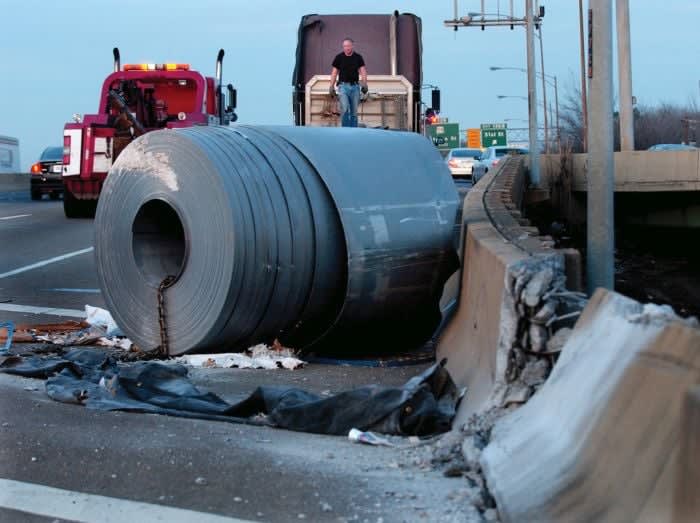
Proper attention to load securement is important not only to pass roadside inspections, but even more importantly, to protect the safety of others on the highway. Photo: Linda Stelter / The Birmingham News
6 min to read
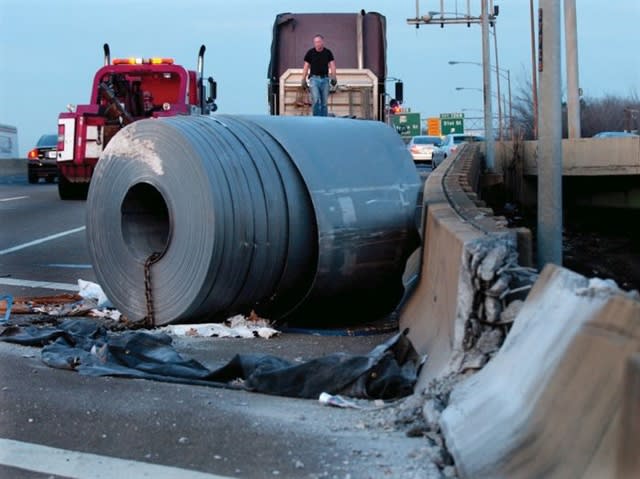
Proper attention to load securement is important not only to pass roadside inspections, but even more importantly, to protect the safety of others on the highway. Photo: Linda Stelter / The Birmingham News
During the Commercial Vehicle Safety Alliance’s 30th annual International Roadcheck June 6-8, authorities will be conducting approximately 17 Level I Inspections per minute across the United States, Canada, and Mexico. This year, inspectors will pay special attention to cargo securement.
A common misconception is that only flatbed loads require cargo inspections, but inspections are required on all vehicles unless the cargo is sealed or otherwise impractical to check. However, platform and other open trailer loads, being the most visible, are a primary focus.
Barnhart Transportation in Erie, Pennsylvania, recently took advantage of Kinedyne’s cargo securement training as part of an annual safety picnic. Barnhart runs 109 trucks, with much of its freight being oversize equipment such as locomotives. While the company does go over load securement in driver orientation, the company wanted to offer drivers a more personal training experience, says Holly Ambover, Barnhart’s health, environmental and safety coordinator.
“The drivers responded to it well, they asked a lot of questions at the end of it,” she says. “We got a lot of feedback from the drivers that it was very beneficial and they learned a lot.”
The training was led by Jeff Luick, a former driver who’s now a regional account rep and trainer for Kinedyne. He worked with his company to start offering this free training through its distributors a few years ago.
“I was trained by a driver, and the driver who trained me was also trained by a driver,” he explains. “You end up taking that information as gospel without really looking into the regulations yourself. What I found is some of the information passed from driver to driver is not accurate or reflective of what the regulation actually is. A term we like to use is ‘tribal knowledge.’”
That’s why training is important. A few years ago, Arkansas-based Maverick Transportation made a $4 million investment in its training center, expanding it to seven classrooms and eight training bays, where drivers live-load all products hauled and are trained in Maverick securement techniques. In addition, an in-house video production team has developed some 75 short training videos that drivers can view in the truck on demand, according to Dean Newell, vice president of safety and driver training for Maverick.
Maverick also has four safety people on the road who travel to Maverick and shipper locations to spot-check loads and help drivers make sure it’s done right.
What inspectors look for
In 2015, the last time Roadcheck focused on cargo, inspectors issued 2,439 violations for load securement. The most common violation was failure to prevent shifting/loss of load. The other most common violations were for failure to secure truck equipment, damaged tie-downs, insufficient tie-downs, and loose tie-downs.
Luick, along with Kinedyne U.S. Director of Sales Bob Dissinger, tagged along with an inspector to see what they look for.
“They first and foremost are looking to make sure the proper amount of securement is being used on a load,” Dissinger says. “Looking to see that it’s bulkheaded and if not that it has the proper straps, and they’re checking the condition of the straps, to make sure they’re not overly worn, there are no nicks or cuts. And depending on the load, making sure there’s edge protection to make sure straps won’t be cut by the load.”
Luick noticed the inspector also was looking to see if the cargo was braced and blocked properly and making sure the tie-downs were not loose.
“The other thing was, he really made sure the [truck] equipment was secured properly. Was the spare tire secure, was the blocking and bracing material that most flatbeds have on them tied down and secured properly.”
Another violation not related to your tie-downs, Luick says, is leaking/spilling/blowing/falling cargo. “If there is dirt, gravel, loose debris, even a few pebbles on the deck, they consider that loose or blowing cargo,” he says. “Say you had just hauled a tracked piece of machinery that had dirt on the tracks. The driver makes the delivery and takes off without sweeping the deck off. He gets inspected and there’s dirt on the deck — there’s a ticket.”
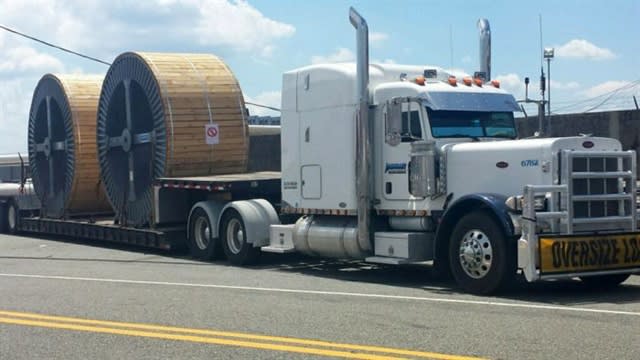
Barnhart Transportation recently offered its drivers extra training on load securement regulations and is sending out refresher tips in advance of CVSA’s Roadcheck inspection blitz.
How many tiedowns
One of the tricky parts of load securement is determining the correct number and type of tie-downs. One of the most common questions Kinedyne’s Luick gets from drivers is the difference between the working load limit, aggregate working load limit, and breaking strength.
As Cargo Equipment Corp. explains on its website, break strength is the point at which any point of your tie-down will fail. It’s determined by the weakest point of the strap (webbing, end fittings, or tensioning device.) Working Load Limit or WLL refers to the maximum allowed weight. Working Load Limit is always one-third of the breaking strength for straps, so a strap with a breaking strength of 15,000 pounds will have a Working Load Limit of 5,000 pounds. For chains, explains Paul Wolford, Kinedyne vice president of sales and marketing, the WLL is 1/4 of the breaking strength.
The aggregate working load limit, as U.S. Cargo Control explains on its website, “is the sum of the working load limits for each device you use to secure your load. To meet safety requirements, the aggregate working load limit of the devices you use must be at least 50% of the total weight of all the pieces of cargo you are hauling.” So if you have a 10,000-pound piece of steel, you would need 5,000 pounds of aggregate working load limit to meet DOT requirements — or more.
“When we say aggregate working load limit,” says Kinedyne’s Luick, “if you have a 10,000-pound load and need 5,000 pounds of working load limit, and your cargo securement [device] has a WLL of, say, 3,335 pounds for a ratchet strap, you would need two ratchet straps and they’re counted in aggregate.”
To help make things easier, Ancra offers a tie-down calculator app, available for Android or iOS. It helps drivers determine the minimum strap requirements needed to comply with FMCSA regulations. The app offers the ability to enter custom article length and weight, as well as custom entries for a strap’s Working Load Limit, which it saves for future use.
At Maverick, Newell explains, they’ve opted to err on the side of caution and go above and beyond government regulations — both for safety’s sake and simply to make it easier to calculate.
“We pretty much rate everything at 8,000 pounds,” Newell explains. “So if it’s a chain or 4-inch strap we rate it the same. So say the load weighs 40,010 pounds, it would require six chains or straps.”
The other area that causes confusion is load length. “Not only do you have to worry about the weight, you have to worry about the linear footage,” Newell explains, “and sometimes that can get confusing to someone who’s not dealt with it before.”
“CSA is very important to us, so we want to make sure our drivers are educated as much as possible for safety and the safety of everybody out on the road,” says Barnhart’s Ambover. “Our CSA scores have been drastically coming down just by communicating with drivers and educating them.”
Subscribe to Our Newsletter
More Safety & Compliance

Kodiak Lines Up Fleets for Driverless Trucking
An agreement for 75 trucks, a new Texas freight lane, and progress on safety validation move Kodiak closer to its planned driverless highway launch.
Read More →
More Trailer Data Through the Same Seven-Way [Video]
Can trucking’s standard seven-way connector handle more cameras and trailer data? Grote’s Adam Slade shows HDT how the company is using new technology with its 4See trailer system, not only to add a new backup camera but also to expand other capabilities — without adding another connection.
Read More →
PrePass Intelligence Mines Fleet Bypass, Toll and Safety Data
PrePass Intelligence helps fleets measure bypass savings, flag potential toll overcharges, and spot suspicious transactions by combining data from separate systems.
Read More →
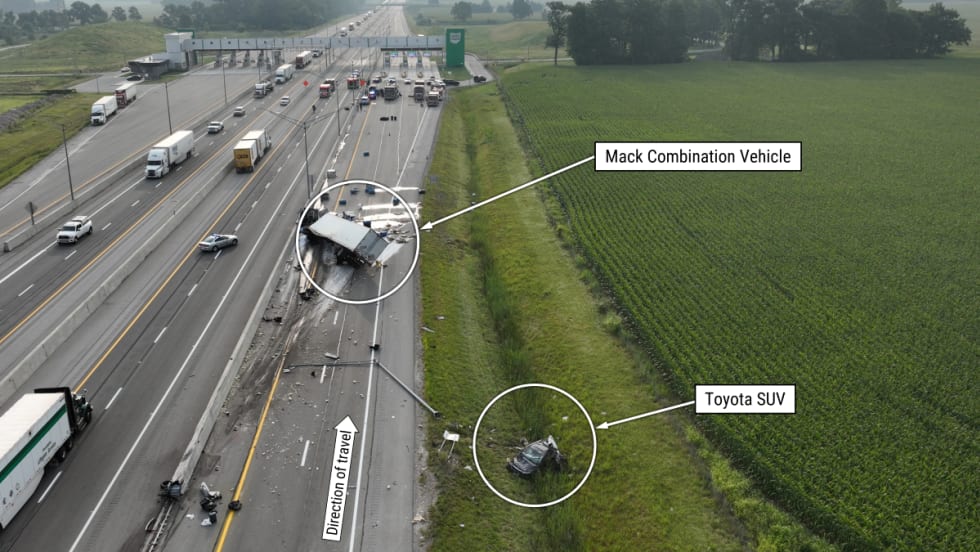
Fatal Crash Exposes Toll Plaza Risks
An NTSB investigation found that last-minute lane changes and large speed differences at an Ohio toll plaza created a hazard the truck driver couldn't avoid in time.
Read More →
When Language Stops the Truck: The Return of ELP Out-of-Service Orders
English language proficiency rules for commercial drivers aren’t new, but renewed out-of-service enforcement has raised the stakes. Here’s what carriers need to know before a driver reaches a roadside inspection.
Read More →
Sponsored•October 6, 2026
A Camera Isn't a Safety Program. Here's What Brokers Are Screening for Now
Footage alone may not be enough to pass broker vetting processes. Here's what counts as a defensible safety program now.
Read More →
Marijuana and Trucking’s Drug-Testing Dilemma
Marijuana is getting stronger, laws are changing, and drug tests still can’t reliably establish impairment. What does that mean for truck drivers and the fleets that employ them?
Read More →
PrePass, Kodiak Connect Driverless Trucks to Roadside Enforcement
The system will allow enforcement agencies to verify Enhanced Inspection information and decide whether Kodiak’s autonomous trucks can bypass roadside screening sites.
Read More →
From One Generation to the Next: How Mentorship Builds Safer Truck Drivers
After three decades in trucking, Harold Perry shares what he's learned about driver safety, mentorship, and helping the next generation build confidence behind the wheel.
Read More →
FMCSA Pauses Biennial-Update Enforcement Amid Motus Transition
Carriers whose updates were due on or after June 1 have more time, while FMCSA works to stabilize its new registration system and warns of phishing sites impersonating its new carrier registration system, Motus.
Read More →