




Future is Green at NTEA
Some of the earliest freight-hauling trucks were electric-powered, but they disappeared in the 1920s when internal combustion engines proved less costly and operationally more flexible

Some of the earliest freight-hauling trucks were electric-powered, but they disappeared in the 1920s when internal combustion engines proved less costly and operationally more flexible.
In recent years, however, high-priced oil and the quest for clean air has spurred development of batteries and drivetrains, and while electric vehicles aren't cheap, government grants make them more affordable.
At least three makes and five models of electric-only trucks are now available. Several of them were highlighted at the National Truck Equipment Association's annual meeting and Work Truck Show last month in Chicago. So were some hydraulic-hybrid trucks, underscoring the fact that at least one is now being produced in limited numbers and others are close to being ready. Hydraulic-drive systems have almost caught up to electric hybrids, which first went into production in 2005.
"Electric hybrids are popular; hydraulics are better," declared Limo-Reid Technologies, one of 20 companies exhibiting at the show's Green Trucks Pavilion. Hydraulic hybrid components are simpler and weigh less, are more efficient and safe, and perform better from a standstill than electric hybrids, the company claims. Hydraulic systems also can be configured to power hoists, pumps and tools. Limo-Reid, with an office in Deerfield, Mich., says it has installed its Hydra-Powered Propulsion Systems on military and commercial trucks and on buses and taxis.
Alternative-fueled vehicles were discussed in educational sessions and were among the trucks available for ride-and-drive experiences. They got a push from an address by T. Boone Pickens, the oilman-turned-alternative energy preacher, who reiterated his message that natural gas should replace diesel fuel in commercial trucks. Pickens, who's investing many millions of dollars in gas fueling stations and electricity generating windmills in the Southwest, said the federal government should provide greater financial incentives for truck operators to buy natural gas-fueled vehicles to help wean Americans from reliance on foreign oil.
But trucks with standard diesel and gasoline powertrains still comprise the vast majority of light- and medium-duty commercial trucks being sold, and most news announcements and vehicles on display at the show were about them. Several truck builders outlined their plans to meet 2010 diesel exhaust limits, and most of them involve selective catalytic reduction. As with heavy trucks, the sole non-SCR proponent is Navistar International, which will use "advanced" exhaust-gas recirculation and other in-cylinder refinements, along with credits earned under EPA rules, to keep its 2010 diesels legal.
Ride and Drive
The ride-and-drive event was staged behind one wing of the vast McCormick Place complex, where builder representatives offered reporters and show attendees on-the-street experiences with their recently developed products. Among the 15 vehicles were two with natural gas engines and another with propane power. Four trucks had Eaton's electric hybrid system, and Duelco-Odyne presented two plug-in diesel-electric hybrid trucks. We have previously driven and reported on those products, so in the two hours allotted for reporters, I concentrated on electric-only trucks from Smith and Evi, two names new to American truck building, and a series-hydraulic hybrid van being developed for big package delivery fleets.
I also drove a Chevrolet Silverado pickup with General Motors' 2-Mode Hybrid system, the same one used in the Tahoe SUV (see February HDT). The pickup employed electric propulsion far more than the Tahoe I drove last year, maybe because the pickup had not been driven as much and, with more stops on the outlined route, had more opportunities to recharge its batteries through regenerative braking.
With a light foot the Silverado would accelerate to 25 and 30 mph on electric power, twice as fast as with the Tahoe, and the Silverado's 6-liter gasoline V-8 engine was quiet when it kicked in. With two-wheel-drive the Silverado hybrid (and a GMC Sierra clone) is EPA-rated at 21 mpg city and 22 mpg highway, 25 percent more than with a standard powertrain, GM says.
Manufacturing considerations caused GM to assign production to the plant that makes four-door crew-cabs, which come with short beds, because such pickups have accounted for half of the market. This perhaps lessens its usefulness as a work truck, but it is available with a modest trim package to help hold down its price to the mid- to high $30,000s.
Electrifying Drives
Each of the two electric trucks I drove costs two to three times as much as a comparable midrange model with a standard diesel powertrain, manufacturers said. Included are batteries, driveline-mounted motor and electronic controls which run at 300 to 330 volts. Federal and state incentives meant to encourage use of the non-polluting vehicles should reduce that price, and the chassis are supposed to last 10 to 20 years, so life-cycle costs begin looking good.
Even though batteries will probably have to be replaced in seven to 10 years, mass production that's expected between now and then should make that a less expensive proposition. Here are brief descriptions:
• EVI-Isuzu LCF conversion. Electric Vehicles International (www.evi-usa.com) converted an Isuzu NPR into an all-electric truck by removing the diesel powertrain and installing an electric motor, batteries and a control system under the cab and along the frame rails. EVI does conversions in Mexico and has an office in Austin, Texas. This vehicle was a bare cab-and-chassis truck, so had a bouncy and sometimes rough ride over broken concrete and asphalt. It was a prototype with some rough edges.
The big problem on my run was that the system repeatedly shut down as soon as we barely got moving on public streets, leaving us dead on the pavement while impatient Chicago motorists blew their horns and swerved around us. Technician Galdino Ferretiz showed me how to reset it by turning the ignition off and on, and switching into Neutral and back into Forward with a three-position rocker switch (that also included Reverse). After we did this about five times, he got out and went around to the left side of the truck and fiddled with some wiring, then got back in and we were off. He explained that the connection to the fan on the control box had come loose and the system had shut off to protect the controls.
According to a brochure, the motor was rated at 100 kilowatts or 134 horsepower, but felt weaker. This Class 3 version had single-speed gearing between the motor and the driveshaft and after some slight shuddering at take-off, the motor whirred up and down in direct relation to road speed. Class 4 and Class 5/6 versions use the same motor with a 2-speed gearbox. The speedometer on this prototype truck didn't work, but Ferretiz said it would do 40 to 50 mph. It took a while to get there because acceleration was slow. The sluggish performance was not what I expected of an electric, but it was more than enough to get us back to the ride-and-drive area.
• Smith Ford Transit. Many copies of this truck, about the size of a Mercedes-Benz Sprinter van, are running in Europe, said Smith officials on hand at the NTEA show. There are no plans to bring the Transit, electric or diesel, to the States, but Smith's conversion uses the same components as the Newton electric truck that Smith has begun marketing here, so performance is similar. It uses lithium-ion batteries and a 110-kw/147.5-hp motor. On the Newton chassis displayed on the show floor, two large, heavy battery boxes are hung on each side of the frame where they would interfere with beverage-delivery bodies, but batteries could be stored elsewhere, executives said.
In the Transit, a slick little joystick-like selector at the base of the dashboard is labeled D-N-R, and asid
More Equipment

Kodiak Lines Up Fleets for Driverless Trucking
An agreement for 75 trucks, a new Texas freight lane, and progress on safety validation move Kodiak closer to its planned driverless highway launch.
Read More →
How GP Transco Builds Fuel Savings a Fraction at a Time
Aerodynamic specs, solar panels, and driver incentives help GP Transco turn small efficiency gains into savings it can reinvest in its people.
Read More →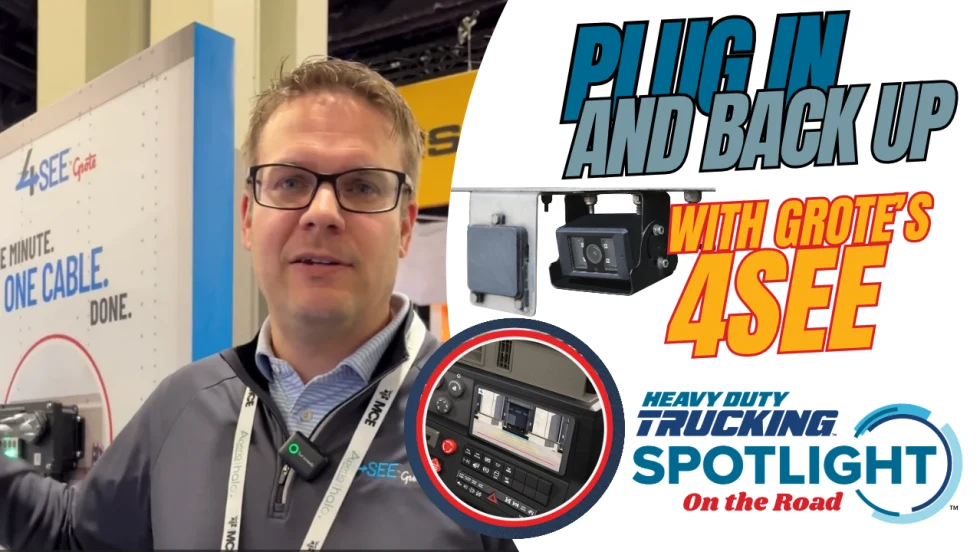
More Trailer Data Through the Same Seven-Way [Video]
Can trucking’s standard seven-way connector handle more cameras and trailer data? Grote’s Adam Slade shows HDT how the company is using new technology with its 4See trailer system, not only to add a new backup camera but also to expand other capabilities — without adding another connection.
Read More →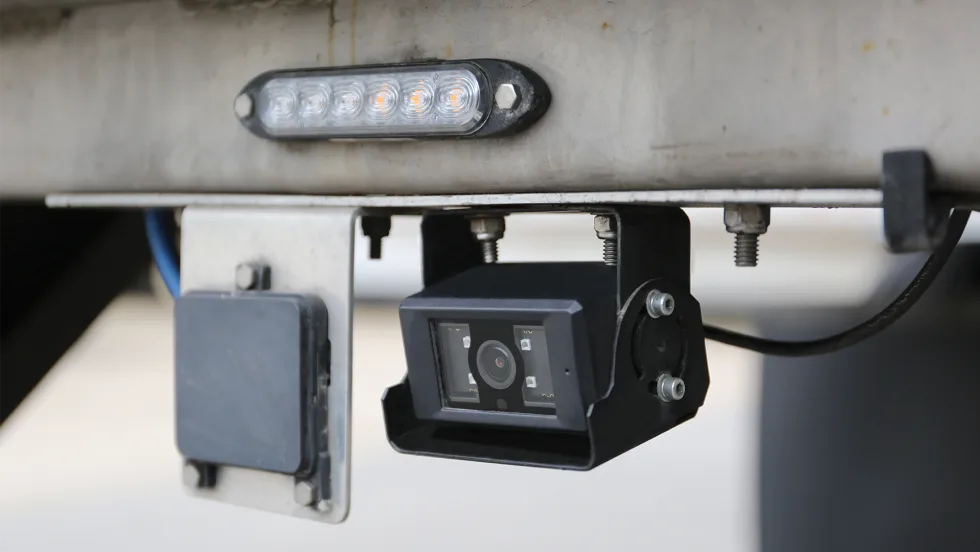
Grote: More Cameras, Same Seven-Way Connector
The next-generation 4See rear-view backup camera from Grote uses the standard seven-way connector and supports additional cameras and other trailer data.
Read More →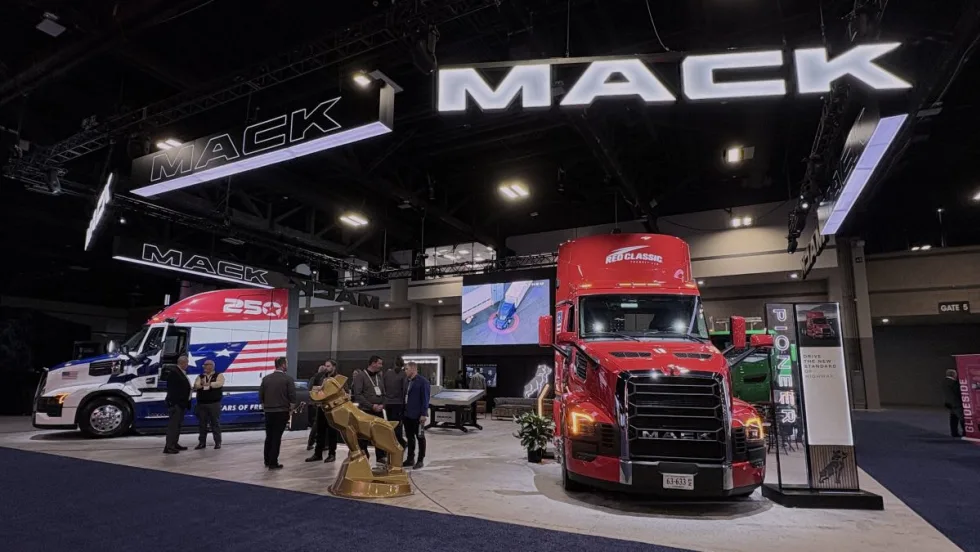
Trucks at ATA's 2026 MC&E in Charlotte, North Carolina [Photos]
From rigs decked out in patriotic America's 250 paint schemes to autonomous trucks and more, check out these photos from ATA's 2026 Management Conference & Exhibition.
Read More →
Help HDT Find Trucking’s Top Products
Have you come across a new product that could make a difference for trucking fleets? Nominate it for HDT’s 2027 Top 20 Products Awards by November 9.
Read More →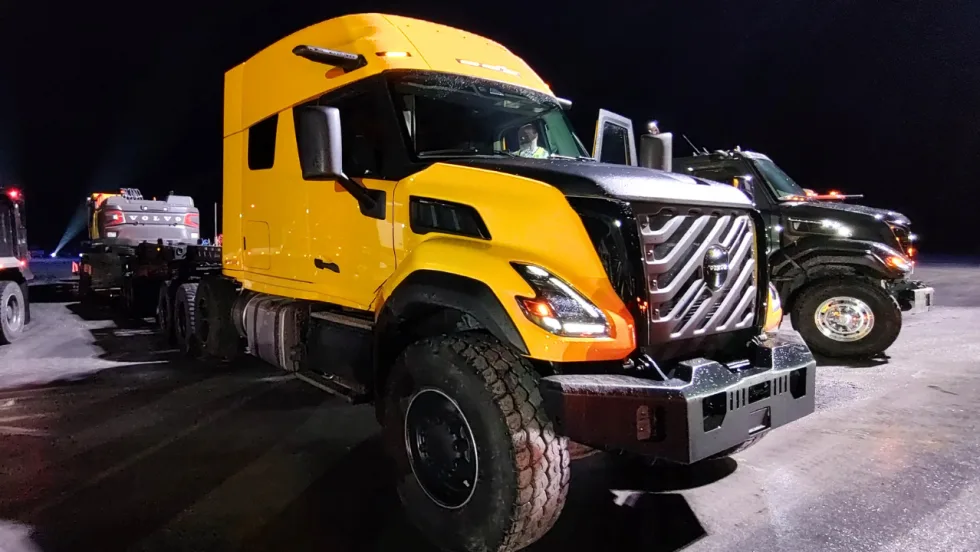
Volvo Unveils New VNX Heavy-Haul and Vocational Truck
Volvo Trucks has launched the VNX, a new vocational truck also available as a tractor in day cab and two sleeper configurations, with one heavy-haul model. The Volvo VNX is powered by Volvo's D13 platform, which delivers up to 540 horsepower and 1,950 pound-feet of torque and is EPA 2027-compliant.
Read More →
How GP Transco Cuts Trucking Fuel Costs, a Tenth of a Gallon at a Time
What’s another tenth of a mile per gallon worth? GP Transco shares how equipment upgrades and driver coaching turn small gains into meaningful fuel savings.
Read More →
Electric Yard Tractors Move Beyond Pilots
Operating-cost savings have overtaken sustainability goals as the leading reason surveyed fleets are adopting battery-electric terminal tractors, according to new NACFE research.
Read More →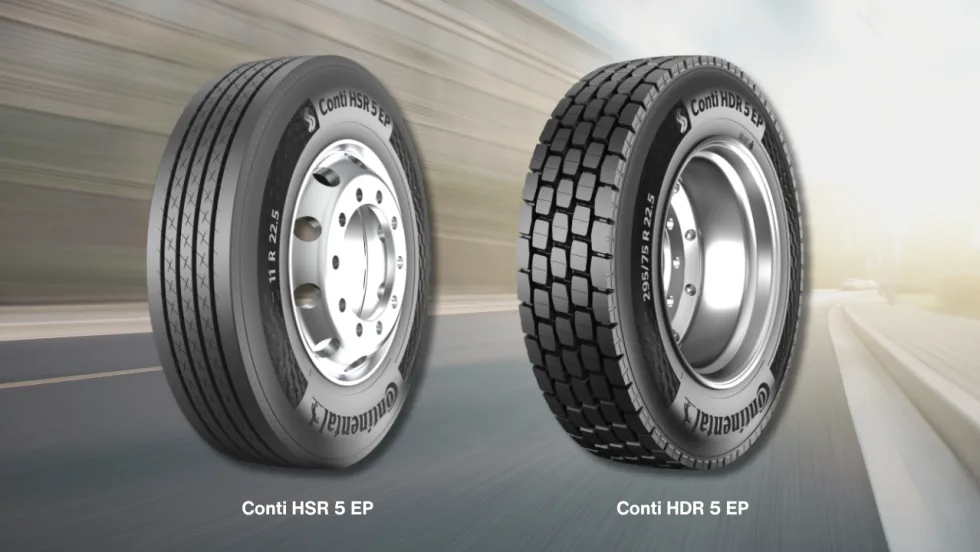
Continental Introduces New Regional Truck Tires
Continental says its new Generation 5 steer and drive tires for regional operations offer longer tread life, with estimated mileage gains of 22% and 19%, respectively.
Read More →