





Related: Ursa Sees High MPG in the Real World
Fuel Saving Fleets: Cooper Makes An Every Day Effort
By staying on top of data and its drivers, Cooper Freight makes its quest for better fuel economy an every day effort.
June 27, 2016
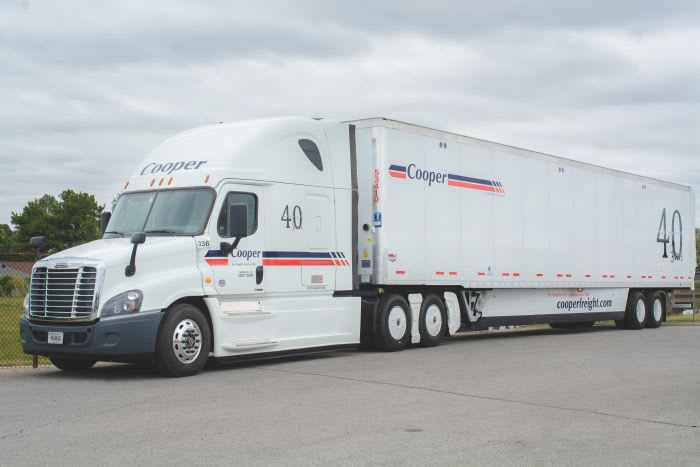
Cooper Freight celebrated its 40th anniversary last year. Its 8.5-mpg fleet average would no doubt astound its founders. Photos: Cooper
4 min to read
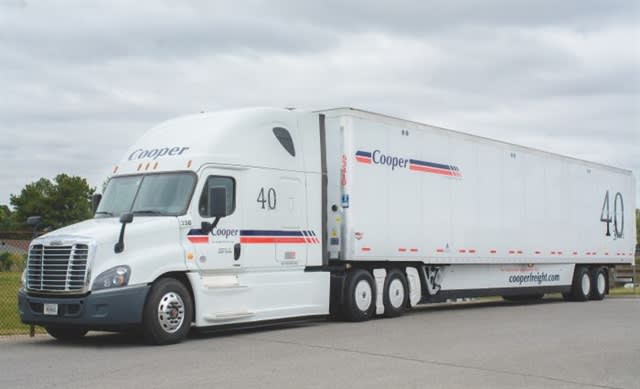
Cooper Freight celebrated its 40th anniversary last year. Its 8.5-mpg fleet average would no doubt astound its founders.Photos: Cooper
Mark Cooper believes he may be able to hit his goal of a 9 mpg fleet average within the next year. Already some trucks are achieving in the low 9s regularly and hitting 10 mpg on some trips under the right conditions, he says. The fleet average is 8.5 and even the most fuel-guzzling trucks in the fleet get 7.9 mpg.
Cooper is general manager of Cooper Freight in Memphis, Tenn., a family company he co-owns with three siblings. The 100-truck fleet of late-model Freightliner Cascadias runs 53-foot van trailers in 48 states and celebrated its 40th anniversary last year.
Fuel economy wasn’t always the focus it is now, though. Back in 2008 and 2009, when fuel prices skyrocketed, the fleet was averaging 5.5 mpg. One of the first things they did to address it was slow the trucks down, and that’s still part of the strategy today. Other major changes that made a big difference in the mpg were cutting idling time and installing TrailerTails from Stemco. Trailer side skirts were installed “years ago” when they first came out, he says, and trailers have automatic tire inflation systems.
“By far the tails work more than anything — that was half a mile to the gallon.”
However, Mark’s not a fan of auto-deploy options for the tails. “The way I look at it is, if the driver does his pretrip like he’s supposed to, he has to walk around the trailer, so he would deploy them then. And that way when he stops he remembers they’re back there and doesn’t tear them up” backing into a dock. While the tails are designed to fold by themselves in these situations, that feature doesn’t always work perfectly. Cooper policy requires drivers to stop to close the tails before they back in, and there are stickers on the front of the trailers to remind them.
“If they get caught with them closed the first time, they’re warned. The second time, it’s a monetary fine. And if they forget they’re back there, they pay for the damage” that may occur if backed into a dock while deployed.
Idle time is monitored through regular downloads as well as via telematics. Drivers averaging more than 5% idle time get warned, then suspended, and terminated if they don’t improve. With Freightliner ParkSmart auxiliary power units to provide heat and air conditioning, Cooper says, “there’s no reason to be at the maximum 10% except in extreme cold weather.”
Some of these policies fly in the face of common advice that it’s better to reward drivers for positive behavior than punish them for bad habits, but Cooper’s high mpg and low driver turnover sho
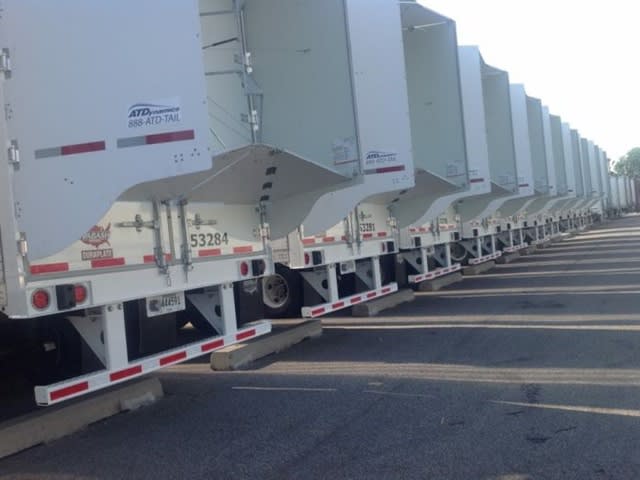
Stemco TrailerTails have been an effective part of Cooper’s fuel mileage strategy. Other trailer technology includes side skirts and automatic tire inflation systems.
w it works just fine for them.
Currently Cooper is testing the FlowBelow tractor-tandem aerodynamic system as well as lower-viscosity oils.
Also in testing are automated manual transmissions. But with an experienced driver workforce that’s already achieving an average of 8.5 mpg on manual transmissions, so far Cooper is not convinced they’re that effective for his fleet.
There already are equipment factors in place that help control driver behavior. “We’ve got [engine operating] parameters set for progressive shifting,” where rpms are low in lower gears, he explains. “We force them to (up)shift or the rpms won’t go so high. Even if he pushes the pedal down, he can only go so many revs through the gears anyway.”
While drivers still can drag down mpg with aggressive driving, those drivers typically don’t last long with the company anyway. “If you’re aggressive on your driving, you’re going to be aggressive with customers and everything else,” including safety.
Even though fuel prices now are not at a level where aiming for 9 to 10 mpg would seem to be an urgent quest, Cooper says when prices are low is actually the perfect time to up your fuel-economy game.
“What you don’t want to do is wait for the fuel to go up, and then you can’t afford” to make the investment and get people trained, he explains. “When fuel starts going up, your clock’s run out at that point, because your money’s being spent on fuel instead of on fuel savings.”
Mark has a bit of an unusual position in that he is in charge of both the company’s financials and its equipment purchasing and maintenance, so it’s easy for him to track how different strategies affect the fleet’s bottom line. He regularly analyzes data from truck downloads and received over the air to see how various test technologies are performing and watch for anomalies.
“You have to care about it, you have to be passionate about it,” he says. “This is an every-day project — you have to be disciplined and keep your employees disciplined and on the same page with you.” Some fleet managers he talks to, he says, don’t even track fuel economy in a meaningful way. But as the old saying goes, if you don’t measure it, you can’t manage it. “I’m a numbers guy — I enjoy it.”
Subscribe to Our Newsletter
More Fleet Management

Sponsored•September 16, 2026
Color Match Smarter: Tools That Restore & Perform
For fleet managers and collision repair professionals keeping heavy-duty trucks on the road, getting the color right the first time isn't just about appearance — it's about efficiency, turnaround time, and bottom-line results. Discover how today's digital color tools are transforming the repair process from guesswork to precision.
Read More →
FMCSA Pauses Biennial-Update Enforcement Amid Motus Transition
Carriers whose updates were due on or after June 1 have more time, while FMCSA works to stabilize its new registration system and warns of phishing sites impersonating its new carrier registration system, Motus.
Read More →
Sponsored•September 14, 2026
2026 Blueprint for Countering Smarter Supply Chain Theft
Cargo theft is no longer just the cost of doing business. It's a multi-billion-dollar criminal enterprise exploiting vulnerabilities across your fleet, drivers, and supply chain.
Read More →


Sponsored•September 1, 2026
How Telematics Improves Visibility, Control, and Performance in Refrigerated Fleets
Explore how telematics help refrigerated fleets improve visibility, uptime, efficiency, compliance, and cargo protection across connected cold chain operations.
Read More →
What the U.S.-Canada Trade War Means for Trucking
Escalating U.S.-Canada tariffs could disrupt cross-border freight, reduce truck volumes, raise costs, and create new uncertainty for carriers on both sides of the border.
Read More →
What Are Trucking’s Top Concerns for 2026?
The American Transportation Research Institute wants to know what's worrying trucking fleet managers, drivers, and other stakeholders in its annual Industry Issues survey.
Read More →
American Trucking Associations Looks for a New Leader
ATA President and CEO Chris Spear abruptly left his job at the association on August 21, at a pivotal time for the trucking industry.
Read More →
Public Wi-Fi Cybersecurity Risks: How Truck Drivers and Fleets Can Protect Their Data
Public Wi-Fi can expose truck drivers and fleets to credential theft, malware, and other cyber threats. Here’s how to reduce the risk on the road.
Read More →
For Nicky Cupp, Fleet Innovation Starts With Frustration
HDT Truck Fleet Innovator Nicky Cupp turns everyday pain points at Fraley & Schilling into opportunities for better technology and smarter processes.
Read More →
Adam Buttgenbach’s Approach to Electric Trucks: Start With Where They Fit
HDT Truck Fleet Innovator Adam Buttgenbach helped PepsiCo build one of North America’s largest EV fleets by focusing on where electric trucks make operational sense.
Read More →