




FMCSA Update: EOBR, Learner Permit Standards
The FMCSA may expand its proposed requirement for electronic onboard recorders to include all carriers, rather than just those who persistently violate the hours of service rules.

The Federal Motor Carrier Safety Administration may expand its proposed requirement for electronic onboard recorders to include all carriers, rather than just those who persistently violate the hours of service rules.
"I am asking [FMCSA] staff to look at ways we can expand that rule and still be within the scope of what we published," FMCSA Administrator John Hill said in remarks to the National Industrial Transportation League.
Under the proposed rule, the agency would require mandatory recorders for carriers that violate the hours rules 10 percent or more of the time, as determined in two compliance reviews within a two-year period.
That approach was the middle of three options the agency considered for its proposal. The lesser option was to keep recorders optional. The greater was to require them industry-wide.
Hill did not say definitely that the agency will switch to the universal option - he is precluded by law from discussing the proposal in detail - but this marks at least the second time he has indicated that the agency is looking at a stricter approach.
In other news, the agency proposed to revise its knowledge and skills tests for the commercial license, and to set new standards for states to issue commercial learner's permits.
Under the proposal, an applicant for a learner's permit would have to pass the knowledge test. Also, a would-be driver would have to obtain the learner's permit and hold it for a month before applying for a CDL. The state would have to check the driver's record before issuing the permit.
In addition, the agency proposed tougher documentation requirements for both permit and license applicants - states would have to check the applicant's Social Security number with the Social Security Administration, for example.
The proposal was published in the April 9 Federal Register.
Hill also said the agency is working on a proposal to create a database for driver drug and alcohol testing. This is in response to concerns about "job hoppers" - drivers who test positive for drugs or alcohol and are fired by the carrier, but soon find a way to pass the drug test without going through the required rehabilitation program and are hired by another carrier.
The agency's plan is to come up with a rule that would identify drivers who do not comply with the rules, and give carriers access to that information.
More Fleet Management

How Telematics Improves Visibility, Control, and Performance in Refrigerated Fleets
Explore how telematics help refrigerated fleets improve visibility, uptime, efficiency, compliance, and cargo protection across connected cold chain operations.
Read More →
What the U.S.-Canada Trade War Means for Trucking
Escalating U.S.-Canada tariffs could disrupt cross-border freight, reduce truck volumes, raise costs, and create new uncertainty for carriers on both sides of the border.
Read More →
What Are Trucking’s Top Concerns for 2026?
The American Transportation Research Institute wants to know what's worrying trucking fleet managers, drivers, and other stakeholders in its annual Industry Issues survey.
Read More →

American Trucking Associations Looks for a New Leader
ATA President and CEO Chris Spear abruptly left his job at the association on August 21, at a pivotal time for the trucking industry.
Read More →
Public Wi-Fi Cybersecurity Risks: How Truck Drivers and Fleets Can Protect Their Data
Public Wi-Fi can expose truck drivers and fleets to credential theft, malware, and other cyber threats. Here’s how to reduce the risk on the road.
Read More →
For Nicky Cupp, Fleet Innovation Starts With Frustration
HDT Truck Fleet Innovator Nicky Cupp turns everyday pain points at Fraley & Schilling into opportunities for better technology and smarter processes.
Read More →
Adam Buttgenbach’s Approach to Electric Trucks: Start With Where They Fit
HDT Truck Fleet Innovator Adam Buttgenbach helped PepsiCo build one of North America’s largest EV fleets by focusing on where electric trucks make operational sense.
Read More →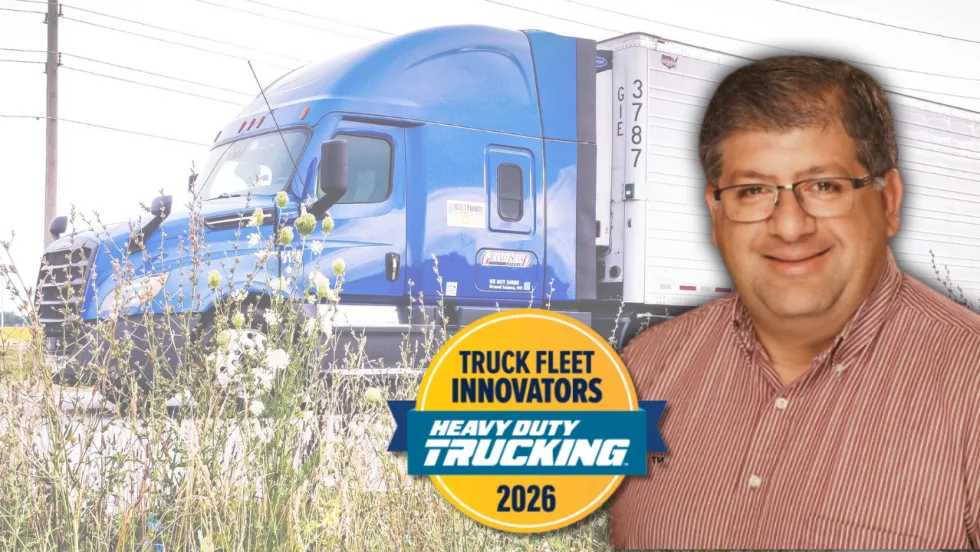
Deen Albert: Let Automation Do the Math, People Make the Decisions
HDT Truck Fleet Innovator Deen Albert makes sure people are still at the heart of operations at Grand Island Express, even while adopting artificial intelligence tools. AI-assisted dispatch helped boost revenue 25% with the same number of trucks.
Read More →
Trimble’s New AI Agent Takes Aim at Fleet Back-Office Busywork
Arc Agent works across Trimble TMS products to automate repetitive tasks such as freight orders, maintenance, invoices, fuel costs and more.
Read More →
How HDT’s 2026 Truck Fleet Innovators Are Rethinking Fleet Operations
Meet five trucking leaders who are challenging assumptions, solving operational problems, and putting innovative ideas to work.
Read More →