




Fleet acquisitions trending upward
The industry has seen a growing number of fleet acquisitions and mergers in the past few months, and many believe this is part of a growing trend. The trend of fleet acquisitions is cyclical, according to Lana Batts, managing partner with Transport Capital Partners, which helps fleets negotiate such deals. “I believe we are just at the beginning of the cycle,” Batts said.

The industry has seen a growing number of fleet acquisitions and mergers in the past few months, and many believe this is part of a growing trend.
The trend of fleet acquisitions is cyclical, according to Lana Batts, managing partner with Transport Capital Partners, which helps fleets negotiate such deals. “I believe we are just at the beginning of the cycle,” Batts said.
One fleet that has been making a number of acquisitions lately says the recent activity has a lot to do with the number of businesses out there looking to sell.
Since October 2011, Indianapolis-based Celadon Group has completed eight acquisitions. The most recent, announced last month, were Rock Leasing Inc., Warren, Ind., and Kelly Logistics Inc., Wadley, Ala.
Before 2011, the company had only done six or seven acquisitions since 2002, says Celadon's Monte Horst, vice president of sales and marketing.
“Acquisitions have picked up certainly. What you are seeing in most cases aren't actually full acquisitions,” Horst explains. “Mostly what we are seeing is financially and we are helping them liquidate themselves. Those are asset acquisitions.”
What's behind the trend?
According to Andy Ahern, CEO of Ahern & Associates, another
M&A consulting and trucking advisory firm, there are three driving forces behind the fleet acquisition trend.
One reason fleets are looking to buy is to gain more potential drivers. “There are no drivers. Getting more drivers is an issue for many fleets,” Ahern explains.
Celadon's Horst agrees: “In terms of gains when we acquire another company, we have access to their driver pool. Since the driver shortage is a big issue in the industry, this is very valuable to us. We can go in and try to recruit those drivers who meet our standards from the fleet we are acquiring.”
Another reason is that many small and mid-size companies don't do enough future business planning, Ahern says. “They are getting their numbers a year after the fact, and then implementing changes. By then it's already too late.”
Not all fleets sell because they're in a financial crisis. Some are being pushed to do so by a lack of confidence in the government and the economy.
“For some of those older owners, they are saying that they survived the worst recession since the Great Depression, and that's the last one they want to go through,” Batts says.
Meanwhile, companies looking to buy see it as the best way to increase their business, Ahern says.
“Many companies can't get any organic growth, and one way to grow is to acquire the capacity of another company,” Ahern explains.
Celadon is experiencing growth in just this way, according to Horst.
“We get access to the customer pool that these carriers had. Sometimes we are able to pick up some solid new customers, or where we find an overlap in customers, we are able to increase our business with them,” he explains.
According to Horst, Celadon also is expanding into new regional applications, has increased its freight volumes, and has been able to get into different service areas, thanks to aquisitions.
For example, with the recent acquisition of Rock Leasing, Celadon got about 40 temperature-controlled trailers. “We got a foothold into the temperature control business now where we didn't have one before.”
Celadon has been approached by many companies about acquiring other businesses, and one reason they give for needing to sell is the Federal Motor Carrier Safety Administration's Compliance, Safety, Accountability program, Horst says.
“Their overall CSA scores are so lowered they cannot get their insurance renewed,” he says.
How long will this go on?
For the foreseeable future, fleet acquisitions will most likely remain higher than average, according to those we interviewed.
“We are going to see another dimension of baby boomers ready to sell their businesses. Trucking doesn't have a lot of confidence in the government right now,” Ahern says.
Transport Capital's Batts agrees: “This uncertainty about the number of taxes that carriers pay, such as the ‘Obamacare’ tax increase, fuel taxes, tolls, etc., have many carrier executives scratching their heads and wondering if they should stay in the business.”
As for Celadon, Horst says they will continue to gauge opportunities for acquisitions with care. “There are three times as many opportunities that come across our plate that we don't do — that don't add another service that we can offer our customers.”
More Drivers

When Language Stops the Truck: The Return of ELP Out-of-Service Orders
English language proficiency rules for commercial drivers aren’t new, but renewed out-of-service enforcement has raised the stakes. Here’s what carriers need to know before a driver reaches a roadside inspection.
Read More →
Samsara Launches Custom AI Agent Builder
Agent Studio lets fleets create AI tools for hours-of-service monitoring, reporting and driver support, including agents that communicate by phone.
Read More →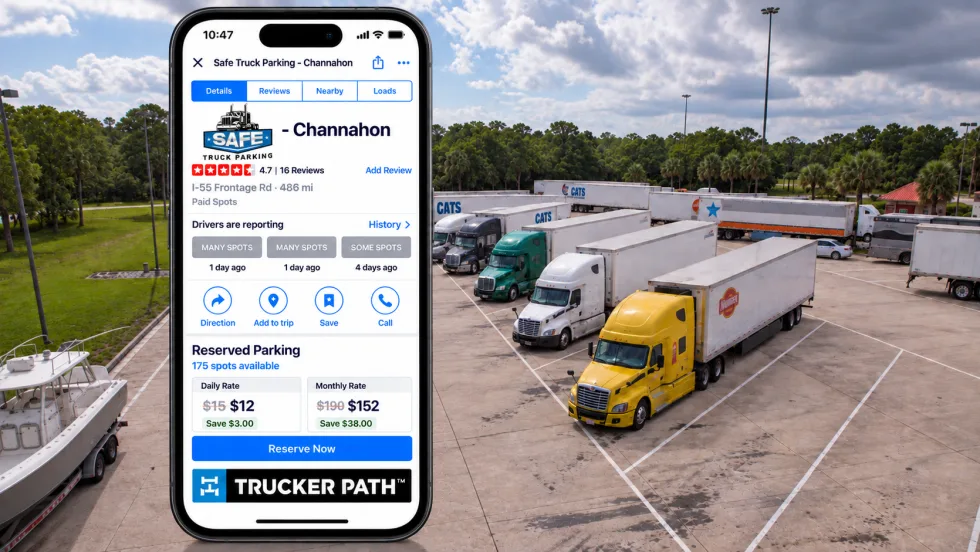
Trucker Path Expands Reserved Parking Network
Trucker Path has added close to 6,000 more truck parking spaces to its Trucker Path Reserved Parking Network with the addition of Safe Truck Parking.
Read More →
EEOC Sues Texas Trucking Company Over Driver Age Limits
The agency says Trancasa USA rejected applicants over 65 and applied tougher driving-record standards to those over 60.
Read More →
Nussbaum, Roehl Announce Second Driver Pay Increase This Year
This year has seen a swath of major truck driver pay increases as freight capacity has tightened.
Read More →
From One Generation to the Next: How Mentorship Builds Safer Truck Drivers
After three decades in trucking, Harold Perry shares what he's learned about driver safety, mentorship, and helping the next generation build confidence behind the wheel.
Read More →
Truck Drivers Need More Than Another Alert
Fleets have more visibility into truck health, safety events, and driver activity than ever. The next challenge is turning all that information into useful guidance for the person who has to decide what to do next.
Read More →
FMCSA Removes 110 Truck Driver Training Schools from Certified ELDT List
Federal regulators also are targeting more than 160 additional training providers and launching a nationwide audit of third-party CDL skills testers as part of a broader crackdown on trucking fraud.
Read More →
Hours of Service Pilot Programs: FMCSA Readies for 2027 Rollout
Two pilot programs could eventually reshape hours-of-service rules, giving truck drivers options to pause their 14-hour clock or use longer split sleeper rest periods.
Read More →
Medical Cards, English Proficiency Reshape Roadcheck Violations
Medical-card violations jumped to the top of the driver out-of-service list during CVSA’s 2026 International Roadcheck, while English-language proficiency violations appeared among the leading violations for the first time.
Read More →