




Flatbed Business Anything but Flat
One of the hottest segments of trailer building is flatbeds. The freight they carry is moving briskly, especially in the automotive and energy sectors, but prosperity is somewhat spotty, say fleet managers.

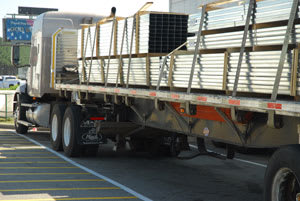
Drilling for oil and natural gas continues to be strong, and items such as steel pipe are filling flatbeds.
One of the hottest segments of trailer building is flatbeds. The freight they carry is moving briskly, especially in the automotive and energy sectors, but prosperity is somewhat spotty, say fleet managers.
Although the construction industry is still down, strong automobile sales continue to drive demand for steel and other materials, says Frank Maly, director of commercial vehicle transportation analysis at ACT Research. Drilling for oil and natural gas continues to be strong, and items such as steel pipes are filling flatbeds. As of the end of April, orders for flatbeds, dropdecks and other related trailers were stretched out for six months.
Dealers say interest from customers is high, and stock is tight in some areas, Maly says. "If a flat can be found, prices are up quite a bit from where they were a year ago. The backlog is at 10,000 units, and orders are coming in at 2,600 a month. The same time a year ago, you were looking at the 1,400 range. Backlogs now are double what they were a year ago."
Maly explains that we're far enough into the recovery that there are a lot of materials that have to be moved. "Not for construction, but automotive and the energy sector. There's an awful lot of drilling going on," meaning movement of equipment and drill pipe.
"It's been a roller coaster," says Jeff Kollar with Aetna Freight Lines, a steel hauler out of Pittsburgh, Pa., that runs 750 tractors and 900 mostly flatbed trailers. "It really hasn't been consistent." He has seen a slip in the service centers, which sell steel to smaller customers in the secondary market, but increases in some of the mill work, which is direct sales to auto and appliance makers.
"It's strong to Mexico, and for shale pipe" used for drilling in Pennsylvania, Ohio and North Dakota, Kolar says.
"Mexico business is really good right now," agrees Steve Colley, vice president of sales at Boyd Bros. Transportation, Clayton, Ala. "We're taking in raw materials to produce building materials, like paper rolls to produce sheetrock and coiled steel. We also take steel and aluminum products out of U.S. ports to go into Mexico.
"We're hauling out steel (products) that are produced a lot cheaper there than in the U.S. - knocked-down metal buildings, farm machinery." The company turns loaded trailers over to Mexican carriers in Laredo, Texas, and picks up loaded and empty trailers there. Boyd Bros. runs 750 tractors and 1,350 flatbed trailers.
"Iron and steel are moving better," Colley says. "Building materials, not yet. You see surges. Our trailer is the warehouse. It was JIT (just-in-time) delivery, now it's OT (on-time). When somebody orders something, they need it right now."
You can be hauling for two roofing companies, he says, one that's going strong and the other cutting back. "It's all about pricing," he says.
Colley notes that freight is very good in the South, thanks to the steel and auto industries, but it's slowing in the Rust Belt states. "In the Northeast, it's surprising," he says. "Usually in the spring there's an influx of trucks, but not this year. Overall it's still good, but it should be better this time of year."
Building materials, especially roof shingles, are a perennial good-weather business for Mercer Transportation, Louisville, Ky., according to John Fallot, who manages the carrier's 85 branch offices. Mercer has 2,000 owner-operated tractors that pull the company's 2,350 trailers.
Roofing materials are mostly for replacement due to normal wear and tear and to repair damage from tornados and windstorms, he says. New-home construction remains down, but room additions to existing houses account for some shipments to lumber yards and home improvement stores. Air conditioning equipment is transported by platform trailer to replace old plants in commercial buildings and for some new construction.
Like other large carriers, Mercer hauls a variety of freight: aluminum and aircraft assemblies for Boeing and Spirit Aerospace in Kansas; farm implements to dealers in the Heartland; and military trucks and armored vehicles to and from training bases for National Guard and Reserve units.
"Business is outstanding," Fallot says. "We're missing more freight than we're hauling. We're hauling 1,100 loads a day (in early June) versus 875 in February. We broker, too, so we move more than we have trucks. So far this year, we're up 10% in revenue compared to last year. We've added trucks, as many as we can. It's different from most carriers because we're hiring drivers who own a truck."
"Business is consistent, says Mike Jeffress, vice president of maintenance at Maverick Transportation, Houston. "The majority of what we've been seeing is replenishing inventories. The first quarter was good for us. Customers were calling and locking in capacity. It's trending down (now), but the second quarter is doing good, hanging in there."
Maverick bought 120 additional flatbeds and 60 replacement drop decks to handle business.
"Everybody's optimistic, but there are so many what-ifs," Jeffress says. "It's an election year."
Boyd Bros.' Colley also cites election-year jitters. "In an election year and all, there are questions about tax laws and such" that affect business decisions and freight shipments, he says. "You can't tell the future."
From the July 2012 issue of HDT
More Equipment

Tesla Wants a Self-Driving Semi. Are Cameras Enough?
Could Tesla’s camera-only autonomous driving technology work on an 80,000-pound Semi? In this commentary, HDT's Deborah Lockridge takes a look at Tesla, Cybercab, and how autonomous trucks see the road.
Read More →
Kodiak: Driverless Long-Haul Truck Launch on Track for 2026
Kodiak AI says its driverless long-haul safety case is 93% complete and it remains on track to begin commercial operations by year-end 2026.
Read More →
What DOT’s Automated Vehicle Strategy Means for Trucking
The U.S. Department of Transportation issued a new automated-vehicle strategy that outlines plans for driverless-truck regulations, cross-state freight corridors, and federal safety standards.
Read More →
East Coast Port Launches $45M Electric Truck Push
The Port Authority of New York and New Jersey announced millions in incentives for zero-emission drayage trucks, yard tractors, and new charging hubs near the port.
Read More →
PlusAI Going Public to Fund Autonomous Truck Launch
A SPAC deal could provide PlusAI with up to $300 million as it works toward a 2027 commercial launch of factory-built autonomous trucks.
Read More →
NHTSA Moves to Rewrite Truck Fuel-Economy Rules
The National Highway Traffic Safety Administration says it lacks authority to regulate medium- and heavy-duty truck engines separately from complete vehicles, but the existing standards have not yet been eliminated.
Read More →
Detroit Opens Orders for EPA 2027 Engines
Detroit isn’t starting from scratch to meet EPA 2027 diesel emissions standards. Its Gen 6 DD13 and DD15 engines keep much of today’s platform while updating the fuel and aftertreatment systems.
Read More →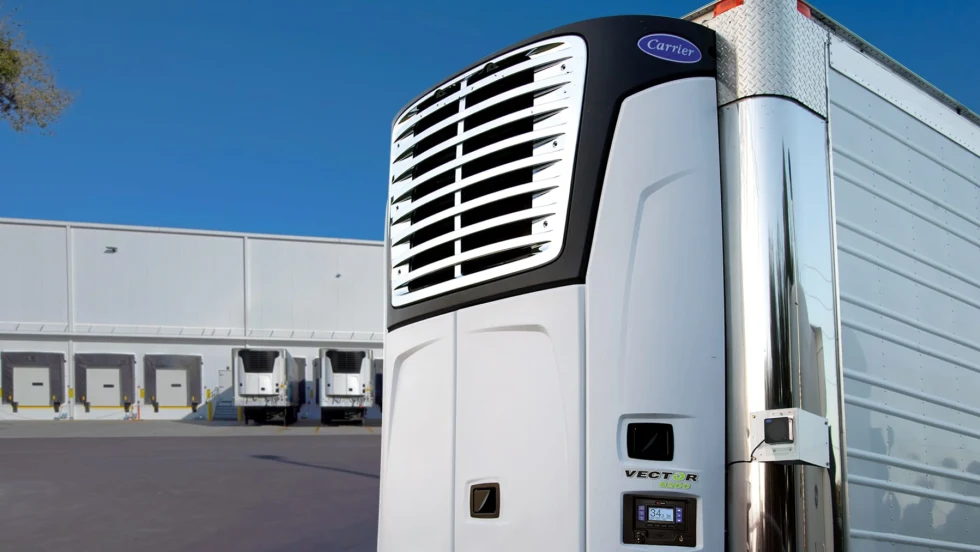
Carrier Transicold Adds All-Electric TRU for Stationary Cold Storage
Carrier Transicold’s new Vector 8200 all-electric transport refrigeration unit gives fleets a diesel-free option for temporary refrigerated and frozen trailer storage.
Read More →
A Closer Look at Kenworth’s Electric T880E Vocational Truck [Video]
Learn more about Kenworth's T880E battery-electric vocational truck at the Paccar Technical Center, including its range, applications, upfitting considerations, and PTO options, in this HDT Spotlight video.
Read More →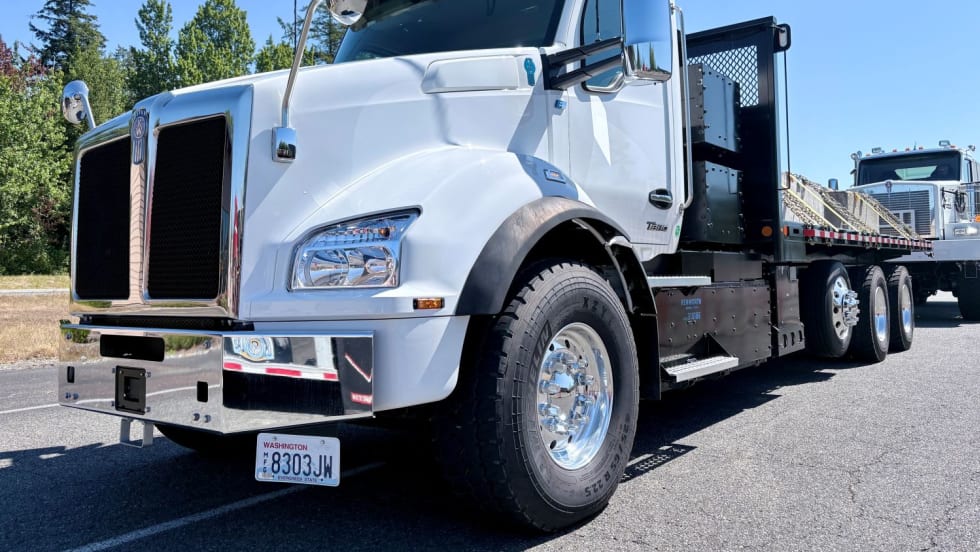
Kenworth T880E Brings EV Power to Vocational Trucks
A closer look at the Kenworth T880E’s range, charging, powertrain and upfit options — and where fleets are showing the most interest.
Read More →