




Engine Smarts: Prognostic Failure Prediction Reduces Unplanned Downtime, Cuts Maintenance Costs
There is an upside to EPA's 2010 emissions regulations.
There is an upside to EPA's 2010 emissions regulations.
The electronic architecture needed for the on-board diagnostic portion of the requirements allows technicians an unprecedented glimpse into the health of the engine. This could help in predicting future potential failures.
While compliance with EPA emissions regulations has been costly in terms of both capital costs and fuel economy, we'll get some economy back with the introduction of SCR. As it turns out, there's another upside too. The EPA 2010 rules require on-board diagnostics similar to those required for passenger cars since 1996. OBD for heavy-duty phases in this year, beginning with the most popular engine models from each manufacturer.
Originally seen as a huge additional burden on top of meeting the stringent NOx and PM standards, the presence of OBD will become a huge customer benefit, says Tom Dollmeyer of the Cummins Engine Company. He says that having sensors to report the health of a 2010 engine has made it possible to detect faults and problems as they develop rather than after they occur. As well, OBD can aid in creating repair strategies for engine systems that otherwise may have left technicians totally stumped. Admittedly, OBD means additional and expensive tools, but the faults and the repair-fault trees are now so much more completely documented that the chances of getting the repair right the first time are greatly improved.
This is poised to get even better with third-party software that can look at these same sensor reports and actually make earlier and deeper predictions into the health and the reliability of vehicles before dispatching them for duty. One such system is NormNet PHM, by Frontier Technology, Inc. of Santa Barbara, Calif.
FTI provides Prognostics and Health Management (PHM) technology to the Department of Defense and its suppliers, who report significant improvements in aircraft readiness and ground vehicle reliability. Programs such as the Light Armored Vehicle Sense-Respond show OBD and prognostic technology provide significant operating cost reductions for those vehicles.
Similarly, the U.S. Army reports that using prognostics within an enhanced Helicopter Utilization Management System ensures machines scheduled for a mission are ready when needed. Helicopters are among the most trouble-prone of all front-line military equipment.
According to FTI's Director of Systems Health Management, Nick Frankle, these anecdotal reports have resulted in increased investment in PHM technology across a wide range of military systems. This technology is directly transferable to commercial trucking and heavy equipment operations as well.
Prognostics is one word for what NormNet PHM does. Another term that is getting quite the buzz is condition-based maintenance. What ever you call them, these programs monitor system performance and make predictions about the ability of an air or ground vehicle to complete a mission. Moreover, PHM can detect potential failure modes, identify components that are likely to fail, and predict with a percentage certainty when the event will occur.
This prognostics ability is going to be huge in trucking. Service failures cause big problems for trucking, and while NormNet PHM will not prevent a failure, it could turn unplanned repairs into scheduled maintenance events, thus eliminating service interruptions or catastrophic failures, Frankle points out.
Fleets want to maximize uptime, and the military results show that utilization improves when equipment in need of repair is taken out of service on a planned basis. Only equipment that can begin and complete a mission is on the dispatch line, minimizing the need for backup vehicles. Applied to fleet repair practices, prognostic technology can reduce turnaround time and ensure that vehicles are totally healthy before being returned to service.
The advantages for trucking are obvious; only those vehicles that can complete the mission are put into service. That means no -- or at least fewer -- service failures to score against the company at customer performance reviews. As well, major savings can result from repairing problems that are about to occur based on need instead of over-maintaining according to the calendar, odometer, or fuel use.
With increasingly complex and expensive equipment doing ever more time-critical tasks, condition-based maintenance will allow fleet managers to get a handle on costs. It also allows repair work to be done at home rather than out in the field.
PHM represents a major shift in equipment management philosophy that can reduce costs significantly while improving service at the same time -- the holy grail of maintenance managers everywhere.
More Equipment

ZF Expands Commercial Vehicle Push in North America
ZF is expanding its North American commercial-vehicle presence with new transmission applications, electrification, trailer technology and autonomous-driving systems.
Read More →
Tesla Wants a Self-Driving Semi. Are Cameras Enough?
Could Tesla’s camera-only autonomous driving technology work on an 80,000-pound Semi? In this commentary, HDT's Deborah Lockridge takes a look at Tesla, Cybercab, and how autonomous trucks see the road.
Read More →
Kodiak: Driverless Long-Haul Truck Launch on Track for 2026
Kodiak AI says its driverless long-haul safety case is 93% complete and it remains on track to begin commercial operations by year-end 2026.
Read More →
What DOT’s Automated Vehicle Strategy Means for Trucking
The U.S. Department of Transportation issued a new automated-vehicle strategy that outlines plans for driverless-truck regulations, cross-state freight corridors, and federal safety standards.
Read More →
East Coast Port Launches $45M Electric Truck Push
The Port Authority of New York and New Jersey announced millions in incentives for zero-emission drayage trucks, yard tractors, and new charging hubs near the port.
Read More →
PlusAI Going Public to Fund Autonomous Truck Launch
A SPAC deal could provide PlusAI with up to $300 million as it works toward a 2027 commercial launch of factory-built autonomous trucks.
Read More →
NHTSA Moves to Rewrite Truck Fuel-Economy Rules
The National Highway Traffic Safety Administration says it lacks authority to regulate medium- and heavy-duty truck engines separately from complete vehicles, but the existing standards have not yet been eliminated.
Read More →
Detroit Opens Orders for EPA 2027 Engines
Detroit isn’t starting from scratch to meet EPA 2027 diesel emissions standards. Its Gen 6 DD13 and DD15 engines keep much of today’s platform while updating the fuel and aftertreatment systems.
Read More →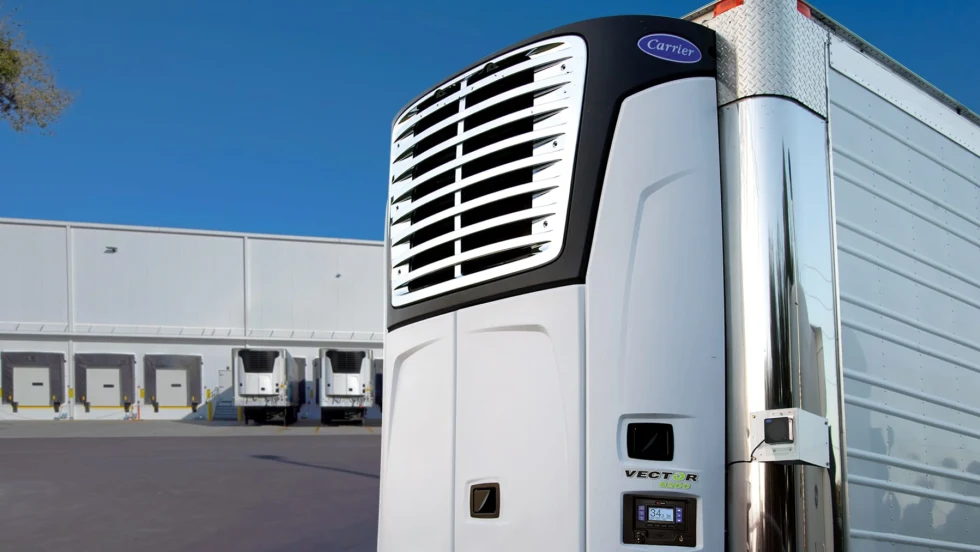
Carrier Transicold Adds All-Electric TRU for Stationary Cold Storage
Carrier Transicold’s new Vector 8200 all-electric transport refrigeration unit gives fleets a diesel-free option for temporary refrigerated and frozen trailer storage.
Read More →
A Closer Look at Kenworth’s Electric T880E Vocational Truck [Video]
Learn more about Kenworth's T880E battery-electric vocational truck at the Paccar Technical Center, including its range, applications, upfitting considerations, and PTO options, in this HDT Spotlight video.
Read More →