




Emissions Report: Servicing the New Diesel Particulate Filters
By law, pollution control equipment on 2007-model diesels is supposed to last at least 100,000 miles before needing any work.

By law, pollution control equipment on 2007-model diesels is supposed to last at least 100,000 miles before needing any work. Pre-production trucks with '07 engines and diesel particulate filters ventured onto the highways even before January '07, when production of the new engines began. Some have probably reached the minimum service point, and fleet managers running them may have started performing work on those DPFs. Members of the Technology and Maintenance Council of the American Trucking Associations - at least those who attended TMC's annual meeting early this month - will by now have gotten a report on what's happening with the engines. We'll write about it in next month's issue.
But you don't have to wait for the TMC report to learn more about the care of DPFs. Sooner or later you'll probably be running trucks with EPA '07 diesels - maybe sooner, if only because you're trying to avoid the 2010 models, which will have even more exhaust equipment to cleanse and will cost even more than the '07s. So you'll want to be prepared to do whatever servicing is required, especially on those new DPFs.
DPFs include a fine ceramic honeycomb combined with precious metals that grabs tiny pieces of soot, more properly called particulates. Most of these are periodically burned off the honeycomb by high heat in a process called regeneration, or "regen." This can be "passive," when the engine's working hard and the exhaust is hot, or "active," when a bit of extra fuel generates the required heat.
Active regens are usually automatic, but a manual regen might be necessary if the engine's been running cool (because its regular duty cycle is light and/or it's been idling a lot). A warning on the instrument panel will indicate that the manual regen is needed, and the driver must either push a button within a reasonable amount of time or his boss must get the truck to a dealer, where shop people will take care of the manual regen.
The DPF's honeycomb filter also traps small particles of ash that come from motor oil. Even though CJ-4 oil, the one formulated specifically for EPA '07 diesels, is a low-ash product, some ash is still left over from combustion and is blown out of the cylinders with the rest of the exhaust. The problem is, ash is not burned away in regeneration, and must be periodically removed.
Ash is cleaned out by compressed air from a special machine (one engine maker recommends a water-based fluid, but has also OK'd the air method). Several models are now available, but each costs $5,000 to $8,000 and only large fleets will be able to justify such purchases. Most smaller operators will send their trucks to truck and engine dealers for DPF servicing. Some already have.
Makers of DPFs have set up procedures that should be followed for servicing. Many procedures are common among all DPF types, and they are listed in a generic way in a document prepared by TMC members.
TMC's Recommended Practice 355 has a long title, "Maintenance and Inspection Guidelines for OEM-installed Exhaust Particulate Filters for Diesel-Powered Vehicles," but it succinctly discusses not just how to work on a DPF, but also how to inspect one and what to look for.
It also repeats what engine builders have been saying regarding the fuel and motor oil that must be used in the new diesels: Burn only ultra-low-sulfur diesel fuel, now available throughout the continental U.S. and much of Canada, and use only low-ash CJ-4 motor oil. If you fill the saddle tanks with regular low-sulfur fuel or pour in higher-ash CH- or CI-4 oil, the engine won't burn nearly as cleanly. And some of those substances will get blown into the DPF and damage or destroy it.
While a DPF doubles as a muffler, it costs many times more than a muffler to replace. Even worse, using improper fuel and motor oil is one of the ways to void the manufacturer's warranty on an engine. Any fuel or oil additives must be approved for use with those fluids, and with an engine and its DPF.
Another way to cancel the warranty is to remove or somehow modify the DPF and other parts of the emissions-control system. That would include cutting wires that run between the DPF and the engine's electronic control unit, which, through sensors on the DPF, is monitoring back pressure and other factors. If a smarty pants trucker removes a DPF so he can install a bellowing straight pipe, the ECU will know and probably won't let the engine run. Preventive maintenance inspections should include looking at the DPF and the wires strung to it.
Here are more of RP 355's maintenance-oriented tips:
Excess oil from worn rings or a blown turbocharger, or vaporized coolant from a blown head gasket or EGR cooler, will quickly load up the DPF. Regenerations won't be able to cope and the DPF will be damaged or prematurely destroyed. So monitoring general engine health becomes more important.
Regular reading of the engine ECU's diagnostics system might eventually reveal DPF troubles, including high back pressure or that the filter is loading up and needs a manual regen (which is what that warning light on the dash will also say). If this warning is ignored, the engine will be derated and eventually shut down, so take care of it.
Inspect the entire exhaust system, from the exhaust manifold and turbocharger all the way back to the DPF itself. All systems will include electronic sensors with attendant wires and connectors, and of course piping and clamps to hold everything together. All these must be secure and tight, and use of stainless steel parts should add life - perhaps a pleasant surprise - and should be easy to loosen for servicing. We're told that wiring and connectors are more likely to fail than the sensors, so look for signs of looseness, fraying and corrosion. Some engines use a fuel "doser," usually placed downstream of the turbo, to initiate an active regen in the DPF. This must be regularly inspected and in some cases cleaned.
For eventual cleaning, most DPFs need to be taken off the trucks. A DPF is heavy, probably 80 or so pounds on a Class 8 truck. Some are mounted on vertical stacks, and some are behind the passenger steps or hung on the frame under the cab. Wherever it is, it'll be a handful for one guy. He might need help from a co-worker or might use a special tool or jack to support the DPF during removal, servicing and reinstallation. Engine and truck manufacturers and makers of shop tools and hydraulic lifts are onto this, and are encouraging use of their products. We'll have more on this next month.
More Fleet Management

Nomination Deadline Extended for HDT Emerging Leaders
Just a few more days to nominate accomplished trucking fleet professionals under 40 who are making an impact and helping lead the industry forward for the HDT Emerging Leaders award. Deadline extended to October 20!
Read More →
What Will ATA’s New Leader Bring to Trucking's Table?
Incoming President and CEO Mark Colson’s record in Alabama offers clues about his priorities and approach following Chris Spear’s abrupt departure as the head of the American Trucking Associations.
Read More →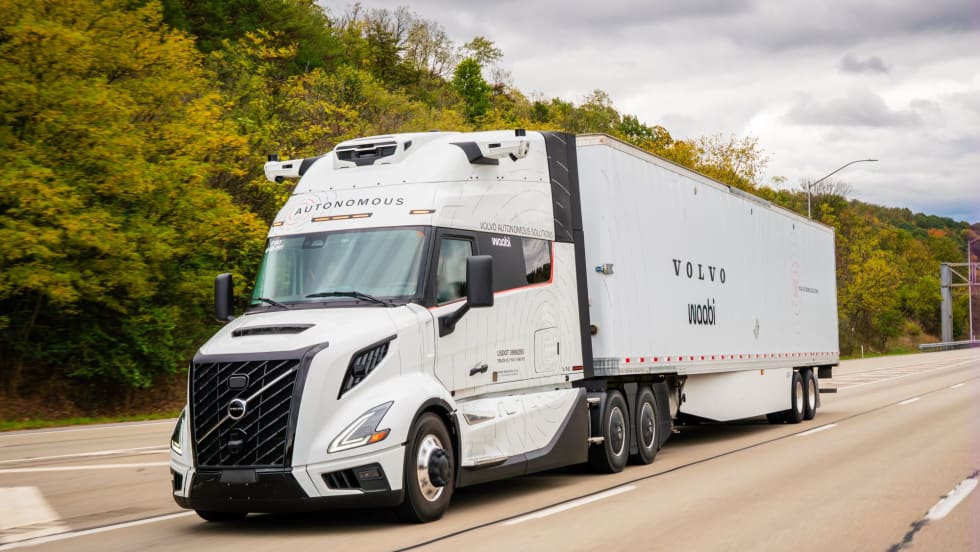
Volvo, Waabi Start Commercial Autonomous Operations in Texas
Volvo VNL Autonomous trucks, powered by the Waabi Driver, are hauling freight directly to third-party facilities for a customer in Texas.
Read More →
Samsara Launches Custom AI Agent Builder
Agent Studio lets fleets create AI tools for hours-of-service monitoring, reporting and driver support, including agents that communicate by phone.
Read More →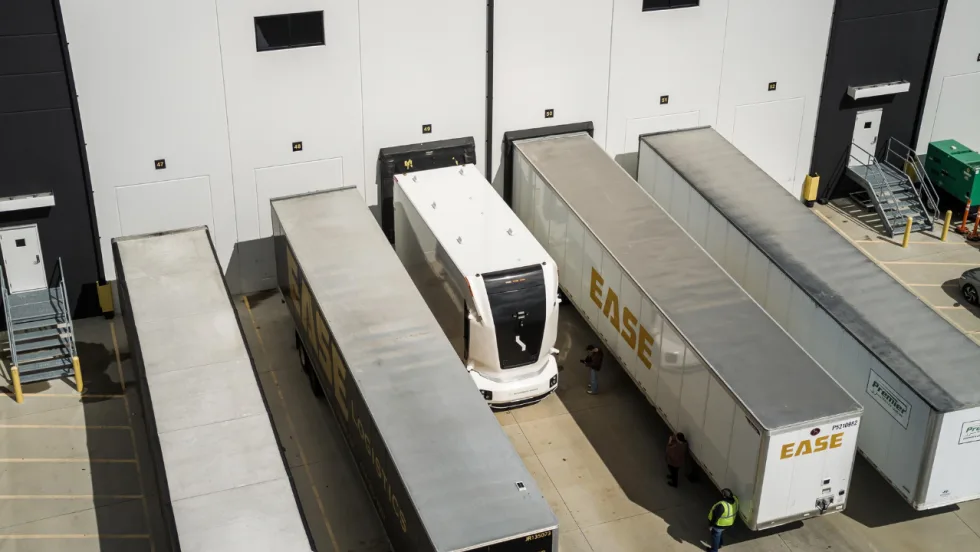
Einride Driverless Electric Trucks Begin Daily Freight Operations in Ohio
Two cabless electric trucks are hauling freight between EASE Logistics facilities in Marysville, Ohio, as part of a multi-state truck automation project.
Read More →
Geotab Links Fleet Card to Vehicle Data
The new card combines fuel discounts with telematics-based purchase controls. Geotab’s analysis also points to potential savings from choosing lower-priced fuel stops.
Read More →
How MFA Helps Protect Trucking Fleets
Multi-factor authentication adds protection when passwords are stolen. Here’s how it works and where fleets should start.
Read More →
How Better Freight Data Helps Trucking Teams Get Ahead of Disruption
Trucking and logistics teams have plenty of data. The problem is getting the right information in front of the right people soon enough to act. Better-connected data can help teams spot trouble earlier and make smarter decisions before small problems become big ones.
Read More →
Trimble: Taking Artificial Intelligence in Trucking Beyond Faster Tasks
At Insight 2026, Trimble executives argued that fleets may need to redesign workflows to get more from AI as it introduced new products and enhancements. AI’s value will depend on how fleets combine automation with their people's knowledge.
Read More →
Build a bulletproof fleet: Uniting ELDs and dash cams for total compliance
An ELD can prove compliance, but it cannot always prove what happened on the road. Discover how uniting accurate ELD data with AI-powered dash cam video can help your fleet strengthen compliance, defend against liability, protect drivers and reduce operational costs.
Read More →