




Embracing the Age of the Air Disc Brake
A while ago I was sitting on a bench in downtown St. Louis with a grande bold coffee in my paw and a reflective mood infusing me with big thoughts. Or maybe just regular-sized thoughts, but definitely about big things

A while ago I was sitting on a bench in downtown St. Louis with a grande bold coffee in my paw and a reflective mood infusing me with big thoughts. Or maybe just regular-sized thoughts, but definitely about big things.
No surprise, really. I'd spent the day talking and hearing about future technologies that might elevate trucks and trucking to new levels of efficiency, and might even save the planet if about a zillion stars aligned the right way.
I was also just a couple of football fields away from the famous and quite captivating Gateway Arch that rises above the Mississippi. It's an inspiring structure, and I found myself staring at it whenever I headed to the nearby Starbucks for fuel.
This really was a vital gateway city, and all manner of people passed through here a century or two ago on their way to the glory and often the tragedy of the burgeoning West.
Not far away I could see the Old Courthouse, too, an elegant, even majestic white structure with a big dome and a history of its own. Slaves asked politely for their freedom in that building once upon a time, and not really so very long ago.
So there I sat, assailed by knowledge of tomorrow and strong images of yesterday. And you know what I concluded? That, collectively, we hang on too tightly to the past. Important though it is, I prefer to look ahead.
In trucking terms I've long thought that we're maybe a little too mired in what worked for us yesterday, whether we're talking management practices or the hardware we rely on so much. It really doesn't help us, I fear.
This general thought occurred to me again more recently when I learned Peterbilt had declared that front air disc brakes are now standard fare on all its Class 8 models. It's a first, and a bold move, but I think it's a mighty good one. Somebody had to start this. Air discs offer the shortest stopping distances possible today. They also trim weight, reduce maintenance demands, and will help meet new stopping-distance standards coming up Aug. 1. Drivers uniformly love the extra stopping power discs provide, not to mention their fade resistance. Mountain drivers, take note.
Yes, there might be balance problems at the outset if a disc-braked tractor is mated to a poorly maintained S-cammed trailer, so this won't be the right option for all players. There are electronic ways around this to some extent, but poor maintenance is hard to defeat by whatever means. So there are challenges, but I really do believe that this is a path we have to follow, as our European counterparts have long since done. Air discs dominate the Euro scene today, after being launched in a widespread way ages ago, in 1996 to be exact.
Back then, the Mercedes-Benz Actros tractor was introduced at the monstrous IAA commercial vehicles show in Hannover, Germany, with standard air discs. Not only that, it also came with EBS (electronic braking System) as standard fare. With such a system, actuation at the wheel is still done by means of air, but the signal from the pedal is electronic. There's pneumatic redundancy throughout, and anti-lock technology is of course at the core.
The advantages of EBS are many. Far shorter response times, significantly shorter stopping distances, straightforward tractor-to-trailer balance, brake-wear monitoring, optimized brake wear, axle-to-axle harmonization, simple diagnostics and easier maintenance.
My friend Bob Murphy, a prominent man-about-trucking in Australia, reminded me about some of this after reading my brief note concerning Pete's announcement in my Product Watch e-newsletter. He noted that Paccar Australia engineered EBS brakes into its Australian model line-up a few years ago. Not incidentally, the Aussies also started using air disc brakes soon after that 1996 Hannover introduction. It's a unique market down under, truck operators enjoying a mix of European and American technology and getting, I suppose, the best of both.
Anyway, like I said, somebody had to start us down this path toward better braking, and I'm glad it's been done. This isn't a case of "If it ain't broke, don't fix it." We CAN do better, and I believe it's an obligation.
All our present purveyors of braking systems can make this leap more or less easily. It only remains for fleet owners at large to develop a more pronounced sense of adventure.
From the May issue of HDT.
More Maintenance
Will API PC-12 Oil Change Trucking Fleet Maintenance?
The new API PC-12 heavy-duty engine oil category reflects the changing demands of modern diesel engines. But fleets like Foodliner are looking to getting their own data before making decisions on adopting the new oils and questions such as extending oil drain intervals.
Read More →
Brake Safety Week to Focus on Drums and Rotors
Commercial vehicle inspectors will be focusing on brakes during CVSA's Brake Safety Week, August 23-29.
Read More →
Possible Battery-Cable Fires Prompt Recall of 15,000+ International MV and HV Trucks
On the recalled vehicles, manufacturing variations can cause the battery interconnect cable to contact the auxiliary stud and hold down the bracket.
Read More →
Rush, MCT Team Up to Grow Refrigeration Service Network
The joint venture will operate MCT's network of Carrier Transicold dealerships and mobile service locations, with the companies promising greater service capacity and uptime for refrigerated fleets.
Read More →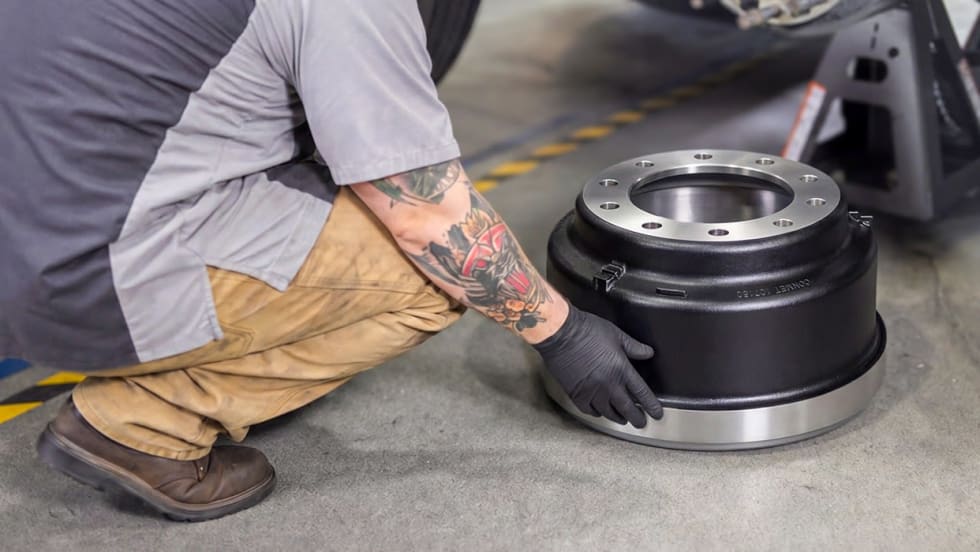
ConMet Expands Aftermarket Brake Drum Lineup With TruCast
A new heavy-duty truck brake drum option in the aftermarket gives customers more flexibility within the ConMet product family.
Read More →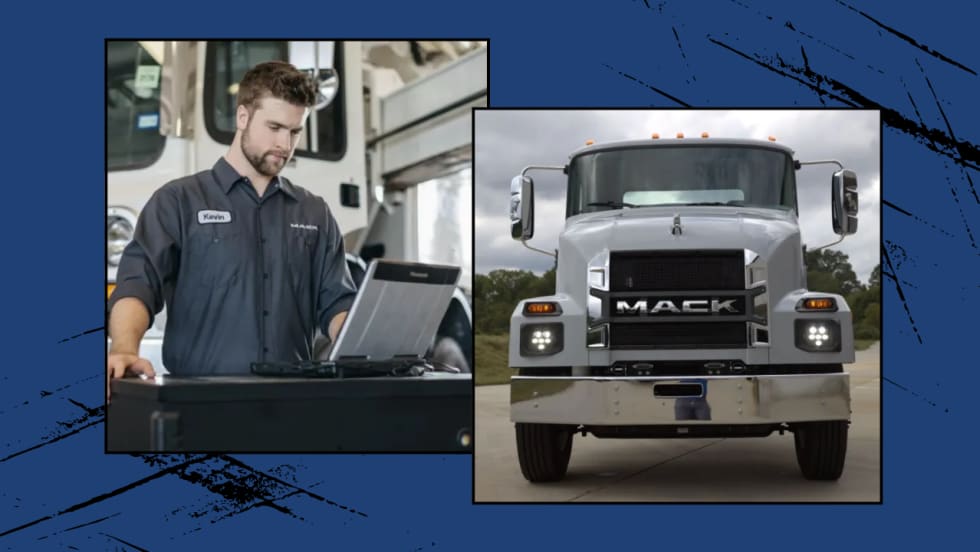
Mack Expands Premium Service Contract Coverage to Medium-Duty MD
With a service contract, inspections, preventive maintenance and repairs can be handled in a single visit instead of multiple ones.
Read More →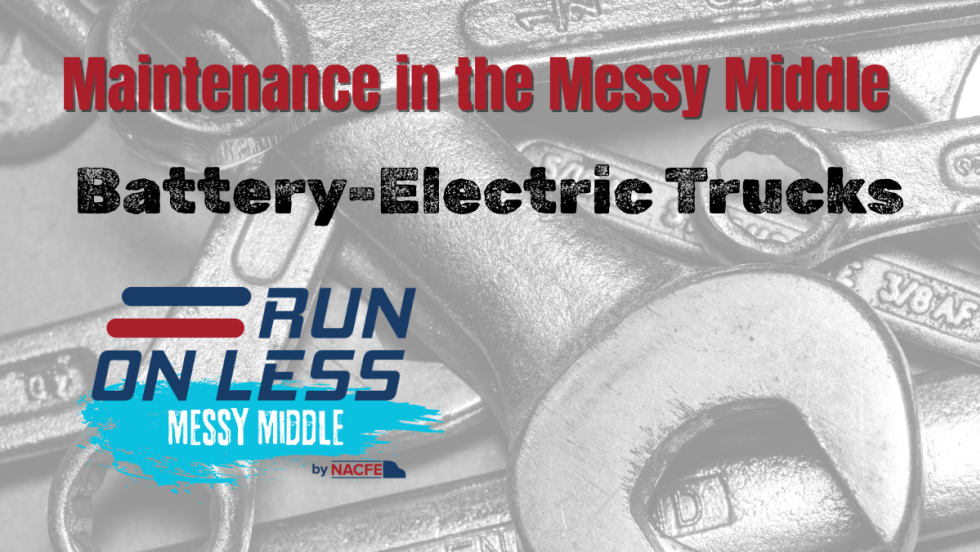
Maintenance in the Messy Middle Part 5: Battery-Electric Trucks
No oil changes. No diesel exhaust fluid. No exhaust aftertreatment. But NACFE battery-electric trucks still require specialized maintenance procedures.
Read More →
Trucking Fleets Faced Record Operating Costs During Third Year of Freight Recession
ATRI's annual operational cost report shows carriers trimmed fleets, delayed equipment purchases, and ran older trucks as expenses continued to outpace freight rates.
Read More →
Noregon Launches CAN Mentor to Simplify Vehicle Network Diagnostics
New Noregon software helps technicians identify CAN network issues without requiring advanced diagnostic equipment or specialized training.
Read More →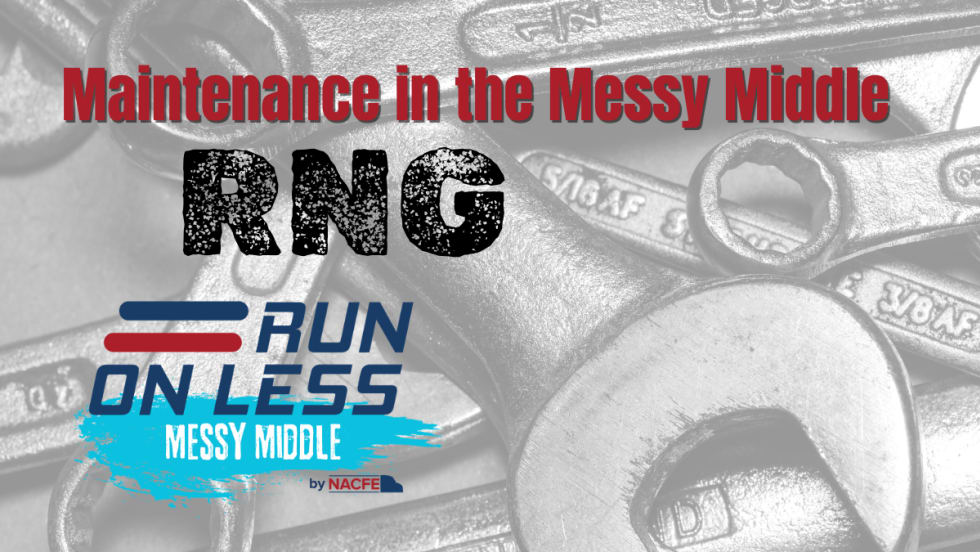
Maintenance in the Messy Middle Part 4: Renewable Natural Gas
The keys to running renewable natural gas as a fleet fuel depend on specialized technician training, rigorous inspection schedules and an understanding of high-pressure fuel systems.
Read More →