




E-Logs: A Critical Strategy for Safety, Compliance and Productivity
Electronic logs may be the workhorse of software for the trucking industry when it comes to helping firms meet safety, compliance and productivity goals
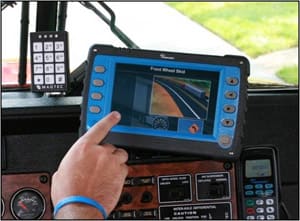
Electronic logs may be the workhorse of software for the trucking industry when it comes to helping firms meet safety, compliance and productivity goals.
With safety as job number one for the industry, preventing some of the most common causes of accidents involving trucks-driver fatigue, drowsiness and sleep-is of paramount importance.
Accuracy for Compliance
An electronic log system is the most accurate way for trucking firms to monitor and document hours of service (HOS)-far more so than paper logs. The electronic onboard recorder (EOBR) records driver responses to software-initiated prompts instead of drivers having to remember crossing time zones as they enter information. They no longer have to rely on their memory at the end of the day to fill in information they may have forgotten to document.
As a result of its proven effectiveness, electronic log keeping has become the de novo standard for law enforcement personnel, because it forces certification compliance between drivers and dispatchers. HOS compliance helps firms avoid fines and more stringent action associated with CSA 2010 implementation currently scheduled for November.
The new system considers 11 violations "red flags" that automatically incur a compliance review and are always investigated by the safety investigator as part of a carrier investigation.
"Fatigued Driving" is one of these that electronic logs can eliminate, along with five of the 10 most prevalent violations, including "log violation," "driver record of duty status not current, "requiring or permitting driver to drive after 14 hours on duty," "requiring or permitting driver to drive after 11 hours on duty" and "false report of driver's record of duty status."
Automation for Productivity
Electronic logs make drivers and back-office personnel more productive. Without having to manually enter data, they save approximately 20-40 minutes each day-an average of 50 hours per year-in pre-trip preparation, duty status change at each stop, preparing for roadside inspections, crossing borders and calculating load assignments. Electronic logs streamline back-office processes as well. The annual 51 million hours that the industry's back-office personnel spend reviewing and storing log records adds up to $63.3 million that can be saved by not having to review paper logs for mistakes and scanning/imaging them into an electronic system.* The system also automatically purges log data after the required six-month period. In addition to reducing man-hour costs, the elimination of paper reduces office and storage expenses.
A Gift for Drivers and Operations
Tom Schmidt, GSTC vice president and general manager shelved his electronic log application until he became concerned that HOS infractions and fines would blemish the company's perfect compliance record. He explains, "We lost only three out of 130 drivers directly attributable to our adoption of electronic logs. Our newer drivers who have used them from day one would probably quit if they had to go back to cumbersome paperwork."
Pollywog Transport President Steve Teeple adopted an electronic log system that reduced the company's drivers out-of-service from 90 percent to 35 percent in just under two years. Electronic logs also helped improve the company's safety statistics, which paid off with a 20 percent reduction in insurance premiums after the first year and an additional 10 percent after the following year.
Schmidt concludes, "With so much at stake-compliance, DOT audits and fines, insurance rates and most critical safety-we have to ensure accurate logs. There is simply no more efficient way to do that than a system synching OBRs to electronic logs and a GPS system."
* Source Data: Tear Up the Paper, iFOCUS Electronic Onboard Recorders, iTECH, December 2004/January 2005
Jim Angel is a product manager for PeopleNet, which provides Internet-based and integrated onboard computing and mobile communications systems to improve North America's trucking industry's fleet management. More information about the company may be found on the company web site at www.peoplenetonline.com or by calling 888-346-3486.
More Fleet Management

Geotab Links Fleet Card to Vehicle Data
The new card combines fuel discounts with telematics-based purchase controls. Geotab’s analysis also points to potential savings from choosing lower-priced fuel stops.
Read More →
How MFA Helps Protect Trucking Fleets
Multi-factor authentication adds protection when passwords are stolen. Here’s how it works and where fleets should start.
Read More →
How Better Freight Data Helps Trucking Teams Get Ahead of Disruption
Trucking and logistics teams have plenty of data. The problem is getting the right information in front of the right people soon enough to act. Better-connected data can help teams spot trouble earlier and make smarter decisions before small problems become big ones.
Read More →

Trimble: Taking Artificial Intelligence in Trucking Beyond Faster Tasks
At Insight 2026, Trimble executives argued that fleets may need to redesign workflows to get more from AI as it introduced new products and enhancements. AI’s value will depend on how fleets combine automation with their people's knowledge.
Read More →
Build a bulletproof fleet: Uniting ELDs and dash cams for total compliance
An ELD can prove compliance, but it cannot always prove what happened on the road. Discover how uniting accurate ELD data with AI-powered dash cam video can help your fleet strengthen compliance, defend against liability, protect drivers and reduce operational costs.
Read More →
Nominations Open for HDT Emerging Leaders
Heavy Duty Trucking is looking for accomplished trucking fleet professionals under 40 who are making an impact and helping lead the industry forward.
Read More →
Why Private Fleets Are Taking More Freight
Private fleets are putting their own trucks on demanding customers and high-cost lanes as companies seek greater control over service, costs, and capacity.
Read More →
Color Match Smarter: Tools That Restore & Perform
For fleet managers and collision repair professionals keeping heavy-duty trucks on the road, getting the color right the first time isn't just about appearance — it's about efficiency, turnaround time, and bottom-line results. Discover how today's digital color tools are transforming the repair process from guesswork to precision.
Read More →
FMCSA Pauses Biennial-Update Enforcement Amid Motus Transition
Carriers whose updates were due on or after June 1 have more time, while FMCSA works to stabilize its new registration system and warns of phishing sites impersonating its new carrier registration system, Motus.
Read More →
2026 Blueprint for Countering Smarter Supply Chain Theft
Cargo theft is no longer just the cost of doing business. It's a multi-billion-dollar criminal enterprise exploiting vulnerabilities across your fleet, drivers, and supply chain.
Read More →