





Retention Practices: Align With Shippers That Care About Your Drivers
Driver Retention: Get Shippers on your Side
Find out the top four ways fleet managers can work with shippers to create a driver-friendly environment.
October 21, 2021

If you have to make a driver wait more than an hour a day on a load, in their mind, they’re not making money,” explains Sherri Garner-Brumbaugh, president and CEO of Findlay, Ohio-based Garner Trucking. “They’re going to seek employment somewhere else where they can drop a trailer and keep moving.
Photo: Jim Park
8 min to read
Prepare to say “so long” to the old motto that the customer is always right. In the fleet world, where good, qualified drivers are like gold dust, fleet managers must advocate for better treatment and support of drivers when they’re picking up and dropping off loads.
With spot and contract rates at record highs (albeit beginning to normalize as we head into 2022), there’s no time like now to add driver needs to discussions and negotiations with new and existing shipping partners.
There are many things a carrier can do to make its company one that drivers want to come back to. Some fleets offer in-house mentorship programs, form driver advisory councils… or build a 61,000-square-foot facility with luxury driver amenities like a spa, daycare, basketball court and healthcare services.
But what happens when the driver leaves his or her base and heads to its first customer? Even the best driver retention practices can make little difference if a driver is met with disrespect or disorganization while working with customers. Negative experiences at a shipper or receiver can contribute to overall job dissatisfaction.
If the problem isn’t happening in-house, is it out of a fleet’s control? Not entirely.
Here are four ways fleet managers can work toward a complete supply chain that takes care of their drivers no matter the point in their journey.
1. Negotiate… and be willing to walk away.
It’s a motor carriers’ market right now. High demand and tight capacity, exacerbated by a shortage of drivers, means freight rates are booming.
During the COVID-19 pandemic in the second half of 2020, consumer purchasing increased more than 35% above the yearly normal, explains Brent Hutto, chief relationship officer with Truckstop.com.
“This change resulted in a market that peaked at 1.8 million loads in a single day and rates of $3.17 per mile,” he says.
Net profit margins for public for-hire carriers were up 2.2 percentage points year over year to 7.2%, according to ACT Research. For less-than-truckload, it was up 1.2 percentage points year over year to 4.2%.
The current supply and demand situation gives motor carriers the upper hand in negotiations with customers, which means now is the best time to make drivers a focus of the conversation. While it’s not easy to talk with every customer, such discussions are essential to ensuring drivers are going to have the experience they hope for: efficient and respectful.
“It’s in our best interest to have a driver-centric organization,” explains Sherri Garner-Brumbaugh, president and CEO of Findlay, Ohio-based Garner Trucking. “And that’s a shift in culture a little bit. We’re friendly to our drivers, and the third party that’s coming in to help us deliver products is, too.”
To ensure that the shippers Garner works with can treat their drivers as valued partners, Garner — a five-time honoree of CarriersEdge and Truckload Carriers Association’s Best Fleets to Drive For — makes driver needs a part of the vetting process when speaking with potential customers.
Some fleets — such as Central Oregon Truck Co., Indiana-based Halvor Lines, Illinois-based Nussbaum Transportation, milk and dairy hauler Western Dairy Transport, and Nebraska-based Fremont Contract Carriers — use a customer scorecard to rate loads and customers. These scores can then be taken into the next contract negotiation. Detention or dwell time is one criterion that can show a direct or indirect effect on profitability.
“The indirect effect is that drivers simply do not like waiting, especially since many of them only get paid while the truck’s wheels are turning,” explains Chris Henry, vice president of customer experience and recognition programs at CarriersEdge. “As a result, increased detention time will negatively affect turnover.” The use of customer scorecards was mentioned by several fleets nominated in the Best Fleets to Drive For program.
These ratings are typically combined with open text comments to more specifically pinpoint the issues affecting their rating, such as access to facilities, treatment by personnel, and available parking.
Even with a vetting process or more informed negotiations, drivers may still report complaints about a shipper. Fleets must be willing to step in or step away in order to advocate for their drivers.
“If [a shipper] has a problem, and they have a receiving clerk that’s a jerk, they probably know it,” says Jeff Clark, who has been a truck driver for more than 30 years. It’s no secret anymore who “problem” shippers are, he adds. Wait times alone (which can now be tracked more easily, thanks to electronic logging devices and other technology) can be a great indicator that something is being lost in translation.
Clark says he relies on his company’s customer service reps to handle situations that may arise while picking up a load. “I’m not a customer service person, I’m a truck driver,” he says, adding that it’s not worth it to argue with a shipper or receiver. That’s where it pays off to have a team behind the driver.
“Make sure that the driver issues are not falling on deaf ears,” says David Heller, TCA’s VP of government affairs. “If it’s important for the driver to have that conversation, it’s important that that conversation be addressed.”
Garner Trucking is one fleet that doesn’t have much tolerance for repeat offenders.
“If we have a poor-acting shipper, and our drivers complain about them? They’re gone,” Brumbaugh says. “I mean that in the most respect I can to my customers, but you have to help us retain our drivers. Our shipping community has to help us retain our drivers. We’re in this together.”
2. Give drivers ‘the details.’
Clark says as a driver, knowing what to expect going in makes a difference in the overall experience at a shipper.
Before committing equipment to a customer, trucking companies should nail down the details of the shipping and receiving environment. These details are essential to share with drivers so they know what to expect when arriving at a location.
The National Industrial Transportation League and TCA recently rereleased guidelines on good business relations between carriers, drivers, shippers and receivers. Those guidelines advise carriers to “give clear instructions to drivers on their responsibilities for service and contract requirements expected by shippers and receivers.”
Here are a few questions to ask a potential shipper:
What are the windows of shipping and receiving?
Can we drop and hook?
Is there a place to park when waiting to load or unload?
Is there overnight parking available?
What amenities are available for drivers?
Fleets should transfer this information, as they do with their typical load information, into their transportation management system.
3. Advocate for driver access to facilities.
A shipper or receiver with a secure, well-lit parking lot can be a safe haven for a driver when truck stops are miles and miles away and drivers need to take their 10-hour break. A waiting room with some coffee during long wait times can be a welcome bonus. Access to a bathroom after a driver has been on the road for hours? That’s not always a given, and it can be a real problem.
During the pandemic, drivers have had even more trouble than normal gaining access to basic facilities.
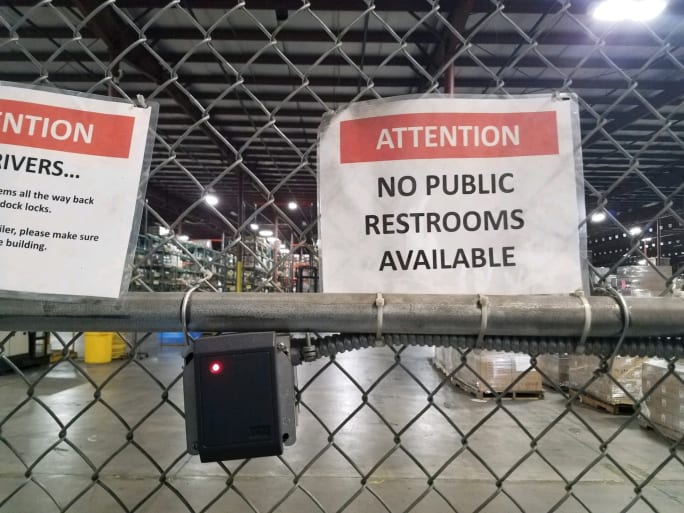
High demand and tight capacity mean fleets have the upper hand in rate negotiations. It may be the perfect time to bring driver needs — like access to basic facilities — into the conversation when vetting potential customers.
Photo: Reader submission
“It’s been even more difficult, because that shipping community or receiving company is wanting less foot traffic on their property,” Garner’s Brumbaugh says. Although lack of restroom access is not a new driver complaint, she says, “COVID has exaggerated that.”
When drivers don’t have access to basic facilities like a restroom, or are met with hostility regarding using them, it can create an unwelcoming environment.
“We will blacklist at that point,” Brumbaugh says. “That is just inhumane. This isn’t the public; these are people coming in that are an extension of your company. You’re not going to treat them like this.”
4. Invest in time-saving equipment and technology.
A common theme in NITL/TCA’s guidelines for good business relations is for all parties (carriers, drivers, shippers and receivers) to respect the time of others in the relationship.
“Finding qualified drivers operating in this industry is dire right now, so making sure that the drivers who are there are treated like human beings, so to speak, is obviously just good business practice,” says TCA’s Heller. “It’s good for humanity, and it makes the driver feel welcomed and part of an industry that truly needs them, without a doubt. That’s value number one, but [also] working in the best partnerships so that a driver’s time is valued.”
Drivers make money by rolling down the road, so, at the end of the day, time-saving efforts go a long way in retaining drivers and making them feel their time is valued.
“One of those places that keeps you for five or six hours? I’m not going back,” Clark says.
That’s why drop-and-hook opportunities are popular among drivers, and shippers can benefit if they’re willing to work toward making those opportunities available, effective, and efficient.
“If you have to make a driver wait more than an hour a day on a load, in their mind, they’re not making money,” explains Garner’s Brumbaugh. “They’re going to seek employment somewhere else where they can drop a trailer and keep moving.”
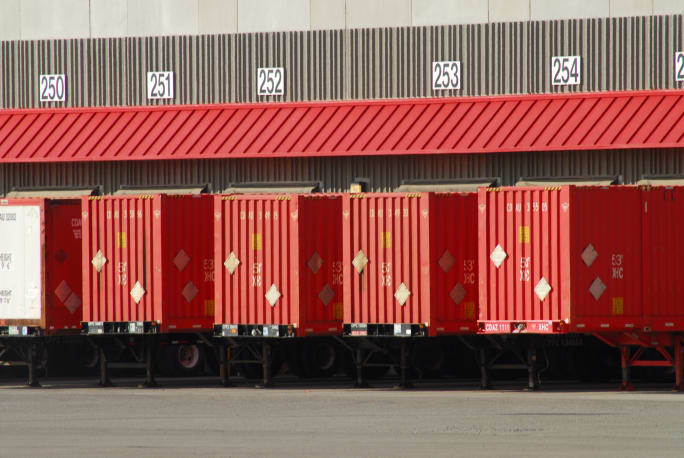
Drop-and-hook opportunities are popular among drivers, so many fleets seek out or prioritize shippers that offer it.
Photo: Jim Park
Large carriers such as Schneider and J.B. Hunt have been able to develop their own trailer-pool systems to increase their ability to offer drop-and-hook freight to drivers. But load-matching and logistics management technologies are making it easier for smaller carriers and shippers to connect on these “power-only” loads, as well.
“One of the things that’s most valuable to the drivers out there today is time,” Heller says. “We’re not talking about expediting freight delivery, we’re talking about scheduling and keeping it on time. So that that a driver can get in and out, and out to their next load, so that their time is not wasted.”
By viewing shipper relations as an essential part of driver retention, a fleet can offer its valuable drivers greater support, and perhaps a greater chance of staying in the industry.
Subscribe to Our Newsletter
More Fleet Management

Sponsored•September 16, 2026
Color Match Smarter: Tools That Restore & Perform
For fleet managers and collision repair professionals keeping heavy-duty trucks on the road, getting the color right the first time isn't just about appearance — it's about efficiency, turnaround time, and bottom-line results. Discover how today's digital color tools are transforming the repair process from guesswork to precision.
Read More →
FMCSA Pauses Biennial-Update Enforcement Amid Motus Transition
Carriers whose updates were due on or after June 1 have more time, while FMCSA works to stabilize its new registration system and warns of phishing sites impersonating its new carrier registration system, Motus.
Read More →
Sponsored•September 14, 2026
2026 Blueprint for Countering Smarter Supply Chain Theft
Cargo theft is no longer just the cost of doing business. It's a multi-billion-dollar criminal enterprise exploiting vulnerabilities across your fleet, drivers, and supply chain.
Read More →


Sponsored•September 1, 2026
How Telematics Improves Visibility, Control, and Performance in Refrigerated Fleets
Explore how telematics help refrigerated fleets improve visibility, uptime, efficiency, compliance, and cargo protection across connected cold chain operations.
Read More →
What the U.S.-Canada Trade War Means for Trucking
Escalating U.S.-Canada tariffs could disrupt cross-border freight, reduce truck volumes, raise costs, and create new uncertainty for carriers on both sides of the border.
Read More →
What Are Trucking’s Top Concerns for 2026?
The American Transportation Research Institute wants to know what's worrying trucking fleet managers, drivers, and other stakeholders in its annual Industry Issues survey.
Read More →
American Trucking Associations Looks for a New Leader
ATA President and CEO Chris Spear abruptly left his job at the association on August 21, at a pivotal time for the trucking industry.
Read More →
Public Wi-Fi Cybersecurity Risks: How Truck Drivers and Fleets Can Protect Their Data
Public Wi-Fi can expose truck drivers and fleets to credential theft, malware, and other cyber threats. Here’s how to reduce the risk on the road.
Read More →
For Nicky Cupp, Fleet Innovation Starts With Frustration
HDT Truck Fleet Innovator Nicky Cupp turns everyday pain points at Fraley & Schilling into opportunities for better technology and smarter processes.
Read More →
Adam Buttgenbach’s Approach to Electric Trucks: Start With Where They Fit
HDT Truck Fleet Innovator Adam Buttgenbach helped PepsiCo build one of North America’s largest EV fleets by focusing on where electric trucks make operational sense.
Read More →