




Related: Companies Moving Forward with Hybrid Truck Technologies
Construction Services Fleet Tests Hybrid System in the Field
By converting two delivery trucks with an XL3 Hybrid Electric Drive System from XL Hybrids, BMC is testing the waters on a greener fleet Colorado.

Steven Martinez・Web Editor
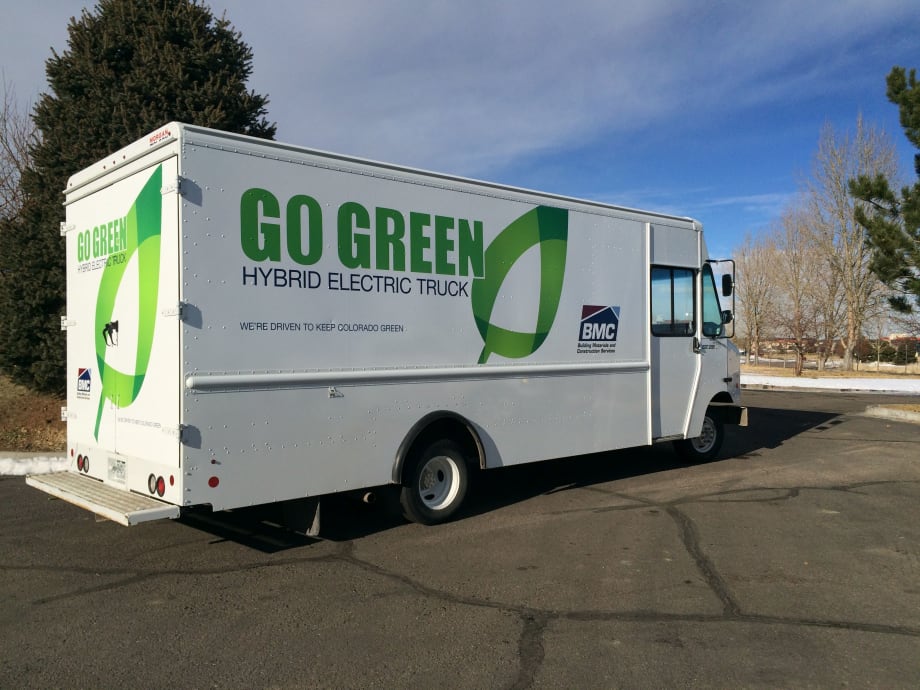
The construction-services company BMC is running a pilot program with XL Hybrids to test two delivery vans equipped with the XL3 Hybrid Electric Drive System. Photos: BMC
4 min to read
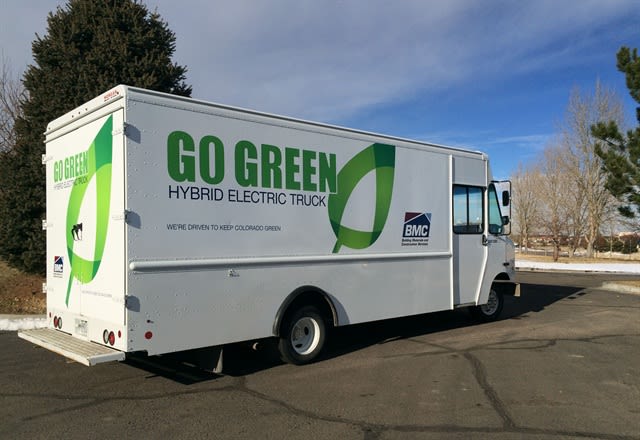
The construction-services company BMC is running a pilot program with XL Hybrids to test two delivery vans equipped with the XL3 Hybrid Electric Drive System.Photos: BMC
A green initiative doesn’t have to be about meeting government regulations. It can also save money, and the Atlanta-based construction services company BMC sees a lot of potential in going green.
BMC is working with XL Hybrids on a pilot program to test the XL3 Hybrid Electric Drive System on two retrofitted Ford E-350 step vans in the field. By comparing the hybrid vans with two non-hybrid vans of the same type, the company wants to see what kind of difference a green initiative might make in its fleet.
Dan Daly is the director of operational support for BMC, which operates in 12 states and services eight of the top 25 housing markets. When the company was looking for ways to make its fleet green, XL Hybrids’ offerings and Daly’s own past experience with the technology at a large fleet with many vehicles guided BMC to the XL3 hybrid system.
“We wanted to start a green footprint and we looked at other companies similar to XL Hybrids,” Daly says. “But the amount of vehicles they had out there and the type of technology they were using were not as advanced as XL Hybrids.”
In the construction and lumber fleet industry, BMC may be among the first fleets to try a green initiative, says Daly. Colorado was chosen for the test program mostly because that’s where it was already operating these step vans. The vehicles were low in miles and BMC wanted to invest the money in a place where it could have a maximum impact.
Colorado is also closer to the West Coast, where there is a stronger emphasis on green sustainability. While California leads the way with its stringent emissions regulations, it may only be a matter of time before that mindset trickles east, Daly says.
XL Hybrids traveled to Colorado to install the XL3 system on BMC’s delivery vans, which only took about a day. The system is relatively simple, made up of a battery pack to store a charge and an electric motor and other components to convert braking energy into a boost during acceleration. The trucks don’t need to be plugged in or charged, and in all driving situations the truck would operate normally. For Daly, this is one of the selling points — there was little interruption in service to start and, in his past experiences, he found it to be reliable as well.
“When they were installed, that was the last you heard from them,” says Daly, speaking about his past experience with the XL Hybrids system. “You never had problems with the unit.”
XL Hybrids says the XL3 system could increase fuel efficiency by 25% in certain applications. So far, BMC drivers report filling up less often. But the extra power during acceleration and better stopping power from the regenerative braking are also positives.
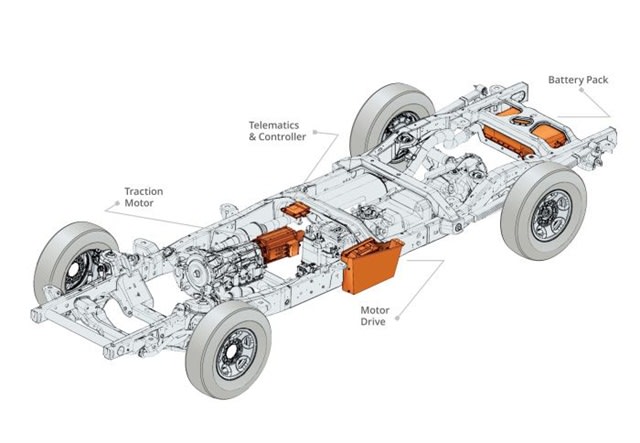
The XL3 Hybrid Electric Drive System uses regenerative braking to store energy, converting it into a boost for the vehicle during acceleration. The system can improve fuel efficiency by as much as 25%, according to XL Hybrids.
The four vans in the pilot program are used for materials delivery and are subject to the stop-and-go driving that many urban and delivery fleets experience daily. Each covers around 20,000 miles a year in the Denver area, and with the extreme elevation and temperature changes, they are hard miles.
Daly believes that in addition to better fuel economy, the system also could extend vehicle life. It is in stop-and-go driving that the most fuel is burned and the most strain is put on components like the drivetrain and brakes. By putting less load on the engine during acceleration and using the electric motor to assist braking, the hybrid system may reduce wear and tear.
“A conventional vehicle that has 100,000 miles compared to a vehicle that has 100,000 miles with a hybrid system, [the hybrid] is going to have a lot less wear and tear,” Daly says.
There will be more than anecdotal evidence to study. XL Hybrids is tracking the performance of the two hybrids and two non-hybrid vehicles in the pilot program using its proprietary wireless data connectivity system. The data is transmitted to the cloud for analysis, and XL Hybrids will track miles per gallon as well as other metrics such as idling, vehicle duty cycle and emissions reduction.
BMC is given a regular report on the progress of the pilot. With all of the collected data the company will then decide on whether to expand the program.
“If the payoff is there, the return on investment, then absolutely, why wouldn’t you? Why wouldn’t anybody?” Daly says.
Perhaps just as important to BMC is the forward-thinking image it is gaining from the green initiative. The trucks in the pilot program were decked out with a custom wrap, co-designed by XL Hybrids, that says “Go Green” in bold green letters. BMC wanted to show the public that it is doing something positive for the environment.
“Is it going to bring more business to our company? Well, maybe,” Daly says. “But we just want our customers and our community to know that we are conscious of this effort for alternative methods.”
Subscribe to Our Newsletter
More Fuel Smarts

How Volvo Updated Its D13 for EPA 2027 [Watch]
Volvo’s updated D13 promises lower emissions without sacrificing performance or fuel economy. Take a closer look at what changed inside the engine in this HDT Spotlight video.
Read More →
Diesel Price Spike Shortens Payback for Natural Gas Trucks, Report Says
Energy Vision estimates fleets could recover the higher purchase price of an RNG-fueled Class 8 tractor in 1.3 to 2.8 years under current fuel-price scenarios.
Read More →
Calstart Becomes Catalyst Mobility, Reflecting Broader Focus
Calstart is now Catalyst Mobility, reflecting the nonprofit’s growing national role in clean transportation, including zero-emission trucks, infrastructure and incentive programs.
Read More →

Record Diesel Prices Squeeze Trucking Fleets
Average U.S. diesel prices have climbed to nearly $6 a gallon, surpassing the 2022 record as tight refinery capacity and Middle East disruptions keep fuel costs elevated.
Read More →
Sponsored•September 9, 2026
How Fuel Delivery Shapes Engine Performance
Fuel delivery depends on more than what happens at the injector. For fleet, maintenance and technical professionals, looking at the full path from pump to injector can provide useful context for understanding engine performance.
Read More →
East Coast Port Launches $45M Electric Truck Push
The Port Authority of New York and New Jersey announced millions in incentives for zero-emission drayage trucks, yard tractors, and new charging hubs near the port.
Read More →
California Bill Could Shed Light on Electric Truck Prices
Why do battery-electric Class 8 trucks remain so expensive? A California bill headed to Gov. Gavin Newsom would give fleets and state agencies more visibility into what manufacturers charge.
Read More →
Detroit Opens Orders for EPA 2027 Engines
Detroit isn’t starting from scratch to meet EPA 2027 diesel emissions standards. Its Gen 6 DD13 and DD15 engines keep much of today’s platform while updating the fuel and aftertreatment systems.
Read More →
Zero-Emission Truck Corridor Planned for West Coast
California, Oregon, Washington, British Columbia and Baja California are coordinating plans for truck charging and hydrogen fueling from Canada to Mexico.
Read More →
A Closer Look at Kenworth’s Electric T880E Vocational Truck [Video]
Learn more about Kenworth's T880E battery-electric vocational truck at the Paccar Technical Center, including its range, applications, upfitting considerations, and PTO options, in this HDT Spotlight video.
Read More →