




Commentary: How Smart is SmartWay?
Can we depend on the fuel-saving numbers provided by the U.S. Environmental Protection Agency’s SmartWay program? Executive Contributing Editor Rolf Lockwood says he's not so sure, in the aftermath of a recent test results story.


Can we depend on the fuel-saving numbers provided by the U.S. Environmental Protection Agency’s SmartWay program?
Frankly, I’m not so sure.
I’ve long feared what I saw as inevitable: that SmartWay, which bills itself as a public/private collaboration between the EPA and the freight transportation industry that helps improve fuel efficiency, would become the default specifier of on-highway sleeper trucks and van trailers in North America.
And it’s happened. If the truck or the tire or the gizmo of whatever sort isn’t SmartWay-approved, the broad perception is that it simply isn’t good enough. There are shippers that demand to see the SmartWay logo on the rigs that haul their goods, and I’ve heard tales of carriers gluing that logo on trucks that never saw the benefit of approval. Worse, it’s now effectively a fence barring entry to California – no SmartWay certification, no entry. The pressure on many fleet operators is huge.
There isn’t a trucking operation on the entire planet that doesn’t want to save fuel, so in theory buying a SmartWay-verified product makes perfect sense.
But again, can we believe in what SmartWay approves?
That question is prompted by the recent testing of trailer aerodynamic devices by the Performance Innovation Transport group, a not-for-profit engineering and research outfit that works out of the Transport Canada test track in Blainville, Quebec. I believe it’s above reproach.
I won’t repeat all the details here, but it comes down to this: PIT recently announced the results of its evaluations on trailers equipped with three undercarriage aerodynamic devices, often called “undertrays.” They consumed just 1.43% less fuel on average than the same trucks without them, in a range from 0% to 2.2%. (PIT doesn’t divulge the results of individual products, except to members.)
With those results, none of the three undertray deflectors could achieve SmartWay verification, which demands a minimum 5% improvement. Yet two of them already had it before the PIT testing was done. And there’s the rub.
How can separate on-track tests done to the strict regime imposed by the SAE/TMC J1321 standard yield such different results? Are such tests not comparable if done at different tracks? And if not, then what does SmartWay verification really mean?
Equipment Editor Jim Park and I have been talking to all and sundry about this, including some of the manufacturers involved in the testing and fleets who have years of experience with trailer aerodynamics. But we still don’t have satisfactory answers.
SmartWay does none of its own testing, a key point here, relying on manufacturers to present test results from approved test facilities. But if those facilities don’t agree, what are we left with?
Many fleets say it doesn’t matter, because they don’t believe the numbers anyway. Some say when evaluating products and specs, they routinely cut fuel-saving percentage claims in half no matter what the source. Many say they spec SmartWay-approved products only in order to get into California.
One of the manufacturers involved in all this told me that SmartWay just provides a suggestion as to what works and what doesn’t, a spec’ing direction.
Not good enough, I say, certainly not if SmartWay is the default arbiter of what’s acceptable and what isn’t.
Incidentally, the third undertray-maker in the recent PIT testing, and I know it’s the one that scored 2.2%, is the only one of the three that can’t claim SmartWay certification. It has results from another test track showing a 5% gain in fuel economy – and guarantees it to buyers – but that track isn’t on SmartWay’s list of acceptable facilities so it won’t grant verification.
All of which shows that these waters are as about as muddy as water gets. And if you weren’t cynical before, you might be now. Just like me.
Read more at www.truckinginfo.com/PIT-undertray.
Rolf Lockwood is vice president, editorial, at Newcom Business Media, which publishes Today’s Trucking. He writes for HDT each month on the making, maintaining and using of trucks.
More Equipment

Kodiak: Driverless Long-Haul Truck Launch on Track for 2026
Kodiak AI says its driverless long-haul safety case is 93% complete and it remains on track to begin commercial operations by year-end 2026.
Read More →
What DOT’s Automated Vehicle Strategy Means for Trucking
The U.S. Department of Transportation issued a new automated-vehicle strategy that outlines plans for driverless-truck regulations, cross-state freight corridors, and federal safety standards.
Read More →
East Coast Port Launches $45M Electric Truck Push
The Port Authority of New York and New Jersey announced millions in incentives for zero-emission drayage trucks, yard tractors, and new charging hubs near the port.
Read More →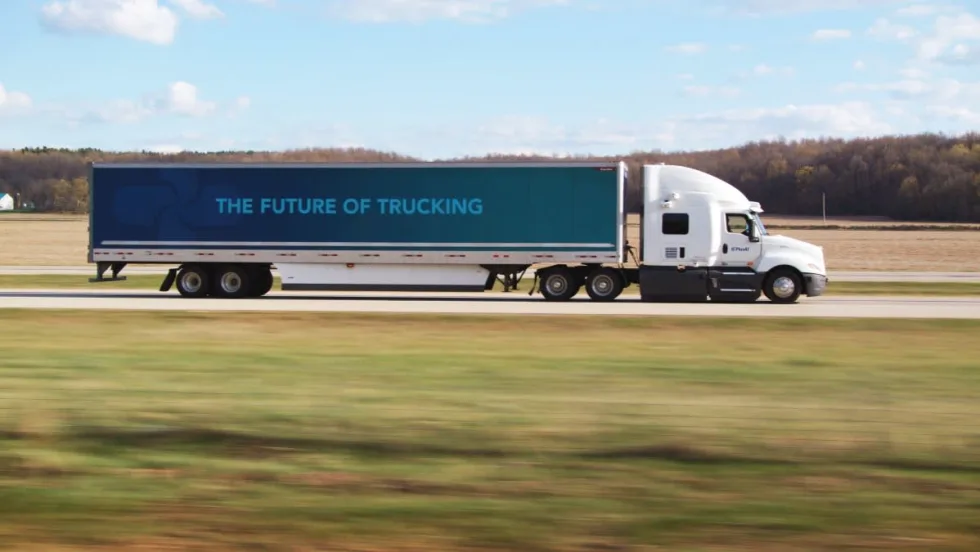
PlusAI Going Public to Fund Autonomous Truck Launch
A SPAC deal could provide PlusAI with up to $300 million as it works toward a 2027 commercial launch of factory-built autonomous trucks.
Read More →
NHTSA Moves to Rewrite Truck Fuel-Economy Rules
The National Highway Traffic Safety Administration says it lacks authority to regulate medium- and heavy-duty truck engines separately from complete vehicles, but the existing standards have not yet been eliminated.
Read More →
Detroit Opens Orders for EPA 2027 Engines
Detroit isn’t starting from scratch to meet EPA 2027 diesel emissions standards. Its Gen 6 DD13 and DD15 engines keep much of today’s platform while updating the fuel and aftertreatment systems.
Read More →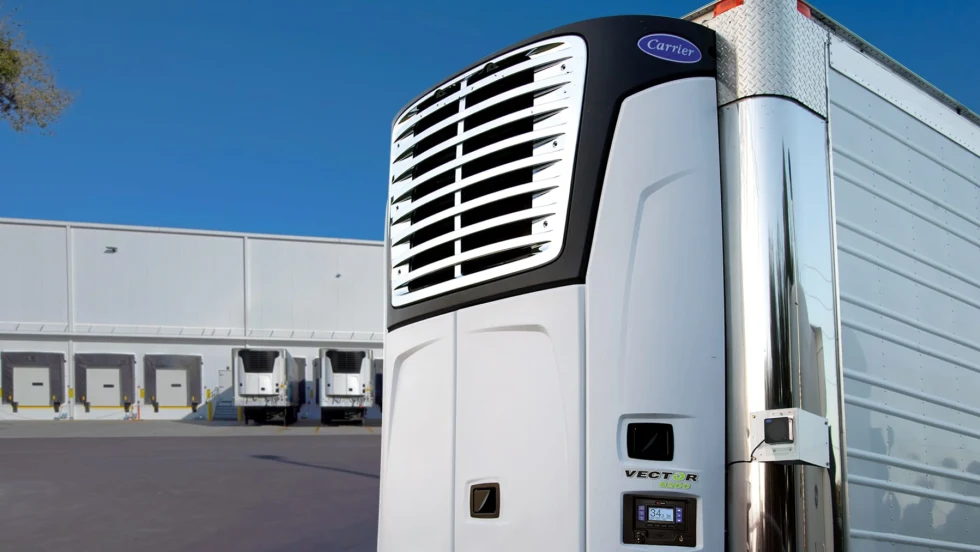
Carrier Transicold Adds All-Electric TRU for Stationary Cold Storage
Carrier Transicold’s new Vector 8200 all-electric transport refrigeration unit gives fleets a diesel-free option for temporary refrigerated and frozen trailer storage.
Read More →
A Closer Look at Kenworth’s Electric T880E Vocational Truck [Video]
Learn more about Kenworth's T880E battery-electric vocational truck at the Paccar Technical Center, including its range, applications, upfitting considerations, and PTO options, in this HDT Spotlight video.
Read More →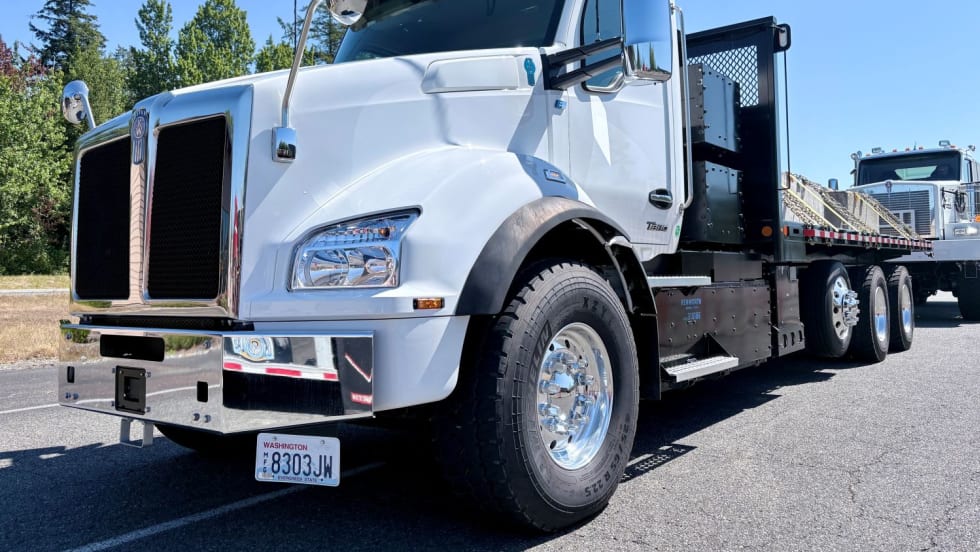
Kenworth T880E Brings EV Power to Vocational Trucks
A closer look at the Kenworth T880E’s range, charging, powertrain and upfit options — and where fleets are showing the most interest.
Read More →
What the U.S.-Canada Trade War Means for Trucking
Escalating U.S.-Canada tariffs could disrupt cross-border freight, reduce truck volumes, raise costs, and create new uncertainty for carriers on both sides of the border.
Read More →