




Class 6 & 7 Roundup
It's a transition time for Class 6 and 7 trucks as American and imported commercial vehicles move into model-year 2009-10 with only minor changes from the previous two years

It's a transition time for Class 6 and 7 trucks as American and imported commercial vehicles move into model-year 2009-10 with only minor changes from the previous two years.
Original equipment manufacturers put considerable resources into fitting their medium- and heavy-duty vehicles with EPA 2007-legal diesels, and they're now readying them for EPA 2010 engines whose tailpipe emissions must be even cleaner. Most builders will use a fluid-based exhaust aftertreatment method, but at least one will not, causing a controversy that will probably continue as the new year unfolds.
Customers who are buying new trucks are already paying hefty premiums for '07 diesels, and they'll pay more for most 2010 models and their associated apparatus. Body builders and upfitters, who must design and install work equipment on the chassis, have resumed scratching their heads after working around the '07 aftertreatment devices, which take up valuable frame space. But OEMs worked hard to make the devices compact and keep frames clear for body mounting, and say they're doing the same for 2010 equipment.
Meanwhile, an economy that was sluggish even before the early autumn financial crisis has seriously pulled down sales and caused the demise of an entire line of trucks - Sterling. Daimler Trucks North America said it will cease building Sterlings, including Acterra medium-duty and medium-heavy models, by next March, and close the Canadian plant that assembles them (see Hotline, page 18). What sales the Acterras had will thus disperse among the other 10 brands in the Class 6-7 market.
Sour news should not mask the actuality that many truck operators continue to acquire new trucks. Ford Commercial Truck's sales and marketing manager, Len Deluca, used a half-full-glass approach in describing his company's situation to customers at a recent industry meeting. Overall sales are 80 percent of 2007's (even if last year's sales were down from 2006), with this breakdown: E-series vans are selling at 79 percent of last year's levels; F-250 and 350 cab-chassis products are at 92 percent; F-450/550s are at 72 percent; F650 and F-750 are at 54 percent; and the Class 3-4 low-cab-forward LCF at 33 percent.
Those numbers were for sales into late summer of calendar 2008; what's happening since news of the financial crises hit the front pages and air waves might further exacerbate the grim sales situation. Yet history says that this too shall pass and prosperity will resume, and players in the industry must prepare for it. That, OEM representatives told attendees at the National Truck Equipment Association's Product Conference in Dearborn, Mich., is exactly what they're doing.
Most presentations on manufacturers' 2009 and 2010 models listed changes to trim levels, alterations of a few chassis dimensions, and refinement of electronic controls to make certain operations easier. Some described what they're doing to prepare for the EPA 2010 diesels, which go into production in January '10 and will begin appearing in trucks a month or two later. Some OEMs start their model years nearly 12 months prior to the calendar year for which they're named, while others phase in through the spring and summer months. So EPA 2010 diesels will first appear in some OEMs' 2011 models and in others' 2010s.
As expected, most manufacturers' reps said their engines will use selective catalytic reduction to cleanse exhaust. SCR requires sometimes bulky equipment to be fitted to exhaust systems downstream of the current diesel particulate filters. These will be accommodated with little intrusion on frame space behind cabs, they said. SCR is the best solution for fuel economy, reps insisted, because it sprays in a urea fluid that displaces diesel fuel. Fuel economy will be 1 percent to 5 percent better with 2010 diesels than current engines.
Navistar International, however, will not use SCR and instead will employ higher levels of exhaust-gas recirculation to meet the 2010 limits. This will require larger cooling systems, but will avoid the extra exhaust-system apparatus and its added weight and higher cost, as well as the need to fill a separate urea tank. Urea fluid - also called diesel exhaust fluid or DEF - might cost as much as diesel, so SCR's higher fuel economy won't save much if any money, Navistar's reps argued. Cummins will supply heavy-duty diesels for some Internationals, and although Cummins announced that its engines will use SCR, the ones it ships to Navistar won't because a contract between the two companies requires non-SCR diesels.
Meanwhile, Caterpillar will begin its withdrawal from the North American truck engine market in January when it drops its midrange C7. All its heavy-duty diesels will be gone a year later. One of the customers for the C7, General Motors, is dropping it from its medium-duty lineup in December, leaving only the Isuzu 6H (GM is also dropping the Vortec 8100 gasoline V-8 from its C6500, C7500 and C8500 in December). The other C7 customer, Ford, will drop the engine in January, leaving it with only the Cummins ISB for its F-650 and F-750.
In other manufacturer developments:
• Hybrid Class 7 tractors are being introduced in the next few months by International, Kenworth and Peterbilt. Like current Class 6 and 7 straight trucks (including hybrids from Freightliner), the tractors will use Cummins ISB diesels (called PX-6 by Paccar, the parent of KW and Pete) and Eaton Corp.'s electric-drive system which is the only one now in production. And Hino says it will bring in a Japan-built Class 3 hybrid in 2011 or so. Hybrids are still a minor part of all medium-duty business, but may grow as prices come down through greater volume and as government incentives become better known.
Recent drops in oil and fuel prices will undermine the business case for hybrids, but fuel prices are expected to climb again when economies improve around the world and demand for oil increases.
• Ford has quietly returned to the Class 8 market with heavier single rear axles in its F-750, yielding gross vehicle weight ratings of up to 37,000 pounds. It gave up building vehicles over 33,000 pounds for 10 years when it sold its HN80 heavies to Freightliner (which is where the now-doomed Sterling heavies came from). That prohibition has expired, and Ford executives are considering tandem rears, too. But they'd need a more powerful engine than the Cummins ISB, which will be the only one in the F-650/750 after January, when Cat drops the C7. Cummins' ISC would work, if Ford wants it.
• General Motors is moving ahead with its medium-duty truck business after its proposed acquisition by Navistar fell through. The building of GM's C series conventionals and T series low-cab-forward models in Flint, Mich., and distribution to GM commercial truck dealers had continued during the talks, and product planners have resumed upgrading and refining the vehicles. GM's affiliation with Isuzu Commercial Truck of America also continues, and Isuzu reps hinted that they might be seeking closer ties, with or without features of a now-expired joint venture between the two companies.
• Daimler Trucks North America has taken over Mitsubishi Fuso's sales, parts and service activities in the U.S. Daimler AG of Germany had acquired a major stake in Fuso of Japan, and decided to move most administrative functions to the Redford, Mich., headquarters of Sterling-Western Star. Although Sterling will soon disappear, those offices will continue functioning for the time being. Parts and service people remain in the old offices in Orange Township, N.J.
• Hino Motor Sales has brought back one of the low-cab-forward models it dropped several years ago when it began building conventionals in North America. Though the conventionals have been very successful, many of Hino's customers resented the loss of the durable and reliable LCFs. Hino has reintroduced a Class 4 model 155 in Canada, an
More Equipment

Kodiak Lines Up Fleets for Driverless Trucking
An agreement for 75 trucks, a new Texas freight lane, and progress on safety validation move Kodiak closer to its planned driverless highway launch.
Read More →
How GP Transco Builds Fuel Savings a Fraction at a Time
Aerodynamic specs, solar panels, and driver incentives help GP Transco turn small efficiency gains into savings it can reinvest in its people.
Read More →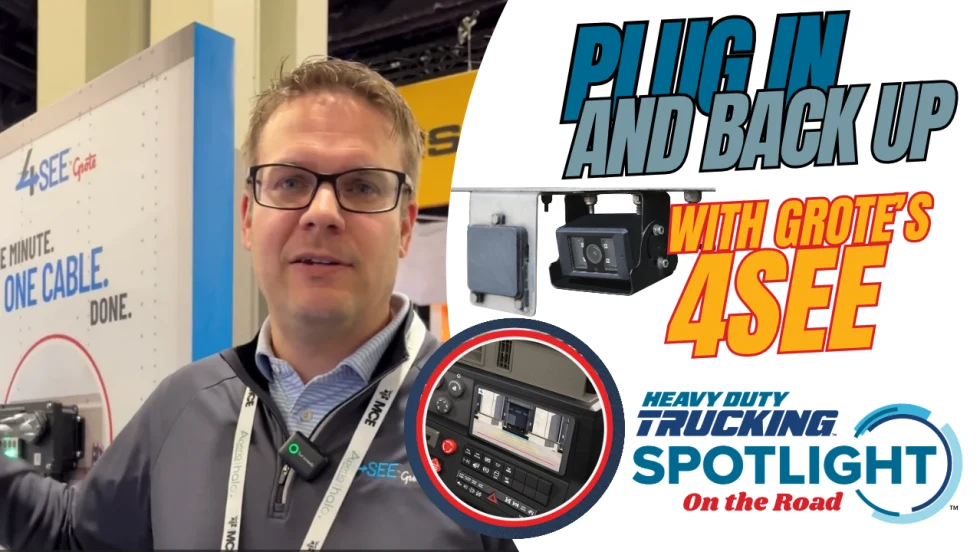
More Trailer Data Through the Same Seven-Way [Video]
Can trucking’s standard seven-way connector handle more cameras and trailer data? Grote’s Adam Slade shows HDT how the company is using new technology with its 4See trailer system, not only to add a new backup camera but also to expand other capabilities — without adding another connection.
Read More →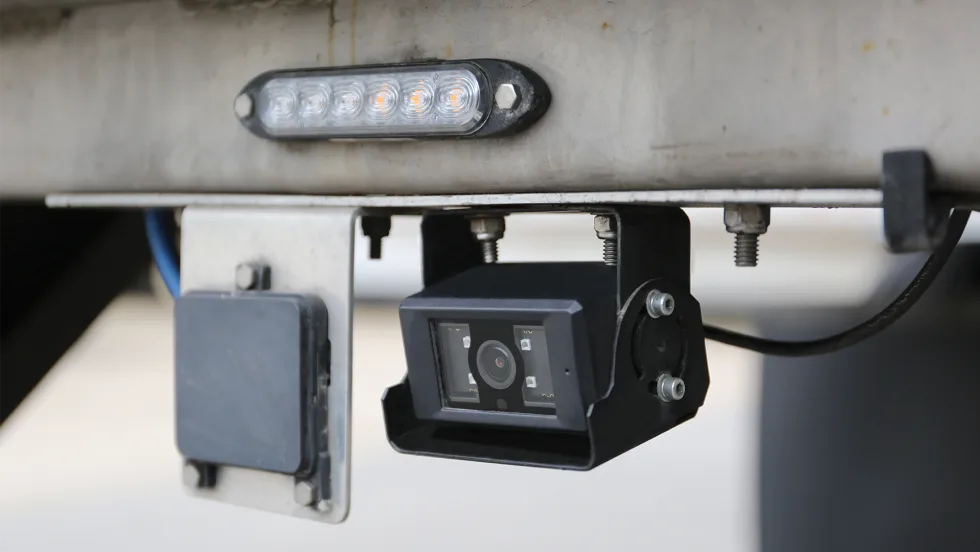
Grote: More Cameras, Same Seven-Way Connector
The next-generation 4See rear-view backup camera from Grote uses the standard seven-way connector and supports additional cameras and other trailer data.
Read More →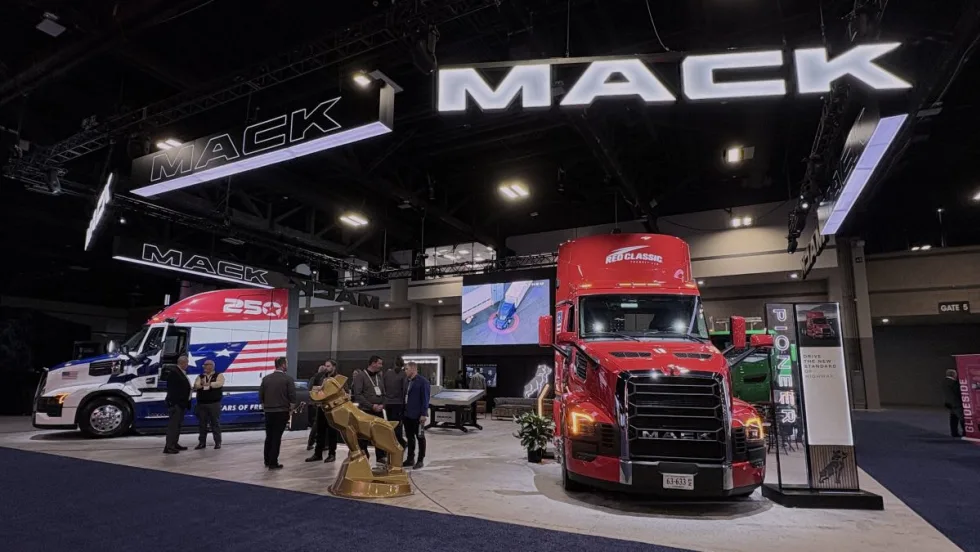
Trucks at ATA's 2026 MC&E in Charlotte, North Carolina [Photos]
From rigs decked out in patriotic America's 250 paint schemes to autonomous trucks and more, check out these photos from ATA's 2026 Management Conference & Exhibition.
Read More →
Help HDT Find Trucking’s Top Products
Have you come across a new product that could make a difference for trucking fleets? Nominate it for HDT’s 2027 Top 20 Products Awards by November 9.
Read More →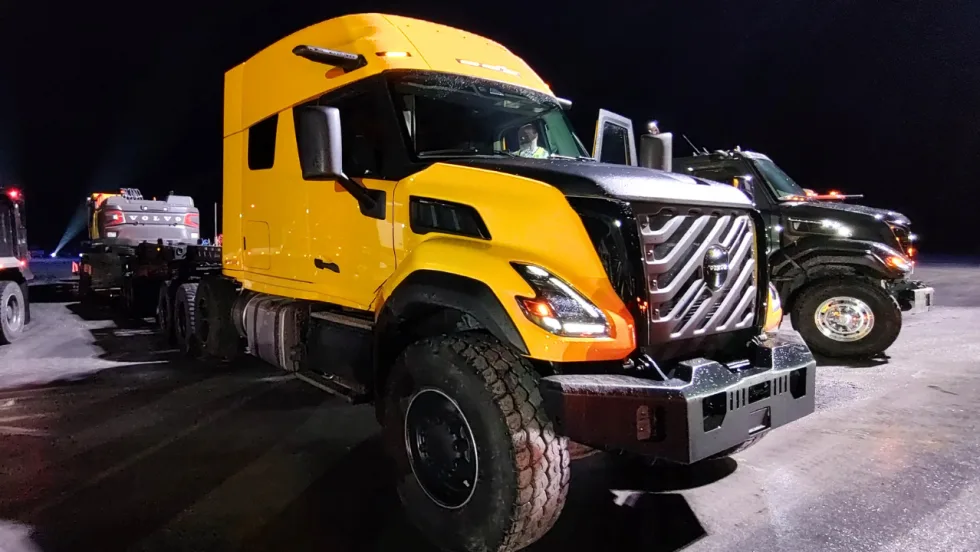
Volvo Unveils New VNX Heavy-Haul and Vocational Truck
Volvo Trucks has launched the VNX, a new vocational truck also available as a tractor in day cab and two sleeper configurations, with one heavy-haul model. The Volvo VNX is powered by Volvo's D13 platform, which delivers up to 540 horsepower and 1,950 pound-feet of torque and is EPA 2027-compliant.
Read More →
How GP Transco Cuts Trucking Fuel Costs, a Tenth of a Gallon at a Time
What’s another tenth of a mile per gallon worth? GP Transco shares how equipment upgrades and driver coaching turn small gains into meaningful fuel savings.
Read More →
Electric Yard Tractors Move Beyond Pilots
Operating-cost savings have overtaken sustainability goals as the leading reason surveyed fleets are adopting battery-electric terminal tractors, according to new NACFE research.
Read More →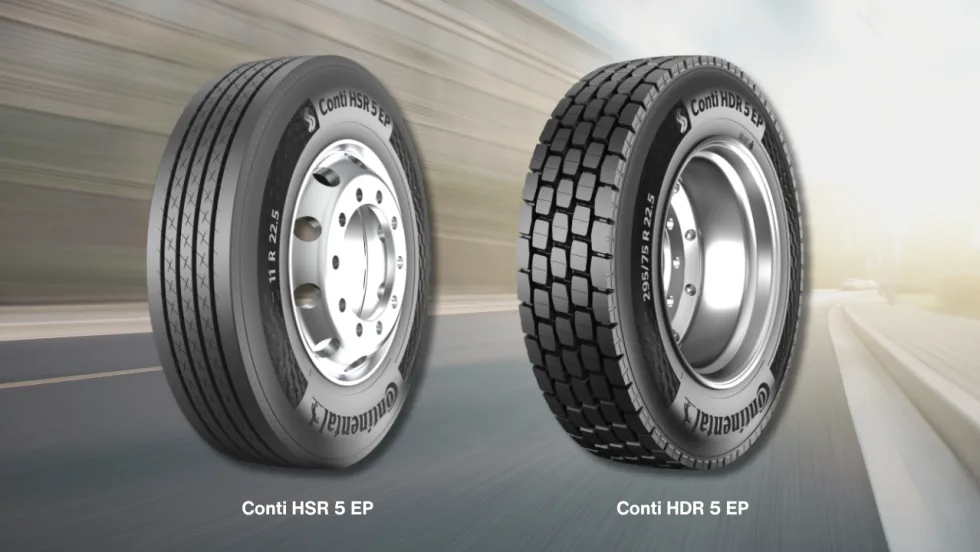
Continental Introduces New Regional Truck Tires
Continental says its new Generation 5 steer and drive tires for regional operations offer longer tread life, with estimated mileage gains of 22% and 19%, respectively.
Read More →