




Carrier Improves CSA Score With Trailer Readiness Program
With just two full-time facilities to handle maintenance on a fleet of more than 2,700 trailers scattered across the lower 48 states and Mexico, conducting regular trailer inspections can be a daunting task for Murray, Ky.-based Paschall Truck Lines.
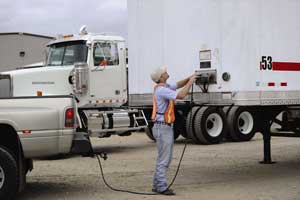
Trained technicians are sent to inspect and record any issues with tire pressures, tread depth, trailer lights, wheel seals, air valves, air lines on the trailer's suspension and braking system, and even reflective tape and mudflaps.
With just two full-time facilities to handle maintenance on a fleet of more than 2,700 trailers scattered across the lower 48 states and Mexico, conducting regular trailer inspections can be a daunting task for Murray, Ky.-based Paschall Truck Lines.
Yet it's a challenge the truckload carrier couldn't afford not to meet, particularly with the requirements of the Federal Motor Carrier Safety Administration's CSA safety enforcement program (Compliance, Safety, Accountability) fully in place.
So Paschall Truck Lines worked with Wingfoot Commercial Tire to pilot-test a Trailer Readiness Program from Goodyear's FleetHQ service. The program is now available nationwide.
Available for fleets of all sizes, the program uses trained technicians to conduct inspections of trailer components such as tires, suspensions and lights, following the same criteria roadside inspectors use. The results are available online through a secure Web portal.
The company has seen a 10% reduction in its overall CSA maintenance score in 12 months, which Scott Gray, maintenance and breakdown manager for Paschall calls "a remarkable change."
"We're also getting improved trailer productivity and efficiency because we're not seeing as many breakdowns or citations by catching these problems up front," he says.
Before it initiated the program in 2011, Paschall Truck Lines wanted to significantly increase the frequency of its trailer inspections. "But we were having a problem getting trailers thoroughly inspected every six months," Gray says.
With so many trailers traveling around the country and into Mexico and only two full-time maintenance facilities, scheduling regular, thorough inspections proved to be too much of a logistical challenge.
Taking control
For the most part, Paschall's drivers successfully conduct thorough inspections of their power units because they control them, Gray explains. However, conducting the same level of inspection of trailers can sometimes be difficult, if not impossible.
When drivers are scheduled to pick up the trailers, it may be too dark outside for them to see problems such as leaking wheel seals, missing reflective tape or tire tread problems. Even during the day, it can be difficult to find burned-out running lights or tire tread problems.
"Then there's the issue of who takes responsibility," Gray says. "It can be difficult for a driver to report an issue that can slow down their on-time performance, especially when the driver who had the trailer before didn't report it."
So Paschall sent out a request for trailer inspection programs. Goodyear submitted the winning proposal.
Here's how the FleetHQ Trailer Readiness Program works: When Paschall receives a specific request or customers contact Paschall to let the company know that several Paschall trailers are parked at their facilities, Paschall's dispatchers or maintenance personnel check the company's maintenance records. They look to see if the trailers are due for inspections or maintenance. If they are, Paschall contacts FleetHQ to arrange a visit by a tire or maintenance technician from the nearest Wingfoot Truck Care Center, local Goodyear-authorized dealer or another preferred provider.
Trained technicians are sent to inspect and record any issues with tire pressures, tread depth, trailer lights, wheel seals, air valves, air lines on the trailer's suspension and braking system, even reflective tape and mudflaps. The one-page inspection forms they use follow the same format as the inspection forms state and federal roadside inspectors use in a Department of Transportation Level 1 inspection.
Technicians look for the same issues state and federal inspectors would look for, paying particular attention to any issues that would result in an out-of-service violation during a standard roadside inspection.
Inspection results are then sent back to the FleetHQ Solutions Center, where they're entered into the password-protected online system, says Jeremy Edds, region sales manager for Wingfoot Truck Care Centers. Issues requiring immediate attention are flagged. Authorized personnel at Paschall can then view the results of the inspections through the FleetHQ Web portal and schedule any necessary repairs or maintenance.
"An inspection through the FleetHQ Trailer Readiness program is not a substitute for a complete Level 1 DOT inspection," Edds says. "However, the program is designed to augment what fleets like Paschall already do through daily pre-trip inspections, so it can help identify issues that drivers might miss."
The program has allowed Paschall to take a more proactive role in helping drivers monitor the safety of trailers, Gray says. "It's helped us reduce the number of violations in our Level 1 DOT inspections by 35% year over year."
From the June 2012 issue of HDT
More Safety & Compliance
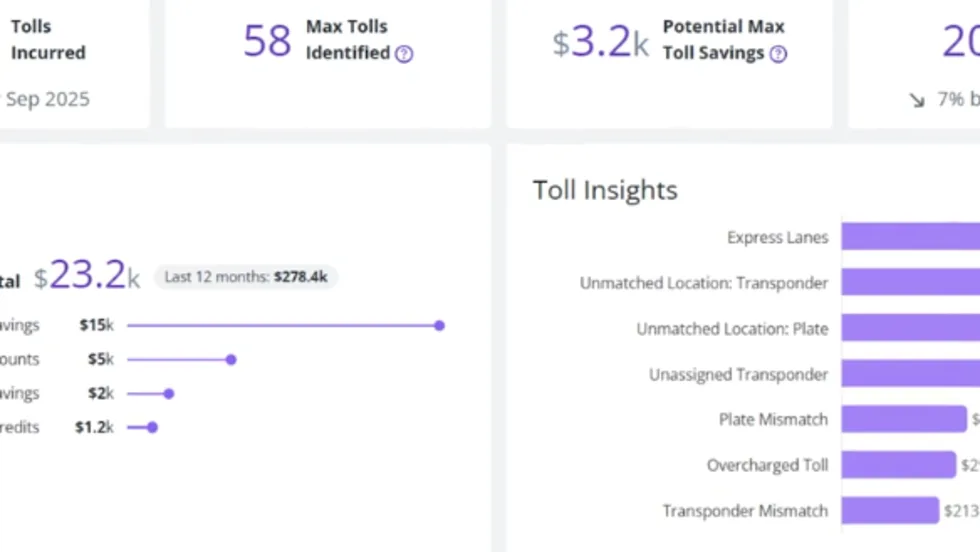
PrePass Intelligence Mines Fleet Bypass, Toll and Safety Data
PrePass Intelligence helps fleets measure bypass savings, flag potential toll overcharges, and spot suspicious transactions by combining data from separate systems.
Read More →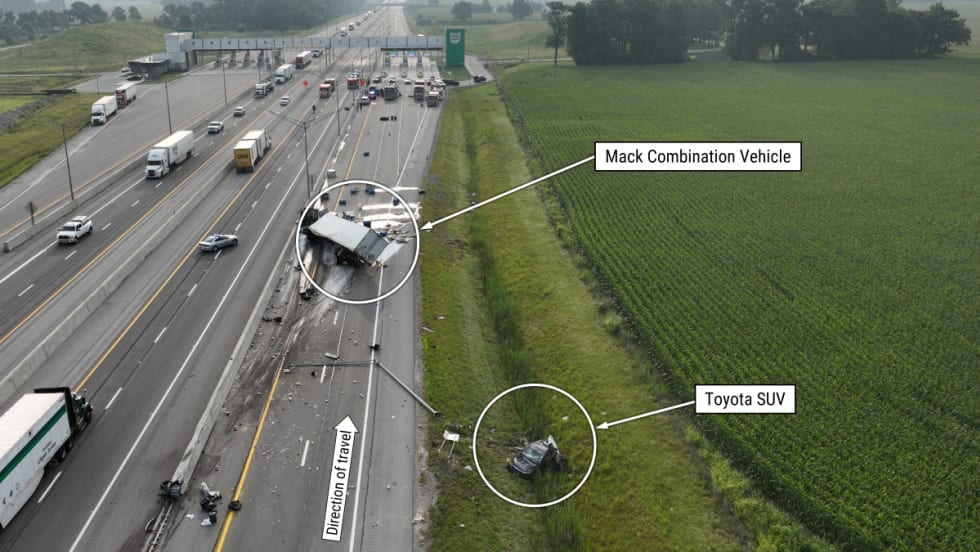
Fatal Crash Exposes Toll Plaza Risks
An NTSB investigation found that last-minute lane changes and large speed differences at an Ohio toll plaza created a hazard the truck driver couldn't avoid in time.
Read More →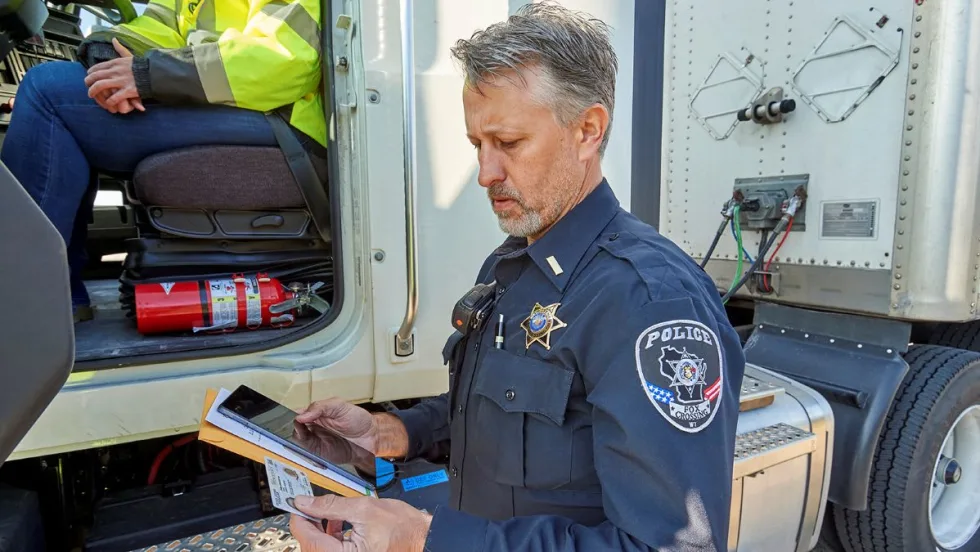
When Language Stops the Truck: The Return of ELP Out-of-Service Orders
English language proficiency rules for commercial drivers aren’t new, but renewed out-of-service enforcement has raised the stakes. Here’s what carriers need to know before a driver reaches a roadside inspection.
Read More →
A Camera Isn't a Safety Program. Here's What Brokers Are Screening for Now
Footage alone may not be enough to pass broker vetting processes. Here's what counts as a defensible safety program now.
Read More →
Marijuana and Trucking’s Drug-Testing Dilemma
Marijuana is getting stronger, laws are changing, and drug tests still can’t reliably establish impairment. What does that mean for truck drivers and the fleets that employ them?
Read More →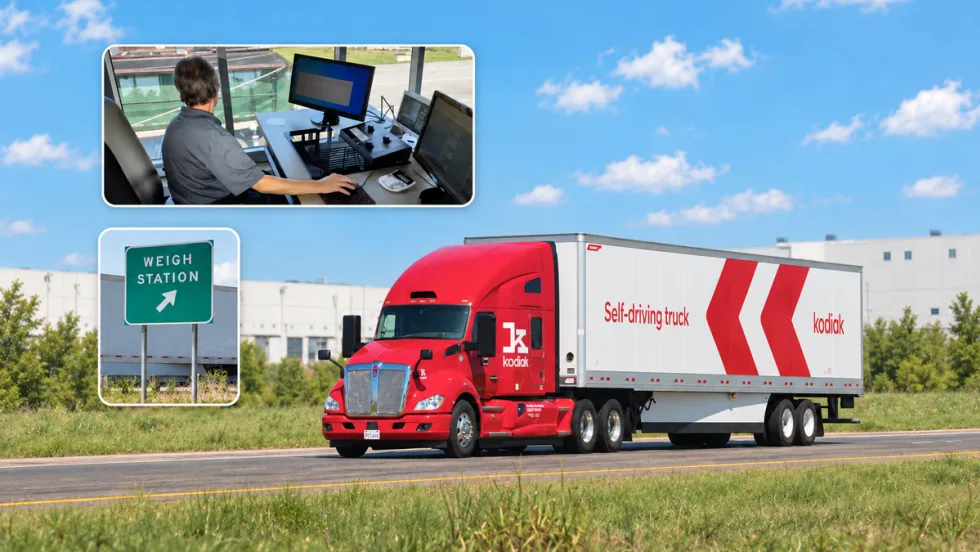
PrePass, Kodiak Connect Driverless Trucks to Roadside Enforcement
The system will allow enforcement agencies to verify Enhanced Inspection information and decide whether Kodiak’s autonomous trucks can bypass roadside screening sites.
Read More →
From One Generation to the Next: How Mentorship Builds Safer Truck Drivers
After three decades in trucking, Harold Perry shares what he's learned about driver safety, mentorship, and helping the next generation build confidence behind the wheel.
Read More →
FMCSA Pauses Biennial-Update Enforcement Amid Motus Transition
Carriers whose updates were due on or after June 1 have more time, while FMCSA works to stabilize its new registration system and warns of phishing sites impersonating its new carrier registration system, Motus.
Read More →
ZF Expands Commercial Vehicle Push in North America
ZF is expanding its North American commercial-vehicle presence with new transmission applications, electrification, trailer technology and autonomous-driving systems.
Read More →
Truck Drivers Need More Than Another Alert
Fleets have more visibility into truck health, safety events, and driver activity than ever. The next challenge is turning all that information into useful guidance for the person who has to decide what to do next.
Read More →